

OXO Architects, timber architecture and construction in Paris
An architecture of situations, not an imposed material
We are not the architects of a material. We are the architects of the right situations, those where a resource, a constructive gesture, an ecological solution find their necessity.
Wood holds a central place in our work, not by doctrine, but because it answers, often, a demand of our time: to build lighter, lower-carbon, more alive. Often, not always. This reflection is not a trend: we have led it for over ten years, project after project, around a simple and demanding question, how can a building be born of its context rather than sit upon it? This precedence is not a detail: it separates conviction from opportunism.
We love wood for what it is as much as for what it allows. It is a living matter, warm to the touch, that breathes, that ages and takes on a patina like a being rather than a product. It carries within it the light, the scent and the time of the forest it comes from. To work with wood is to renew an ancient bond between architecture and the living, that of the frames, trusses and joints that generations of builders refined before us. This sensitive, almost affective part is not a supplement of soul: it guides the way we design spaces, their softness, their acoustics, their relationship to the hand and the eye.
But to love wood does not mean to impose it. A reasoned declaration of love acknowledges the limits, listens to the place, measures the life cycle and knows, sometimes, to choose another material. It is this fertile tension, between passion for a resource and the lucidity of the architect, that founds our expertise. Wood when it makes sense, fully; other answers elsewhere, without regret.
Our approach to wood
The forest as the origin of the structure
Our relationship to wood begins with reading a place. At Revin in the Ardennes, at Ecotone Arcueil and at the Tour A10 in Tours, the forested environment makes the development of a load-bearing timber structure natural. The material does not come from elsewhere: it extends the landscape.
Wood when it bears
When the site justifies it, wood becomes the frame of the project. At Marcel Paul, a mostly timber structure gathers retail, offices and activities under one roof. At Pixel Tours it carries the housing; at Kaskade it gains height, lighter.
Wood in dialogue
An architect of situations never makes wood an absolute. At the Paul Éluard cultural centre it meets pale concrete and glass; at the Les Menuires congress centre, local stone. Sometimes, elsewhere, earth, stone or low-carbon concrete make more sense.
Research held over time
This demand is worked from the first sketch. With Sou Fujimoto, at the Talent Makers Lab, we seek the porosity of the inhabited and the vegetal. At the Tour d'Asnières, the rigour of wood is tested from the balsa model on.
Timber built, not declared
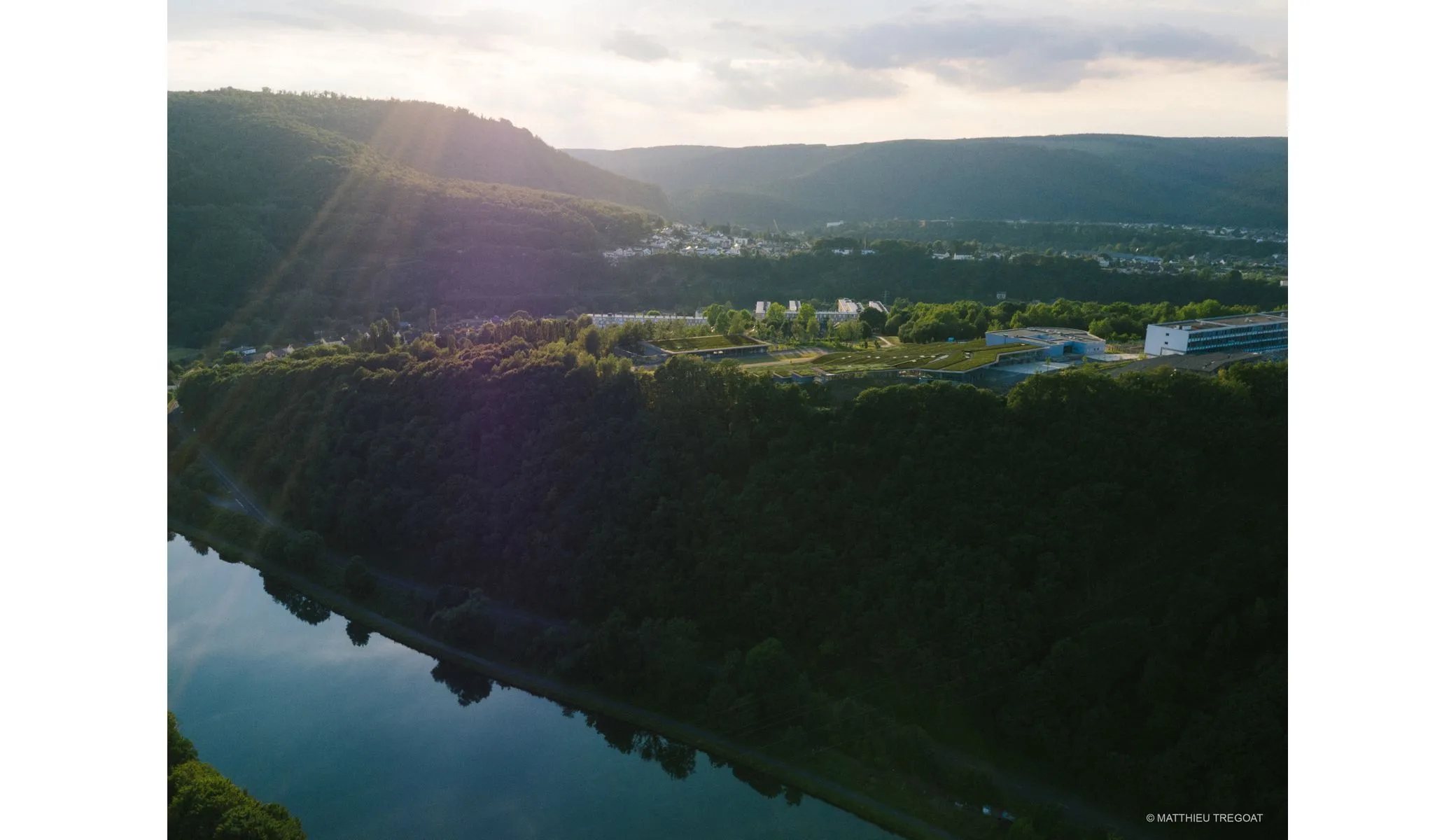
Lycée Jean Moulin
In the Ardennes forest, within the meanders of the Meuse: the founding project, at large scale, where construction extends a wooded territory.
See the project ›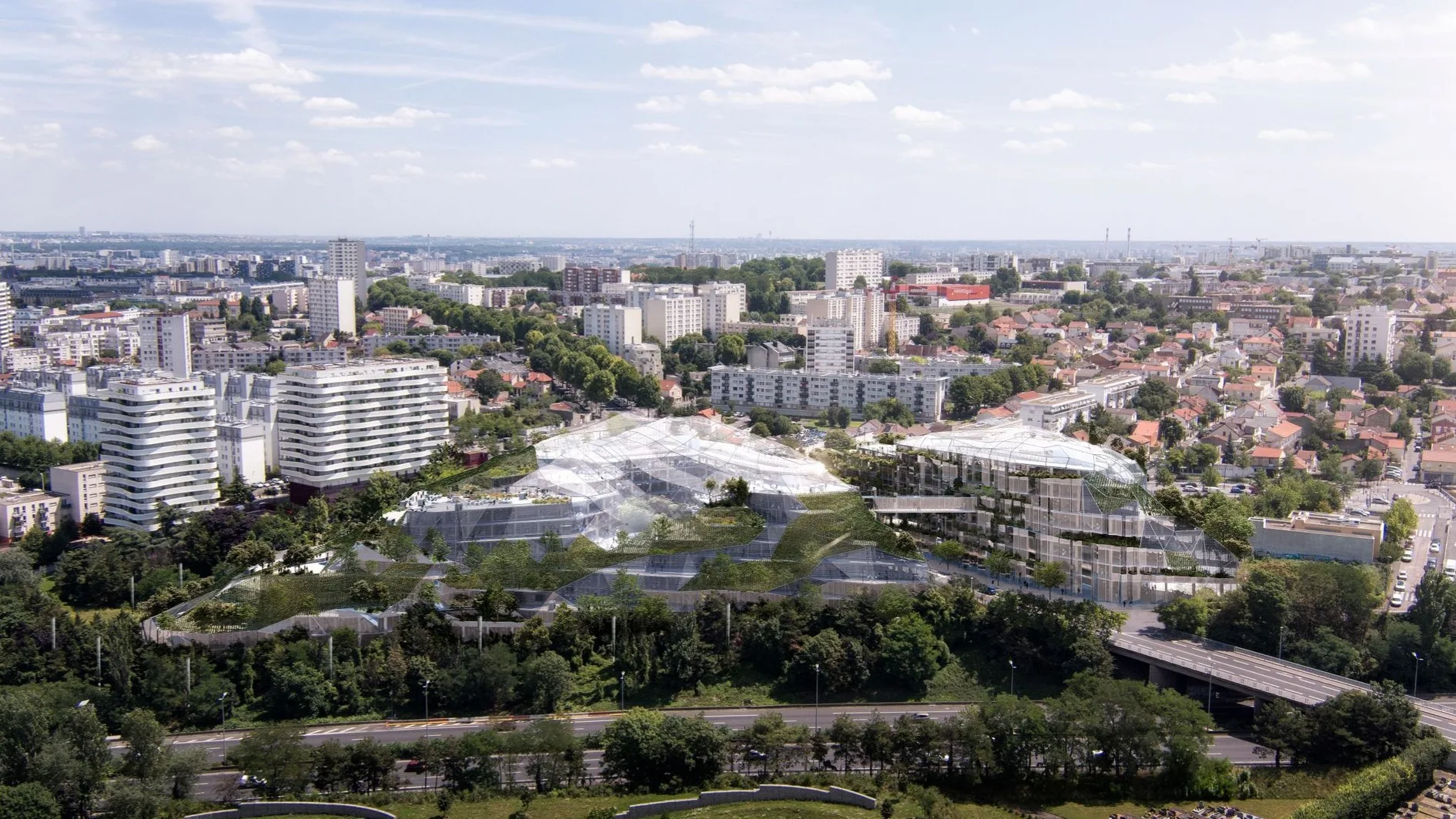
Ecotone Arcueil
A living building whose vegetal context calls for a load-bearing timber structure.
See the project ›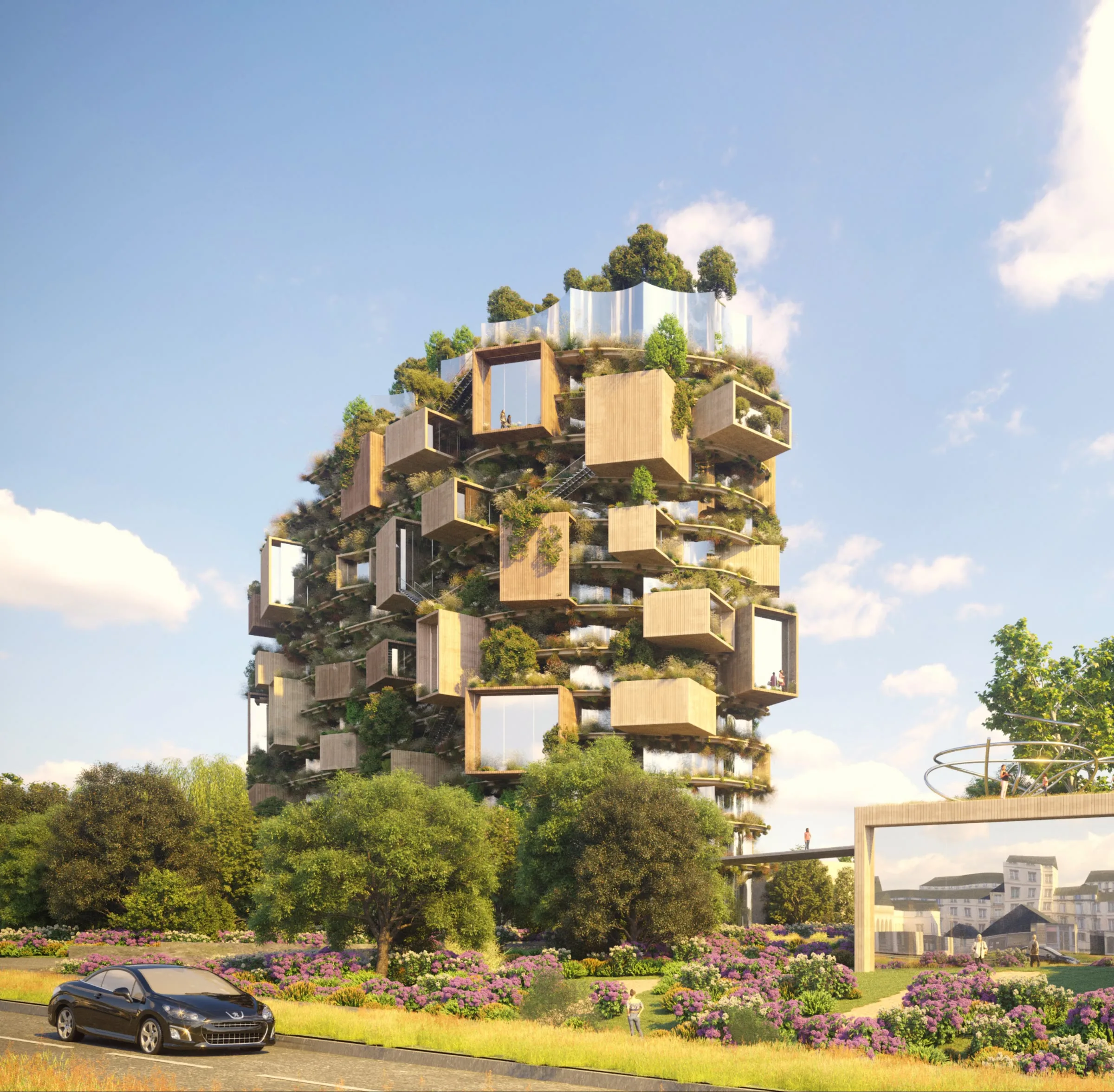
Tour A10
In Tours, on a wooded edge, a mixed-use verticality with a timber frame.
See the project ›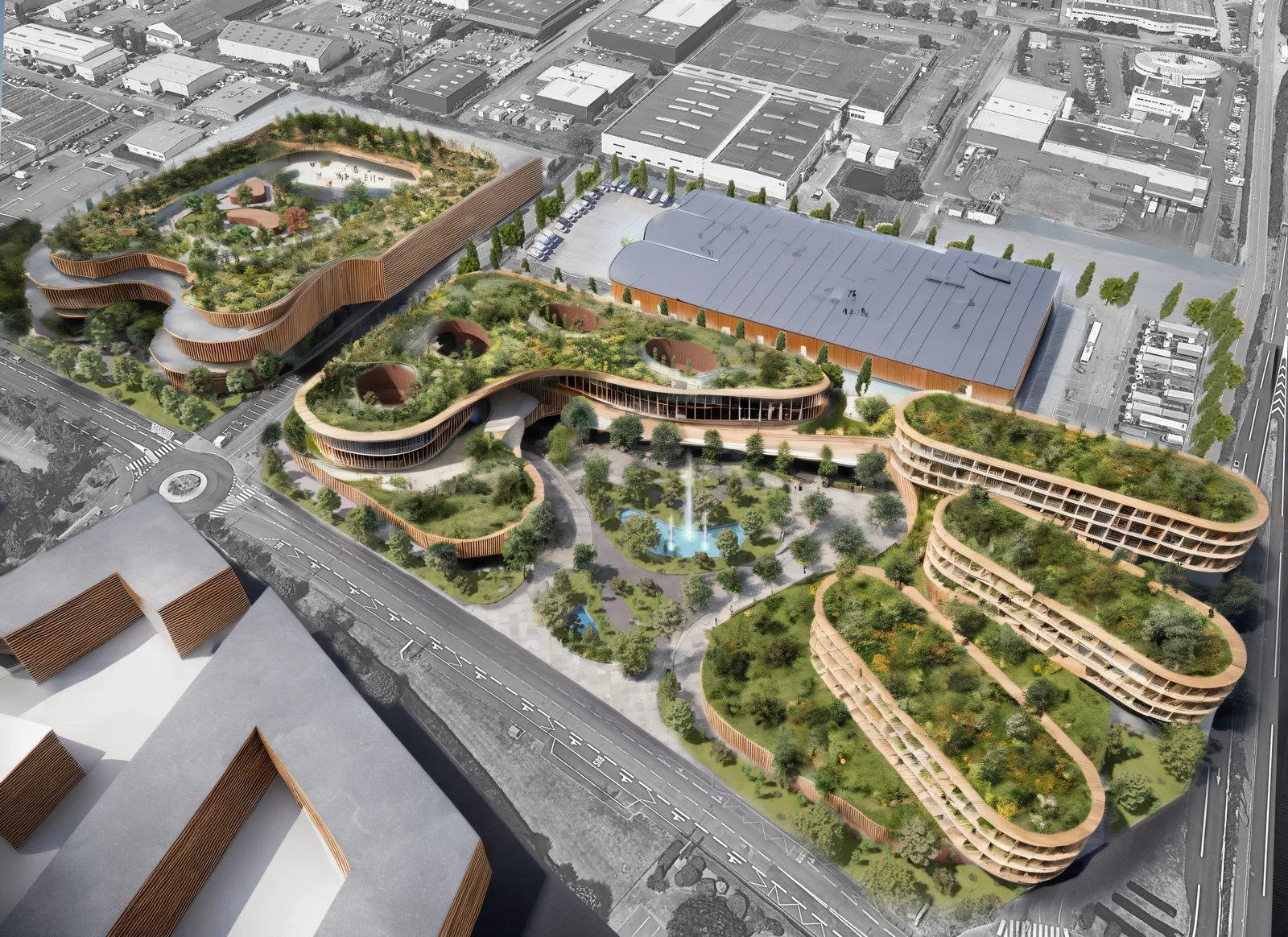
Marcel Paul
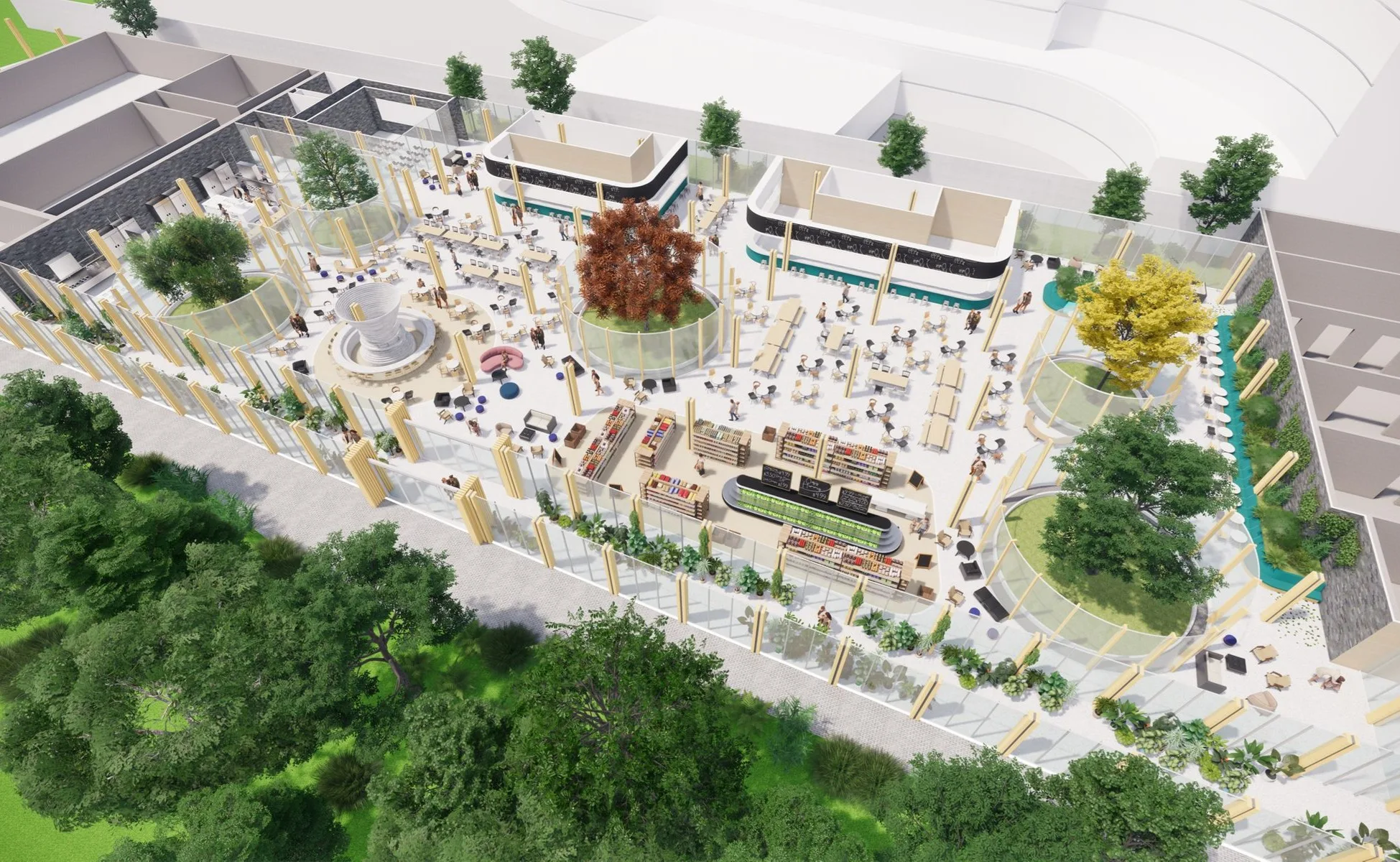
In Saint-Herblain, a mostly timber structure gathers retail, offices and activities under one landscape-roof.
See the project ›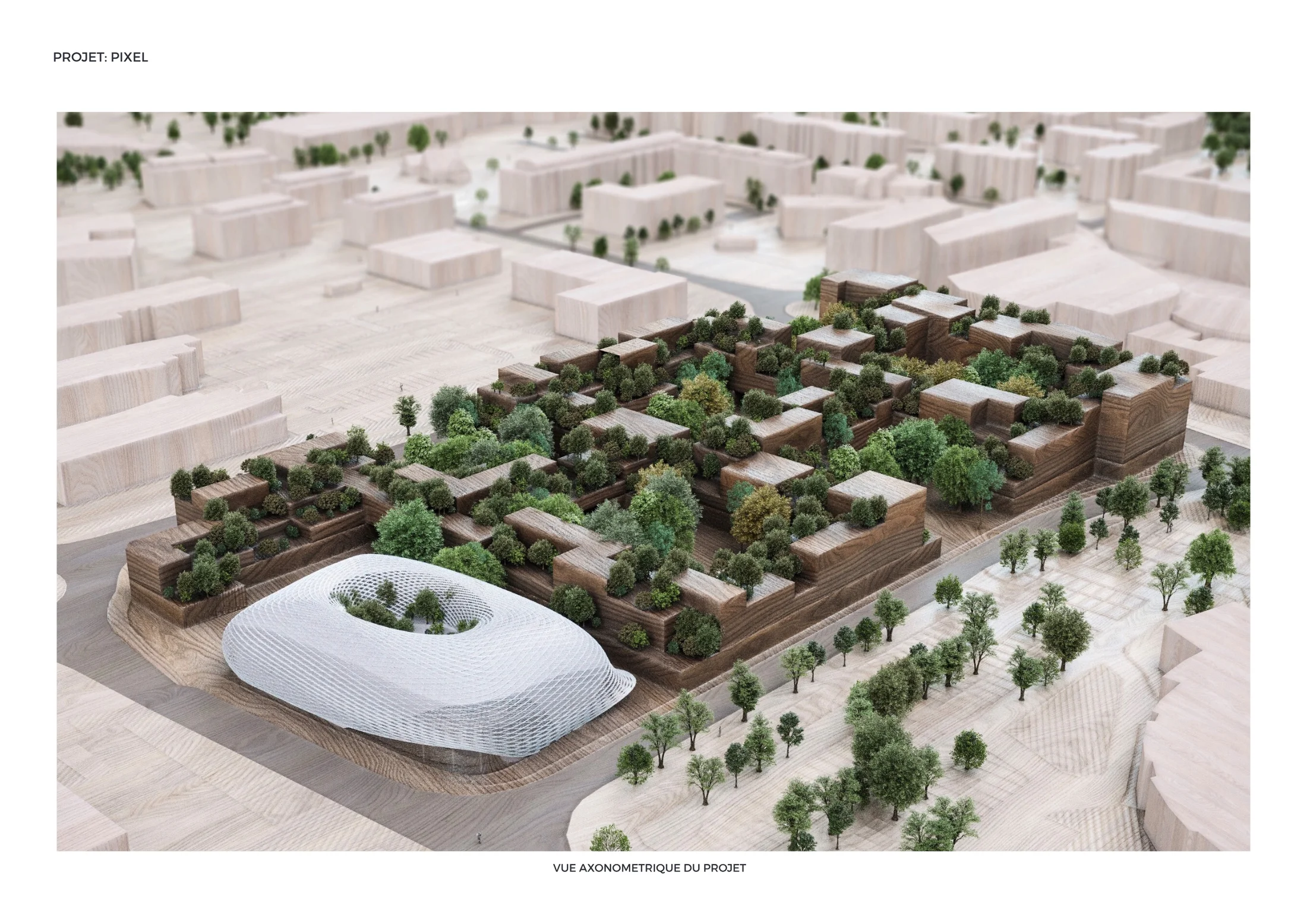
Pixel Tours
Wood chosen for the housing: warmth, visual lightness, environmental performance.
See the project ›
Boulogne Seine Gourmande
Wood structures our material approach, not as a trend but as a coherent answer to the challenges of decarbonation.
See the project ›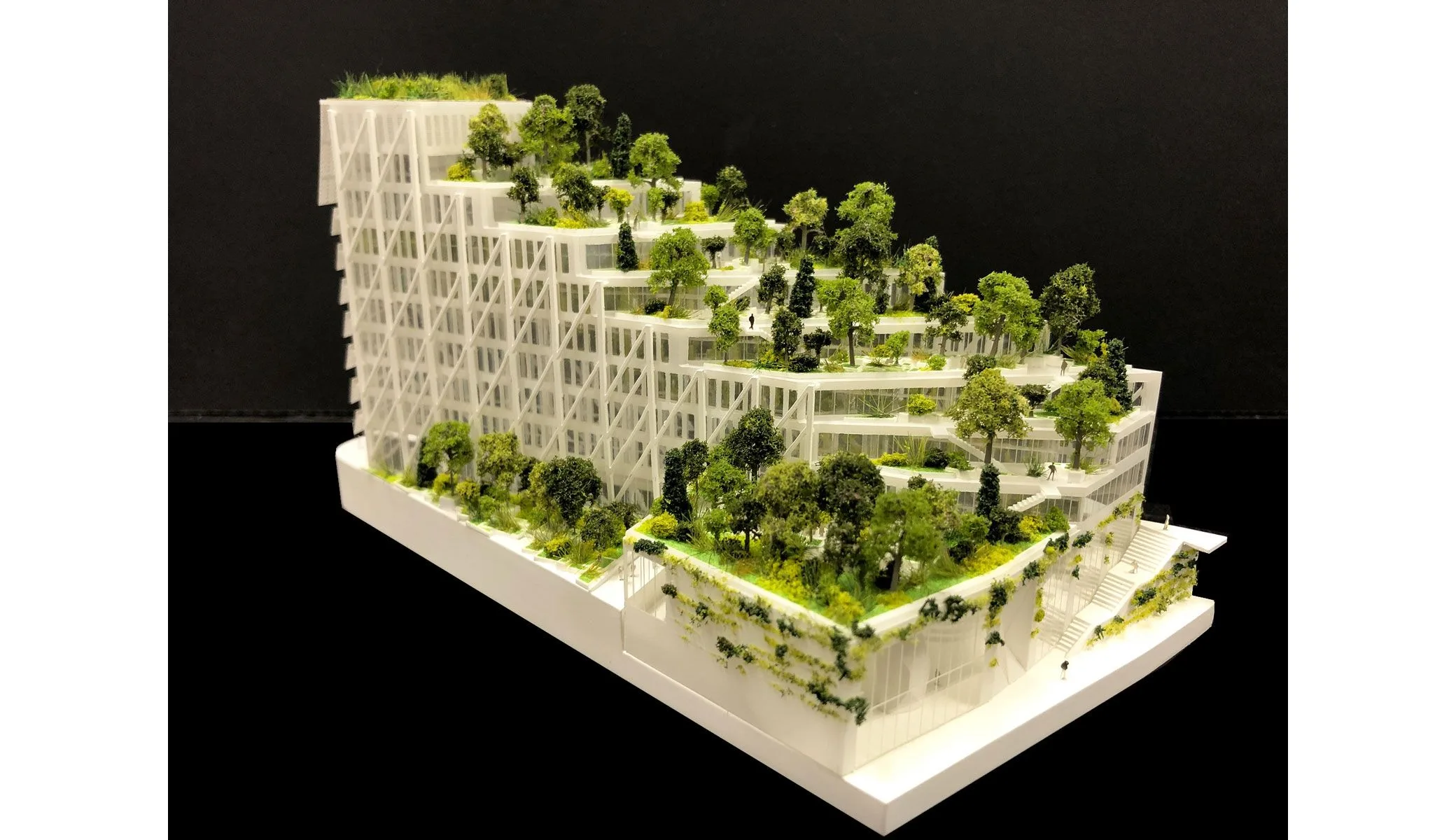
Kaskade
In Lille, to bear height otherwise, lighter: wood in verticality.
See the project ›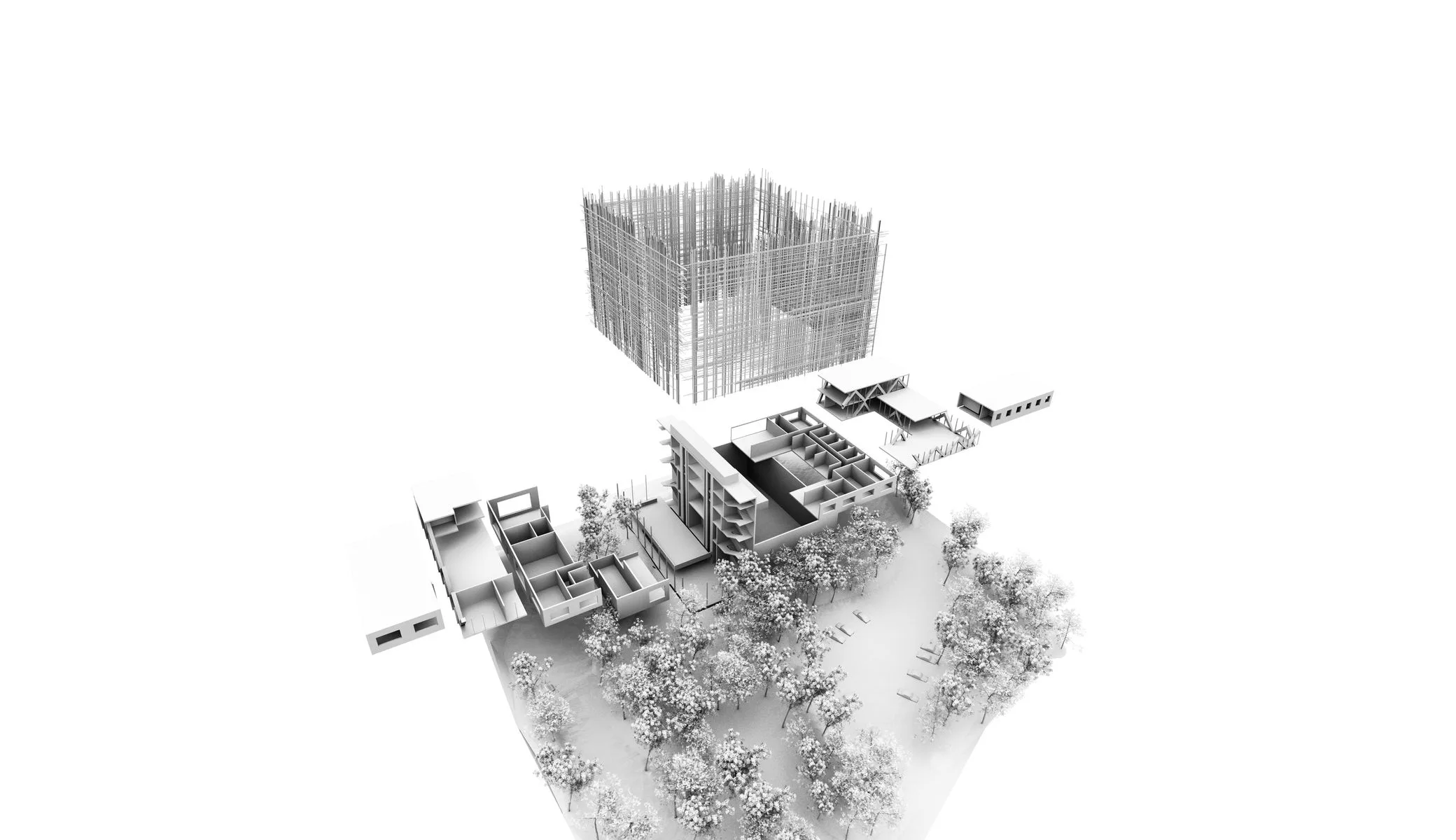
Paul Éluard cultural centre
In Cugnaux, wood meets pale concrete and glass in an economy of means that absorbs the light.
See the project ›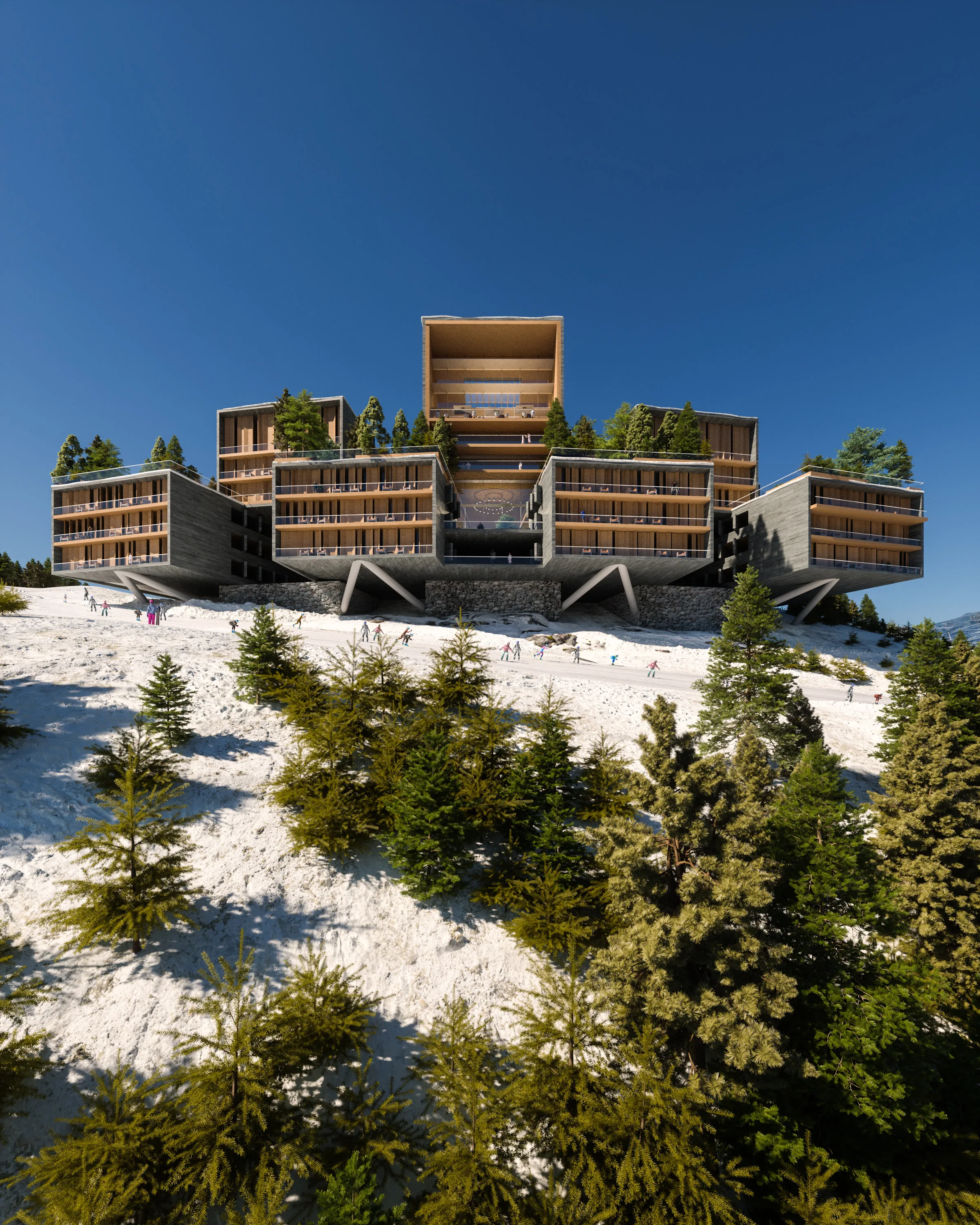
Les Menuires congress centre
Wood and local stone, to carry an Alpine constructive memory without pastiche.
See the project ›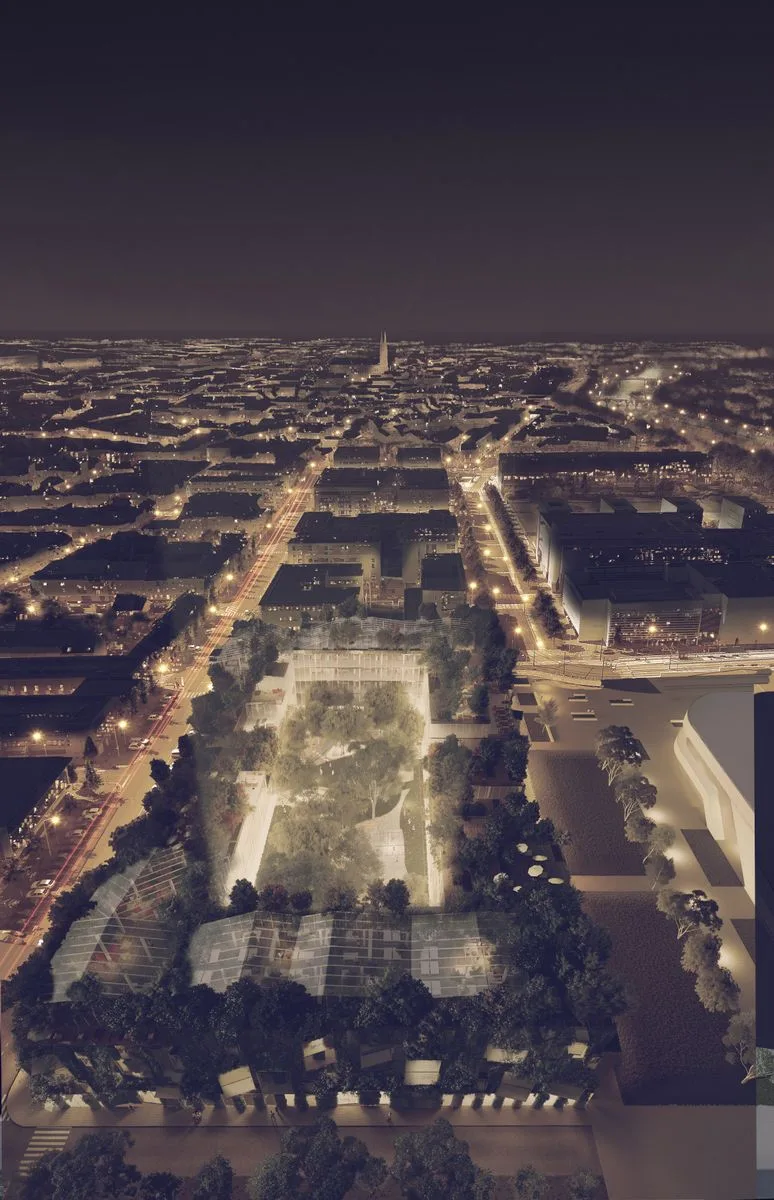
Talent Makers Lab
In Angers, with Sou Fujimoto, a radical porosity between the inhabited and the vegetal.
See the project ›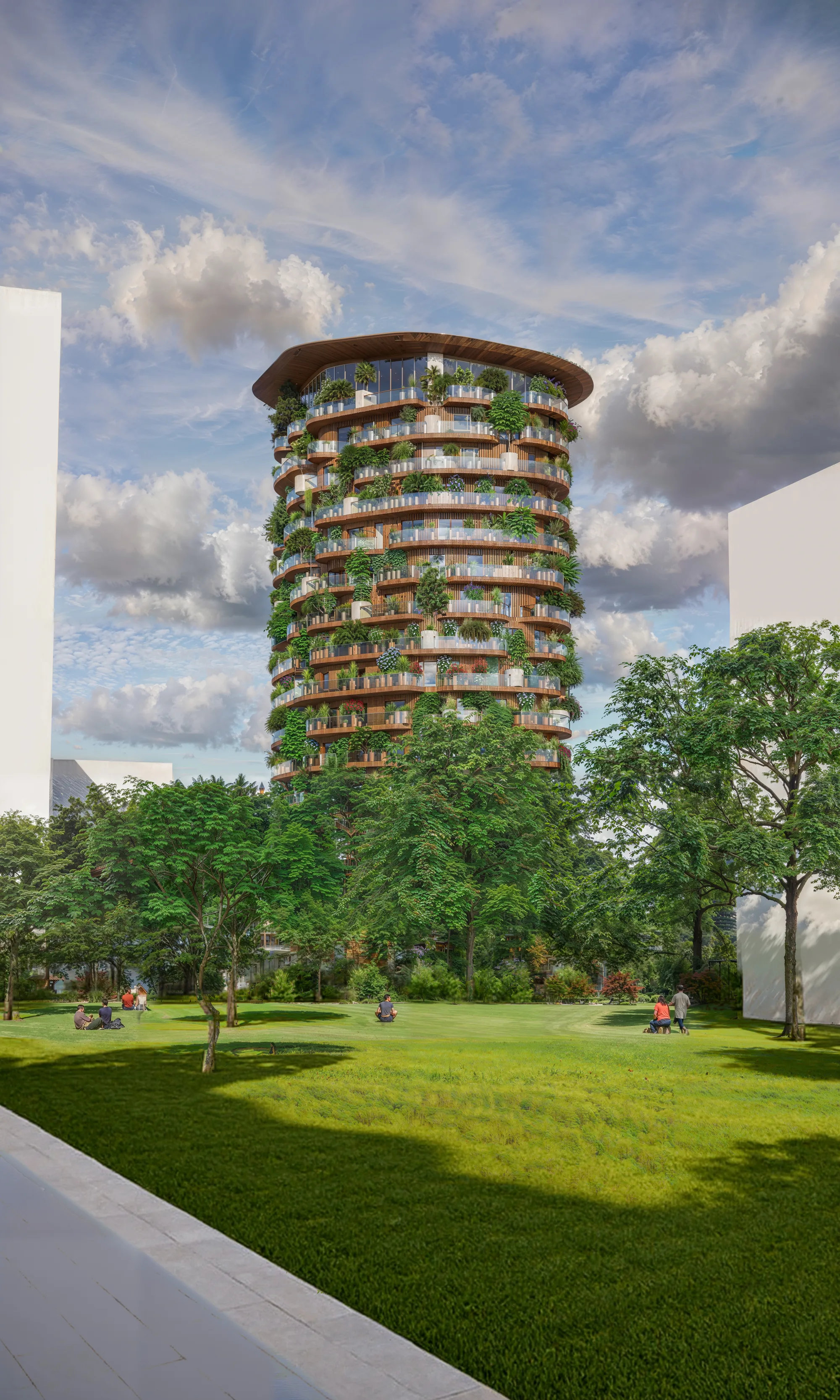
Tour d'Asnières
The rigour of wood tested from the balsa model, a material that forgives no approximation.
See the project ›OXO in figures
Frequently asked questions
What is timber construction?
Timber construction uses wood as the load-bearing structure of the building, alone or in a hybrid system (wood-concrete, wood-steel). It reduces weight and carbon footprint, speeds up the site and brings a renewable resource to the heart of the building. At OXO, it answers first to the context of the site.
Does wood resist fire?
The question is legitimate, and the answer rests on a paradox: wood burns, yet it resists. A glued-laminated or solid timber beam consumes slowly at the surface, forming a charring layer of roughly 0.7 mm per minute that insulates the core and protects it. The intact section keeps its load-bearing capacity in a predictable, calculable way: we size the member so that after the required fire-resistance rating (30, 60 or 90 minutes depending on use), the structure still stands. Steel, by contrast, does not burn but buckles: around 500°C it loses its strength and collapses without warning. Add to this compartmentation, smoke control and, where regulations require it, sprinklers. Our timber buildings, from the Lycée Jean Moulin in Revin to Ecotone in Arcueil, meet the same public-building and housing requirements as concrete. Fire safety is not a magical property of the material: it is the result of design, calculation and workmanship. That is precisely where our craft is decided.
Does building in timber cost more?
Let us be honest: yes, the structural package can show a higher initial cost on some projects. But that figure per square metre of shell tells you almost nothing about the real cost. Off-site prefabrication changes the equation: elements arrive ready to assemble, the site is shortened by several months, stays cleaner, with less disturbance for neighbours and fewer interim interest charges to pay. A lightweight structure eases foundations and transport. On the Jean Moulin school in Revin, as at Marcel Paul (Saint-Herblain), this logic made timber relevant, never imposed. The real debate is not the price per square metre of structure, it is the time horizon: over the building's life cycle, the balance often tips in favour of timber. We are not the architects of a material, but of good situations. Decarbonisation, indoor comfort, speed of delivery: these values are part of the real cost of a building. Timber when the context calls for it, after ten years of research, never by dogma.
How does a timber building age, and what maintenance does it require?
Timber worries people because they believe it fragile. The facts say otherwise: medieval timber-framed churches and centuries-old farmhouses have stood for six or eight hundred years. Their secret is no miracle product, it is a principle: protected timber. A generous roof overhang, a base that lifts the wood off the ground, an air gap that ventilates the cladding, and careful treatment of the singular points (bearings, junctions, penetrations). A structure conceived this way asks for little upkeep: a periodic inspection, occasionally a local repair. The greying of cladding, so often feared, is purely aesthetic: it is the patina of time, not a pathology. Timber turns grey, it does not grow weaker. We choose each species and each finish according to the real exposure of the facade, from Douglas fir to larch, from charred to pre-greyed wood. At OXO, from the Jean Moulin school in Revin to Ecotone Arcueil, more than ten years of research have taught us this: durability is not bought, it is drawn. It is decided in the detail, in the right line.
Does timber withstand moisture and water?
Let us be frank: water is not timber's enemy, stagnation is. Wood that is regularly wetted by rain then dried by the air does not suffer: this is the case for every exposed cladding. What harms timber is moisture that stays trapped, unable to escape. The first barrier is therefore not a product, it is the drawing: steering the water, providing air gaps, avoiding water traps, caring for every junction. We then reason in use classes, from 1 to 4, matching species and treatment to the real exposure of each wall. Structural timber reaches the site dried, at a controlled and monitored moisture content, the condition of its stability. Occasional wetting is harmless, prolonged stagnation cannot be undone. This is exactly where our demand plays out: the right detail, drawn before it is built. Timber does not fear the rain when the architecture, for its part, has planned where the water will go.
Does wood offer good comfort for occupants (acoustic, thermal, air quality)?
Comfort is not declared, it is measured and felt. Wood has low intrinsic inertia, but combined with screeds and good insulation it provides a thermal phase shift that delays the entry of summer heat by several hours. Above all, its low conductivity makes it warm to the touch, without the cold-wall sensation of concrete, and it regulates humidity by absorbing then releasing moisture from the air. Acoustics, often cited as the weak point, is mastered through design: walls and floors built as mass-spring-mass, heavy floating screeds, resilient strips that cut airborne transmission and impact noise. As for indoor air quality, untreated or finely finished wood, combined with controlled ventilation, limits volatile compounds. At the Lycée Jean Moulin as at Marcel Paul, this comfort in use, thermal, acoustic, sensory, is what remains once the construction site is forgotten. That is what we seek: not a fashionable material, but the right situation for those who inhabit the place.
Is wood really low carbon?
Yes, but not by magic. As it grows, a tree captures CO2 through photosynthesis and stores it as biogenic carbon. Used in a structure, that wood keeps this carbon sequestered for the whole life of the building, decades during which it stays out of the atmosphere. Add to this a low embodied energy: turning a trunk into a beam takes far less energy than producing cement or steel, two materials whose manufacture emits enormous amounts of CO2. So much for the promise.
Honesty calls for nuance. The real balance depends on the origin (a sustainably managed forest, located nearby), on transport, on how the wood is used, and above all on end of life: wood that is burned or buried releases its carbon, wood that is reused prolongs its storage. Only a full life cycle analysis, the kind RE2020 requires, tells the truth. This is our lens at OXO: we think in terms of global carbon cost, from the ground to deconstruction. At the Jean Moulin high school in Revin, the timber structure was not an argument, it was the result of that calculation. Wood is virtuous when it is well conceived, not because it is wood.
Do we have to build everything in wood to decarbonize?
No, and that is the heart of our position. At OXO, we are not the architects of a material, but of good situations. Wood is a major lever for decarbonization, not a single answer. Wanting to build everything in wood would be a dogma, and a dogma closes its eyes to context.
To decarbonize is to put the right material in the right place. A mixed timber-concrete structure combines the lightness and carbon storage of the first with the thermal mass and strength of the second, each where it serves best. Low-carbon concrete, the reuse of existing materials, and material sobriety (simply using less matter) count as much as the species chosen. And the most ecological gesture is sometimes to not build at all: to renovate what exists rather than demolish, because the least emitting building is the one we never raise. This logic guides our projects, from the decarbonization of Boulogne Seine Gourmande to the Ecotone in Arcueil. Wood takes its rightful place there, generous but measured. For us, loving wood also means knowing when to prefer something else.
Doesn't building in wood contribute to deforestation?
The question is fair, and we take it seriously. But we must separate two realities that the word wood tends to blur. Deforestation destroys an ecosystem: a tropical forest is cleared for soy or pasture, and nothing grows back. Sustainable forestry is the opposite: a managed forest, harvested through selective cutting, that regenerates and, in Europe, expands every year. Responsible construction timber comes from these forests, traced by the PEFC and FSC labels, which certify the chain from the plot onward. We favour local sourcing and short supply chains: wood that has crossed the planet loses its ecological meaning. A point often overlooked: a managed forest, where mature trees are harvested and replaced by young shoots hungry for carbon, captures more than a forest left to reach maturity and equilibrium. Yet let us stay clear eyed: virtuous wood presupposes virtuous management, it is never automatic, and vigilance over origin remains our duty. In the end, building in responsible wood gives economic value to the living forest. In a world that covets it, this offers the forest a tangible reason to exist and to be preserved.
Does OXO always build in wood?
No, never on principle, and that is a point of honour. We love wood, deeply, after more than ten years of research on this material. But we are not the architects of a material: we are the architects of good situations. Wood asserts itself when the landscape and the age call for it. On a forest site it becomes structurally and emotionally self evident: the Jean Moulin high school in Revin, set in the Meuse valley, Ecotone in Arcueil, the A10 tower in Tours. Elsewhere, it is the place that dictates the right matter: local stone quarried nearby, raw earth from the site, low carbon concrete when the span demands it, the reuse of materials already present. Often these matters converse within a single project, wood as structure, another as base or as skin. To impose wood everywhere would be a dogma, and dogma is the enemy of rightful architecture. Our commitment is not to a species, but to coherence: the right material, in the right place, for the right reason. This is how a building is born that truly belongs to its site, and that stays just over time.
Is wood suitable for tall, large-scale buildings?
Yes. As early as 2016, the Lycée Jean Moulin let us build at large scale. Today, projects such as Kaskade in Lille or the Tour A10 in Tours carry the research towards verticality, in timber or hybrid structures, lighter and decarbonated.
What are OXO's landmark timber projects?
The Lycée Jean Moulin in Revin (delivered, in the Ardennes forest), Marcel Paul in Saint-Herblain (a mostly timber structure), Pixel Tours, Boulogne Seine Gourmande, Kaskade in Lille, Ecotone Arcueil and the Tour A10 in Tours. A trajectory of over ten years, built or in study.
A timber project? Let us talk.
We design every building from its context and its resources.
Contact us