
Boulogne Seine Gourmande
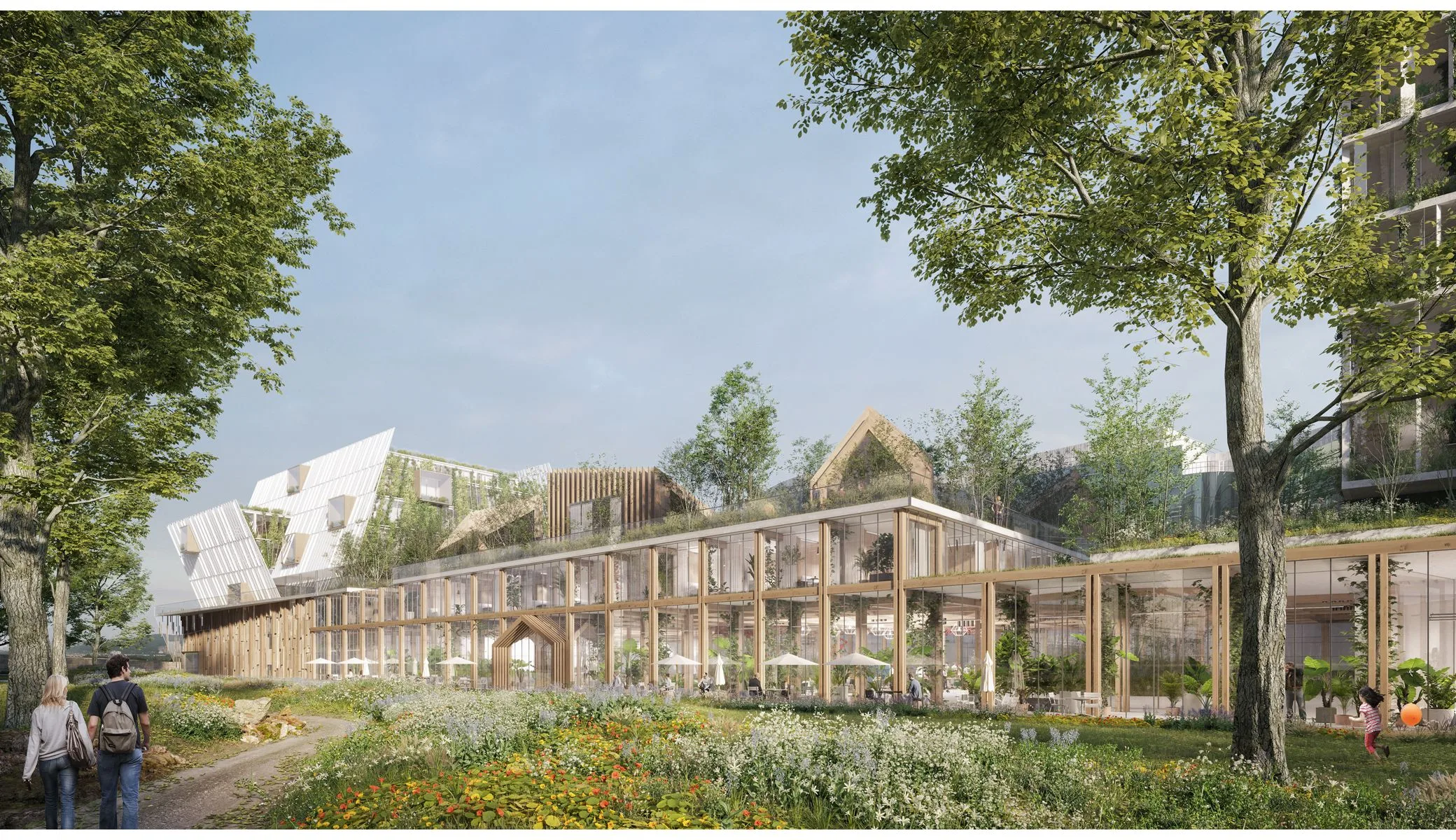
Our project is understood as the composition of a landscape, a whimsical, harmonious and surprising territory. A place where one lives, attractive within a metropolitan district, an ode to French gastronomy. We had to defend a renewed approach, contextual yet innovative, which is why we chose to safeguard the memory of the place and inscribe ourselves in the continuation of preexisting spaces, whose interiors and exteriors of the blocks are linked to the city.
We conceived **Boulogne Seine Gourmande** as an architectural and urban manifesto, a sensitive response to the transformation of a metropolitan fragment in search of identity. In Boulogne-Billancourt, a city marked by its industrial heritage and perpetual mutation, our 12,835 m² intervention interweaves hotel, housing and dining spaces in a gesture that refuses functional separation in favor of **programmatic hybridization**. The site called upon us to go beyond the simple addition of programs to invent a living place, where French gastronomy becomes the narrative thread of a renewed urban experience.
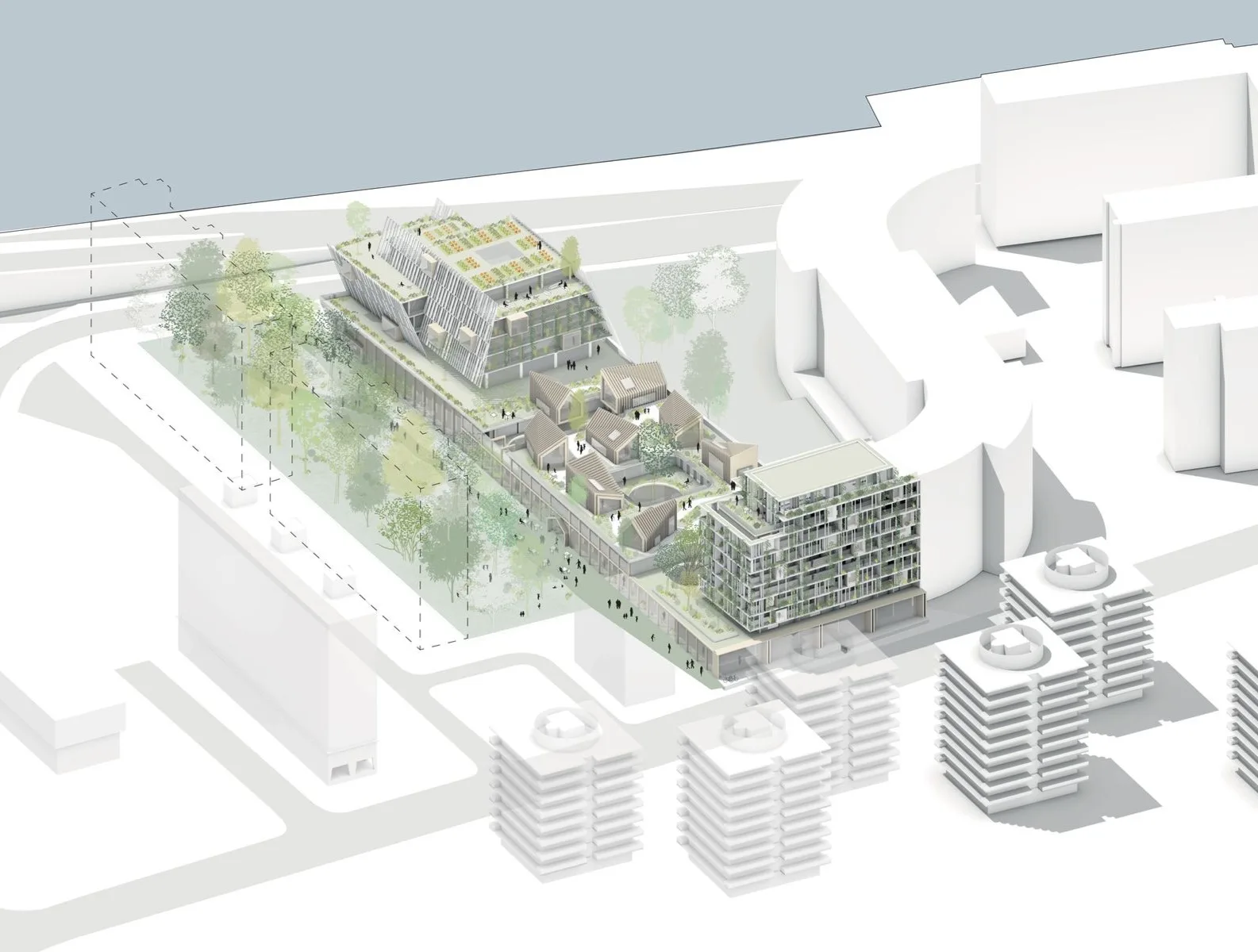
The project is understood first as the **composition of a landscape**, a whimsical and harmonious territory where urbanity rediscovers a human scale. We sought to preserve the memory of the place, not through nostalgic mimicry, but through a conscious inscription in the continuity of preexisting spaces. The blocks inherited from the surrounding urban fabric dialogue with our intervention, their interiors and exteriors extend, respond to each other, create unexpected porosities. This **active contextuality** allowed us to propose an architecture that belongs as much to the city as to its inhabitants, avoiding the pitfall of the solitary object, closed in on itself.
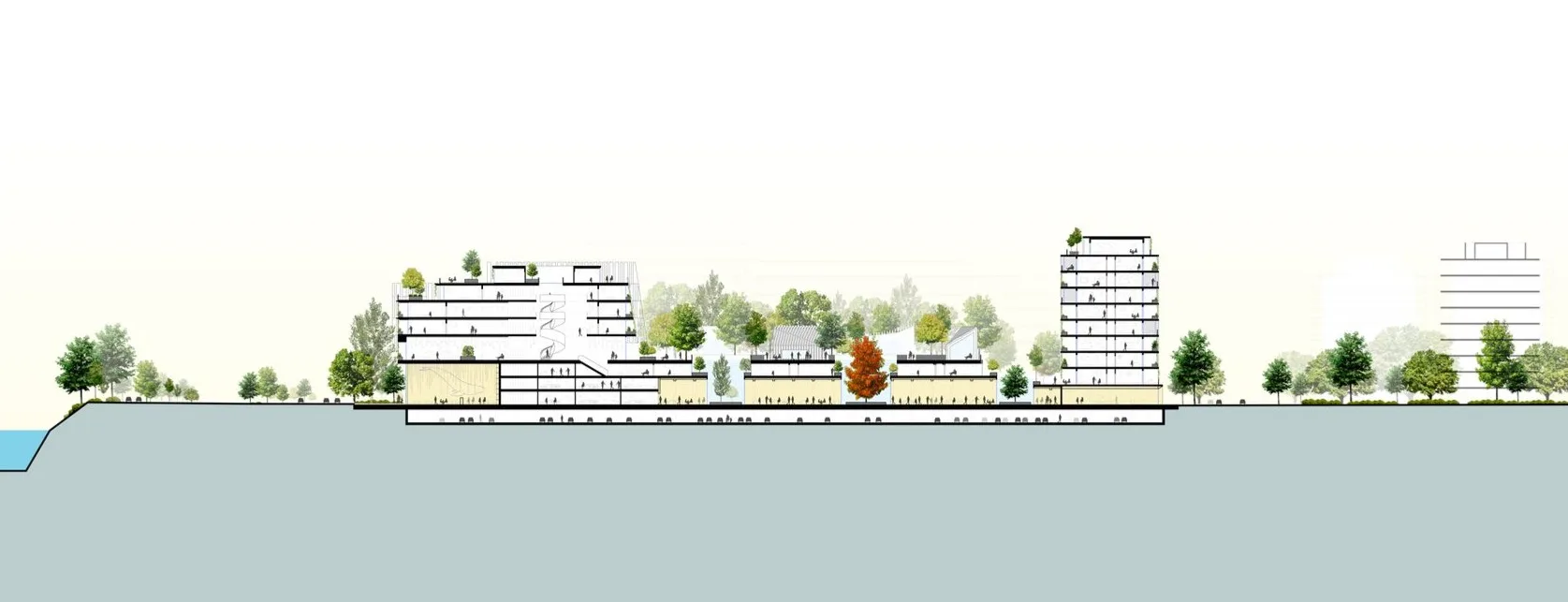
Our approach rests on an interweaving of landscapes and surfaces. The living place thus created transforms ordinary uses and authorizes a dialogue between nature and horizon that, if perhaps not without precedent, acquires here a particular intensity. We worked on the **superposition of landscape strata**, playing with planes, horizons, multiple perspectives. The local biotope becomes a conceptual resource: augmenting environments, enriching biodiversity, are not cosmetic gestures but structuring principles. Each level of the project, each terrace, each setback, becomes an opportunity to introduce living elements, to multiply ecosystems, to create ecological niches that transform the very perception of architecture.
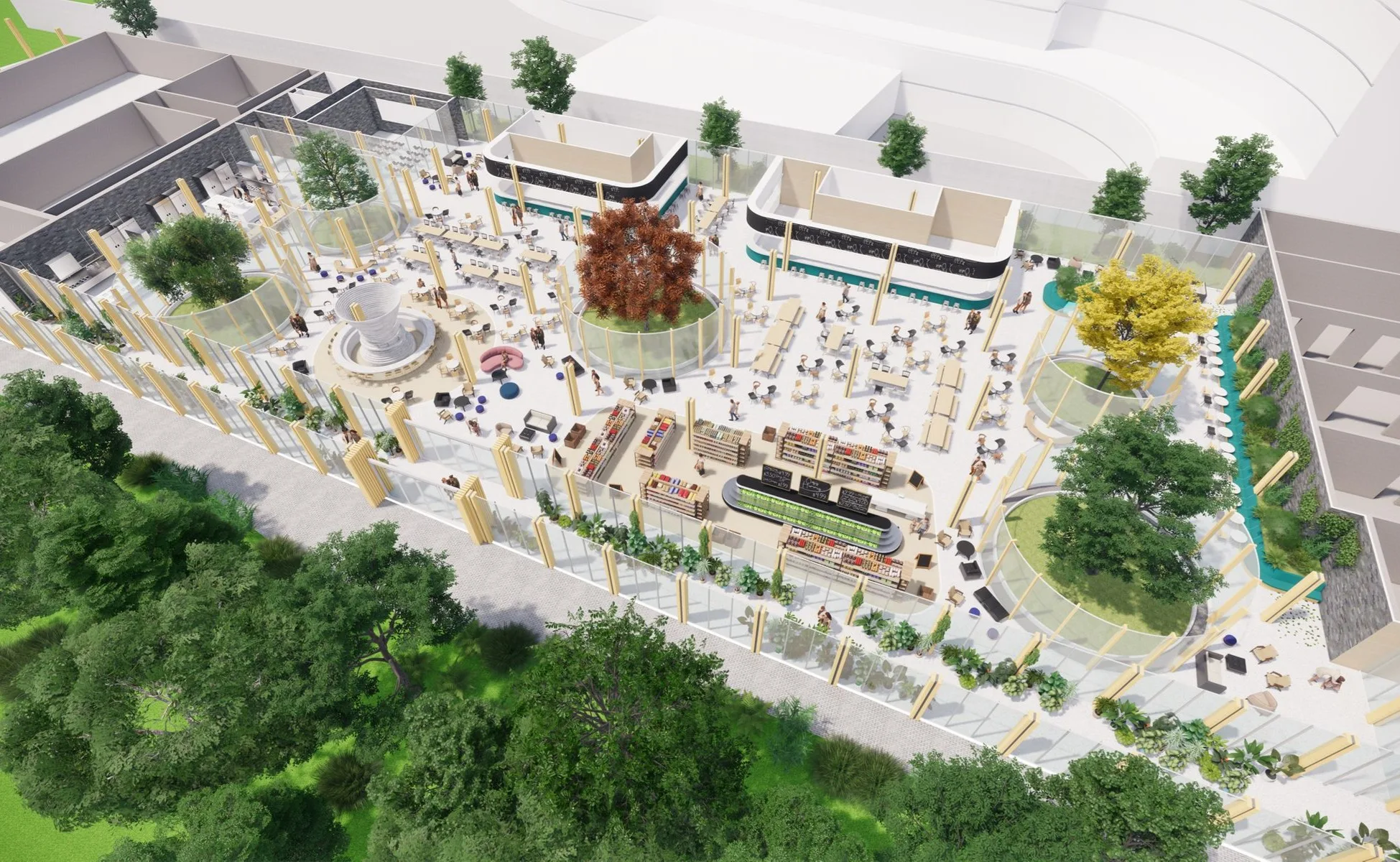
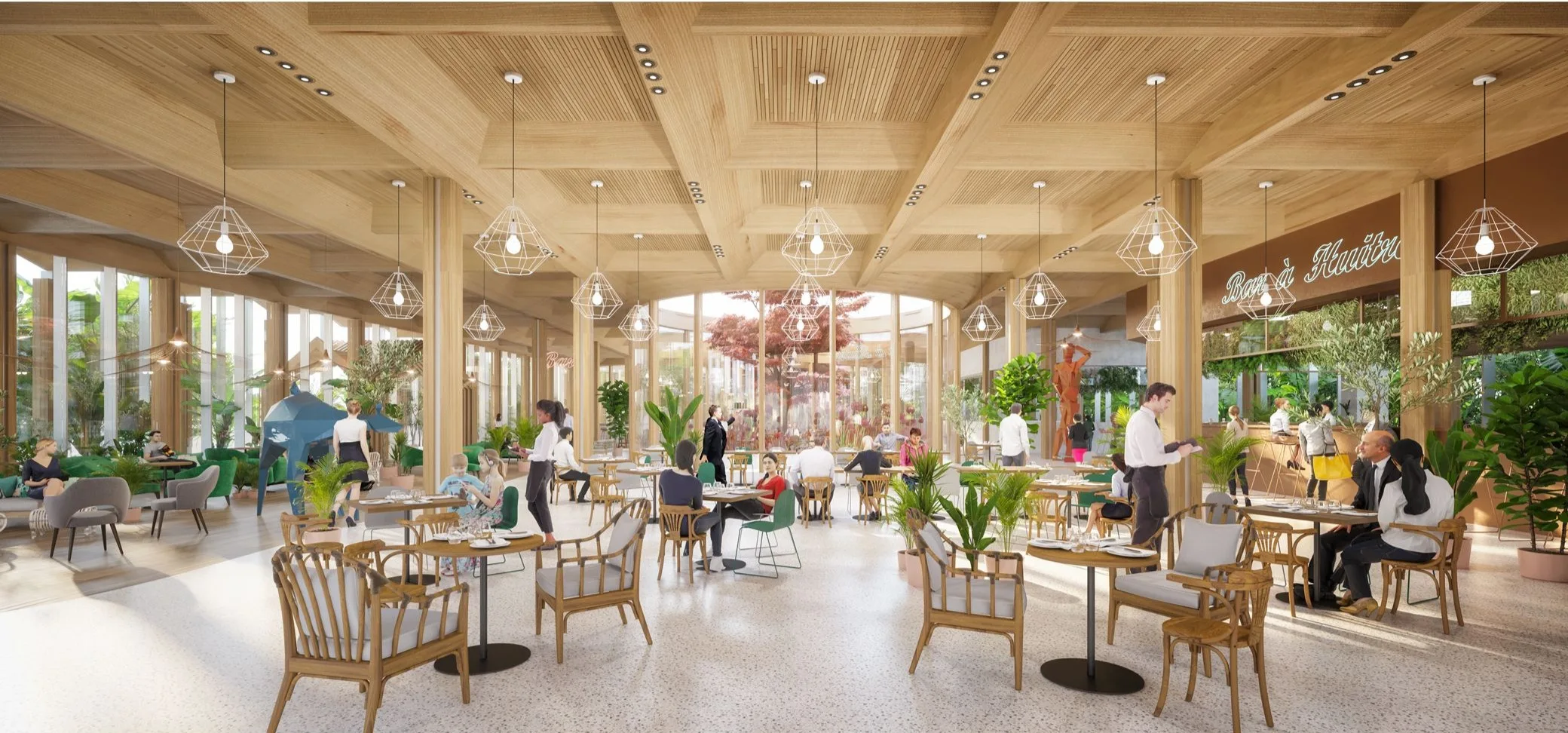
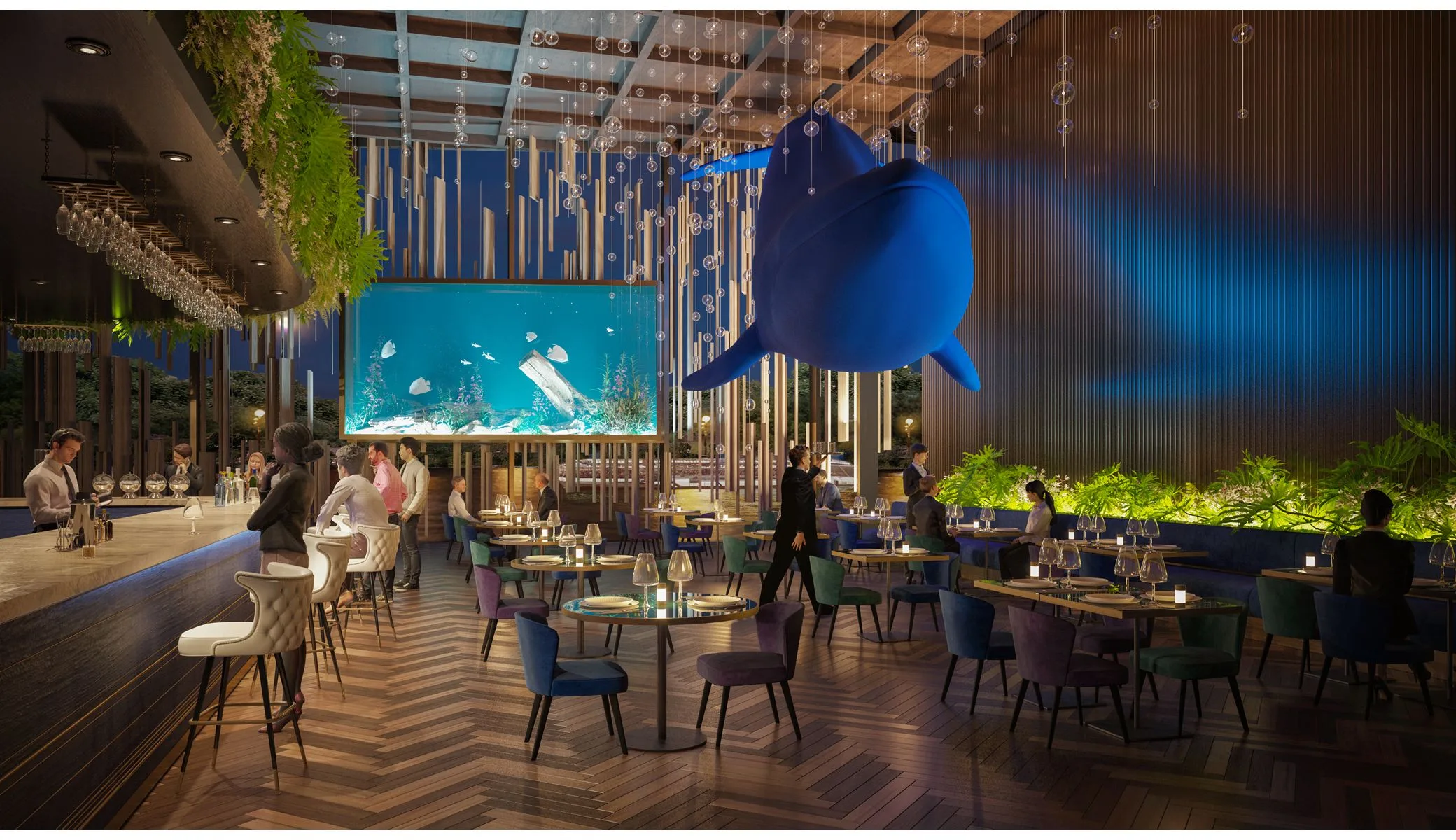
In collaboration with **Pascal Haudressy**, we explored the artistic and sensory dimension of the project. His artist's perspective nourished our reflection on materiality and spatial experience, conferring upon the place a poetic depth that exceeds the strict programmatic response. The dining spaces, conceived as a *food court* but refusing the banality of the term, become urban scenes where gastronomy is offered to be seen, smelled, shared. We imagined spatial sequences where the preparation of dishes, the conviviality of meals, the intimacy of hotel rooms and the tranquility of housing respond to each other without ever merging.
The architecture we propose rests on an **assumed constructive frugality**, a search for sobriety that is not austerity but rightness. Wood structures our material approach, not as a fashion effect but as a coherent response to decarbonization challenges. We conceived a resilient architecture, capable of adapting to transformations of use, to climatic evolutions, to urban mutations. This complete adaptability traverses all levels of the project, from the load-bearing structure to interior fittings, from bioclimatic devices to modular exterior spaces.
The question of **decarbonization** did not come to graft itself onto an already drawn project, it constitutes its foundation. We questioned each constructive choice, each technical detail, in light of its environmental impact. The massive use of wood, the rationalization of structures, the limitation of excavations, the reversibility of fittings, all these principles converge toward an architecture sober in carbon and generous in spatial qualities. The ecology we defend is not punitive, it opens on the contrary new formal possibilities, new relationships between interior and exterior, between built and planted.
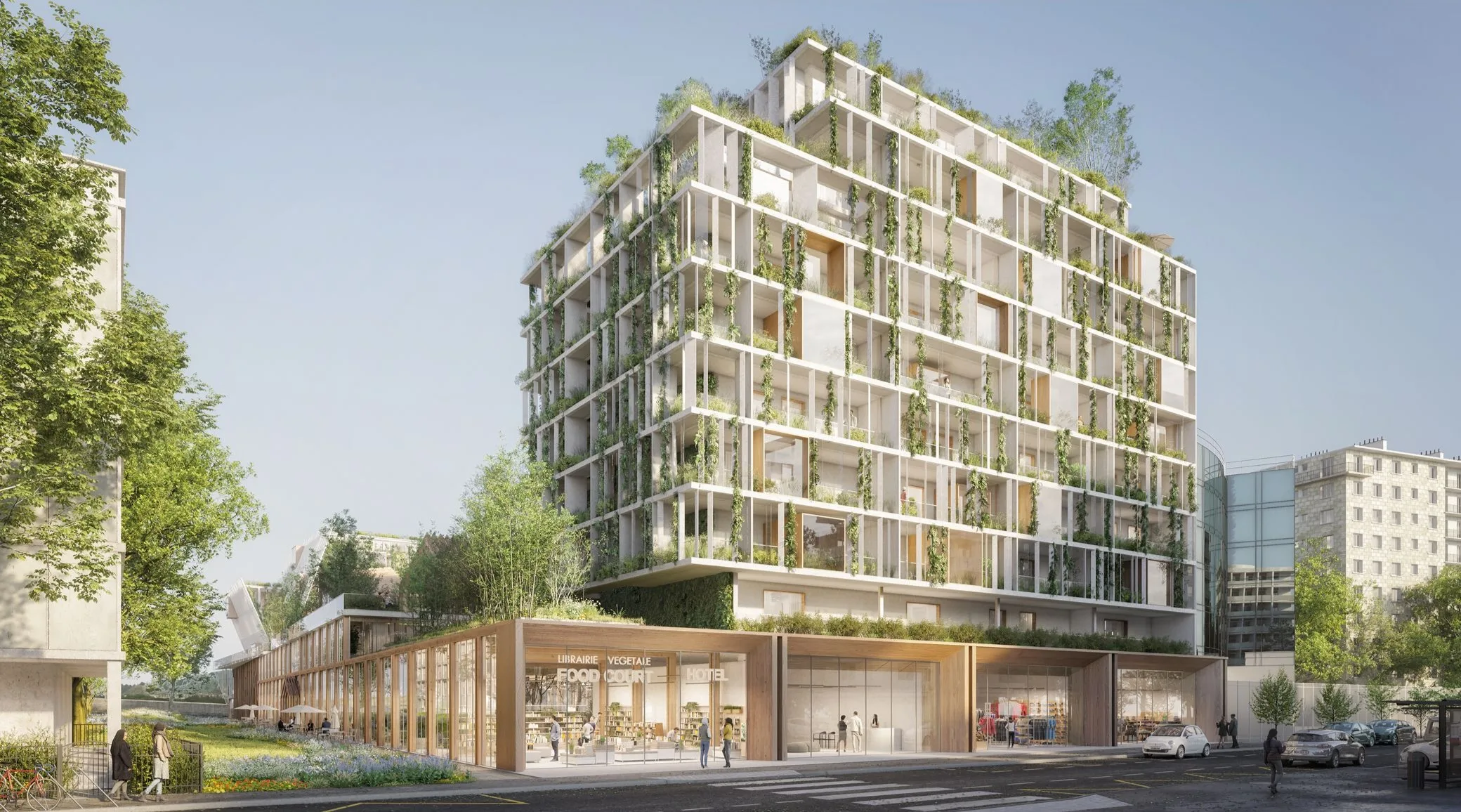
We propose new ways of inhabiting, living and dreaming in Boulogne. This ambition, which might seem disproportionate, finds its concrete translation in the attention paid to contemporary uses. The housing units are not standardized cells but generous spaces, extended by planted terraces, open to the sky and the city. The hotel is not a sleeping machine but a place of true hospitality, where one stays as much as one passes through. The restaurants and spaces of conviviality invent a new edible urbanity, where gastronomy becomes a vector of social connection, encounter, sharing.
The project echoes the **original balance of space**, an obviously mythical notion but conceptually fertile. We sought to reconnect with a lost form of harmony between city and nature, between mineral and vegetal, between function and pleasure. This quest for balance translates into the volumetric composition, into the play of solids and voids, into the gradation of densities, into the alternation of open and closed sequences. Each architectural gesture responds to this search for a **spatial rightness** that exceeds mere programmatic efficiency.
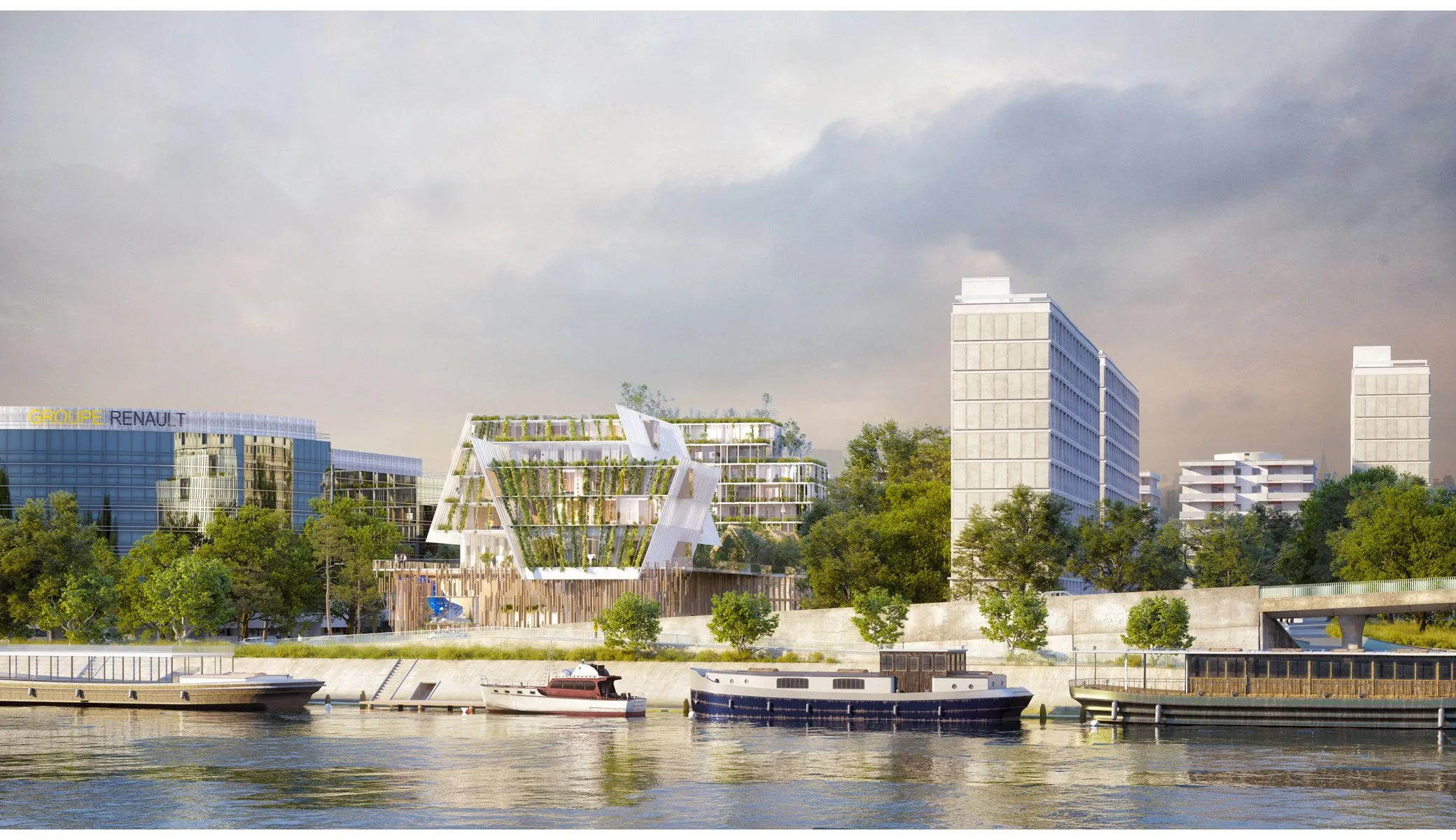
The project's irruption into the existing fabric seeks to be gentle, almost obvious. We refused the violence of the spectacular gesture in favor of a respectful yet affirmed insertion. The volumes dialogue with neighboring scales, the materials respond to the surrounding palette without slavishly copying it. This attitude, which one could qualify as **architectural modesty**, renounces neither ambition nor innovation, it reorients them toward a form of collective intelligence, of shared harmony.
Boulogne Seine Gourmande remains a competition, an unrealized project, but it carries within it a vision we continue to defend. That of a metropolitan architecture capable of re-enchanting the everyday, of linking great qualitative demand to environmental concerns, of transforming gastronomy into an urban project. A place where living rhymes with cultivating, inhabiting with sharing, building with preserving.
The project is understood first as the **composition of a landscape**, a whimsical and harmonious territory where urbanity rediscovers a human scale. We sought to preserve the memory of the place, not through nostalgic mimicry, but through a conscious inscription in the continuity of preexisting spaces. The blocks inherited from the surrounding urban fabric dialogue with our intervention, their interiors and exteriors extend, respond to each other, create unexpected porosities. This **active contextuality** allowed us to propose an architecture that belongs as much to the city as to its inhabitants, avoiding the pitfall of the solitary object, closed in on itself.
Our approach rests on an interweaving of landscapes and surfaces. The living place thus created transforms ordinary uses and authorizes a dialogue between nature and horizon that, if perhaps not without precedent, acquires here a particular intensity. We worked on the **superposition of landscape strata**, playing with planes, horizons, multiple perspectives. The local biotope becomes a conceptual resource: augmenting environments, enriching biodiversity, are not cosmetic gestures but structuring principles. Each level of the project, each terrace, each setback, becomes an opportunity to introduce living elements, to multiply ecosystems, to create ecological niches that transform the very perception of architecture.
In collaboration with **Pascal Haudressy**, we explored the artistic and sensory dimension of the project. His artist's perspective nourished our reflection on materiality and spatial experience, conferring upon the place a poetic depth that exceeds the strict programmatic response. The dining spaces, conceived as a *food court* but refusing the banality of the term, become urban scenes where gastronomy is offered to be seen, smelled, shared. We imagined spatial sequences where the preparation of dishes, the conviviality of meals, the intimacy of hotel rooms and the tranquility of housing respond to each other without ever merging.
The architecture we propose rests on an **assumed constructive frugality**, a search for sobriety that is not austerity but rightness. Wood structures our material approach, not as a fashion effect but as a coherent response to decarbonization challenges. We conceived a resilient architecture, capable of adapting to transformations of use, to climatic evolutions, to urban mutations. This complete adaptability traverses all levels of the project, from the load-bearing structure to interior fittings, from bioclimatic devices to modular exterior spaces.
The question of **decarbonization** did not come to graft itself onto an already drawn project, it constitutes its foundation. We questioned each constructive choice, each technical detail, in light of its environmental impact. The massive use of wood, the rationalization of structures, the limitation of excavations, the reversibility of fittings, all these principles converge toward an architecture sober in carbon and generous in spatial qualities. The ecology we defend is not punitive, it opens on the contrary new formal possibilities, new relationships between interior and exterior, between built and planted.
We propose new ways of inhabiting, living and dreaming in Boulogne. This ambition, which might seem disproportionate, finds its concrete translation in the attention paid to contemporary uses. The housing units are not standardized cells but generous spaces, extended by planted terraces, open to the sky and the city. The hotel is not a sleeping machine but a place of true hospitality, where one stays as much as one passes through. The restaurants and spaces of conviviality invent a new edible urbanity, where gastronomy becomes a vector of social connection, encounter, sharing.
The project echoes the **original balance of space**, an obviously mythical notion but conceptually fertile. We sought to reconnect with a lost form of harmony between city and nature, between mineral and vegetal, between function and pleasure. This quest for balance translates into the volumetric composition, into the play of solids and voids, into the gradation of densities, into the alternation of open and closed sequences. Each architectural gesture responds to this search for a **spatial rightness** that exceeds mere programmatic efficiency.
The project's irruption into the existing fabric seeks to be gentle, almost obvious. We refused the violence of the spectacular gesture in favor of a respectful yet affirmed insertion. The volumes dialogue with neighboring scales, the materials respond to the surrounding palette without slavishly copying it. This attitude, which one could qualify as **architectural modesty**, renounces neither ambition nor innovation, it reorients them toward a form of collective intelligence, of shared harmony.
Boulogne Seine Gourmande remains a competition, an unrealized project, but it carries within it a vision we continue to defend. That of a metropolitan architecture capable of re-enchanting the everyday, of linking great qualitative demand to environmental concerns, of transforming gastronomy into an urban project. A place where living rhymes with cultivating, inhabiting with sharing, building with preserving.
- Lieu
- Boulogne-Billancourt, France
- Nature
- Programme mixte
- Surface
- 12 835 m2
- Concours
- 2019
- MOA
- Globalstone, Strat & Fi
- Co-architectes
- Pascal Haudressy (artiste)