Villa S
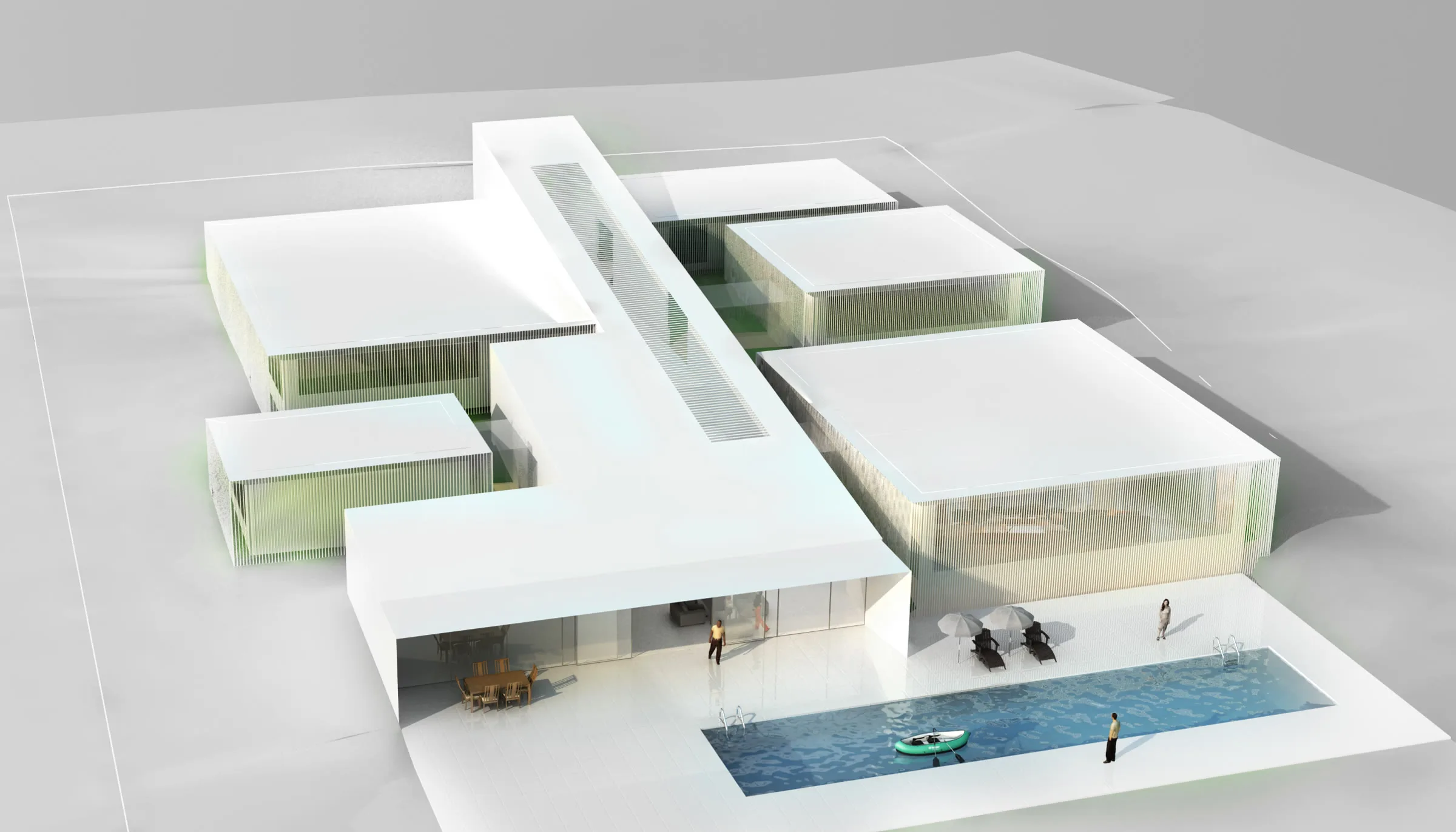
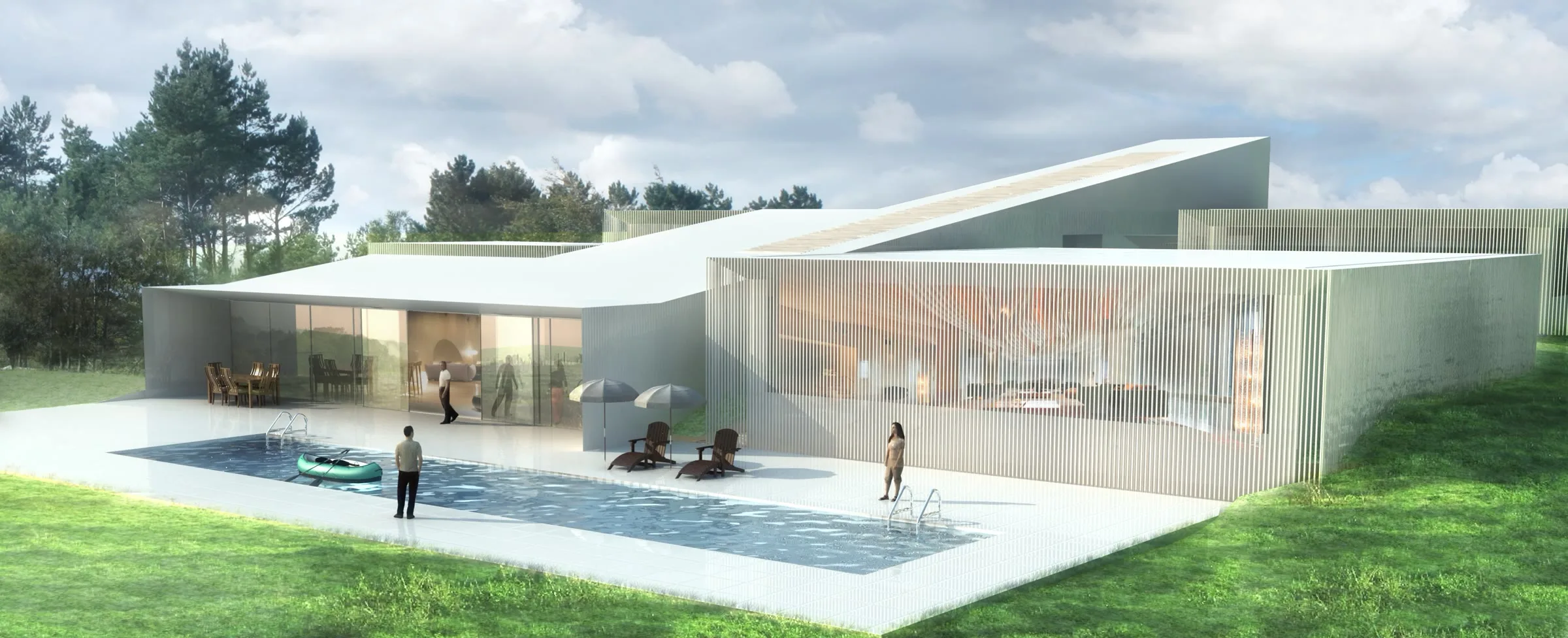
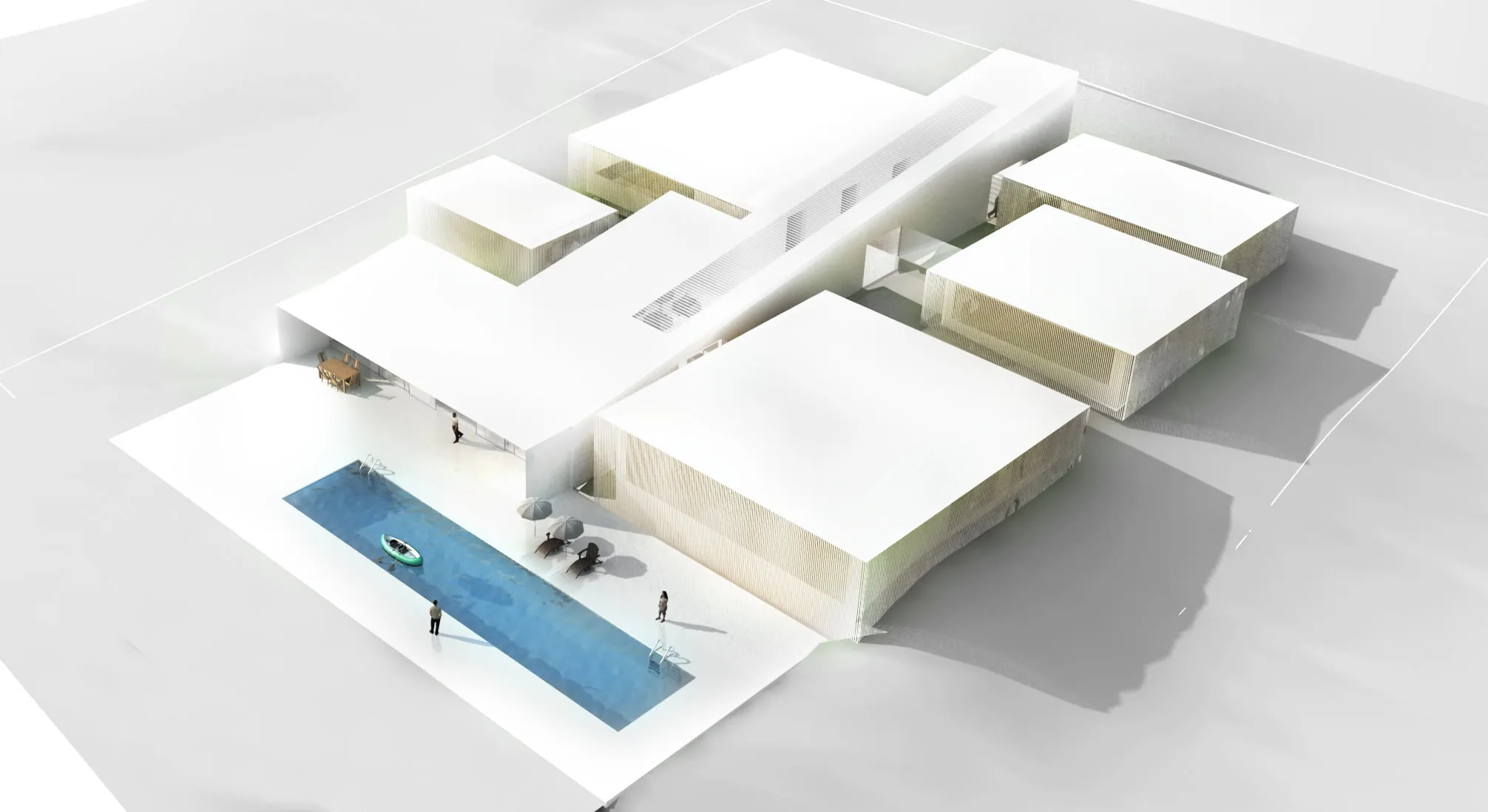
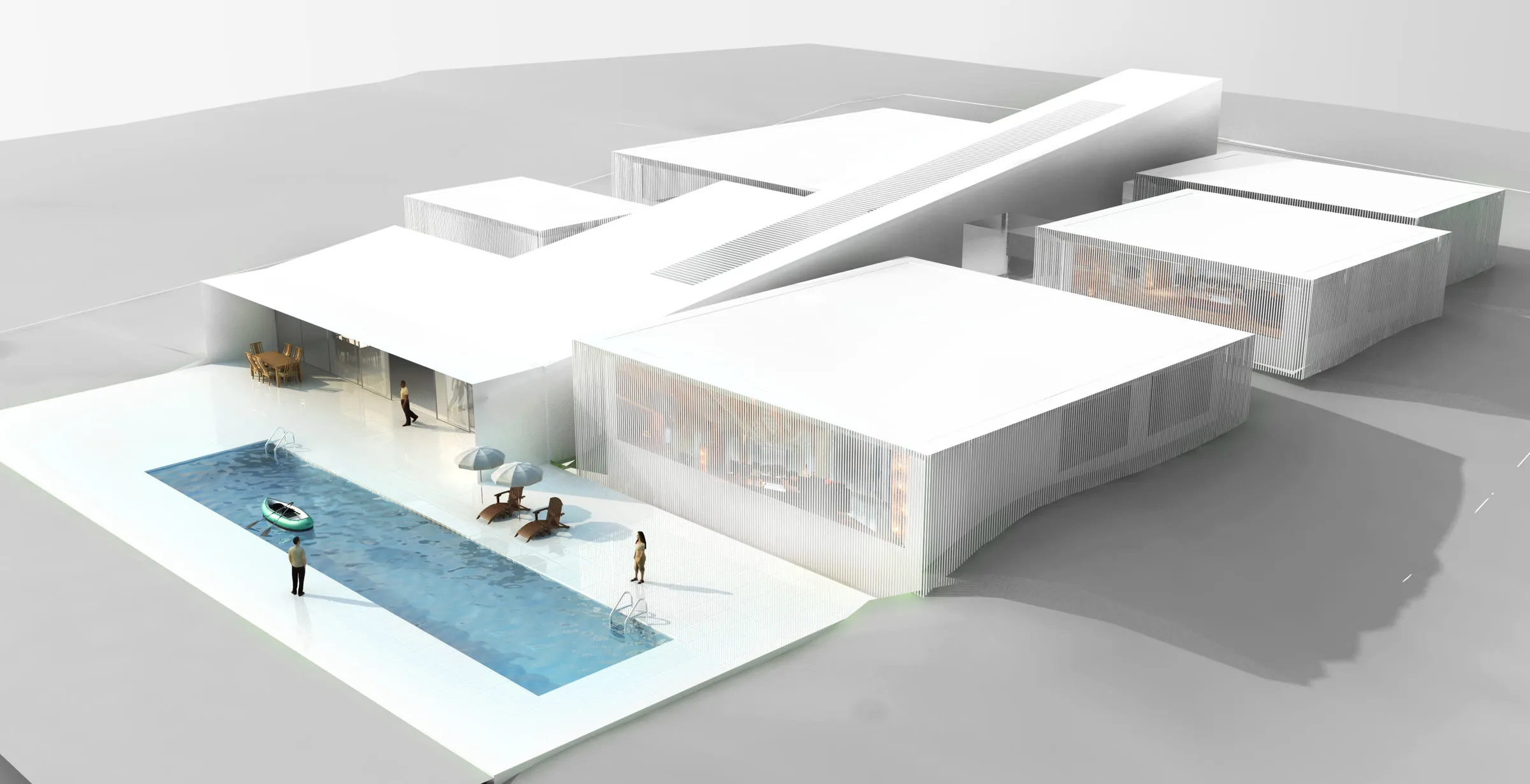
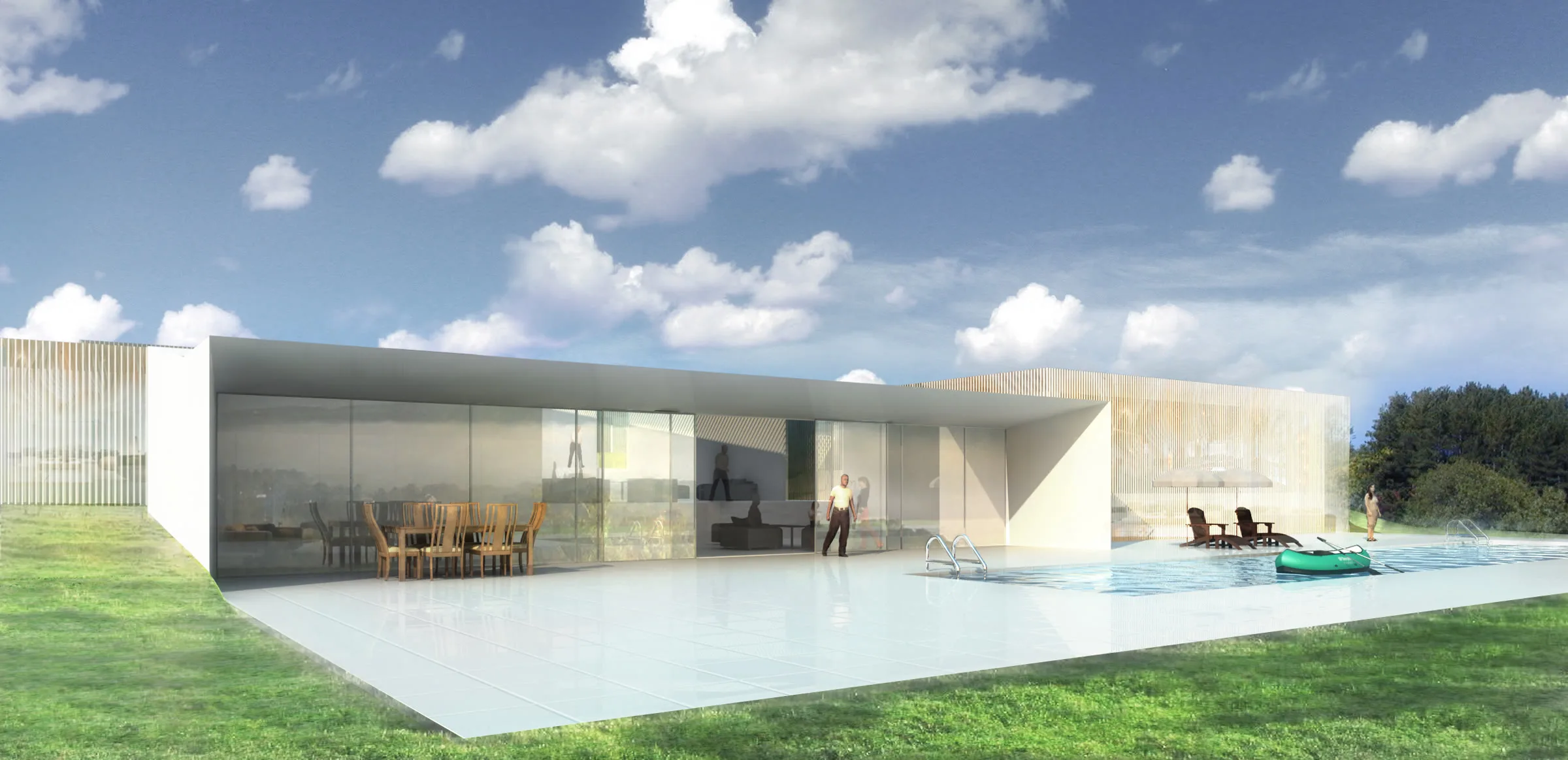
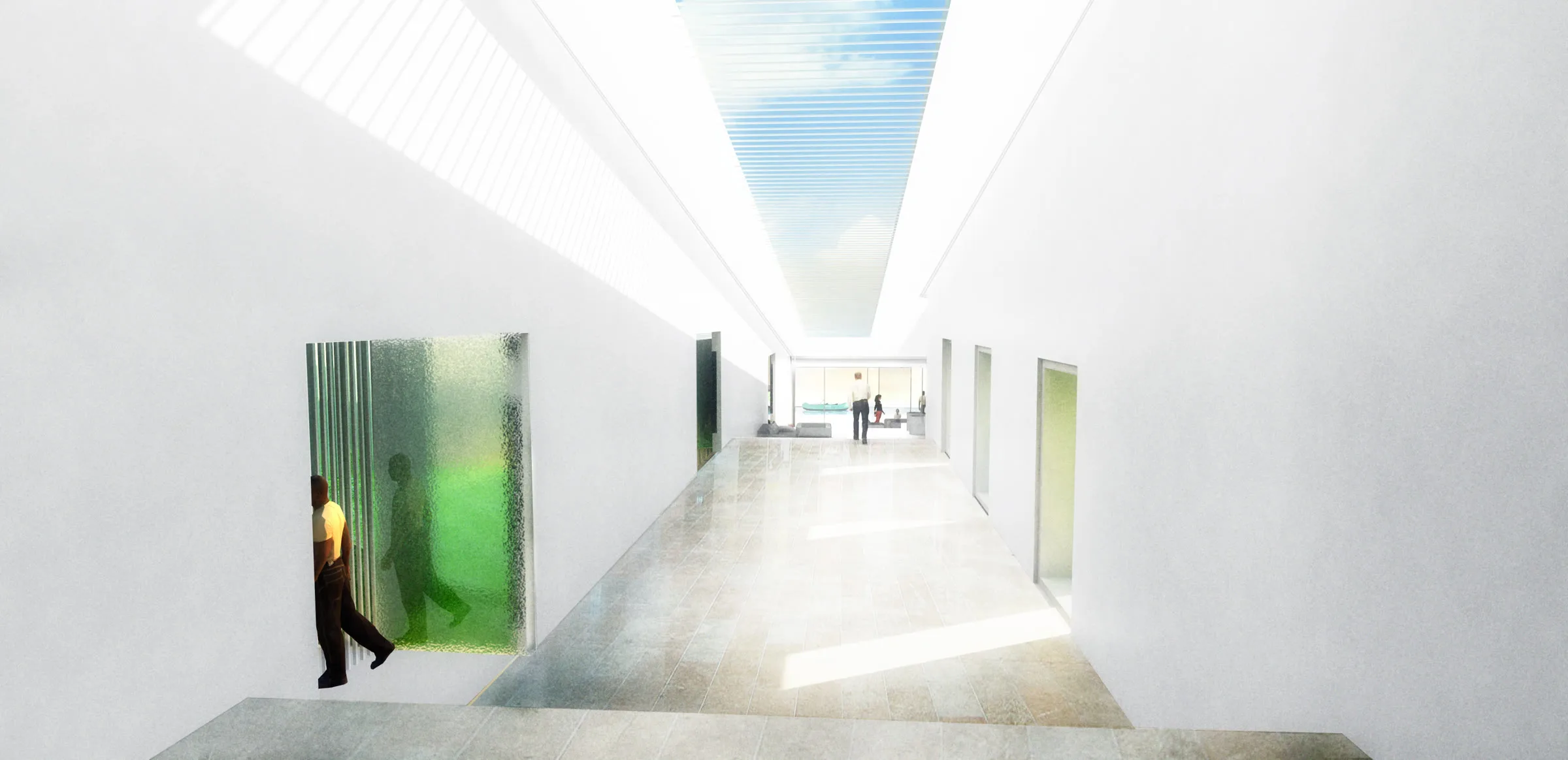
Villa S in Senegal, contextual architecture, detailed axonometric views and direct relationship to the garden.
In Senegal, we conceived Villa S as a meditation on dwelling in a tropical climate, an exercise in domestic architecture where form derives from precise analysis of context rather than from a predetermined gesture. The project originated from a private commission in 2015, in a territory where architecture must constantly negotiate between solar protection, natural ventilation and opening to the garden. We reject here any exotic or mimetic posture. What interests us is the construction of a spatial device capable of accommodating climatic variations, daily uses, moments of sociability as well as withdrawal.
The Senegalese site imposes its own rules. Grazing light, persistent heat, humidity varying with the seasons. We observed local typologies, those vernacular architectures that have resolved for generations the question of comfort without resorting to mechanical solutions. What emerges from this observation is the importance of **intermediate spaces**, those places neither inside nor outside that constitute the true matter of tropical dwelling. Villa S thus organizes itself around a series of **graduated spatial sequences**: from garden to covered terrace, from terrace to open living area, from living area to more intimate bedrooms. Each transition is a climatic threshold as much as an architectural one.
The organization revealed by our axonometric views is not arbitrary. We positioned the **collective living spaces** on the ground floor, in direct relationship with the garden. The living room, dining room, kitchen form a continuous platform, interrupted only by technical cores. This fluidity is not a concession to the modernist free plan, but a response to Senegalese lifestyles where the boundary between interior and exterior dissolves naturally. Large disappearing sliding bays allow the facade to open entirely onto the garden, transforming the villa into a covered pavilion during temperate days or cool evenings.
The **sleeping areas** develop in retreat, in a more protected wing. This volumetric offset creates a lateral courtyard, an intimate garden that offers the bedrooms a preferential orientation, sheltered from prevailing winds and afternoon sun. Each bedroom has its own exterior extension, private terrace or balcony, providing controlled visual escapes toward the landscape. We always seek this articulation between communal life and intimacy, between spatial generosity and possibility of withdrawal. Domestic architecture is also the art of enabling the cohabitation of solitudes.
The **materiality** of the project participates in this economy of means. Raw concrete left exposed, white coatings to reflect light, local wood for sun breakers and joinery. We favored materials available on site, implemented according to techniques mastered by local artisans. This pragmatism does not exclude rigor: each constructive detail is carefully drawn, each wall thickness considered for its thermal inertia, each roof overhang calculated to effectively protect facades from solar radiation. The **wooden sun breakers** become the project's major plastic element, their rhythmic repetition composing the facades while ensuring protection of interior spaces.
The **environmental approach** does not derive here from label or certification, but from constant attention to fundamental bioclimatic principles. Systematic cross ventilation, room orientation according to their use and solar gains, use of concrete's thermal inertia to regulate temperature variations, widely overhanging roof to shade facades. We conceived a **low-tech architecture**, which seeks its comfort in the intelligence of the spatial device rather than in the multiplication of technical equipment. Wet rooms are grouped to limit networks, rainwater collected for garden irrigation, plant species chosen for their drought resistance.
The **garden** is not a décor but a programmed extension of the villa. We designed it as a succession of vegetative layers, from ground covers to tall trees, which progressively filter views from public space and temper the immediate microclimate. Local species, adapted to the Senegalese climate, require little maintenance and structure the exterior space with as much precision as the built walls. This garden is conceived as an **active climatic device**, capable of cooling air through evapotranspiration, shading facades, filtering dust-laden winds.
Delivered in 2015, Villa S belongs to this lineage of domestic projects where we seek to define a contemporary architecture that renounces neither modernity nor territorial anchoring. We do not claim to invent yet another critical regionalism, but simply to propose an attentive architecture, **contextual without being nostalgic**, sober without being austere. Daily use has validated our spatial hypotheses: the inhabitants have appropriated these intermediate spaces, these covered terraces that become the true heart of the house according to hours and seasons. Architecture then becomes what it should always be, a discreet and generous framework for the life that unfolds within it.
The Senegalese site imposes its own rules. Grazing light, persistent heat, humidity varying with the seasons. We observed local typologies, those vernacular architectures that have resolved for generations the question of comfort without resorting to mechanical solutions. What emerges from this observation is the importance of **intermediate spaces**, those places neither inside nor outside that constitute the true matter of tropical dwelling. Villa S thus organizes itself around a series of **graduated spatial sequences**: from garden to covered terrace, from terrace to open living area, from living area to more intimate bedrooms. Each transition is a climatic threshold as much as an architectural one.
The organization revealed by our axonometric views is not arbitrary. We positioned the **collective living spaces** on the ground floor, in direct relationship with the garden. The living room, dining room, kitchen form a continuous platform, interrupted only by technical cores. This fluidity is not a concession to the modernist free plan, but a response to Senegalese lifestyles where the boundary between interior and exterior dissolves naturally. Large disappearing sliding bays allow the facade to open entirely onto the garden, transforming the villa into a covered pavilion during temperate days or cool evenings.
The **sleeping areas** develop in retreat, in a more protected wing. This volumetric offset creates a lateral courtyard, an intimate garden that offers the bedrooms a preferential orientation, sheltered from prevailing winds and afternoon sun. Each bedroom has its own exterior extension, private terrace or balcony, providing controlled visual escapes toward the landscape. We always seek this articulation between communal life and intimacy, between spatial generosity and possibility of withdrawal. Domestic architecture is also the art of enabling the cohabitation of solitudes.
The **materiality** of the project participates in this economy of means. Raw concrete left exposed, white coatings to reflect light, local wood for sun breakers and joinery. We favored materials available on site, implemented according to techniques mastered by local artisans. This pragmatism does not exclude rigor: each constructive detail is carefully drawn, each wall thickness considered for its thermal inertia, each roof overhang calculated to effectively protect facades from solar radiation. The **wooden sun breakers** become the project's major plastic element, their rhythmic repetition composing the facades while ensuring protection of interior spaces.
The **environmental approach** does not derive here from label or certification, but from constant attention to fundamental bioclimatic principles. Systematic cross ventilation, room orientation according to their use and solar gains, use of concrete's thermal inertia to regulate temperature variations, widely overhanging roof to shade facades. We conceived a **low-tech architecture**, which seeks its comfort in the intelligence of the spatial device rather than in the multiplication of technical equipment. Wet rooms are grouped to limit networks, rainwater collected for garden irrigation, plant species chosen for their drought resistance.
The **garden** is not a décor but a programmed extension of the villa. We designed it as a succession of vegetative layers, from ground covers to tall trees, which progressively filter views from public space and temper the immediate microclimate. Local species, adapted to the Senegalese climate, require little maintenance and structure the exterior space with as much precision as the built walls. This garden is conceived as an **active climatic device**, capable of cooling air through evapotranspiration, shading facades, filtering dust-laden winds.
Delivered in 2015, Villa S belongs to this lineage of domestic projects where we seek to define a contemporary architecture that renounces neither modernity nor territorial anchoring. We do not claim to invent yet another critical regionalism, but simply to propose an attentive architecture, **contextual without being nostalgic**, sober without being austere. Daily use has validated our spatial hypotheses: the inhabitants have appropriated these intermediate spaces, these covered terraces that become the true heart of the house according to hours and seasons. Architecture then becomes what it should always be, a discreet and generous framework for the life that unfolds within it.
- Lieu
- Sénégal
- Nature
- Villa
- Surface
- Confidentiel
- Budget
- Confidentiel
- Livraison
- 2015
- MOA
- Privé