Villa C
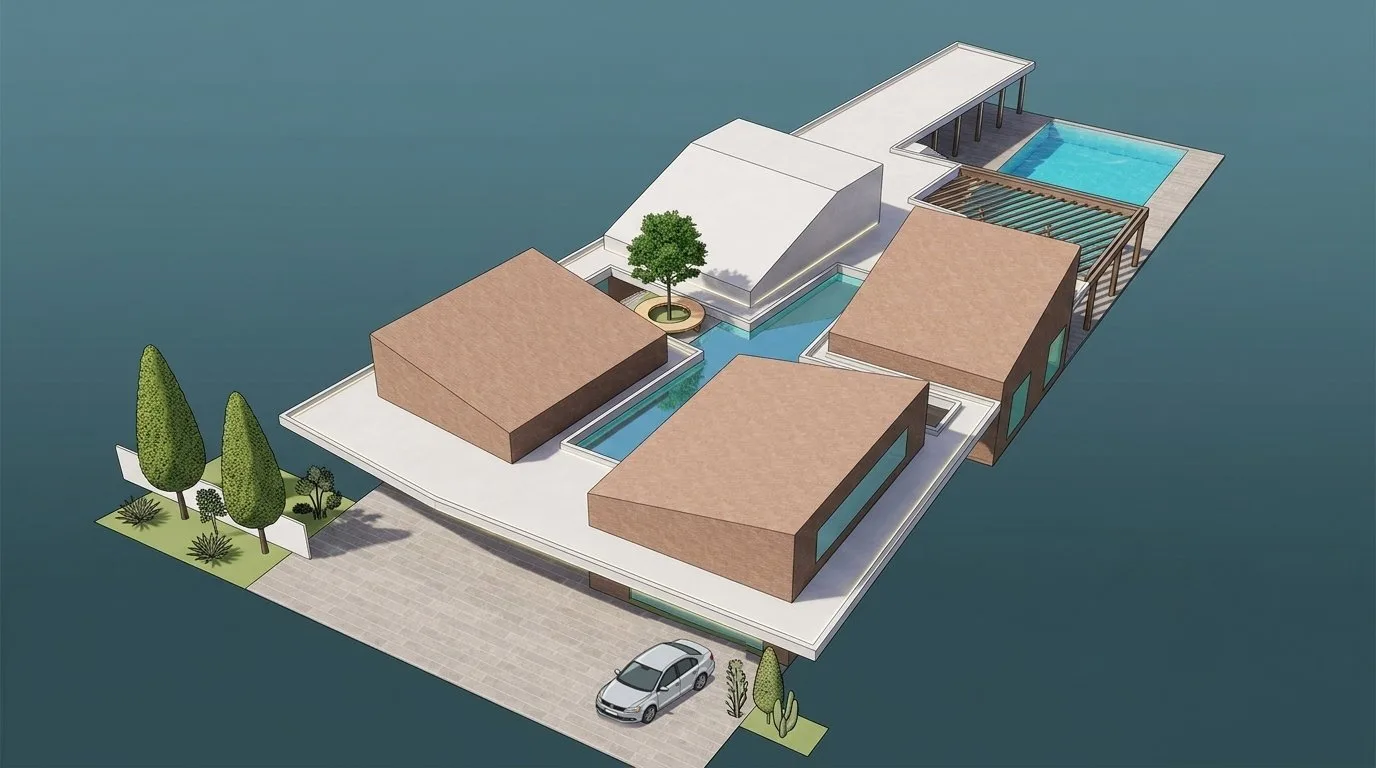
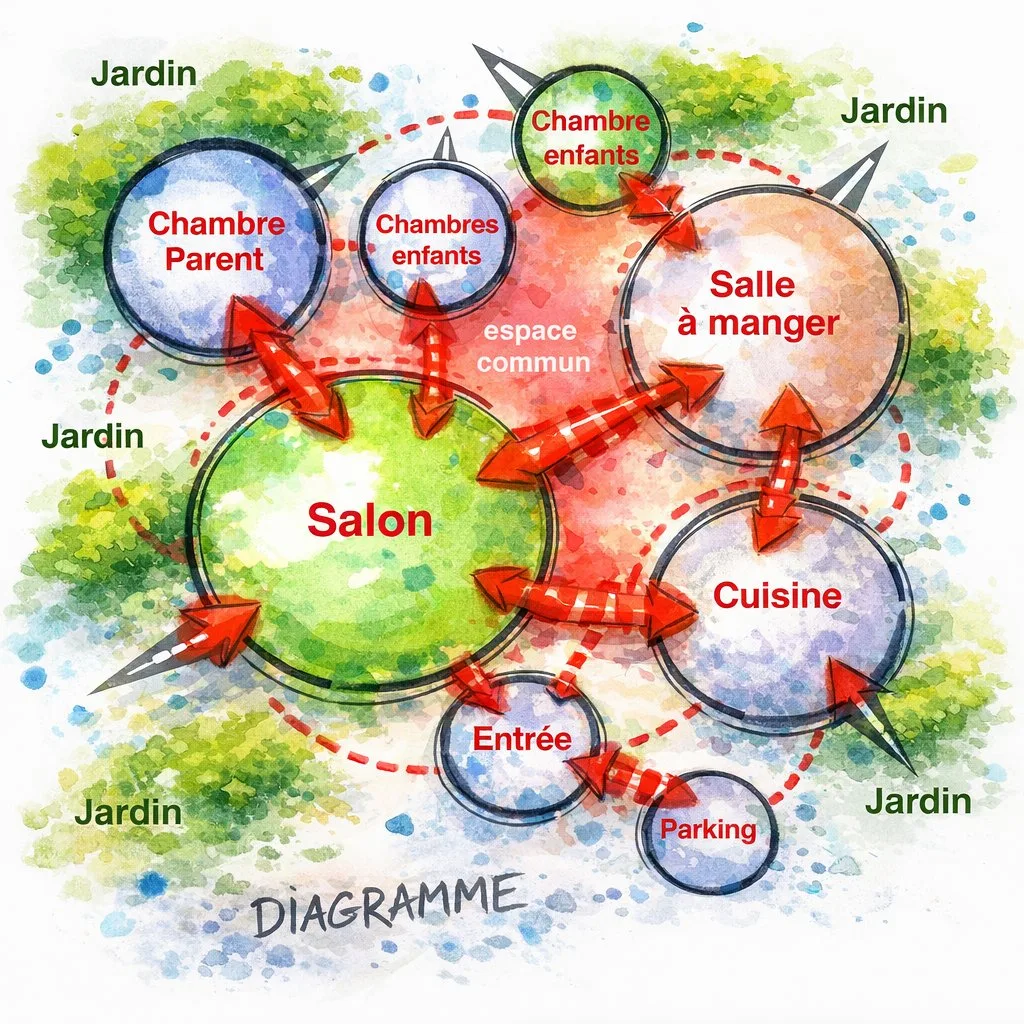
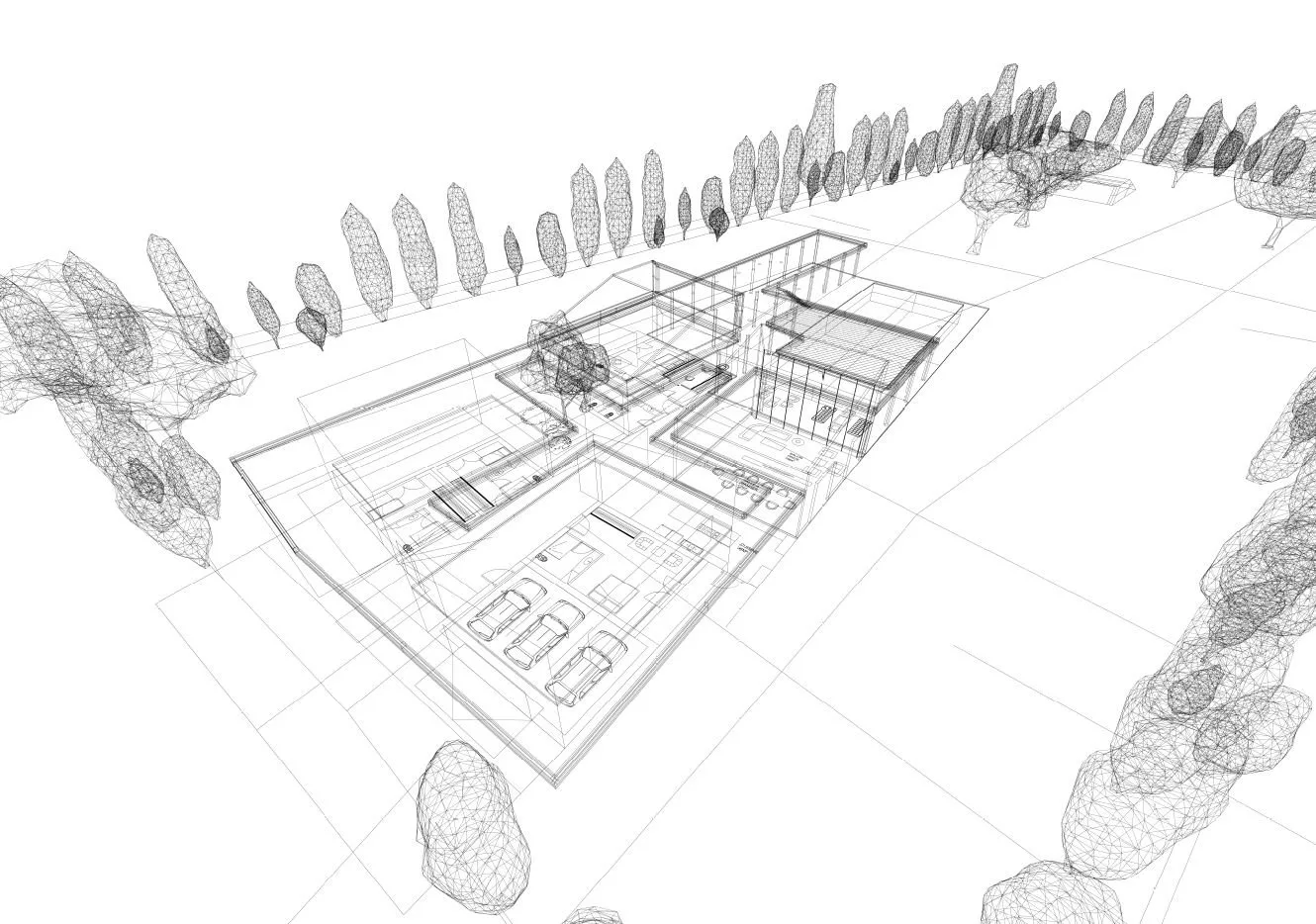
Villa C in Belgium, sculpted architecture, studied axonometric views and conceptual diagram linking day and night.
We conceived **Villa C** in Belgium as a spatial exploration around the notion of **inhabitable fracture**. The site, whose precise nature remains confidential, offered us the opportunity to question contemporary domesticity through a rigorous geometric reading. It was not about drawing a house that simply responds to the programmatic needs of a private client, but rather proposing a **sculpted architecture** where each volume carries within it a precise spatial and temporal intention. We thus structured the project around a strong conceptual diagram: the separation between day and night, between collective life and intimate withdrawal, materialized by a physical split that organizes the entire composition.
This fracture is not merely formal. It constitutes the generative principle of the project, a dividing line that separates functions while connecting them. On one side, the daytime spaces open generously onto the garden, in a logic of **transparency** and continuity with the exterior. On the other, the nighttime volumes close in, thicken, offering a material density and protection necessary for intimacy. This duality, far from being binary, modulates according to uses, hours, seasons. It presupposes an architecture that breathes, that welcomes both morning light and evening shadow, without one overwhelming the other.
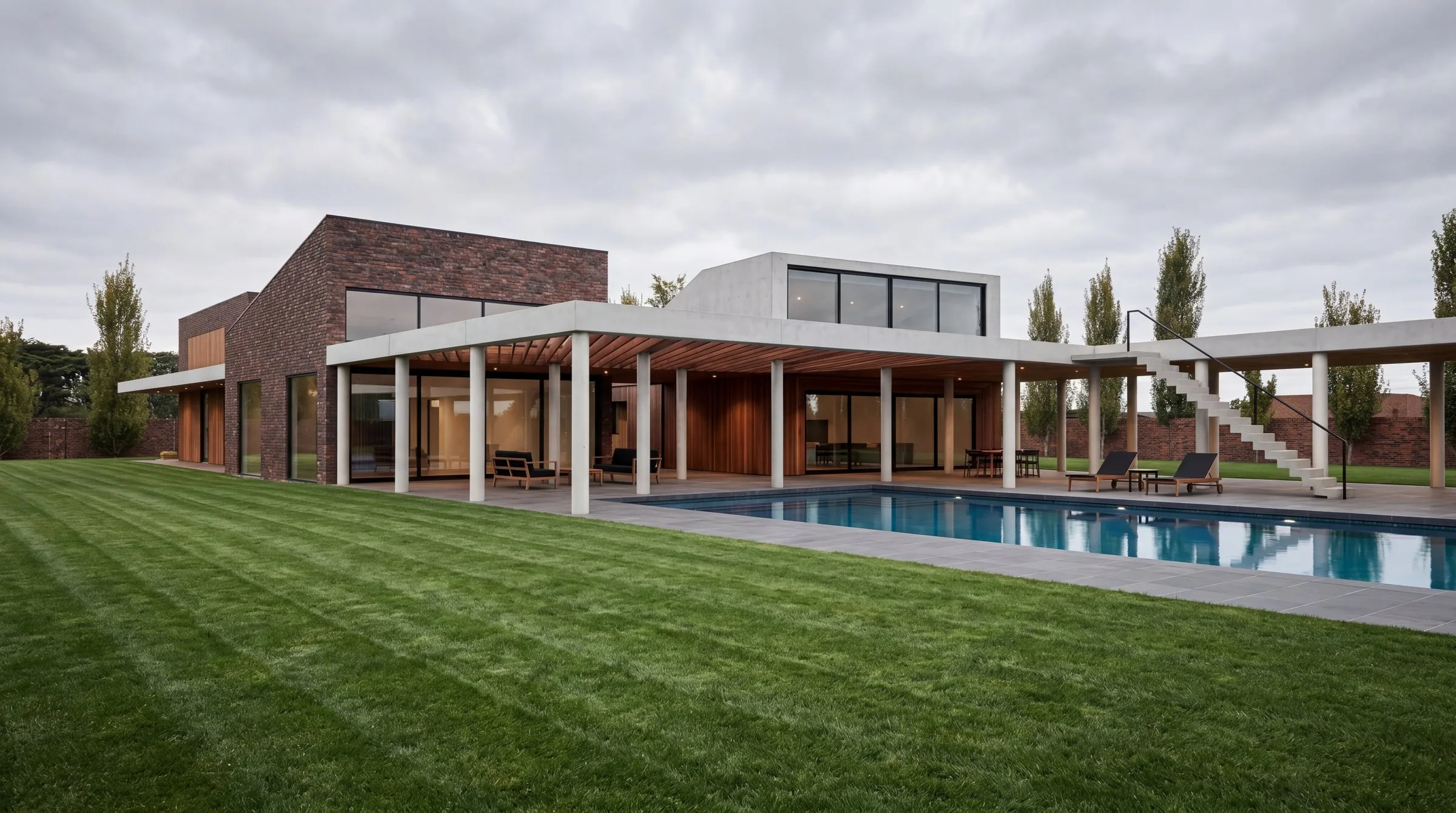
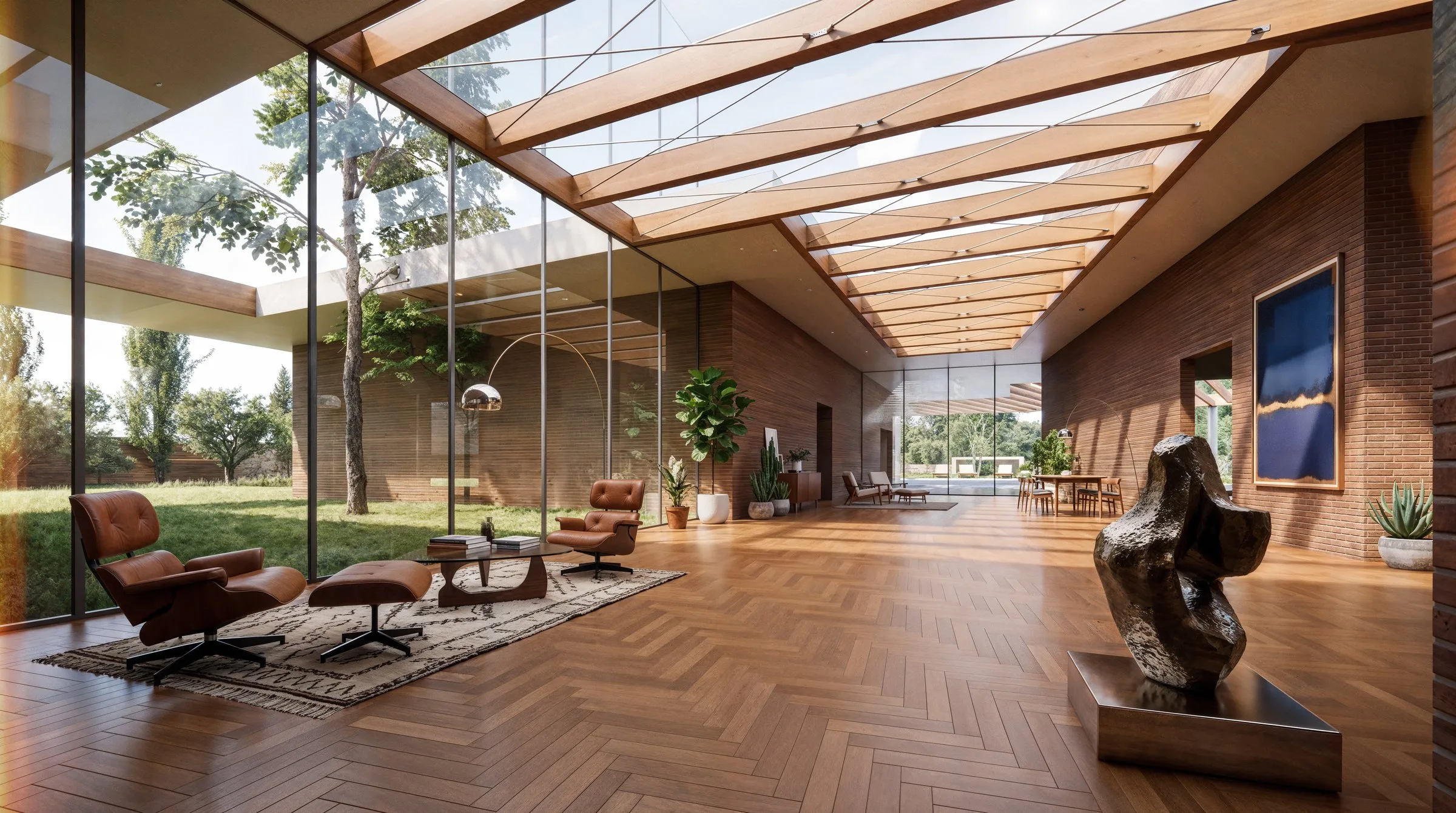
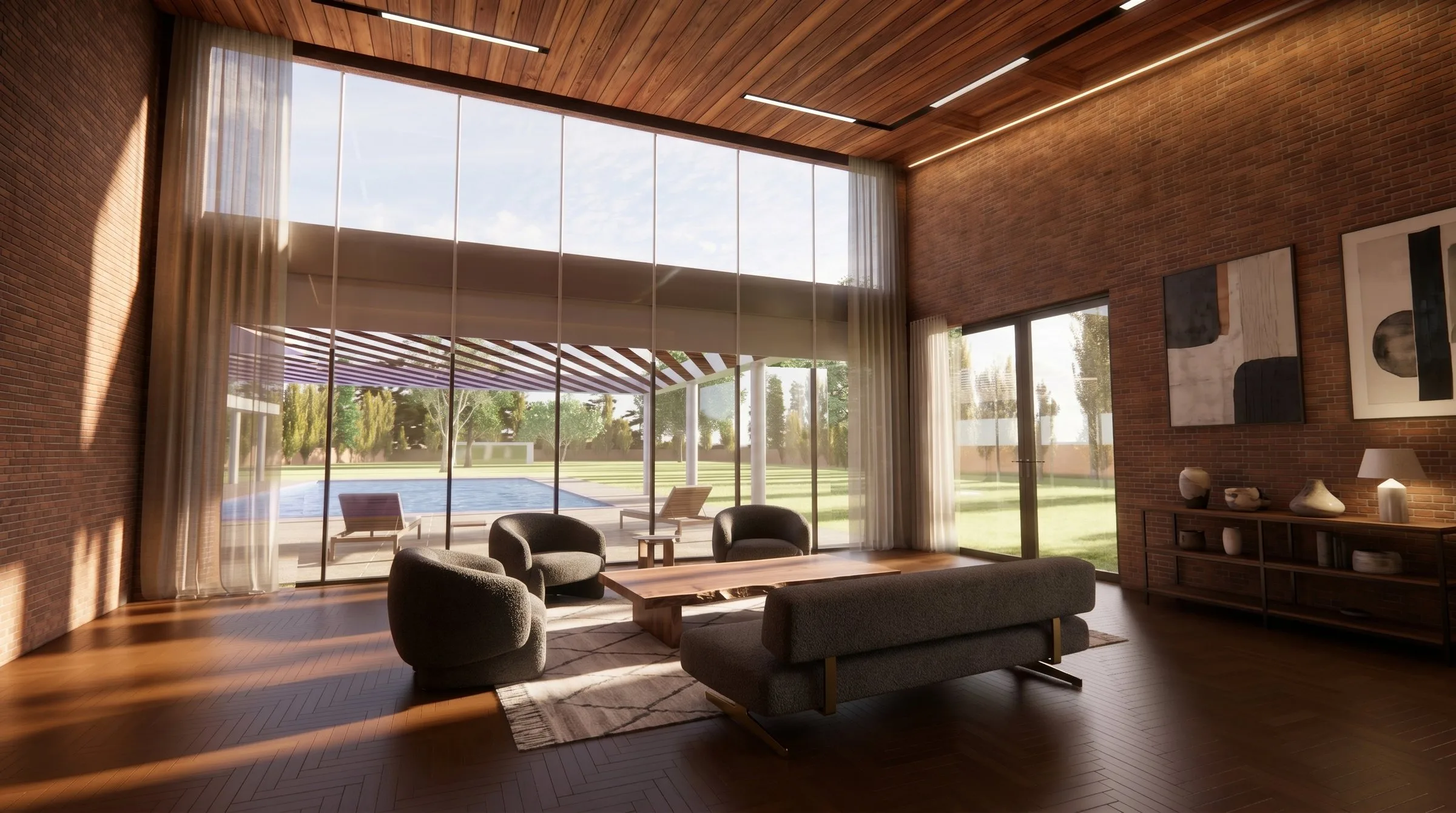
The ground floor develops in **open plans**, almost floating, where visual and spatial continuity between interior and exterior becomes a fundamental architectural gesture. We sought to extend the garden floor into the house, to blur the boundary between inside and outside. The glazed walls, carefully treated in their dimensioning and framing, are not simple openings: they are devices for connection, filters that organize the gaze, that frame the near or distant landscape, that let in light without sacrificing thermal comfort. This controlled permeability allows the house to inscribe itself in its context without dissolving, to dialogue with the territory without submitting to it.
On the upper floor, the logic reverses. The volumes close in, become more **opaque**, more massive. The intimacy of the bedrooms demands another materiality, another density. We worked the envelope as a protective skin, capable of isolating without confining, of preserving without cutting off from the world. The openings, more measured, are placed with precision to capture necessary light without exposing the interior. They create **intimate framings**, visual sequences that accompany the evening's withdrawal, the morning's awakening, moments of pause. This duality between transparency and opacity structures not only the perception of the building, but also the sensory experience of its inhabitants.
We worked extensively in **axonometric views** to understand and refine this spatial logic. These drawings, tools of conception as much as communication, allowed us to reveal the complexity of volumetric articulations, the way spaces overlap, slip into one another, respond to each other across the central fracture. The axonometric, through its capacity to show simultaneously multiple faces, multiple depths, helped us think of the house as a **coherent three-dimensional object**, where each angle, each recess, each projection participates in an overall logic. It also allowed us to verify, before construction, that the sculpted geometry we were proposing remains inhabitable, generous, comfortable.
The **materiality** of the project fully participates in this duality. We chose materials that respond simultaneously to the technical, environmental and sensory requirements of the project. The light, almost neutral surfaces of the daytime spaces let light bounce, circulate, animate the space. The nighttime volumes are treated in more subdued tones, more tactile textures, that invite rest, introspection. This material palette, sober but precise, allows the architecture not to impose itself through ornament, but to reveal itself through the rightness of its proportions, the quality of its joints, the light that comes to emphasize each edge, each plane.
Our **environmental approach** inscribes itself in this same logic of precision and economy of means. We sought to limit glazed surfaces where they are not necessary, to orient openings to maximize passive solar gains in winter and protect them in summer, to design a high-performance envelope without resorting to unnecessary thickness. The inhabited fracture, by organizing spaces according to their use and temporality, also allows us to **modulate energy needs**: the daytime zones, very open, naturally benefit from the sun's light and heat, while the nighttime zones, more closed, better maintain their temperature. This spatial articulation becomes a bioclimatic tool, without the architecture being enslaved to a numerical performance that would obscure the sensory experience.
Inhabiting **Villa C** ultimately means experiencing an architecture that rhythms daily life, that accompanies gestures and moods without imposing a rigid lifestyle. It means accepting that day and night, transparency and opacity, openness and withdrawal are not oppositions, but complementary polarities. We conceived this house as a spatial device where each inhabitant can find their place, their rhythm, their light. Architecture then becomes a frame, discreet but present, that does not dictate but suggests, that does not constrain but liberates. It is this ambition, that of a **sculpted and considered domesticity**, that we carried throughout this project in Belgium.
This fracture is not merely formal. It constitutes the generative principle of the project, a dividing line that separates functions while connecting them. On one side, the daytime spaces open generously onto the garden, in a logic of **transparency** and continuity with the exterior. On the other, the nighttime volumes close in, thicken, offering a material density and protection necessary for intimacy. This duality, far from being binary, modulates according to uses, hours, seasons. It presupposes an architecture that breathes, that welcomes both morning light and evening shadow, without one overwhelming the other.
The ground floor develops in **open plans**, almost floating, where visual and spatial continuity between interior and exterior becomes a fundamental architectural gesture. We sought to extend the garden floor into the house, to blur the boundary between inside and outside. The glazed walls, carefully treated in their dimensioning and framing, are not simple openings: they are devices for connection, filters that organize the gaze, that frame the near or distant landscape, that let in light without sacrificing thermal comfort. This controlled permeability allows the house to inscribe itself in its context without dissolving, to dialogue with the territory without submitting to it.
On the upper floor, the logic reverses. The volumes close in, become more **opaque**, more massive. The intimacy of the bedrooms demands another materiality, another density. We worked the envelope as a protective skin, capable of isolating without confining, of preserving without cutting off from the world. The openings, more measured, are placed with precision to capture necessary light without exposing the interior. They create **intimate framings**, visual sequences that accompany the evening's withdrawal, the morning's awakening, moments of pause. This duality between transparency and opacity structures not only the perception of the building, but also the sensory experience of its inhabitants.
We worked extensively in **axonometric views** to understand and refine this spatial logic. These drawings, tools of conception as much as communication, allowed us to reveal the complexity of volumetric articulations, the way spaces overlap, slip into one another, respond to each other across the central fracture. The axonometric, through its capacity to show simultaneously multiple faces, multiple depths, helped us think of the house as a **coherent three-dimensional object**, where each angle, each recess, each projection participates in an overall logic. It also allowed us to verify, before construction, that the sculpted geometry we were proposing remains inhabitable, generous, comfortable.
The **materiality** of the project fully participates in this duality. We chose materials that respond simultaneously to the technical, environmental and sensory requirements of the project. The light, almost neutral surfaces of the daytime spaces let light bounce, circulate, animate the space. The nighttime volumes are treated in more subdued tones, more tactile textures, that invite rest, introspection. This material palette, sober but precise, allows the architecture not to impose itself through ornament, but to reveal itself through the rightness of its proportions, the quality of its joints, the light that comes to emphasize each edge, each plane.
Our **environmental approach** inscribes itself in this same logic of precision and economy of means. We sought to limit glazed surfaces where they are not necessary, to orient openings to maximize passive solar gains in winter and protect them in summer, to design a high-performance envelope without resorting to unnecessary thickness. The inhabited fracture, by organizing spaces according to their use and temporality, also allows us to **modulate energy needs**: the daytime zones, very open, naturally benefit from the sun's light and heat, while the nighttime zones, more closed, better maintain their temperature. This spatial articulation becomes a bioclimatic tool, without the architecture being enslaved to a numerical performance that would obscure the sensory experience.
Inhabiting **Villa C** ultimately means experiencing an architecture that rhythms daily life, that accompanies gestures and moods without imposing a rigid lifestyle. It means accepting that day and night, transparency and opacity, openness and withdrawal are not oppositions, but complementary polarities. We conceived this house as a spatial device where each inhabitant can find their place, their rhythm, their light. Architecture then becomes a frame, discreet but present, that does not dictate but suggests, that does not constrain but liberates. It is this ambition, that of a **sculpted and considered domesticity**, that we carried throughout this project in Belgium.
- Lieu
- Belgique
- Nature
- Villa
- Surface
- Confidentiel
- Budget
- Confidentiel
- MOA
- Privé