Val de Crêt
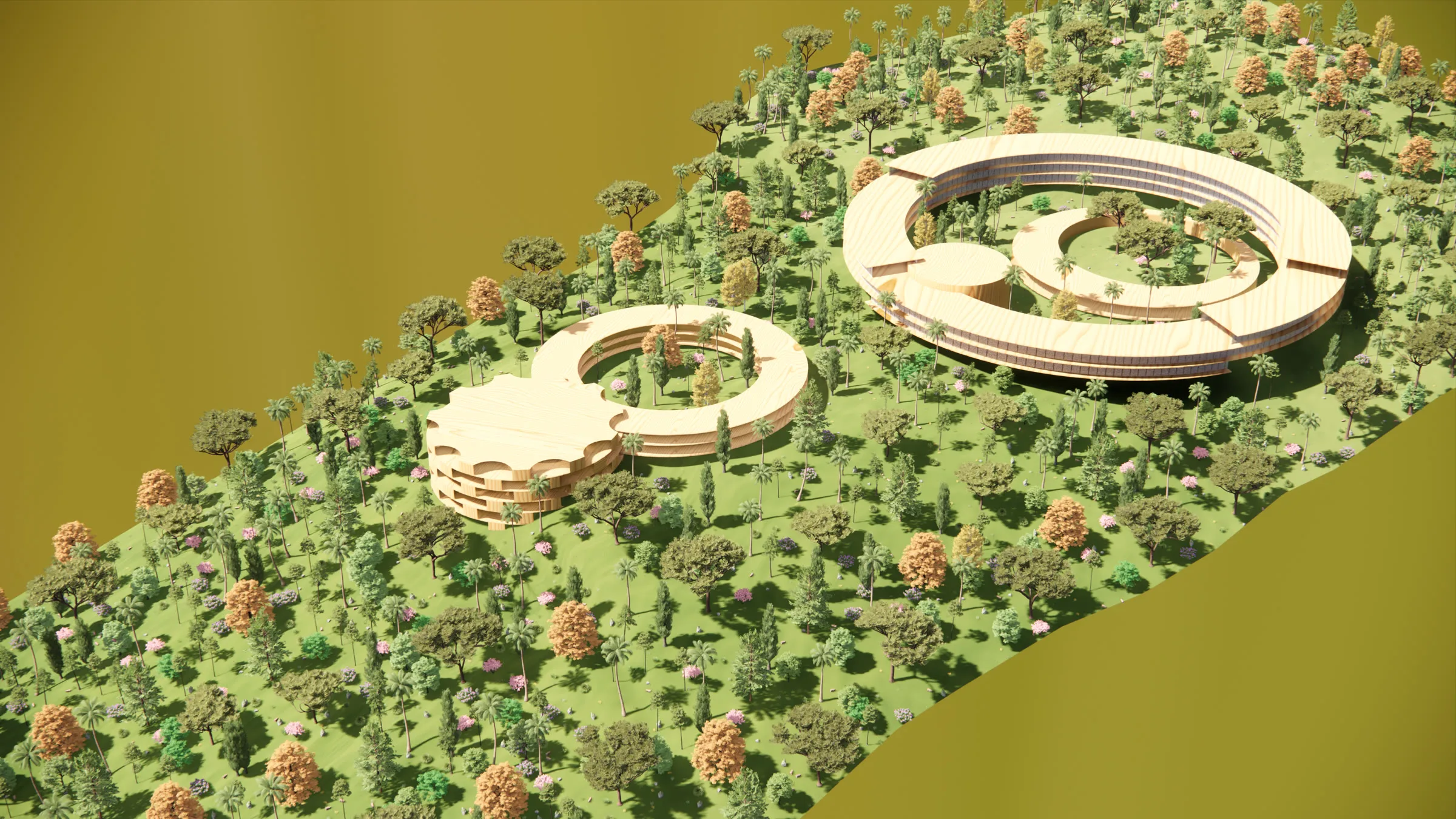
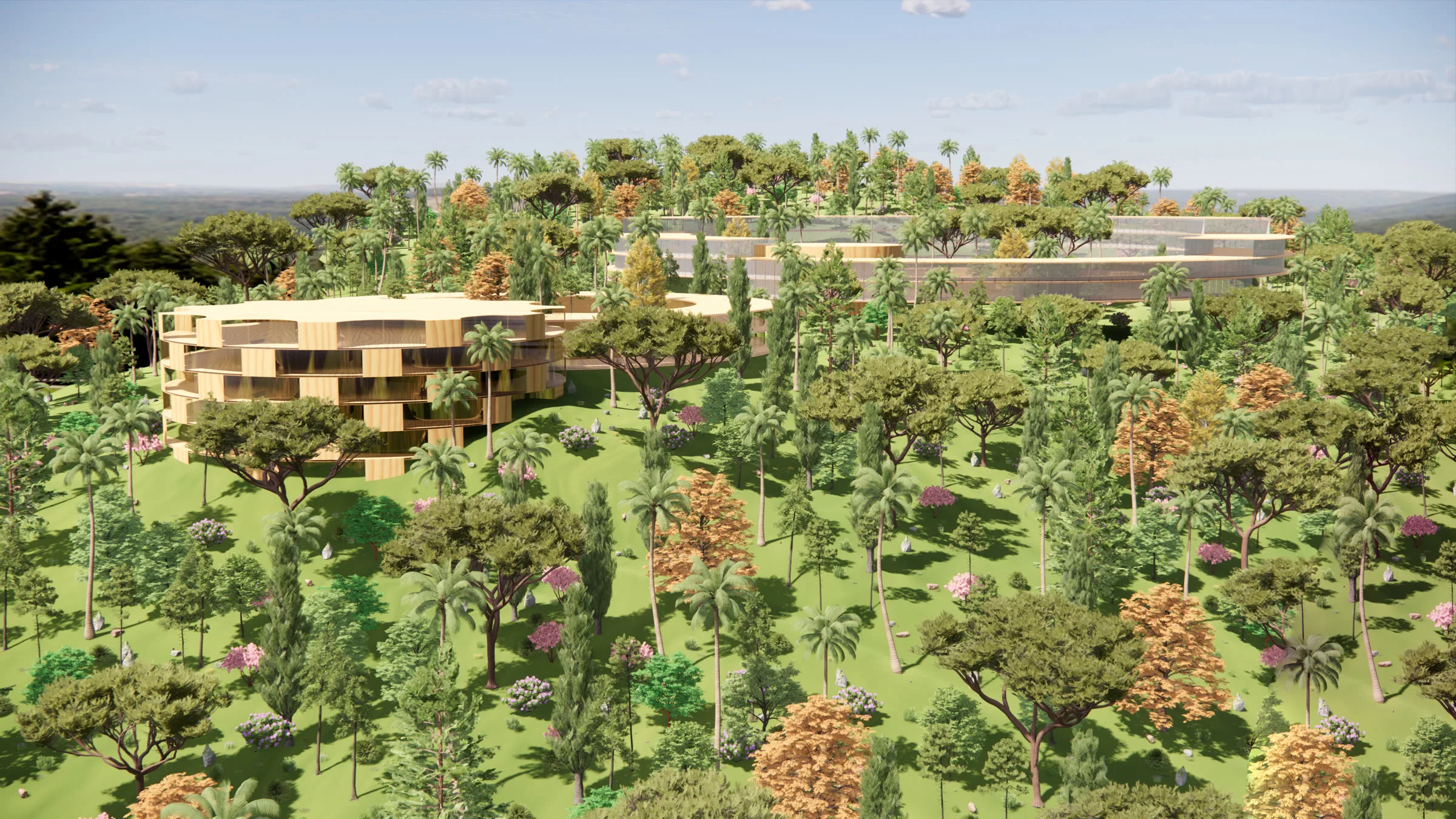
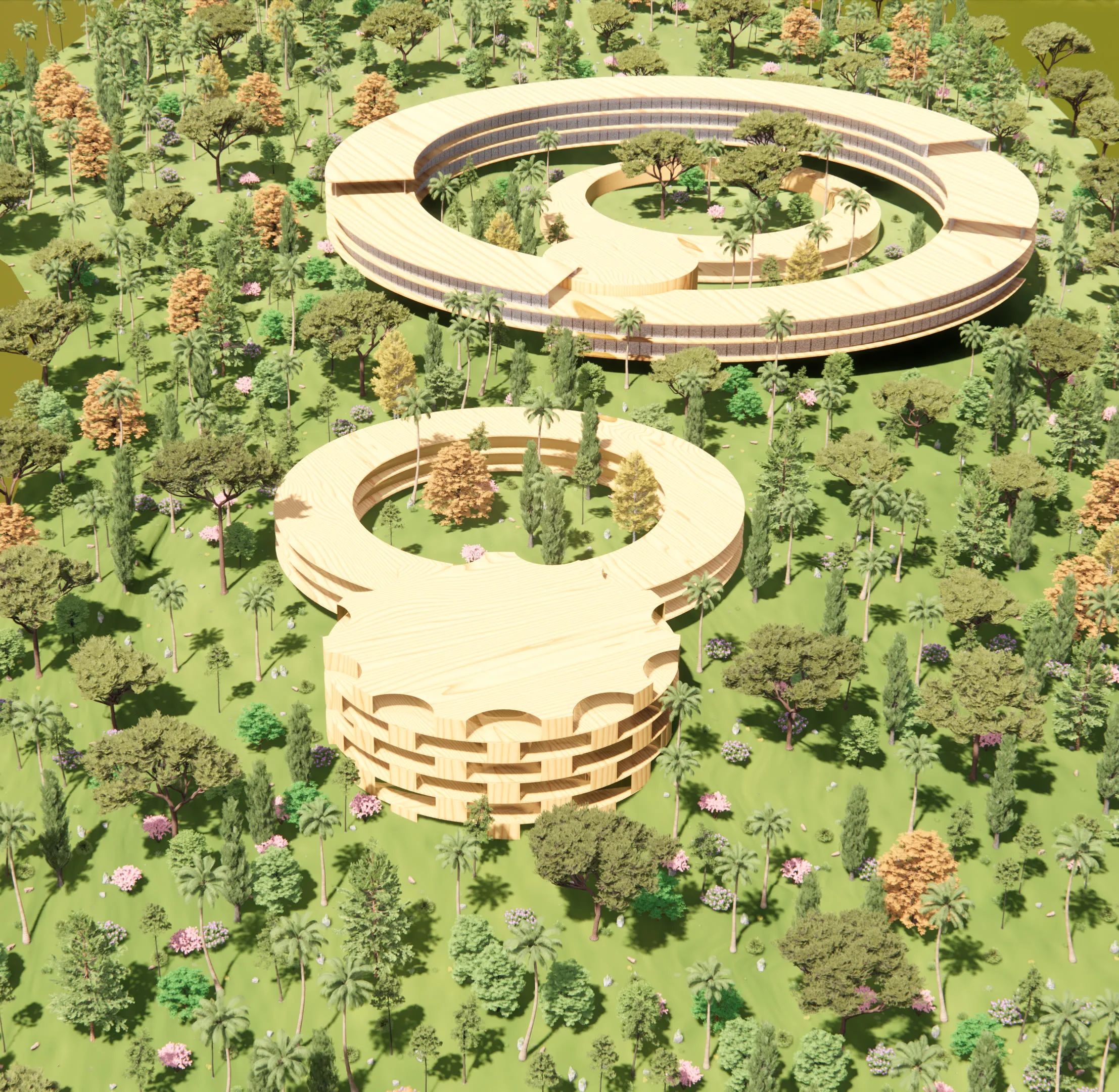
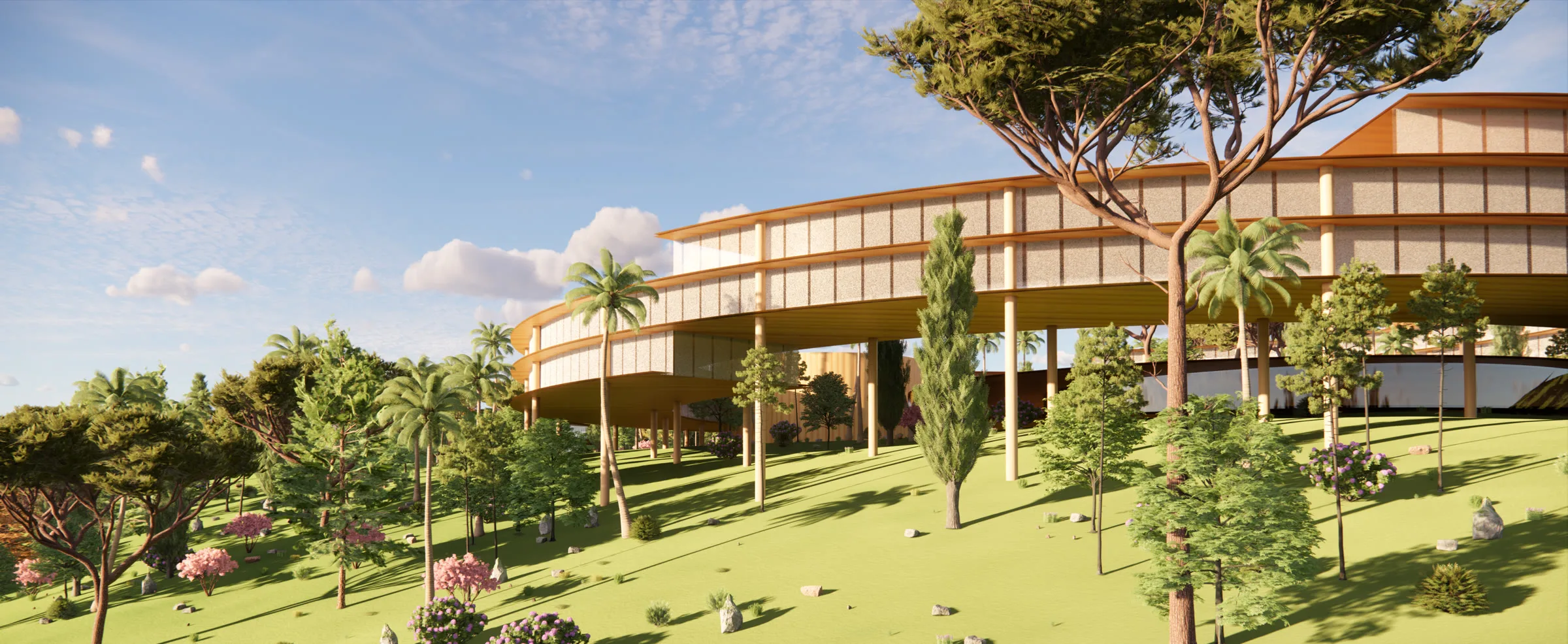
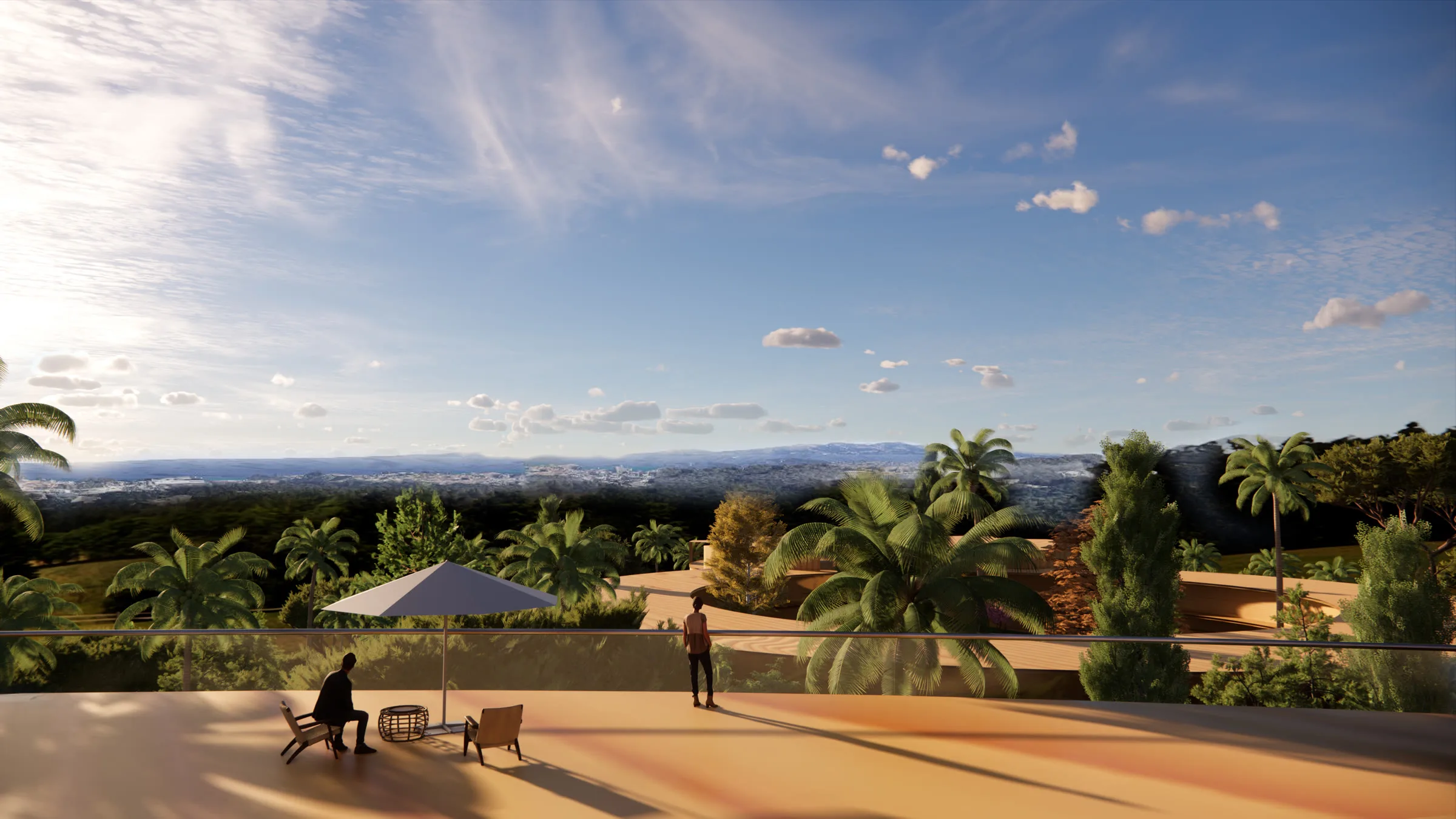
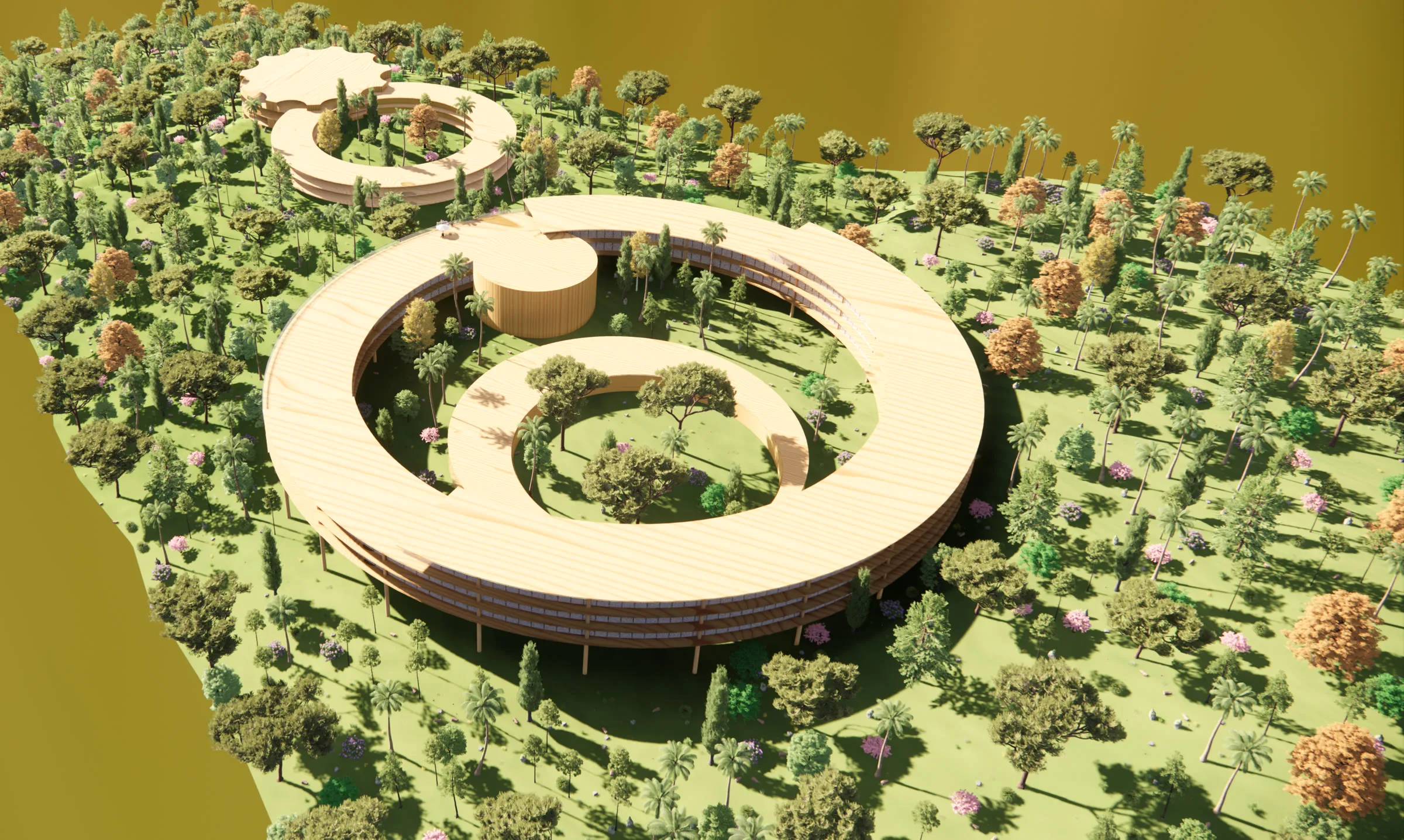
Val de Crêt residential project, contemporary architecture integrated into the terrain, planted facades and framed views of the landscape.
We conceived Val de Crêt as an architecture of the ground, a series of inhabited strata that accompany the slope without ever opposing it. The site, whose exact configuration remains confidential, immediately suggested a logic of **topographic inscription** rather than vertical emergence. Where other projects assert their presence through height, we sought here relative effacement, the progressive fusion between what is built and what belongs to the natural relief. This approach is not a camouflage strategy, but an attempt to **reinterpret the relationship between built form and landscape**, a way of extending the lines of the terrain until they become habitable.
The program mixes housing and office spaces, a hybridization that led us to consider not two separate functions, but a **continuum of uses** sharing the same relationship to the site. Each unit, whether it accommodates work or dwelling, benefits from a direct link to the exterior, abundant natural light, and carefully calibrated orientation. We refused the logic of repetitive standardized plans. On the contrary, the geometry of each volume derives from its position on the slope, its exposure to the sun, the view it frames. This **programmatic singularity** implies attentive spatial design, where each interior dialogues with a specific fragment of the landscape.
The **terraced layering** structures the entire project. The roofs are not simple fifth facades, but planted sloping planes that physically extend the topography. Ascending along the slope, one traverses a succession of accessible terraces, suspended gardens, buffer spaces between private and communal. This vegetal continuity transforms the neighbor's roof into the garden of the upper level, creating a **vertical permeability** rarely achieved in conventional residential complexes. The project thus becomes an inhabited hill, an augmented relief whose strata are as many cultivable grounds, informal meeting places, planted breathing spaces.
We worked the materiality with a desire for **constructive sobriety**. Light concrete, cast in prefabricated panels, forms the main structure. Its neutral tone, slightly warm, avoids the aggressiveness of overly pure whites and dialogues with the mineral tones of the site. Wood, used in cladding and joinery, introduces tactile warmth, a chromatic vibration that evolves with the seasons and light. This concrete-wood alternation is not decorative: it responds to structural and bioclimatic logic. Concrete ensures thermal inertia, wood protects, ventilates, tempers. The large glazed bays are positioned with precision, never randomly, always to **frame a specific view**, an isolated tree, a ridgeline, a fragment of sky. Each opening is a moving tableau, an optical device that connects the interior to a piece of the exterior.
Our environmental approach for Val de Crêt rests on three pillars. First, **minimizing the ground footprint**: by embracing the slope, we reduce earthworks, preserve natural water flows, limit land artificialisation. Next, **extensive vegetation** of roofs and interstitial spaces: these planted surfaces absorb rainwater, create cooling islands, favor local biodiversity. Finally, **rigorous bioclimatic design**: optimized orientation, integrated solar protections, natural cross ventilation, materials with low embodied energy. We did not seek the spectacular label, but discreet performance, that which inscribes itself over time, that which is measured in daily comfort, reduced bills, controlled carbon footprint.
The use of these spaces, their future appropriation by inhabitants, guided each spatial decision. The exterior extensions, private terraces or shared gardens, are not residual surfaces, but **living spaces in their own right**, extensions of the living room, open-air bedrooms. We imagined generous circulations, widened landings that become meeting places, inhabited thresholds where one stops, where one converses. This attention to the **quality of intermediate spaces** seems essential to us in a world where housing too often reduces itself to closed surfaces, disconnected from neighborhood and site.
Val de Crêt remains for now in study phase, an unrealized project that nonetheless testifies to research we pursue: that of an **architecture of care**, attentive to relief, uses, natural cycles. Each project, whether it is built or remains on paper, nourishes our reflection, refines our spatial vocabulary. Here, we explored the possibility of a built form that does not impose itself, but infiltrates, that slips between contour lines, that breathes with the landscape. This research is never finished, it continues from one project to another, in permanent dialogue between drawing and territory.
The program mixes housing and office spaces, a hybridization that led us to consider not two separate functions, but a **continuum of uses** sharing the same relationship to the site. Each unit, whether it accommodates work or dwelling, benefits from a direct link to the exterior, abundant natural light, and carefully calibrated orientation. We refused the logic of repetitive standardized plans. On the contrary, the geometry of each volume derives from its position on the slope, its exposure to the sun, the view it frames. This **programmatic singularity** implies attentive spatial design, where each interior dialogues with a specific fragment of the landscape.
The **terraced layering** structures the entire project. The roofs are not simple fifth facades, but planted sloping planes that physically extend the topography. Ascending along the slope, one traverses a succession of accessible terraces, suspended gardens, buffer spaces between private and communal. This vegetal continuity transforms the neighbor's roof into the garden of the upper level, creating a **vertical permeability** rarely achieved in conventional residential complexes. The project thus becomes an inhabited hill, an augmented relief whose strata are as many cultivable grounds, informal meeting places, planted breathing spaces.
We worked the materiality with a desire for **constructive sobriety**. Light concrete, cast in prefabricated panels, forms the main structure. Its neutral tone, slightly warm, avoids the aggressiveness of overly pure whites and dialogues with the mineral tones of the site. Wood, used in cladding and joinery, introduces tactile warmth, a chromatic vibration that evolves with the seasons and light. This concrete-wood alternation is not decorative: it responds to structural and bioclimatic logic. Concrete ensures thermal inertia, wood protects, ventilates, tempers. The large glazed bays are positioned with precision, never randomly, always to **frame a specific view**, an isolated tree, a ridgeline, a fragment of sky. Each opening is a moving tableau, an optical device that connects the interior to a piece of the exterior.
Our environmental approach for Val de Crêt rests on three pillars. First, **minimizing the ground footprint**: by embracing the slope, we reduce earthworks, preserve natural water flows, limit land artificialisation. Next, **extensive vegetation** of roofs and interstitial spaces: these planted surfaces absorb rainwater, create cooling islands, favor local biodiversity. Finally, **rigorous bioclimatic design**: optimized orientation, integrated solar protections, natural cross ventilation, materials with low embodied energy. We did not seek the spectacular label, but discreet performance, that which inscribes itself over time, that which is measured in daily comfort, reduced bills, controlled carbon footprint.
The use of these spaces, their future appropriation by inhabitants, guided each spatial decision. The exterior extensions, private terraces or shared gardens, are not residual surfaces, but **living spaces in their own right**, extensions of the living room, open-air bedrooms. We imagined generous circulations, widened landings that become meeting places, inhabited thresholds where one stops, where one converses. This attention to the **quality of intermediate spaces** seems essential to us in a world where housing too often reduces itself to closed surfaces, disconnected from neighborhood and site.
Val de Crêt remains for now in study phase, an unrealized project that nonetheless testifies to research we pursue: that of an **architecture of care**, attentive to relief, uses, natural cycles. Each project, whether it is built or remains on paper, nourishes our reflection, refines our spatial vocabulary. Here, we explored the possibility of a built form that does not impose itself, but infiltrates, that slips between contour lines, that breathes with the landscape. This research is never finished, it continues from one project to another, in permanent dialogue between drawing and territory.
- Lieu
- France
- Nature
- Logements
- Surface
- Confidentiel
- Budget
- Confidentiel
- Concours
- 2022
- MOA
- Confidentiel