Montigny-lès-Cormeilles
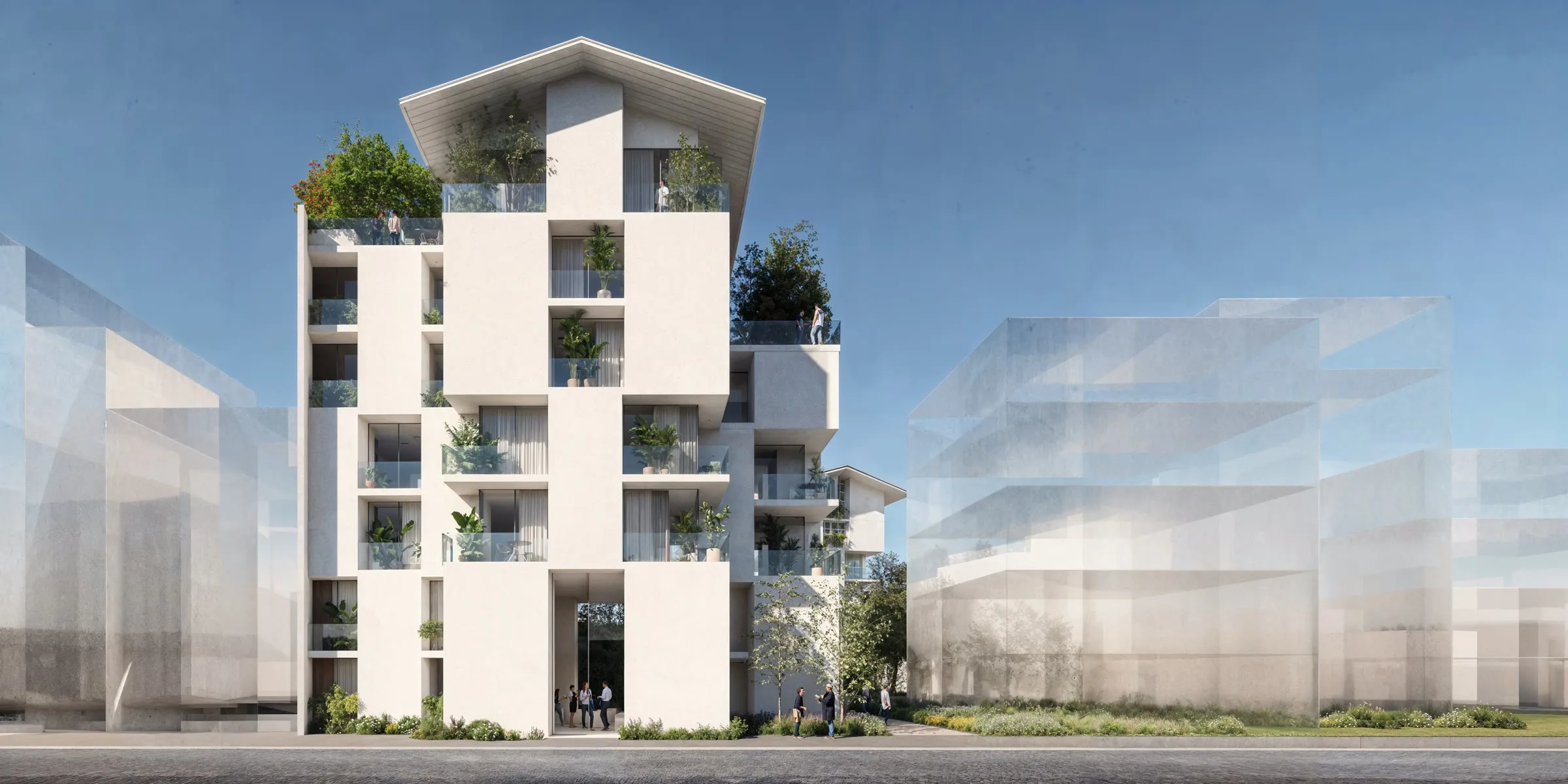
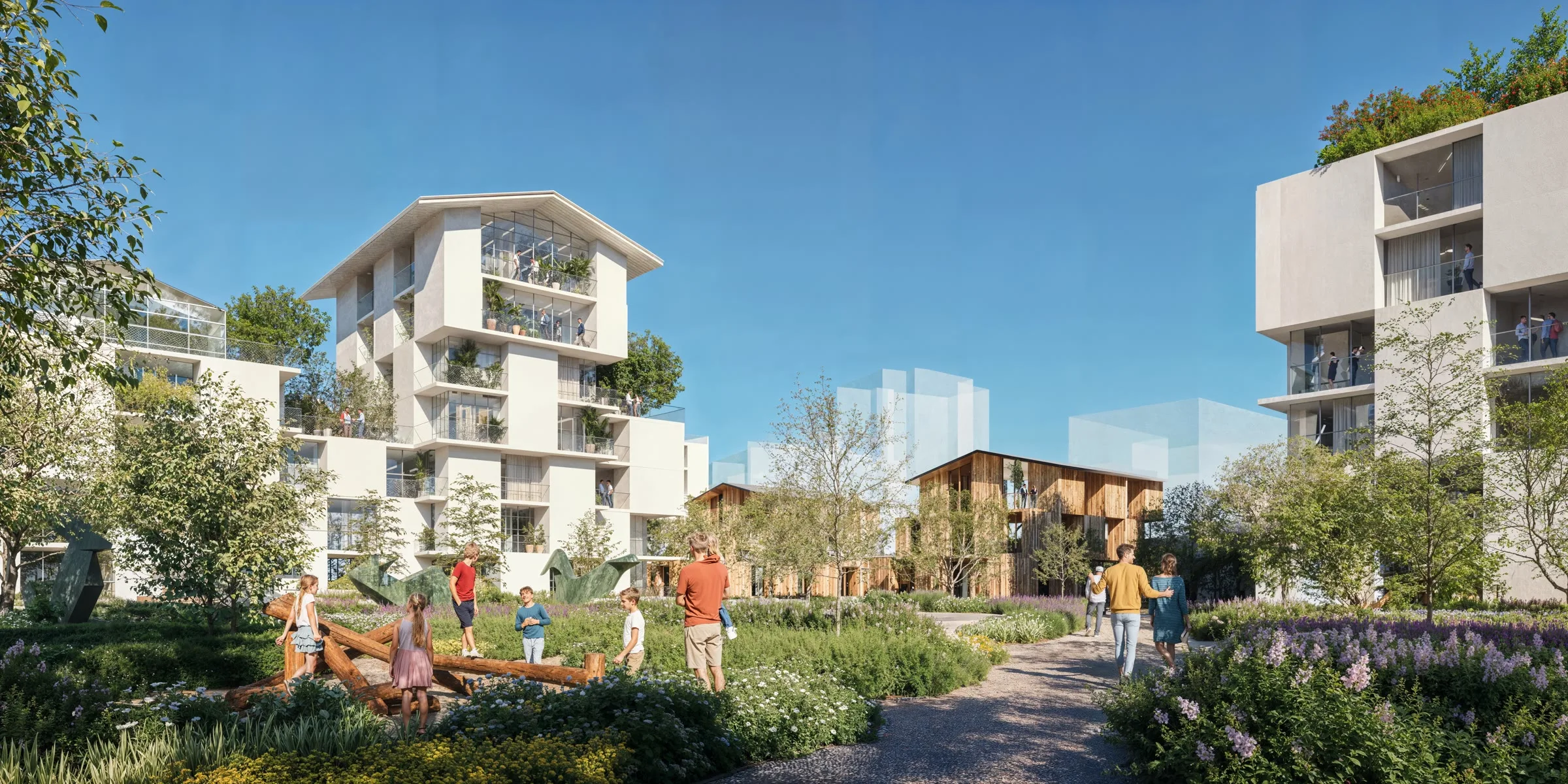
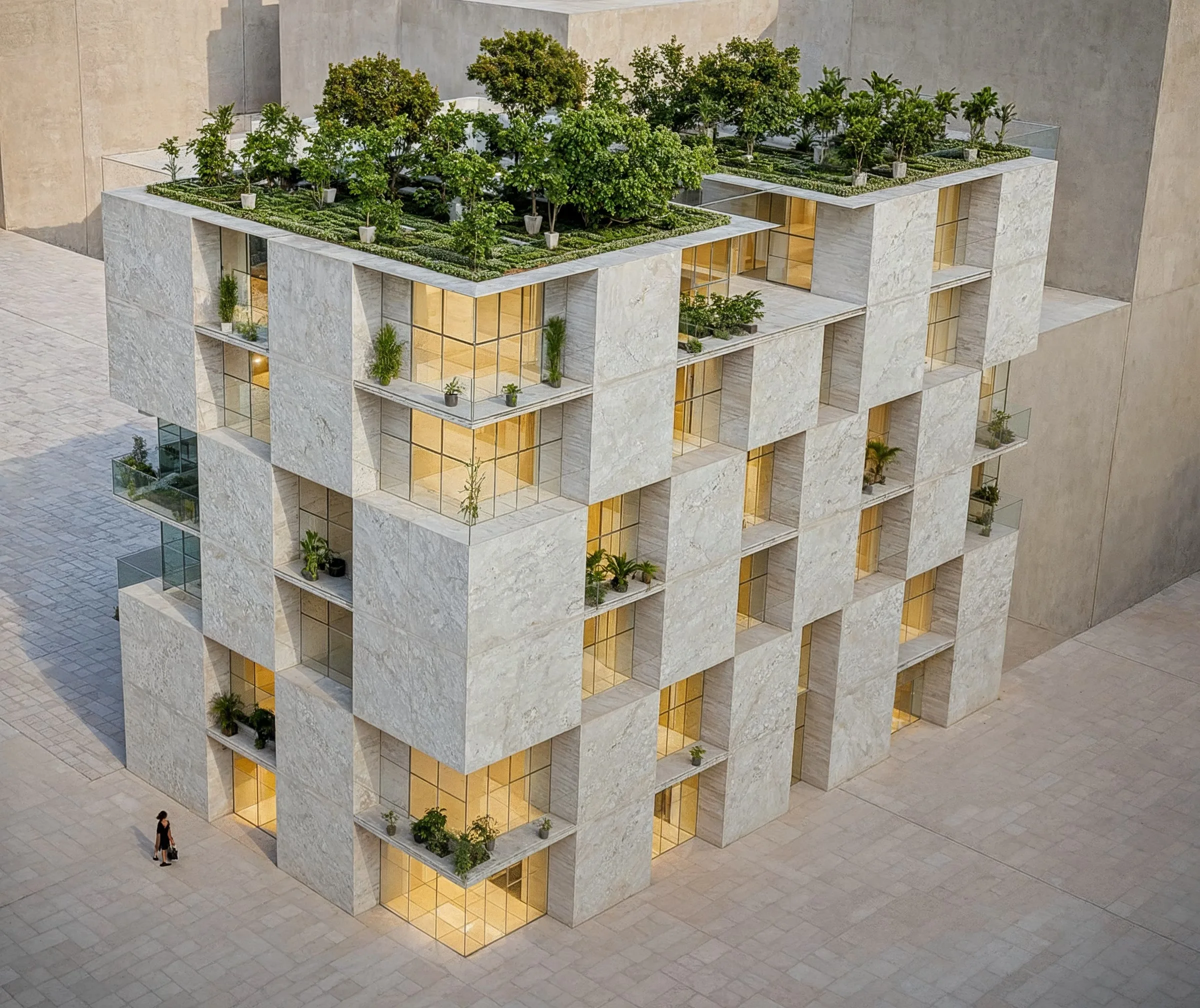
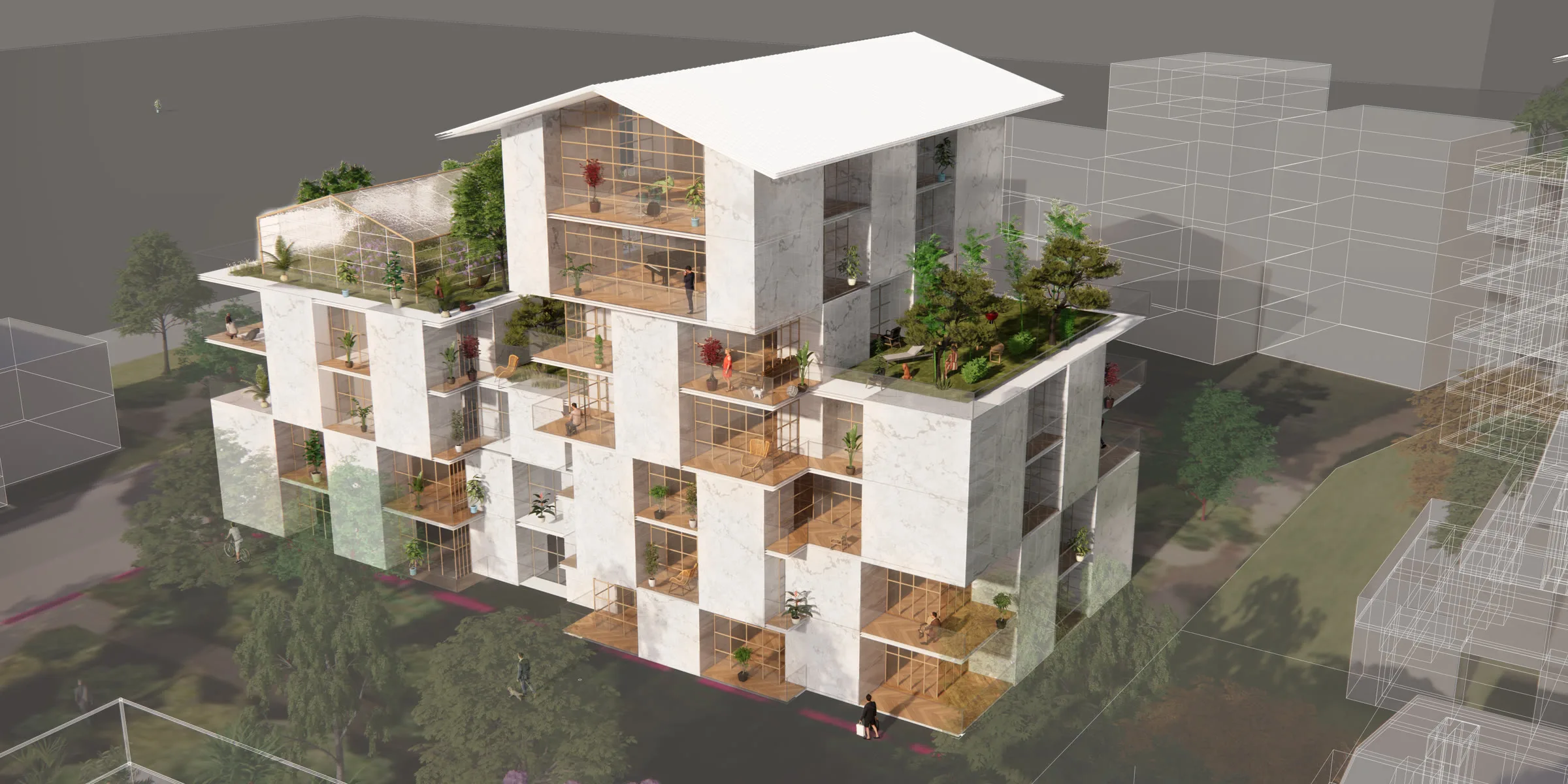
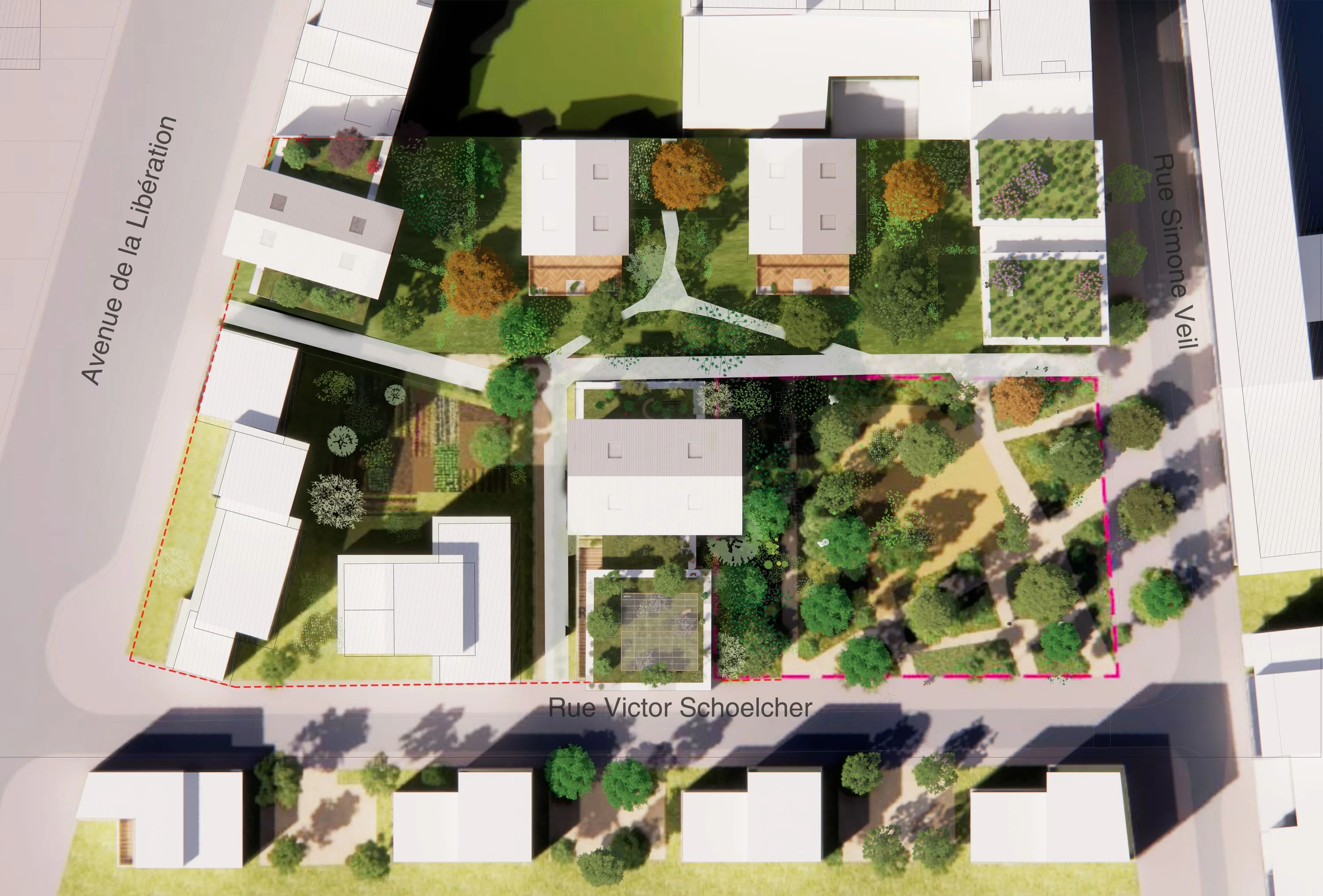
Housing complex in Montigny-lès-Cormeilles, open site plan, garden follies, luminous lobby and inhabited axonometrics.
# Montigny-lès-Cormeilles
In Montigny-lès-Cormeilles, on the edge of the Paris metropolis, we designed a residential complex that questions the **porosity between dwelling and gardening**. The site, inserted into a classic suburban fabric, called for an urban gesture capable of reconnecting with the generosity of outdoor spaces without reproducing the introverted logic of large housing estates. We wanted to invent a form of **gentle intensity**, where density would not be read as a constraint but as an opportunity to create multiple places, thresholds, breathing spaces.
The site plan proposes an open organization, centered on a **planted courtyard** that becomes the true heart of the project. Rather than closing the plot in on itself, we multiplied visual and physical porosities, openings that allow residents to perceive the garden from the entrance, even before having crossed the lobby. This transparency strategy transforms the collective space into a truly shared common good, a daily horizon rather than a simple land residue.
One of the most distinctive architectural choices lies in the introduction of **garden follies**, small pavilions scattered throughout the outdoor spaces. Inspired by 18th-century garden follies, these light structures serve as informal meeting points, places for reading, playing, or simply contemplating. Some accommodate seating, others climbing plants, still others remain deliberately indeterminate so that residents can appropriate them. We sought to create **spatial micro-events**, moments of pause, refuges at domestic scale that break with the sometimes intimidating vastness of collective gardens. These follies participate in a broader ambition: to restore narrative depth to outdoor spaces, to anchor them in architectural memory while opening them to contemporary appropriation.
The **entrance lobby**, largely glazed, is not conceived as a simple transitional space. It becomes an inhabited room, a qualitative place where light passes through, where gazes meet, where one can linger. The large bay windows facing the garden create visual continuity between the public space of the street and the courtyard, blurring the boundaries between inside and outside. We paid careful attention to the materiality of this threshold: light stone flooring, integrated furniture, potted vegetation that extends the garden indoors. The idea was to establish an **entry ritual**, a moment of decompression where one leaves the city to enter home, but without abrupt rupture. This lobby is not an airlock, it is a habitable extension of public space.
The **facades** play on rhythms of offsets and setbacks that animate urban perspectives and create a variety of exposures for each dwelling. We avoided strict alignment, preferring a composition in relief that gives depth and multiplies oblique views. These setbacks generate continuous terraces or generous loggias, extensions of the dwellings that reinforce the feeling of **inhabiting a vertical garden**. The materials, sober and durable, alternate light renders and wood cladding, with particular attention to the fineness of details: openwork metal railings, recessed joinery that avoids the flat facade effect, cast shadows that evolve throughout the day.
The **environmental approach** structures the project from the sketch phase. The planted courtyard, generous in surface area, promotes open-air rainwater management, with landscape swales and retention zones integrated into the garden design. The planted species, chosen for their hardiness and their ability to create shade, contribute to summer comfort and urban biodiversity. The facades, oriented to optimize passive solar gains in winter, integrate solar protections (canopies, setbacks, climbing vegetation on the follies) that limit summer overheating. We also worked on the **compactness of volumes**, reducing thermal losses while maximizing living space. The through units, which constitute the majority of the program, ensure effective natural ventilation and limit reliance on air conditioning. Finally, bio-sourced materials (wood, raw earth for certain interior partitions) and low-carbon-footprint insulation reflect our desire to reduce overall environmental impact.
Regarding **use**, we imagined dwellings capable of evolving with the lives of their inhabitants. The plans are designed for a certain neutrality, generous and luminous spaces that can accommodate different family configurations or ways of living. The outdoor extensions (terraces, loggias) are dimensioned to become true living rooms six months of the year, blurring the boundary between interior and exterior surface. The courtyard, with its follies, its pathways, its areas of shade and sun, is intended as a playground for children as much as for adults, a place where people meet, where they recognize each other, where a community of residents gradually forms.
This project for Montigny-lès-Cormeilles is an attempt to reconcile **density and intimacy**, to show that a housing complex can be simultaneously generous, open, and deeply inhabited. The garden follies, the through lobby, the facade setbacks are not decorative elements: they are the tools of an architecture that seeks to create places, to invent rituals, to offer residents spaces for breathing and meeting in the dense city. We believe that dwelling also means gardening, contemplating, gathering, and that architecture must make this possible, with simplicity and clarity.
In Montigny-lès-Cormeilles, on the edge of the Paris metropolis, we designed a residential complex that questions the **porosity between dwelling and gardening**. The site, inserted into a classic suburban fabric, called for an urban gesture capable of reconnecting with the generosity of outdoor spaces without reproducing the introverted logic of large housing estates. We wanted to invent a form of **gentle intensity**, where density would not be read as a constraint but as an opportunity to create multiple places, thresholds, breathing spaces.
The site plan proposes an open organization, centered on a **planted courtyard** that becomes the true heart of the project. Rather than closing the plot in on itself, we multiplied visual and physical porosities, openings that allow residents to perceive the garden from the entrance, even before having crossed the lobby. This transparency strategy transforms the collective space into a truly shared common good, a daily horizon rather than a simple land residue.
One of the most distinctive architectural choices lies in the introduction of **garden follies**, small pavilions scattered throughout the outdoor spaces. Inspired by 18th-century garden follies, these light structures serve as informal meeting points, places for reading, playing, or simply contemplating. Some accommodate seating, others climbing plants, still others remain deliberately indeterminate so that residents can appropriate them. We sought to create **spatial micro-events**, moments of pause, refuges at domestic scale that break with the sometimes intimidating vastness of collective gardens. These follies participate in a broader ambition: to restore narrative depth to outdoor spaces, to anchor them in architectural memory while opening them to contemporary appropriation.
The **entrance lobby**, largely glazed, is not conceived as a simple transitional space. It becomes an inhabited room, a qualitative place where light passes through, where gazes meet, where one can linger. The large bay windows facing the garden create visual continuity between the public space of the street and the courtyard, blurring the boundaries between inside and outside. We paid careful attention to the materiality of this threshold: light stone flooring, integrated furniture, potted vegetation that extends the garden indoors. The idea was to establish an **entry ritual**, a moment of decompression where one leaves the city to enter home, but without abrupt rupture. This lobby is not an airlock, it is a habitable extension of public space.
The **facades** play on rhythms of offsets and setbacks that animate urban perspectives and create a variety of exposures for each dwelling. We avoided strict alignment, preferring a composition in relief that gives depth and multiplies oblique views. These setbacks generate continuous terraces or generous loggias, extensions of the dwellings that reinforce the feeling of **inhabiting a vertical garden**. The materials, sober and durable, alternate light renders and wood cladding, with particular attention to the fineness of details: openwork metal railings, recessed joinery that avoids the flat facade effect, cast shadows that evolve throughout the day.
The **environmental approach** structures the project from the sketch phase. The planted courtyard, generous in surface area, promotes open-air rainwater management, with landscape swales and retention zones integrated into the garden design. The planted species, chosen for their hardiness and their ability to create shade, contribute to summer comfort and urban biodiversity. The facades, oriented to optimize passive solar gains in winter, integrate solar protections (canopies, setbacks, climbing vegetation on the follies) that limit summer overheating. We also worked on the **compactness of volumes**, reducing thermal losses while maximizing living space. The through units, which constitute the majority of the program, ensure effective natural ventilation and limit reliance on air conditioning. Finally, bio-sourced materials (wood, raw earth for certain interior partitions) and low-carbon-footprint insulation reflect our desire to reduce overall environmental impact.
Regarding **use**, we imagined dwellings capable of evolving with the lives of their inhabitants. The plans are designed for a certain neutrality, generous and luminous spaces that can accommodate different family configurations or ways of living. The outdoor extensions (terraces, loggias) are dimensioned to become true living rooms six months of the year, blurring the boundary between interior and exterior surface. The courtyard, with its follies, its pathways, its areas of shade and sun, is intended as a playground for children as much as for adults, a place where people meet, where they recognize each other, where a community of residents gradually forms.
This project for Montigny-lès-Cormeilles is an attempt to reconcile **density and intimacy**, to show that a housing complex can be simultaneously generous, open, and deeply inhabited. The garden follies, the through lobby, the facade setbacks are not decorative elements: they are the tools of an architecture that seeks to create places, to invent rituals, to offer residents spaces for breathing and meeting in the dense city. We believe that dwelling also means gardening, contemplating, gathering, and that architecture must make this possible, with simplicity and clarity.
- Lieu
- Montigny-lès-Cormeilles, France
- Nature
- Logements
- Surface
- Confidentiel
- Budget
- Confidentiel
- Concours
- 2023
- MOA
- Confidentiel