Ecotone Arcueil
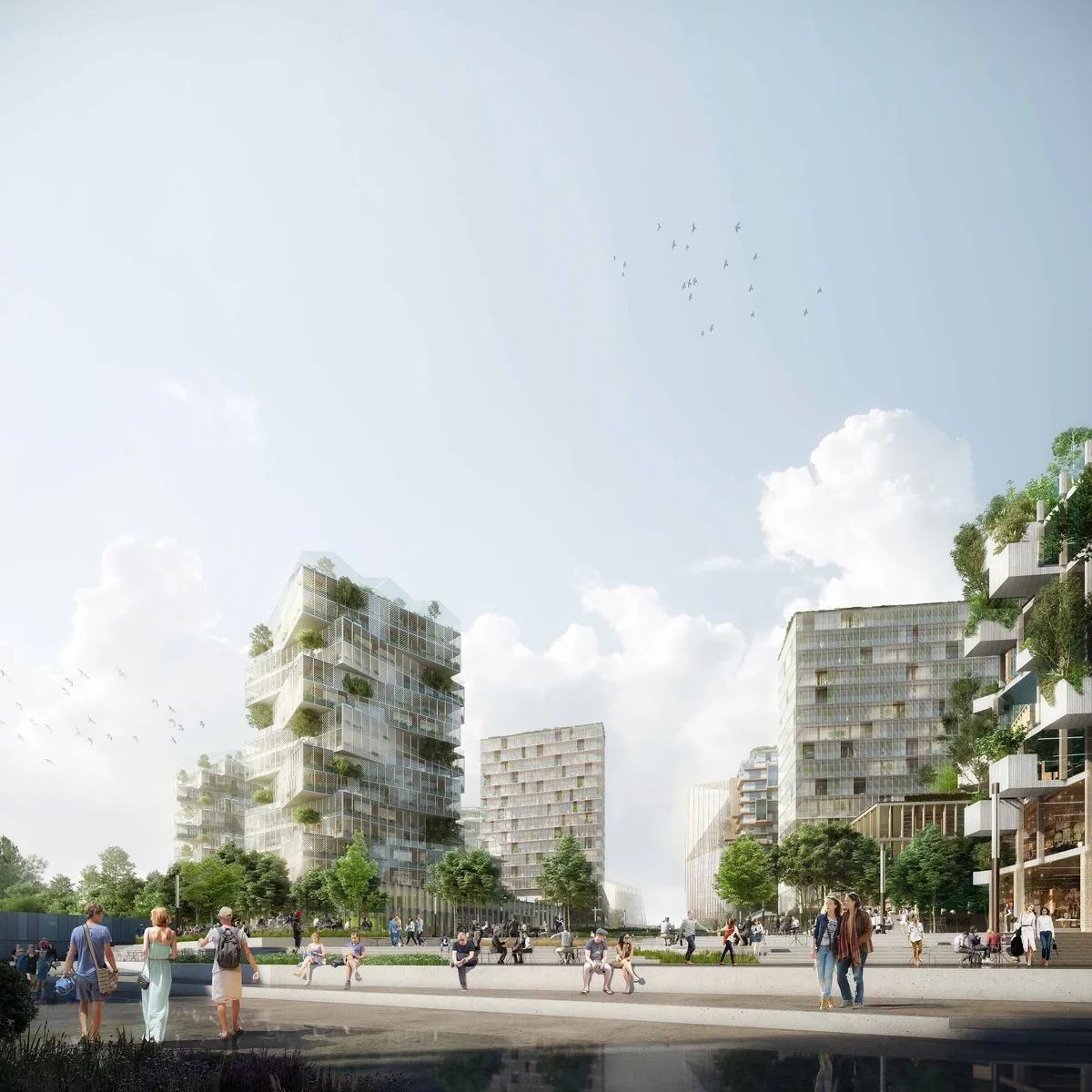
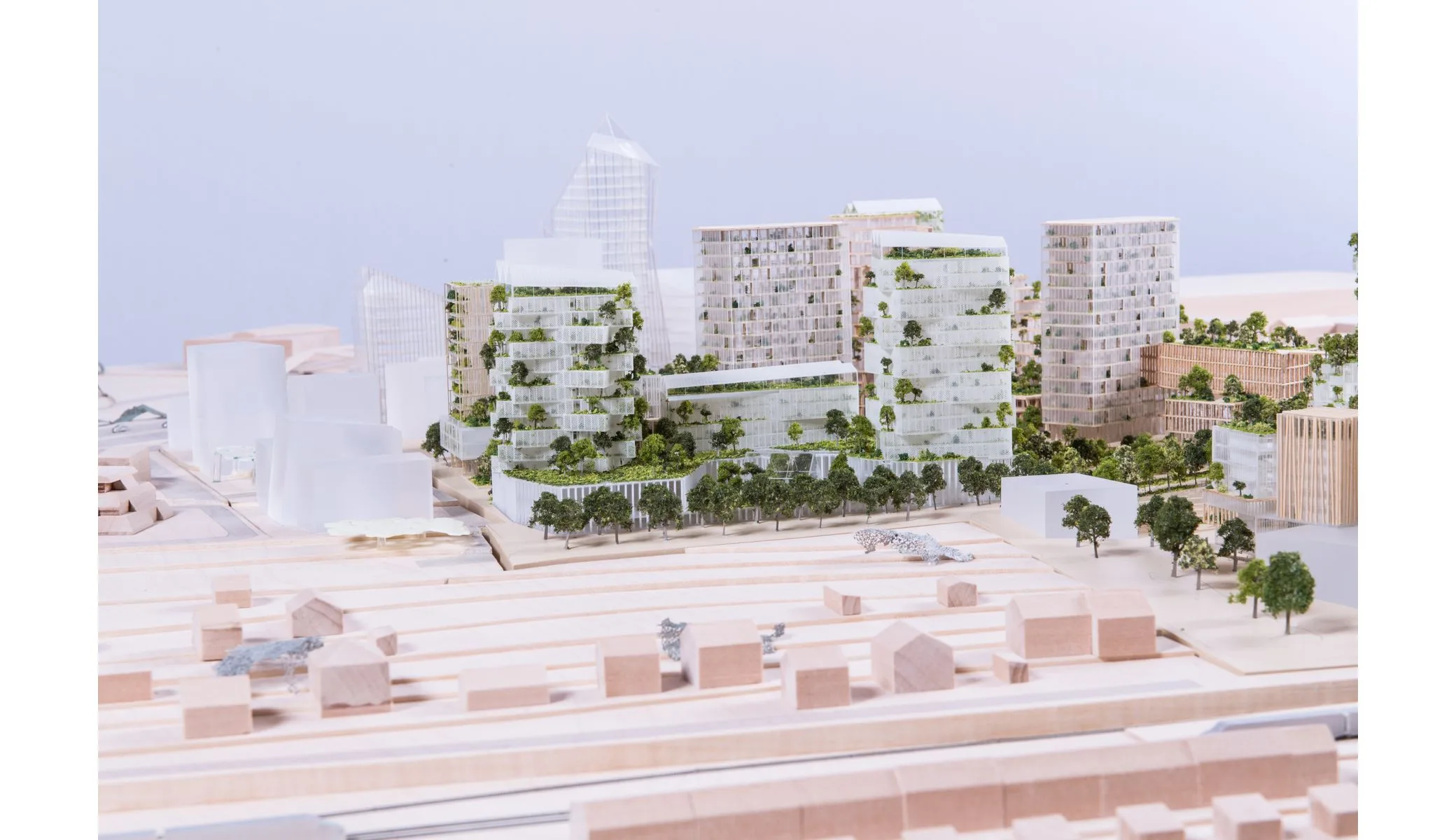
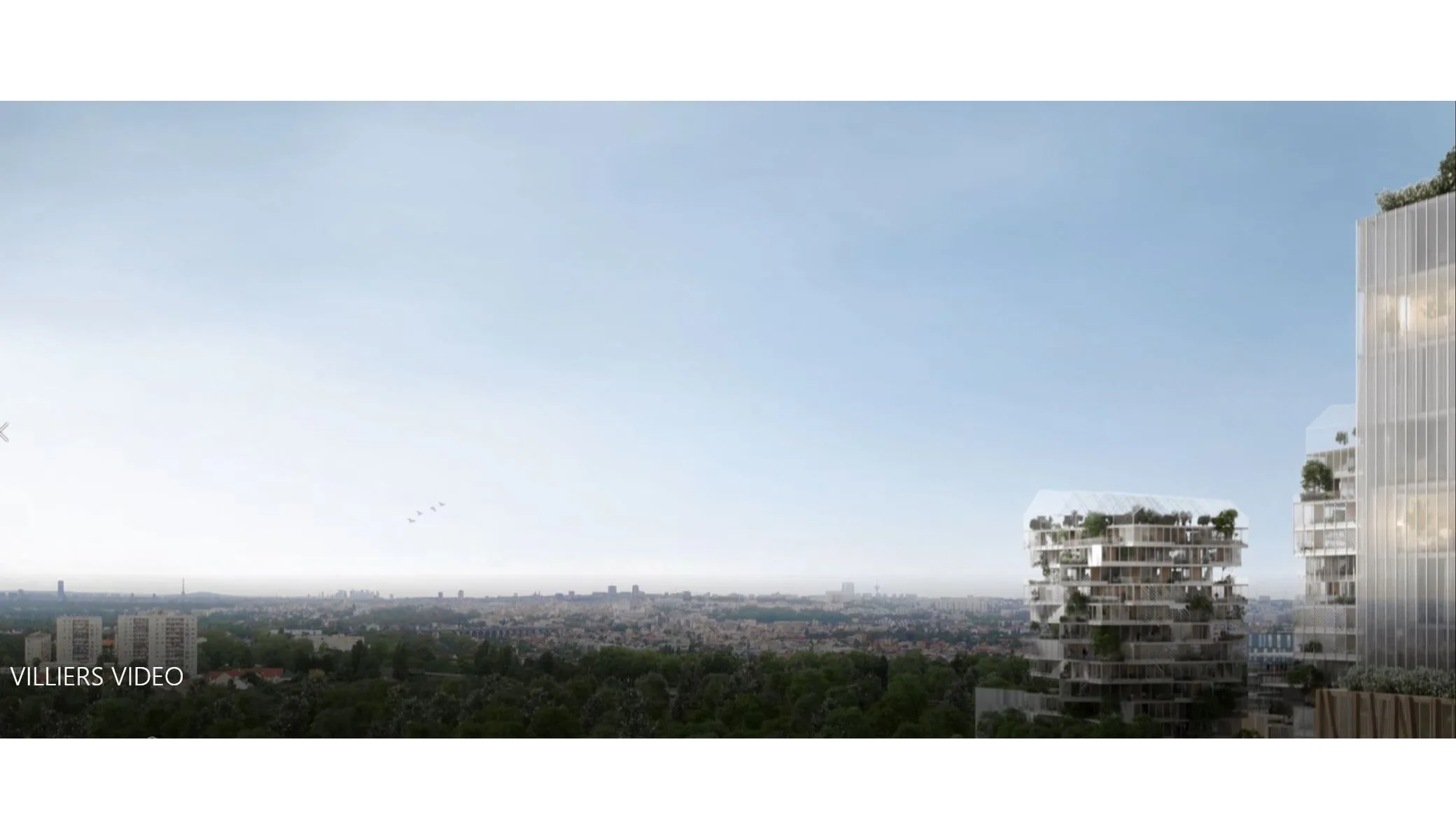
Ecotone proposes to create an unprecedented link between city and nature. A physical transitional link between the hillside park and the city, but also the desire to forge a connection toward a new societal model: by working on the porosity between built form and vegetation, Ecotone offers the possibility of a new relationship between humans and nature, a more virtuous relationship that is more respectful of the environment. This profoundly biophilic logic contributes not only to the well-being of the building's occupants but also aims to guide behaviors toward greater sobriety and ecological awareness. Our project takes the form of a building terraced along the slope and carved with patios that provide interior lighting for living and working spaces.
The 81,870 m² program combines offices, hotel, and retail, typologies usually treated as autonomous volumes. We chose to weave them into a **continuous landscape framework**, where each function benefits from direct contact with vegetation and natural light. This programmatic mix responds to the mutations of contemporary work: the hotel accommodates nomadic employees and international collaborators, retail irrigates the ground floor to create an active urban base, offices unfold in flexible floor plates opening onto planted terraces. Rather than a functional stack, we conceived a **tertiary ecosystem** where porosity between uses encourages exchanges, chance encounters, and the serendipity conducive to innovation.
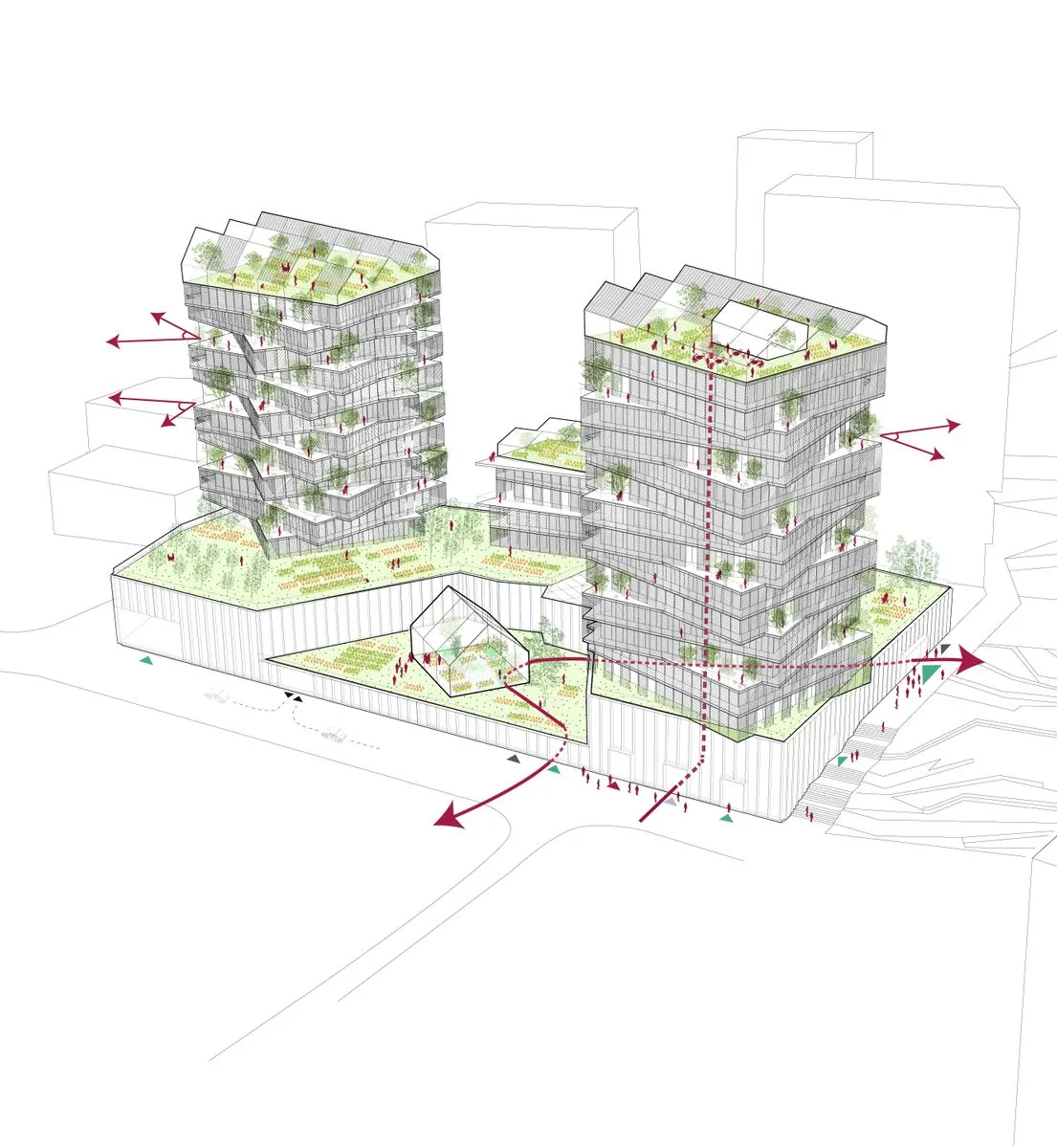
The architectural parti rests on a **constructed topography** that naturally extends the hillside slope. The building rises in broad vegetated terraces, descending progressively toward the city, like a mineral and inhabited continuation of the natural relief. This terraced section allows each level to benefit from generous exterior access, transforming what could have been a compact volume into a succession of **inhabitable horizons**. The patios carved into the building's heart function as vertical respirations, irrigating interior spaces with zenithal light and creating protected microclimates. These strategic voids are not simple light wells: they constitute genuine **ecological chambers**, sheltered from highway nuisances, where shared programs unfold, informal meeting rooms, relaxation spaces, collective vegetable gardens.
Ecotone's materiality rests on a **living skin system** that envelops the entire façade. A double skin of glass and vegetation protects the building from the highway's acoustic and thermal nuisances while maintaining visual transparency to the landscape. This filtering façade, inspired by contemporary mashrabiyas, is not ornament but an **active climatic infrastructure**: it buffers thermal variations, captures rainwater for irrigation, and shelters avian and entomological biodiversity. The load-bearing structures in low-carbon concrete are minimized in favor of punctual columns liberating vast flexible floor plates. The terraces, treated as thick planter slabs, receive differentiated substrates according to exposure and planted species, resistant grasses on the highway side, fruit-bearing shrubs in protected patios, climbing plants on vertical façades. This **vegetal stratification** creates visual and sensory depth that evolves with the seasons: spring blooms, summer foliage, autumn colors, winter structures.
Our environmental approach goes beyond simple energy performance to embrace an **integral ecology**. The orientation of terraces and depth of overhangs are calculated to optimize passive solar gains in winter while protecting from summer radiation. The patios function as natural thermal chimneys, evacuating warm air through draft and creating cross-ventilation currents. Rainwater management is entirely internalized: rooftop collection, storage in underground cisterns, redistribution for irrigating 15,000 m² of vegetated surfaces. Biosourced materials, wood for sunshades, raw earth for certain interior partitions, reduce the project's embodied energy. But the ambition exceeds technique: by creating **ecological continuity** between the hillside park and inhabited terraces, Ecotone becomes a biological corridor that compensates for urban fragmentation. Integrated nest boxes, melliferous species, absence of pesticides: we conceive the building as an **ecotone** in the ecological sense of the term, that transition zone where two distinct ecosystems meet and intermingle, creating biodiversity superior to the sum of the parts.
The aerial walkways connecting certain floor plates at levels R+4 and R+5 are not simple circulation: they materialize the **collaborative horizontality** we favor over the hierarchical verticality of traditional towers. Suspended above the patios, they offer plunging views onto interior gardens, constantly recalling the presence of the living. These spaces of wandering become places of informal encounter, pause, visual decompression, essential to the well-being and creativity of tertiary workers.
In building permit phase since 2017 for delivery scheduled in 2025, Ecotone embodies our conviction that tertiary architecture can and must become an **agent of ecological regeneration** rather than a consumer of resources. In a dense and constrained metropolitan context, we demonstrate that it is possible to build massively while increasing the presence of the living, improving occupant comfort, and reducing environmental footprint. The building no longer opposes the landscape: it becomes an inhabited extension, a fragment of cultivated nature where work, hospitality, and commerce coexist in dynamic equilibrium. This project constitutes for us a manifesto: biophilic architecture is not a decorative luxury but an existential necessity, the condition of a future urbanity capable of simultaneously accommodating metropolitan intensity and ecological resilience.
- Lieu
- Villiers-sur-Marne, France
- Nature
- Logements
- Surface
- 16 549 m²
- Budget
- 28 M€ HT
- Concours
- 2017
- MOA
- Compagnie de Phalsbourg, Codeur & Compagnie, Emerige