Le Cristal
Le Cristal is an urban piece but also a 'landscape piece,' heir to a history that reaches back to the ancient landscapes of Nanterre. Reinterpreting the scale of today's buildings, it offers new sensations of nature under this climate, which will preserve the biodiversity of the natural environments of the city of Nanterre.
**Le Cristal** emerges in the fabric of Nanterre as both an urban and landscape response, heir to a historical stratification that we sought to extend rather than erase. We approached this project for Bouygues Immobilier between 2015 and 2020 with the conviction that the tower must no longer impose itself as an autonomous object, but inscribe itself in a **territorial continuity** where architecture and nature nourish each other. Nanterre, a city in perpetual metamorphosis, has welcomed for several decades architectural interventions that seek to reconcile density and quality of life. Our intention was to contribute to this history by proposing an urban piece that is not only built, but also planted, breathed, inhabited by the living.
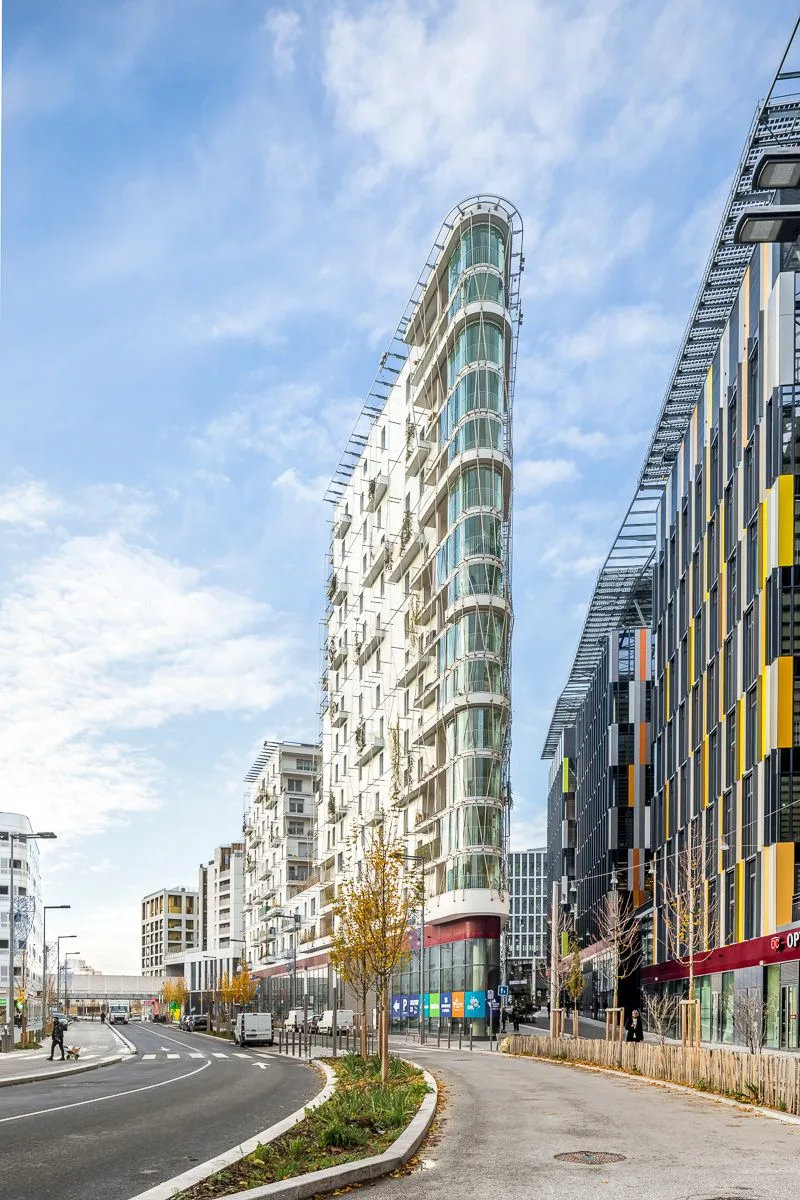
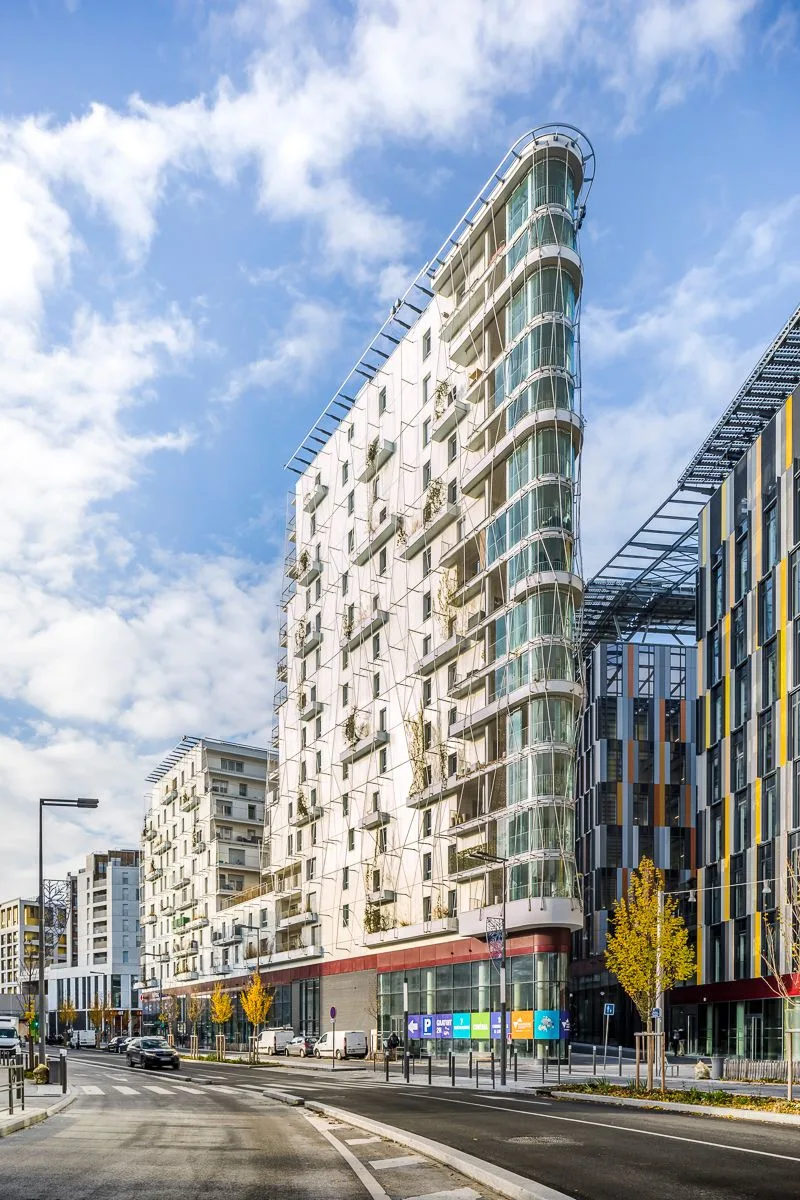
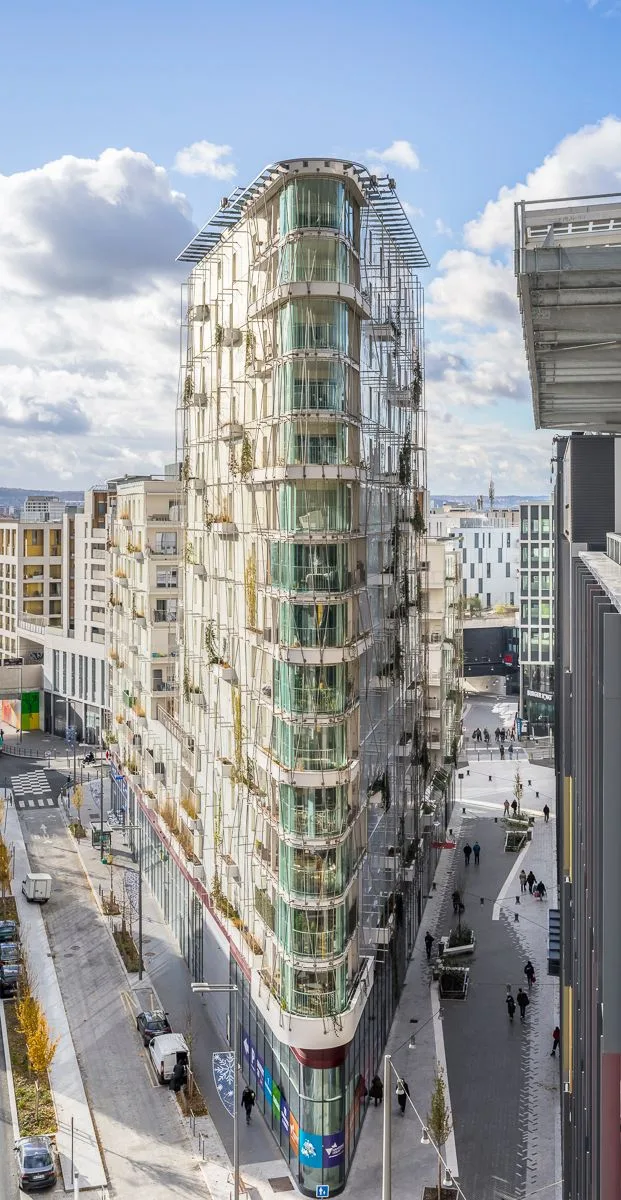
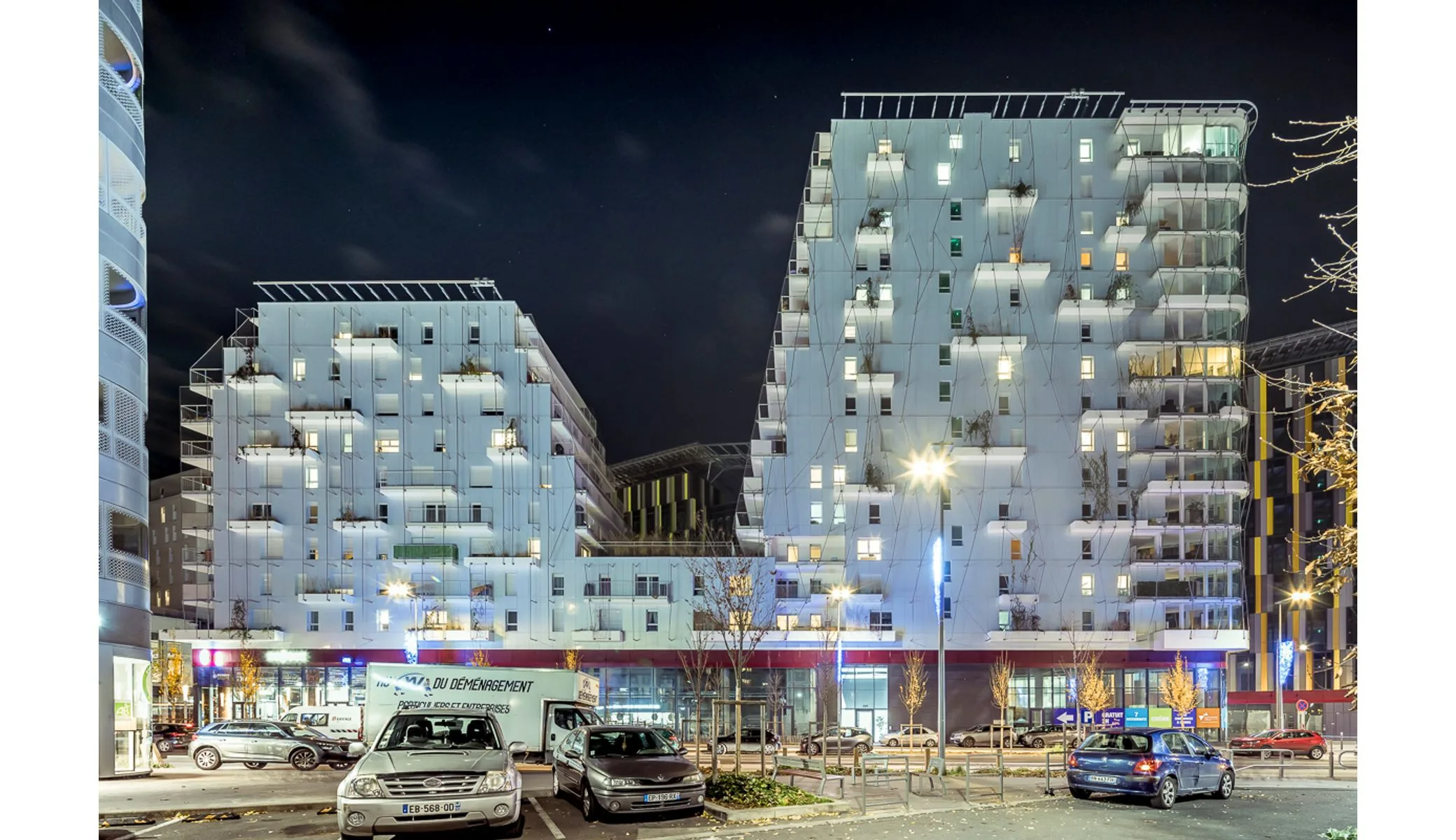
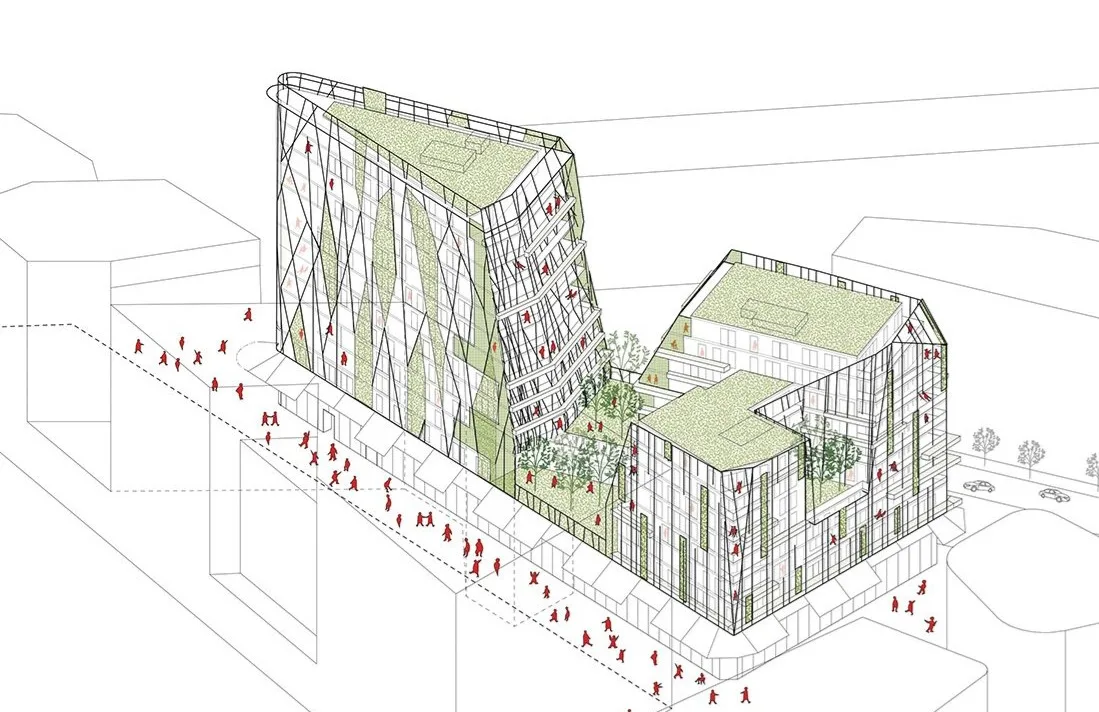
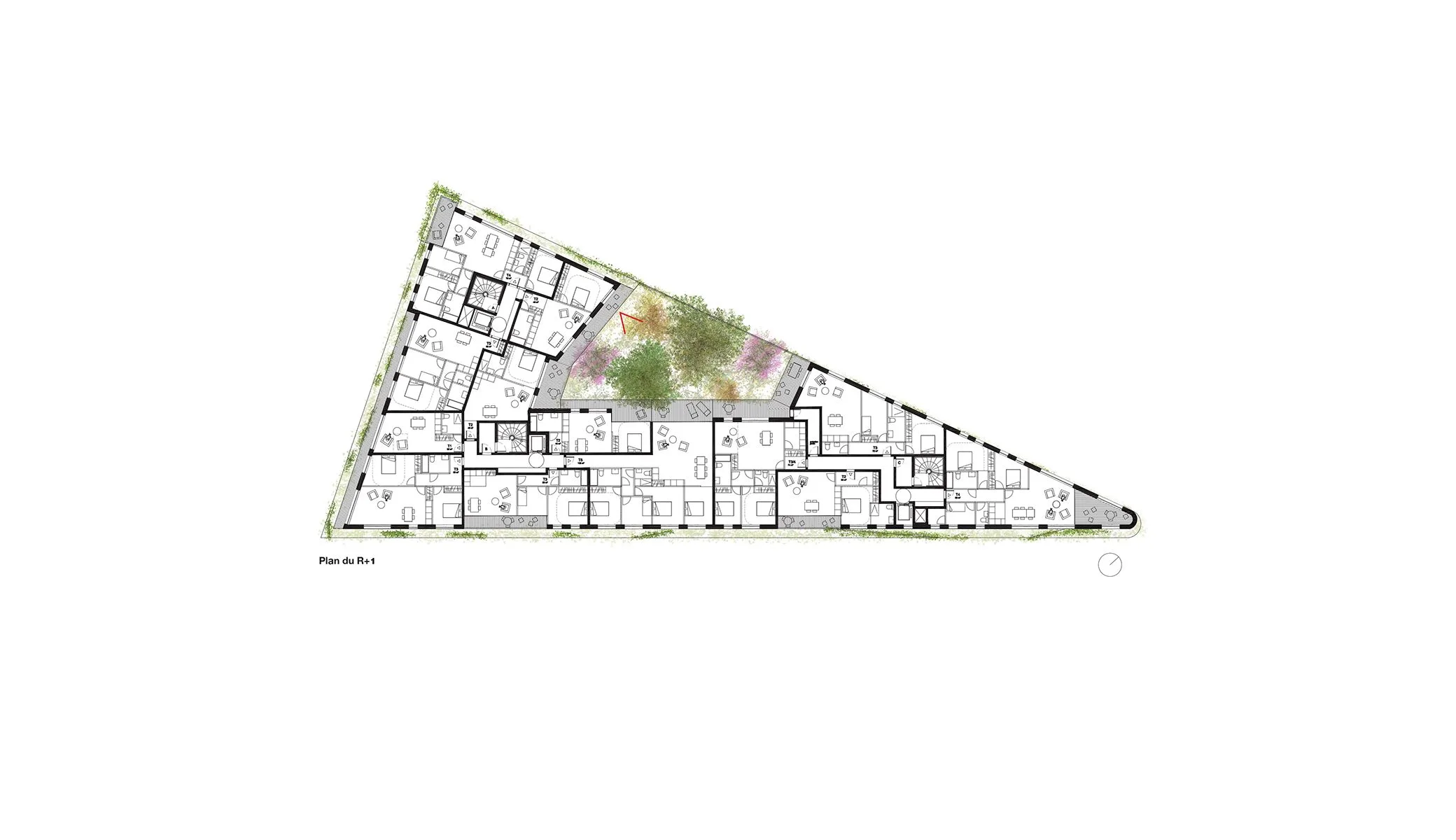
The program brings together **6,900 square meters** distributed across three emergences: a residential tower of twelve floors, a second of nine, a third of seven, all placed on a continuous commercial base that dialogues with the Allée de Corse and the central forum of the new district "Nanterre, Cœur de Quartier." This base is not a simple functional ground floor: it structures the public space, welcomes cafés and shops, orchestrates pedestrian flows, and above all articulates the transition between the street and the overhanging dwellings. We wanted this foundation to be porous, welcoming, allowing real **urban permeability** between the different sequences of the district.
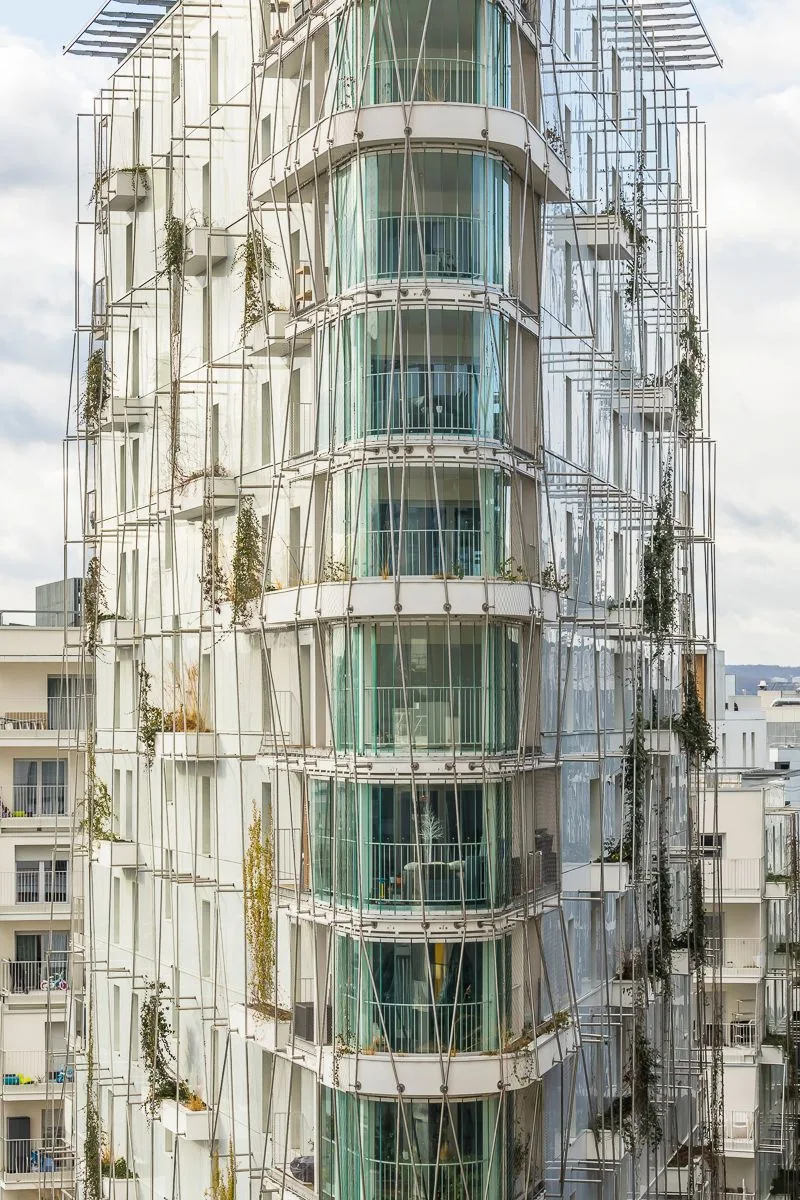
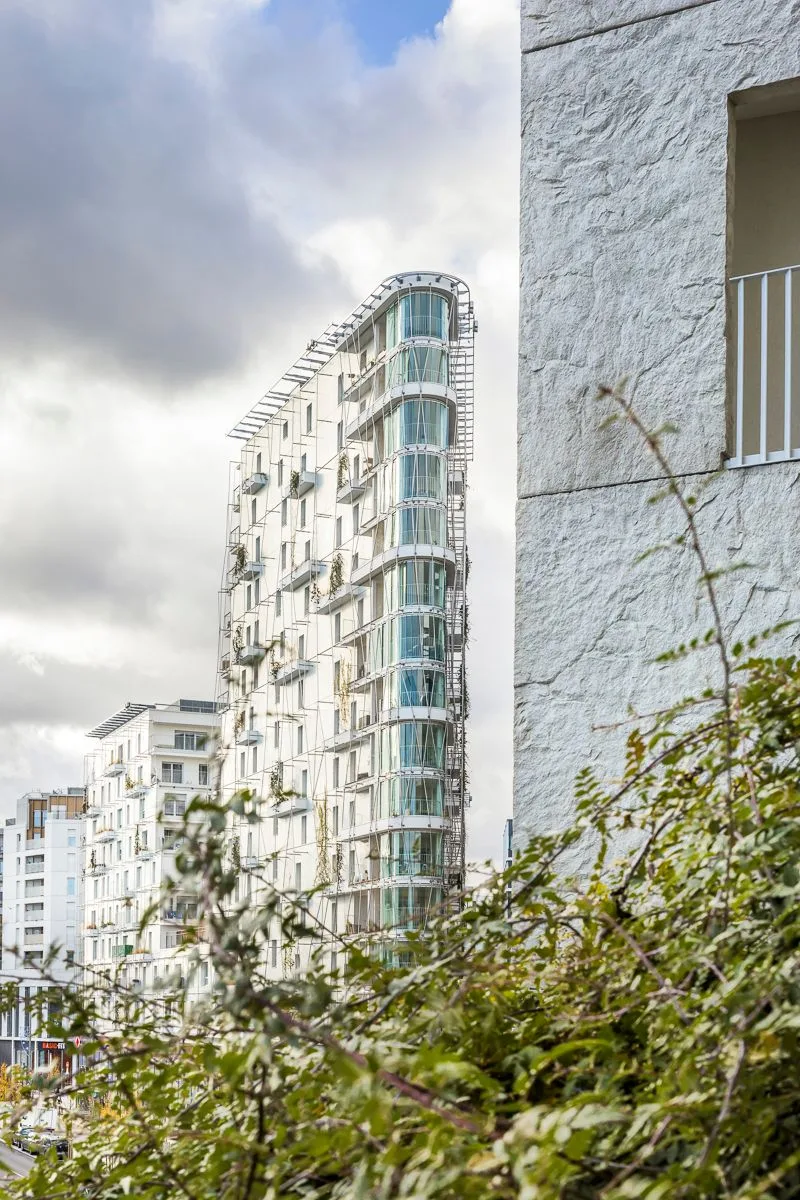
The main tower, the one that rises to twelve levels, carries within it the idea of the **crystal**: not as a decorative metaphor, but as a generative principle. We worked the volumetry through **fragmentation and faceting**, breaking the angles, cutting the edges so that light does not slide uniformly over the façades but breaks, reflects, and multiplies there. The transparent prow that marks the summit captures solar rays according to the hours and seasons, transforming the building into an active luminous device. This formal research is not gratuitous: it responds to a desire to inscribe the project in a **dialogue with the sky**, to ensure that the edifice changes appearance according to the viewing angle, according to the weather, according to the sun's course. The crystal is both matter and metaphor, it evokes preciousness, rarity, the transformation of the ordinary into the singular.
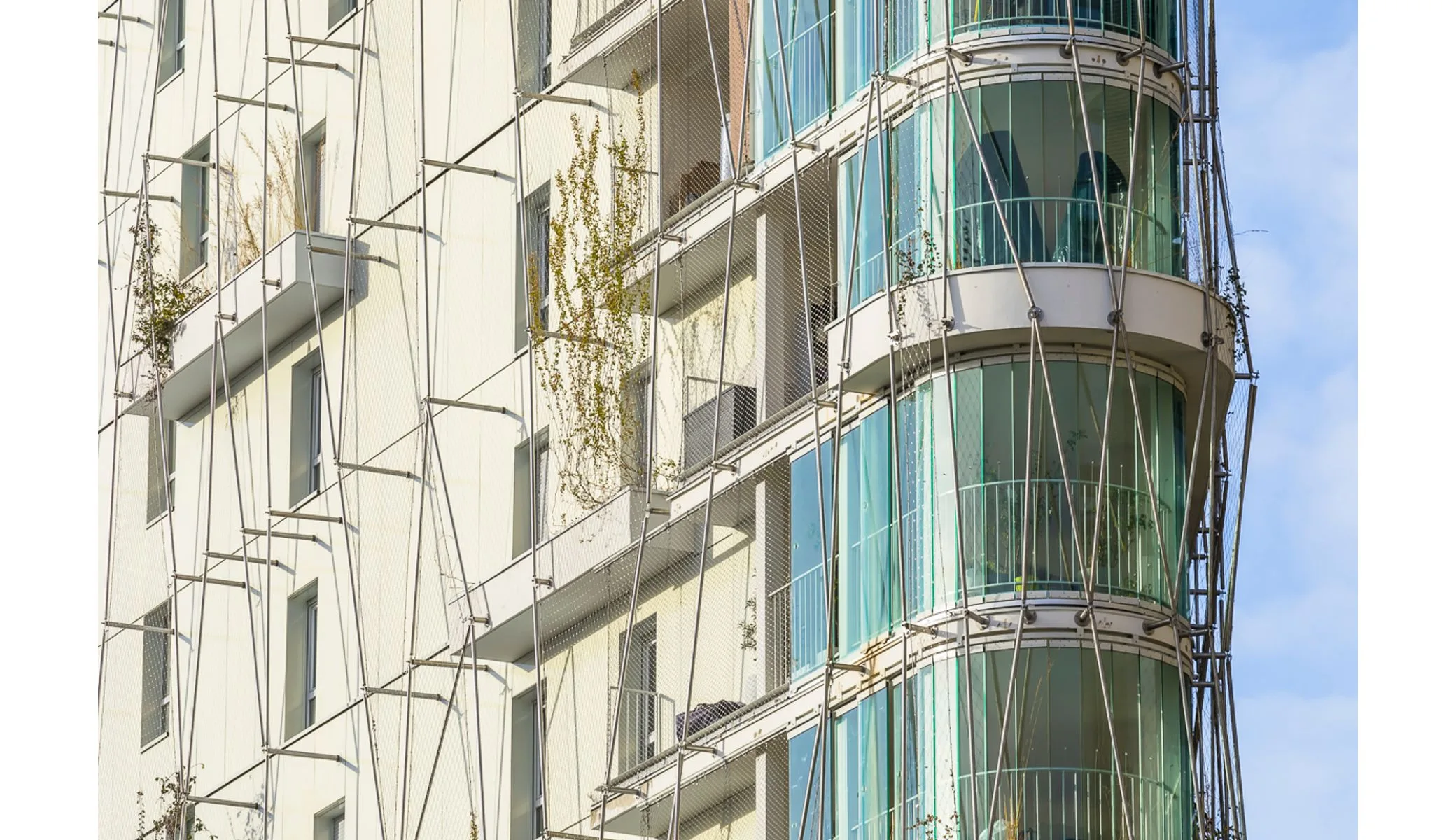
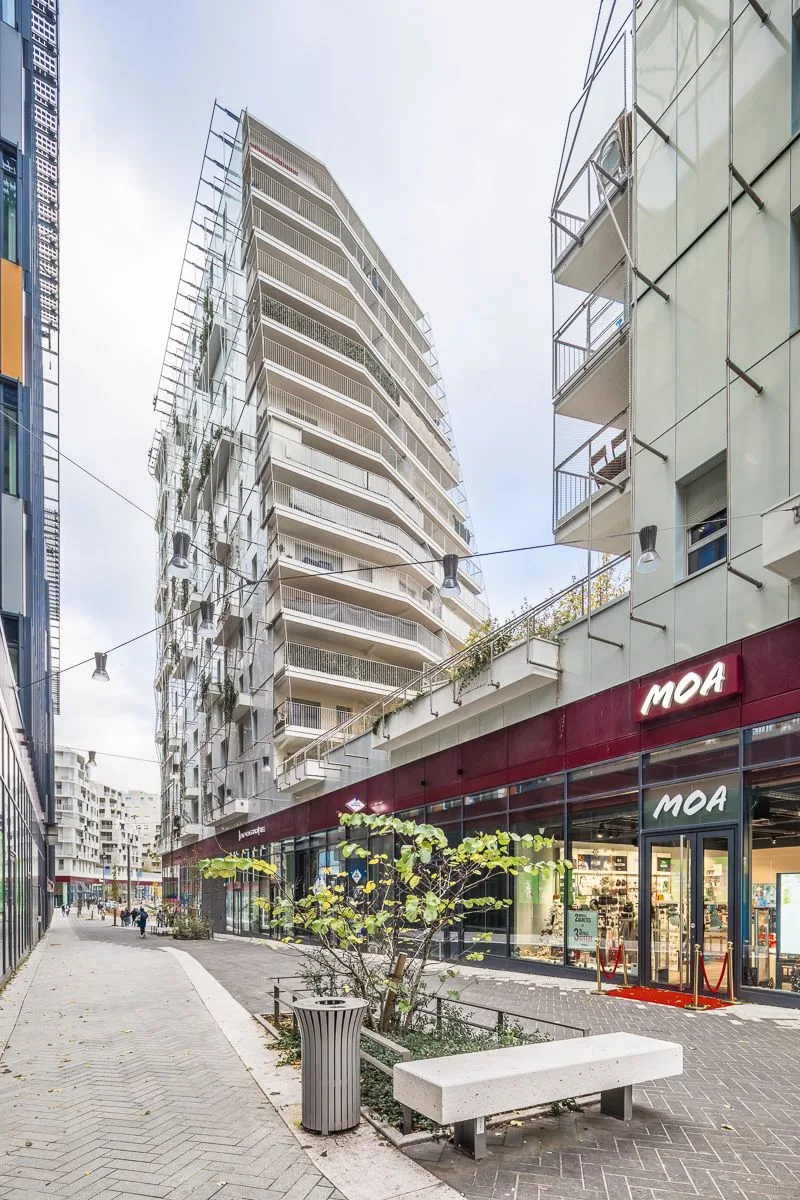
But we do not conceive of the tower as an isolated monolith. This is why we designed a **cascade of planted terraces** that connect the tower to the Allée de Corse. These terraces are not simple balconies: they are **inhabited landscape strata**, suspended gardens that allow nature to climb along the building, to soften the angles, to temper the façades. This architecture of vegetation responds to an ecological but also sensory requirement: we wanted the inhabitants to be able to live in contact with a nature that is not residual, relegated to interstices, but constitutive of the project itself. The cascading gardens create a **vertical architectural promenade**, a sequence of intermediate exterior spaces between the street and the dwelling, between the public and the intimate.
From an environmental standpoint, this profusion of vegetation is not insignificant. It participates in the **preservation of local biodiversity**, offers refuges for urban fauna, contributes to the absorption of rainwater, and tempers heat islands. We worked with landscape architects to identify **local species** adapted to the climate of the Île-de-France region, capable of flourishing on terraces, of resisting winds at altitude, of withstanding thermal variations. Nature here becomes the necessary counterpoint to urbanization, it introduces the notion of **fugacity, seasonality, and long time** in an environment dominated by instantaneity and the mineral.
The commercial base, meanwhile, articulates this green verticality with the horizontality of the street. The shops and cafés open directly onto the forum, create flows, encounters, spontaneous appropriations. We designed a **fluid continuity** between the main alley and the heart of the district, an architectural promenade that is both obvious and rich, legible and surprising. Commerce does not come as a supplement to housing: it structures usage, it creates a neighborhood, it generates an active and diversified urban life.
Le Cristal is part of the larger ensemble of "Nanterre, Cœur de Quartier," an ambitious urban project that rethinks an entire territory. Our tower, the culminating point of this operation, assumes an **iconic function** without falling into formal gesticulation. It aims to be a landmark in the urban landscape, a signal of a neighborhood in the making, but also a testimony to a way of building the contemporary city: dense but breathable, vertical but vegetated, technical but sensitive. It symbolizes a **sustainable future** not as a slogan but as a concrete approach, embodied in the very materiality of the project.
For us, this operation illustrates a profound conviction: architecture must be both **urban piece and landscape piece**, it must assume its constructed condition while welcoming the living, it must structure space while leaving room for the unexpected, the fugitive, the breath. Le Cristal is a tower, certainly, but it is also a vertical garden, a living place traversed by the seasons, a fragment of the city that seeks to reconcile the inhabitants with a form of nature that is domesticated but vibrant, cultivated but sincere. It is this tension between mineral and vegetal, between density and porosity, between form and light, that constitutes architecture for us today.
The program brings together **6,900 square meters** distributed across three emergences: a residential tower of twelve floors, a second of nine, a third of seven, all placed on a continuous commercial base that dialogues with the Allée de Corse and the central forum of the new district "Nanterre, Cœur de Quartier." This base is not a simple functional ground floor: it structures the public space, welcomes cafés and shops, orchestrates pedestrian flows, and above all articulates the transition between the street and the overhanging dwellings. We wanted this foundation to be porous, welcoming, allowing real **urban permeability** between the different sequences of the district.
The main tower, the one that rises to twelve levels, carries within it the idea of the **crystal**: not as a decorative metaphor, but as a generative principle. We worked the volumetry through **fragmentation and faceting**, breaking the angles, cutting the edges so that light does not slide uniformly over the façades but breaks, reflects, and multiplies there. The transparent prow that marks the summit captures solar rays according to the hours and seasons, transforming the building into an active luminous device. This formal research is not gratuitous: it responds to a desire to inscribe the project in a **dialogue with the sky**, to ensure that the edifice changes appearance according to the viewing angle, according to the weather, according to the sun's course. The crystal is both matter and metaphor, it evokes preciousness, rarity, the transformation of the ordinary into the singular.
But we do not conceive of the tower as an isolated monolith. This is why we designed a **cascade of planted terraces** that connect the tower to the Allée de Corse. These terraces are not simple balconies: they are **inhabited landscape strata**, suspended gardens that allow nature to climb along the building, to soften the angles, to temper the façades. This architecture of vegetation responds to an ecological but also sensory requirement: we wanted the inhabitants to be able to live in contact with a nature that is not residual, relegated to interstices, but constitutive of the project itself. The cascading gardens create a **vertical architectural promenade**, a sequence of intermediate exterior spaces between the street and the dwelling, between the public and the intimate.
From an environmental standpoint, this profusion of vegetation is not insignificant. It participates in the **preservation of local biodiversity**, offers refuges for urban fauna, contributes to the absorption of rainwater, and tempers heat islands. We worked with landscape architects to identify **local species** adapted to the climate of the Île-de-France region, capable of flourishing on terraces, of resisting winds at altitude, of withstanding thermal variations. Nature here becomes the necessary counterpoint to urbanization, it introduces the notion of **fugacity, seasonality, and long time** in an environment dominated by instantaneity and the mineral.
The commercial base, meanwhile, articulates this green verticality with the horizontality of the street. The shops and cafés open directly onto the forum, create flows, encounters, spontaneous appropriations. We designed a **fluid continuity** between the main alley and the heart of the district, an architectural promenade that is both obvious and rich, legible and surprising. Commerce does not come as a supplement to housing: it structures usage, it creates a neighborhood, it generates an active and diversified urban life.
Le Cristal is part of the larger ensemble of "Nanterre, Cœur de Quartier," an ambitious urban project that rethinks an entire territory. Our tower, the culminating point of this operation, assumes an **iconic function** without falling into formal gesticulation. It aims to be a landmark in the urban landscape, a signal of a neighborhood in the making, but also a testimony to a way of building the contemporary city: dense but breathable, vertical but vegetated, technical but sensitive. It symbolizes a **sustainable future** not as a slogan but as a concrete approach, embodied in the very materiality of the project.
For us, this operation illustrates a profound conviction: architecture must be both **urban piece and landscape piece**, it must assume its constructed condition while welcoming the living, it must structure space while leaving room for the unexpected, the fugitive, the breath. Le Cristal is a tower, certainly, but it is also a vertical garden, a living place traversed by the seasons, a fragment of the city that seeks to reconcile the inhabitants with a form of nature that is domesticated but vibrant, cultivated but sincere. It is this tension between mineral and vegetal, between density and porosity, between form and light, that constitutes architecture for us today.
- Lieu
- Nanterre
- Nature
- Logements
- Surface
- 6 900 m²
- Budget
- 10.5 M€ HT
- Concours
- 2015
- Livraison
- 2020
- MOA
- Bouygues Immobilier