La Victorine
A jewel of French and international cinema studios, the Victorine studios were inaugurated in 1919. These soon-to-be-centenarian studios have been the setting for the greatest French and international productions. Marcel Carné filmed Les Enfants du Paradis (1945) there, Roger Vadim shot Et Dieu créa la femme, the mythical role of Brigitte Bardot, and François Truffaut dedicated one of his greatest achievements there, La Nuit Américaine. Renowned international directors have also placed their cameras there, including Rex Ingram for The Four Horsemen of the Apocalypse and Alfred Hitchcock who filmed part of his movie Under Capricorn there.
We were approached by the City of Nice in 2018 to conduct a definition study on the future of the Victorine studios, a century-old heritage of French cinema. Inaugurated in 1919, these studios have been the theater of mythical productions: *Les Enfants du Paradis* by Marcel Carné, *Et Dieu créa la femme* by Roger Vadim, *La Nuit Américaine* by François Truffaut, or *Under Capricorn* by Alfred Hitchcock. But for several decades, the Victorine has lost its productive vitality. Buildings remain vacant, soundstages abandoned. Faced with this erosion, our mission consisted of imagining how to breathe life back into this emblematic place, not through nostalgia, but through a profound programmatic and urban refoundation.
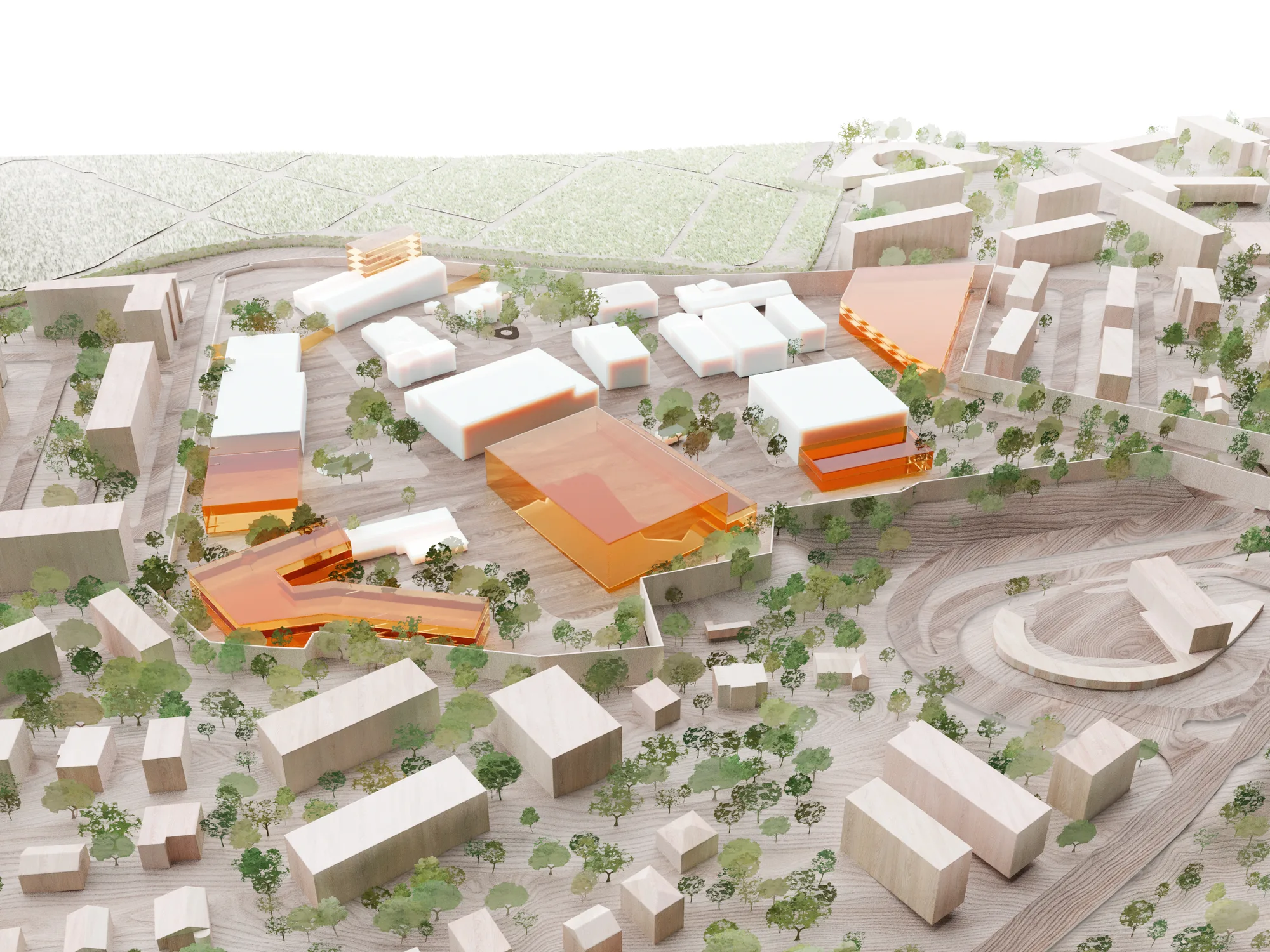
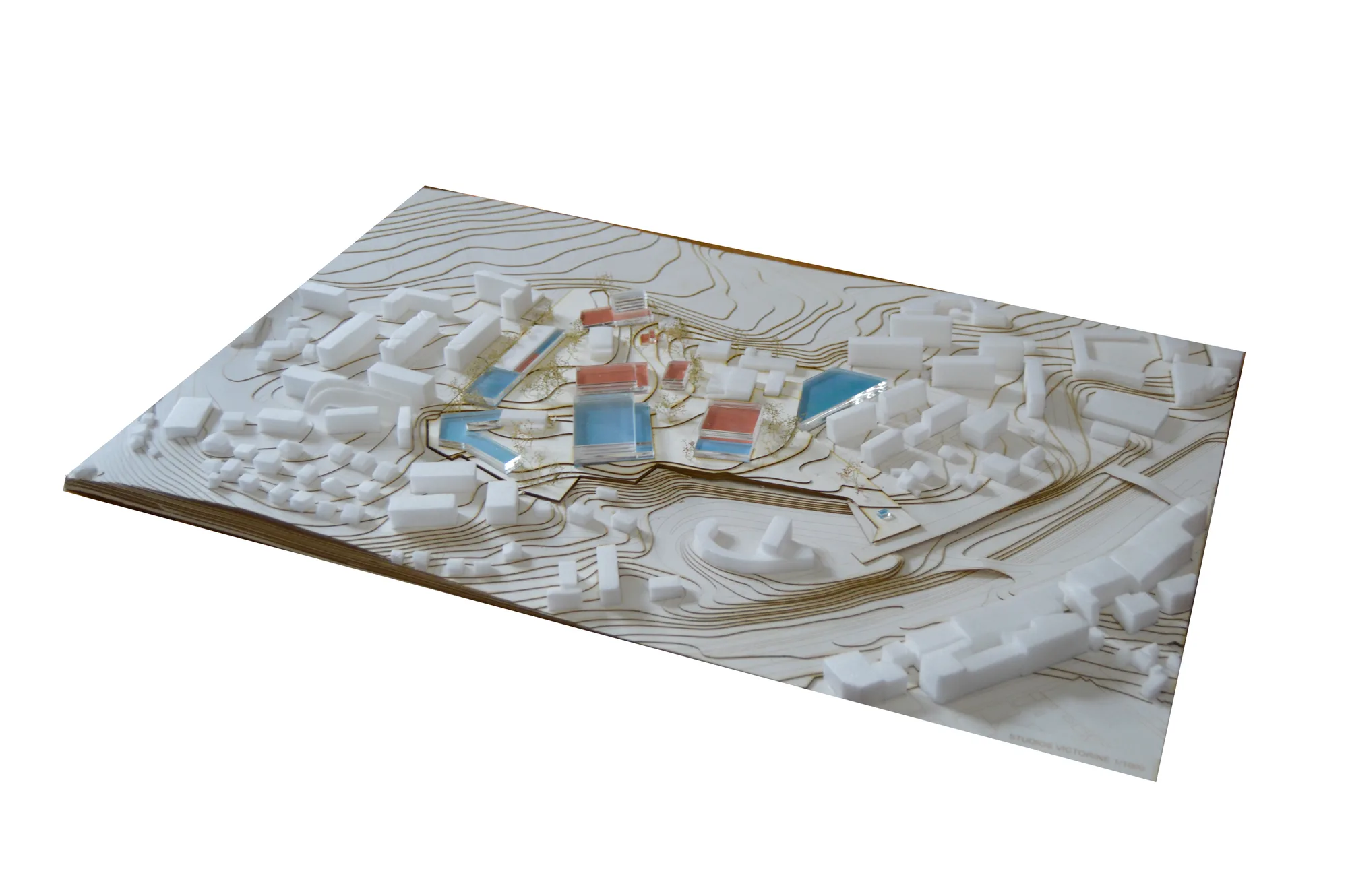
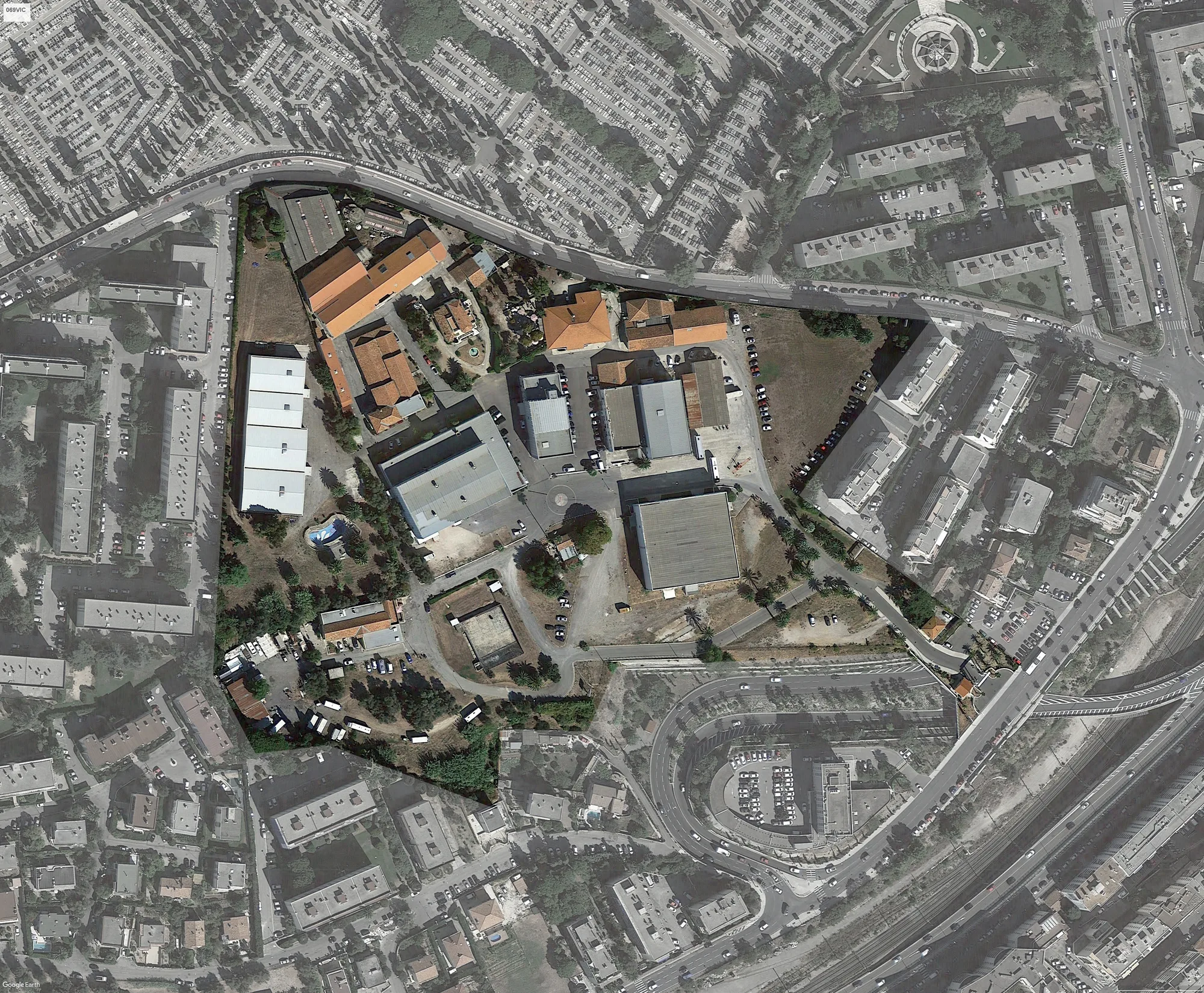
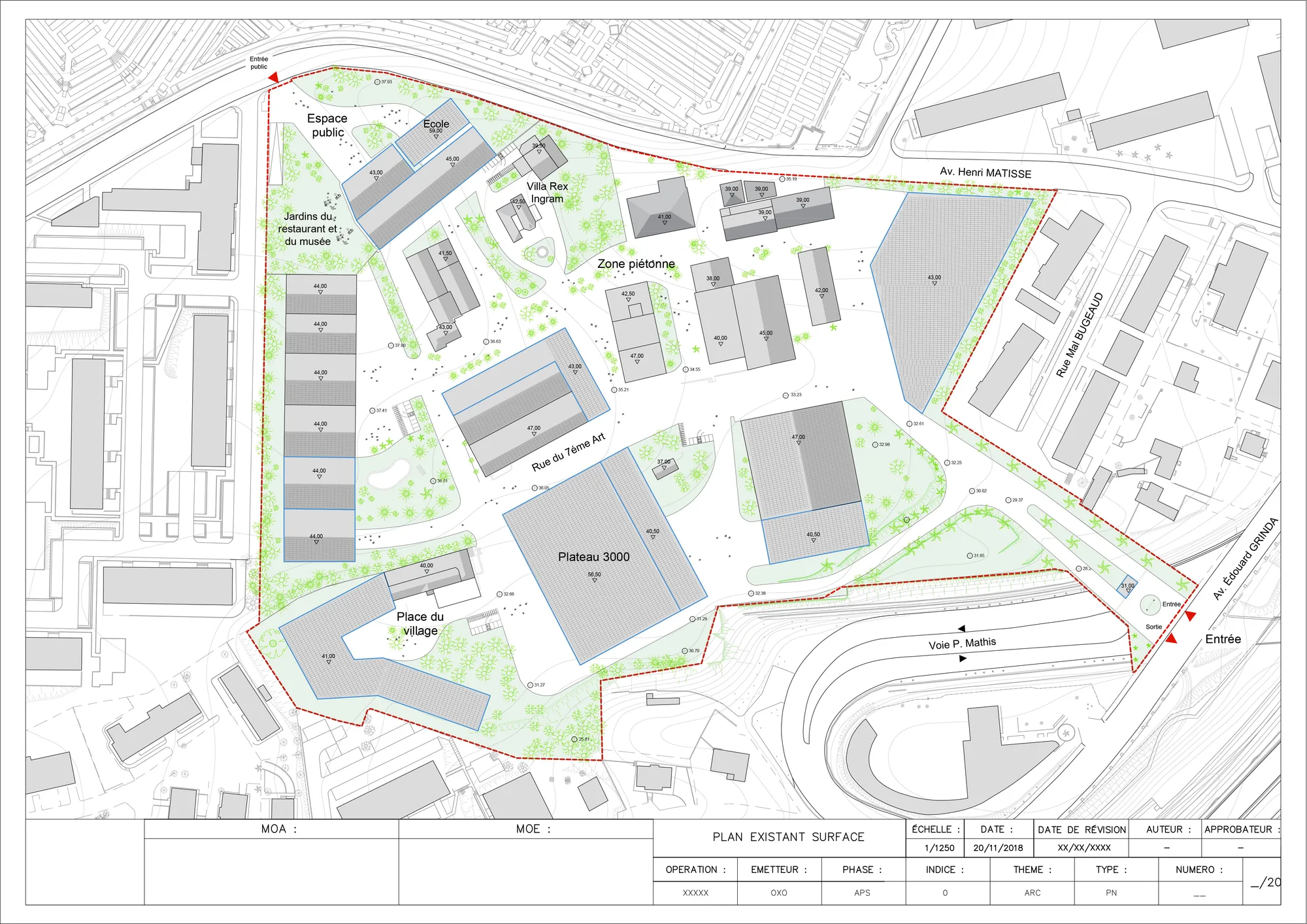
**The site itself carries a singular history**, that of a production enclosure at the heart of a Nice urban fabric that has densified around it. It occupies a significant surface area, nearly 33,000 m², in a relatively homogeneous residential neighborhood. This enclave constitutes an urban anomaly, a closed territory, opaque, almost impossible to find for those unaware of its existence. However, its location offers strategic potential: near circulation axes, accessible without being isolated, this site could become a true cultural and economic crossroads. We immediately understood that the challenge was not only to rehabilitate existing buildings, but to envision a **new urbanity** for the Victorine, capable of combining professional creation and public openness, production intimacy and knowledge sharing.
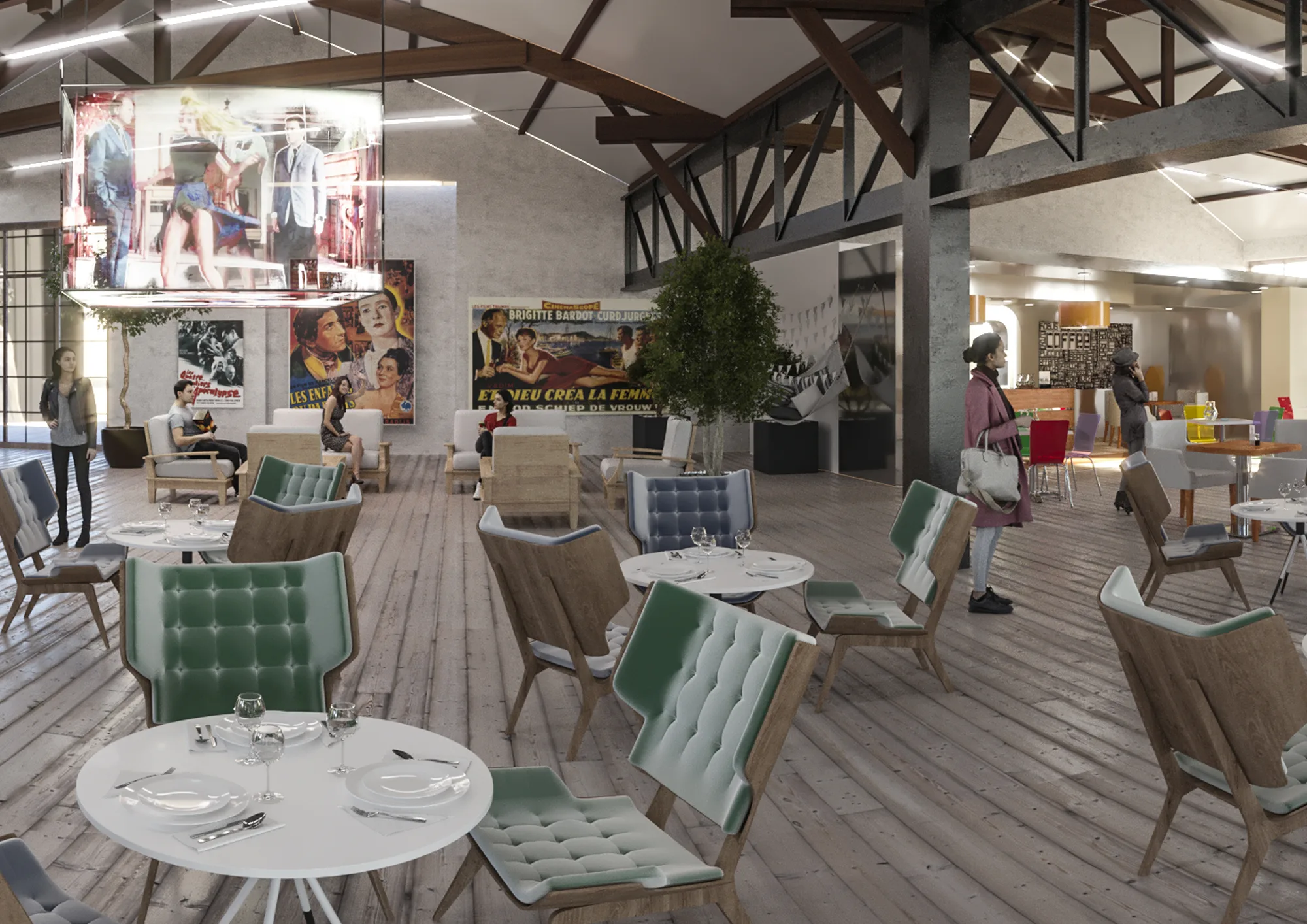
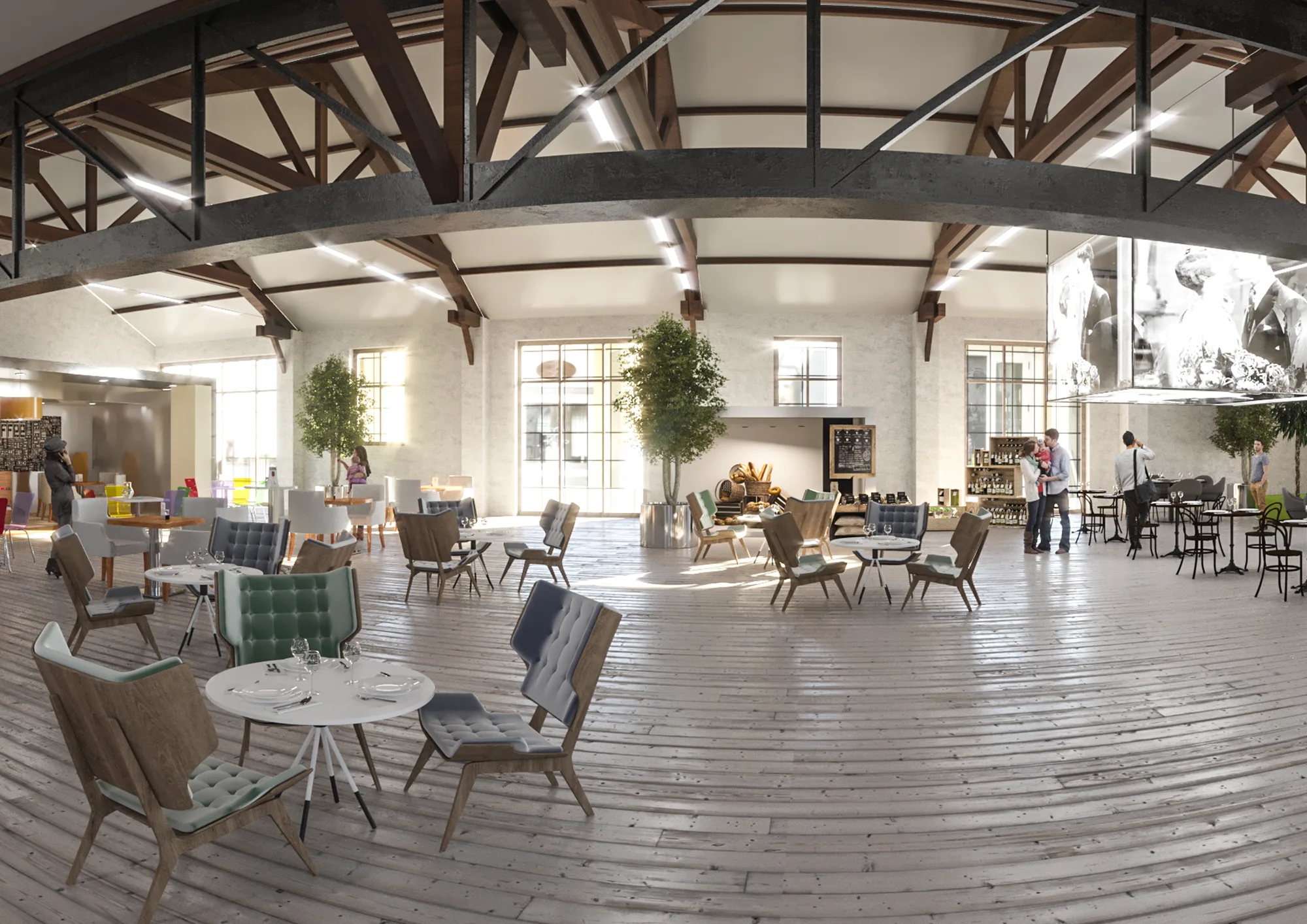
The outlined program rests on a double ambition: maintaining and developing film studio activity while opening the place to other functions related to image, transmission, and the creative economy. Filming studios, postproduction spaces, offices for technical professions, but also media library, exhibition spaces, training areas, neighborhood shops. The idea was to make the Victorine a **city within the city**, a complete ecosystem dedicated to cultural and creative industries. Not a theme park frozen in cinema memory, but a contemporary working tool, attractive for national and international productions, where professionals would find all the necessary resources for their projects.
We approached the study by questioning the very notion of studio. Historically, film studios are **productive fortresses**, withdrawn into themselves, hostile to outside gaze. At the Victorine, this enclosure logic contributed to its decline: by closing itself off from the city, the place cut itself off from its economic and social environment. Our approach consisted of reversing this logic. How to open without revealing everything? How to make this boundary porous without compromising the confidentiality imperatives inherent to filming? We imagined a programmatic stratification, with protected production zones at the heart of the site and public functions on the periphery, thus creating interfaces between the world of cinema and the inhabitants of Nice.
The **materiality** of the project had to dialogue with the site's industrial heritage, its hangars, its soundstages with metal frameworks, its modest facades. We envisioned a sober architecture, built with durable materials, raw concrete, metal, glass, capable of composing with the existing without pastiche. Some historic buildings deserved to be preserved, rehabilitated, reinvested. Others, devoid of heritage value, could be demolished to free up space, densify, create breathing room, interior courtyards, traversing gardens. The challenge was not to raze everything, but to **compose a sedimentation**, mixing traces of the past and contemporary interventions. We also reflected on the question of heights: how to densify without crushing the surrounding neighborhood? How to create visual landmarks while respecting local scale? These questions nourished our volumetric sketches, our sunlight studies, our reflections on views and perspectives.
On the environmental level, the study integrated strong ecological concerns from the outset. Film studios are massive consumers of energy, notably for lighting, soundstage air conditioning, technical flow management. We explored paths for **energy mutualization**, the integration of photovoltaic devices, rainwater recovery, the creation of cooling islands through tree planting and partial soil de-sealing. The idea was to make the Victorine a model of responsible cultural production, where technical performance and ecological sobriety would not oppose each other, but mutually reinforce each other. We also worked on mobility, imagining soft circulation within the site, facilitated connections with public transportation, a reduction in automobile dependence.
What particularly interested us in this project was its **collective and unifying** dimension. The Victorine should not be a simple real estate tool, but a place of encounter, transmission, learning. The media library, for example, could become a resource center on cinema and image, open to students, researchers, cinephiles. The offices should welcome not only production companies, but also startups specialized in special effects, virtual reality, new narrative formats. By bringing together these actors, by favoring informal exchanges, by creating synergies, the Victorine could become an **innovation hub** for the audiovisual industry, on a regional, national, and perhaps even European scale.
Our study, conducted in 2018, made it possible to measure the potential for embellishment, densification, and reinvention of this exceptional site. It laid the foundations for an ambitious architectural and urban project, capable of restoring the Victorine's radiance, not through simple restoration of the past, but through the invention of a desirable future. Today, this work remains a reference for us, an exploration of possibilities, a manifesto for a cinema anchored in its territory, open to the world, conscious of its social and environmental responsibilities.
**The site itself carries a singular history**, that of a production enclosure at the heart of a Nice urban fabric that has densified around it. It occupies a significant surface area, nearly 33,000 m², in a relatively homogeneous residential neighborhood. This enclave constitutes an urban anomaly, a closed territory, opaque, almost impossible to find for those unaware of its existence. However, its location offers strategic potential: near circulation axes, accessible without being isolated, this site could become a true cultural and economic crossroads. We immediately understood that the challenge was not only to rehabilitate existing buildings, but to envision a **new urbanity** for the Victorine, capable of combining professional creation and public openness, production intimacy and knowledge sharing.
The outlined program rests on a double ambition: maintaining and developing film studio activity while opening the place to other functions related to image, transmission, and the creative economy. Filming studios, postproduction spaces, offices for technical professions, but also media library, exhibition spaces, training areas, neighborhood shops. The idea was to make the Victorine a **city within the city**, a complete ecosystem dedicated to cultural and creative industries. Not a theme park frozen in cinema memory, but a contemporary working tool, attractive for national and international productions, where professionals would find all the necessary resources for their projects.
We approached the study by questioning the very notion of studio. Historically, film studios are **productive fortresses**, withdrawn into themselves, hostile to outside gaze. At the Victorine, this enclosure logic contributed to its decline: by closing itself off from the city, the place cut itself off from its economic and social environment. Our approach consisted of reversing this logic. How to open without revealing everything? How to make this boundary porous without compromising the confidentiality imperatives inherent to filming? We imagined a programmatic stratification, with protected production zones at the heart of the site and public functions on the periphery, thus creating interfaces between the world of cinema and the inhabitants of Nice.
The **materiality** of the project had to dialogue with the site's industrial heritage, its hangars, its soundstages with metal frameworks, its modest facades. We envisioned a sober architecture, built with durable materials, raw concrete, metal, glass, capable of composing with the existing without pastiche. Some historic buildings deserved to be preserved, rehabilitated, reinvested. Others, devoid of heritage value, could be demolished to free up space, densify, create breathing room, interior courtyards, traversing gardens. The challenge was not to raze everything, but to **compose a sedimentation**, mixing traces of the past and contemporary interventions. We also reflected on the question of heights: how to densify without crushing the surrounding neighborhood? How to create visual landmarks while respecting local scale? These questions nourished our volumetric sketches, our sunlight studies, our reflections on views and perspectives.
On the environmental level, the study integrated strong ecological concerns from the outset. Film studios are massive consumers of energy, notably for lighting, soundstage air conditioning, technical flow management. We explored paths for **energy mutualization**, the integration of photovoltaic devices, rainwater recovery, the creation of cooling islands through tree planting and partial soil de-sealing. The idea was to make the Victorine a model of responsible cultural production, where technical performance and ecological sobriety would not oppose each other, but mutually reinforce each other. We also worked on mobility, imagining soft circulation within the site, facilitated connections with public transportation, a reduction in automobile dependence.
What particularly interested us in this project was its **collective and unifying** dimension. The Victorine should not be a simple real estate tool, but a place of encounter, transmission, learning. The media library, for example, could become a resource center on cinema and image, open to students, researchers, cinephiles. The offices should welcome not only production companies, but also startups specialized in special effects, virtual reality, new narrative formats. By bringing together these actors, by favoring informal exchanges, by creating synergies, the Victorine could become an **innovation hub** for the audiovisual industry, on a regional, national, and perhaps even European scale.
Our study, conducted in 2018, made it possible to measure the potential for embellishment, densification, and reinvention of this exceptional site. It laid the foundations for an ambitious architectural and urban project, capable of restoring the Victorine's radiance, not through simple restoration of the past, but through the invention of a desirable future. Today, this work remains a reference for us, an exploration of possibilities, a manifesto for a cinema anchored in its territory, open to the world, conscious of its social and environmental responsibilities.
- Lieu
- Nice, France
- Nature
- Culture / Studios de cinéma
- Surface
- 33 000 m²
- Concours
- 2018
- MOA
- Ville de Nice