La Perverie, Nantes
La Perverie residential complex in Nantes, architecture rooted in its context, urban patterns and green perspectives.
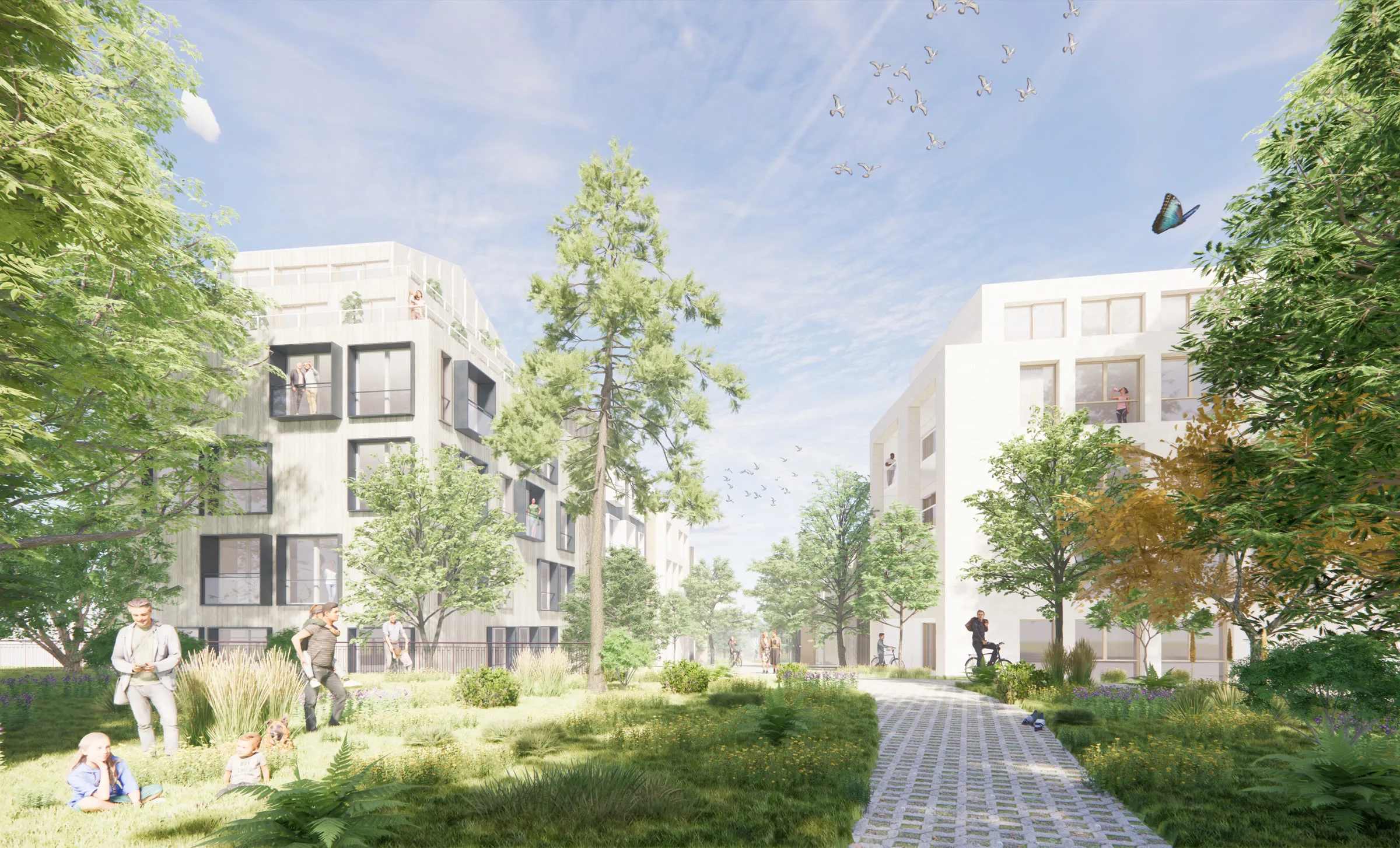
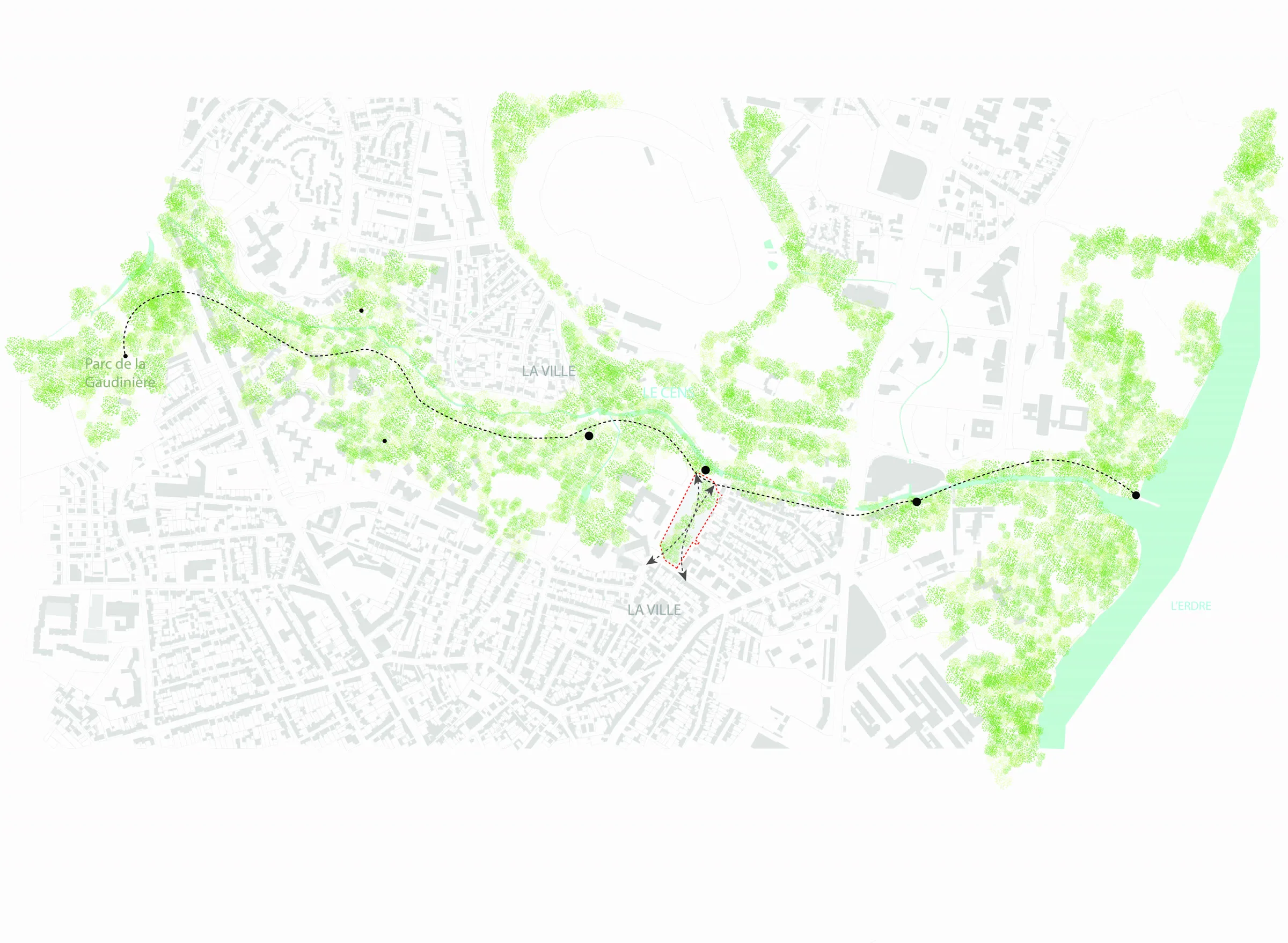
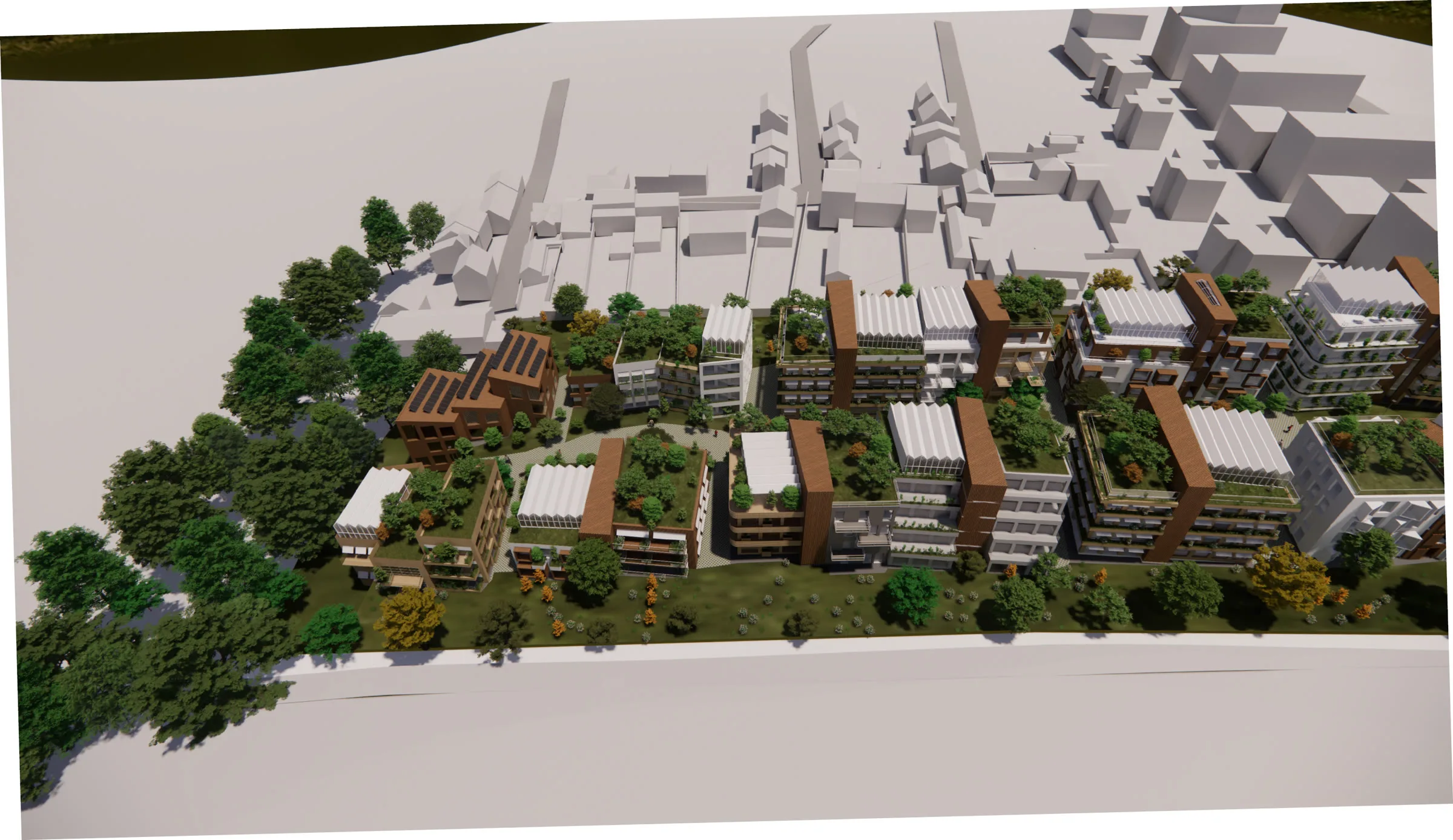
In Nantes, the La Perverie project is situated within an evolving urban fabric, where the balance between densification and preservation of the existing landscape constitutes the main challenge. We approached this site as a fragment of the city to compose, taking into account the historical plot structure, green continuities and viewpoints from public space. The architecture we propose does not assert a monumental presence, rather it builds itself through sedimentation, through a series of decisions that dialogue with the context rather than dominate it.
The residential program calls for reflection on contemporary density, this often misunderstood notion that oscillates between excessive concentration and sterile dilution. We sought a form of **measured density**, capable of generating varied uses without sacrificing the privacy of residents or the quality of common spaces. The layout scheme derives directly from this ambition: it organizes built volumes according to a logic of breathing, creating visual breakthroughs from the street and preserving the green networks that structure the neighborhood.
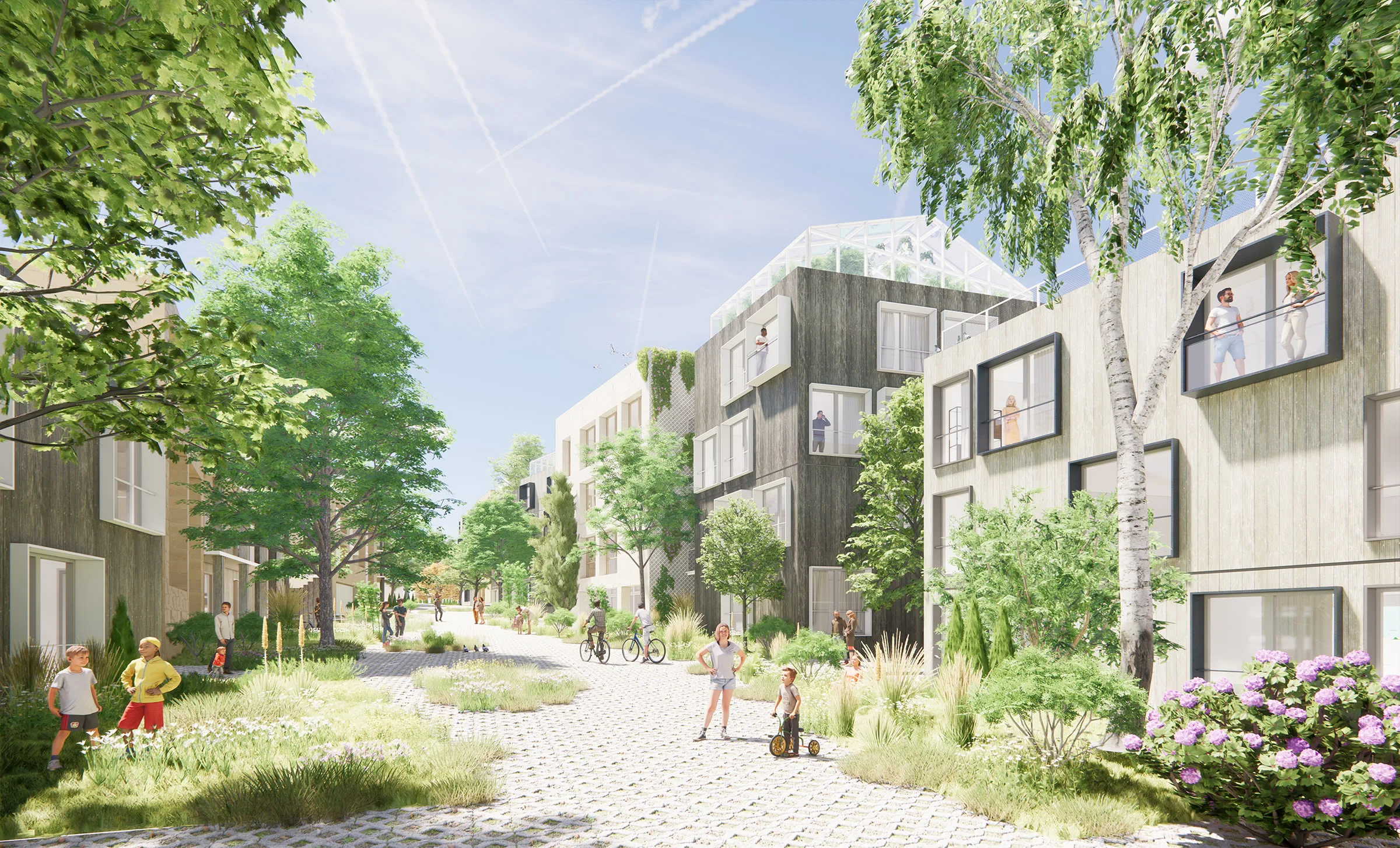
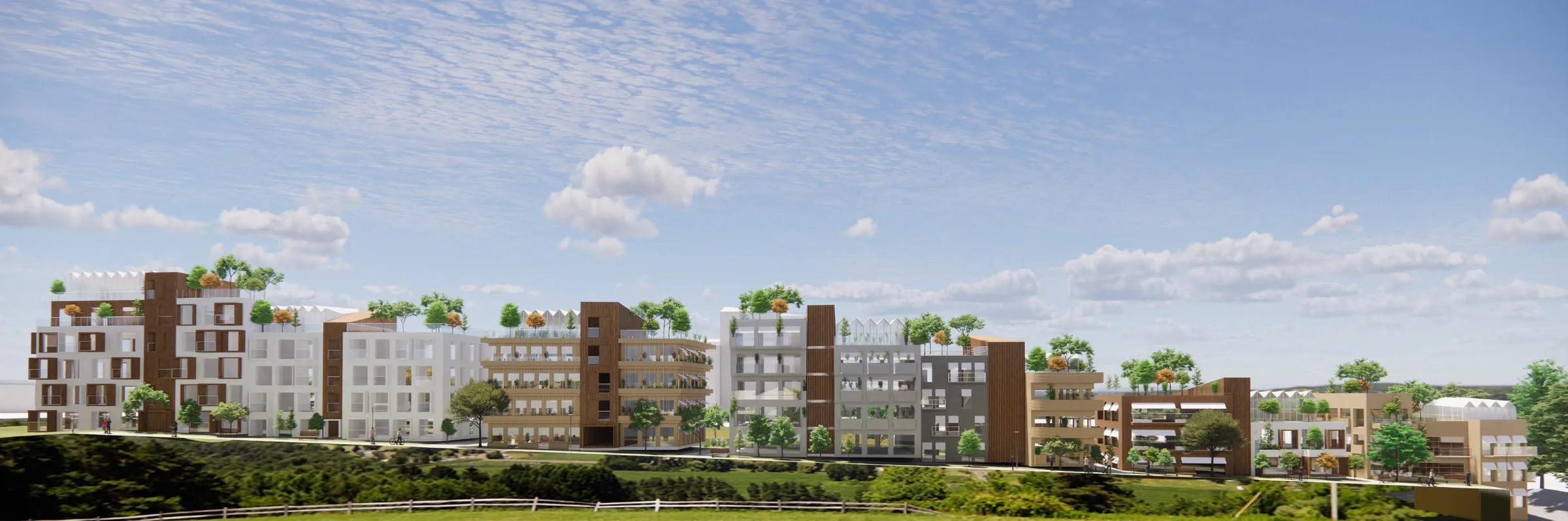
The urban composition relies on a principle of **spatial gradation**. The buildings do not form a continuous front but a series of articulated sequences, creating thresholds between public space and private space. This articulation allows us to control views, avoid direct overlooks and create intermediate pockets of greenery. We do not seek to isolate the housing from the rest of the city, on the contrary, we multiply points of contact while protecting the privacy necessary for living. This double movement, apparently contradictory, defines in our view a pertinent residential architecture for the contemporary city.
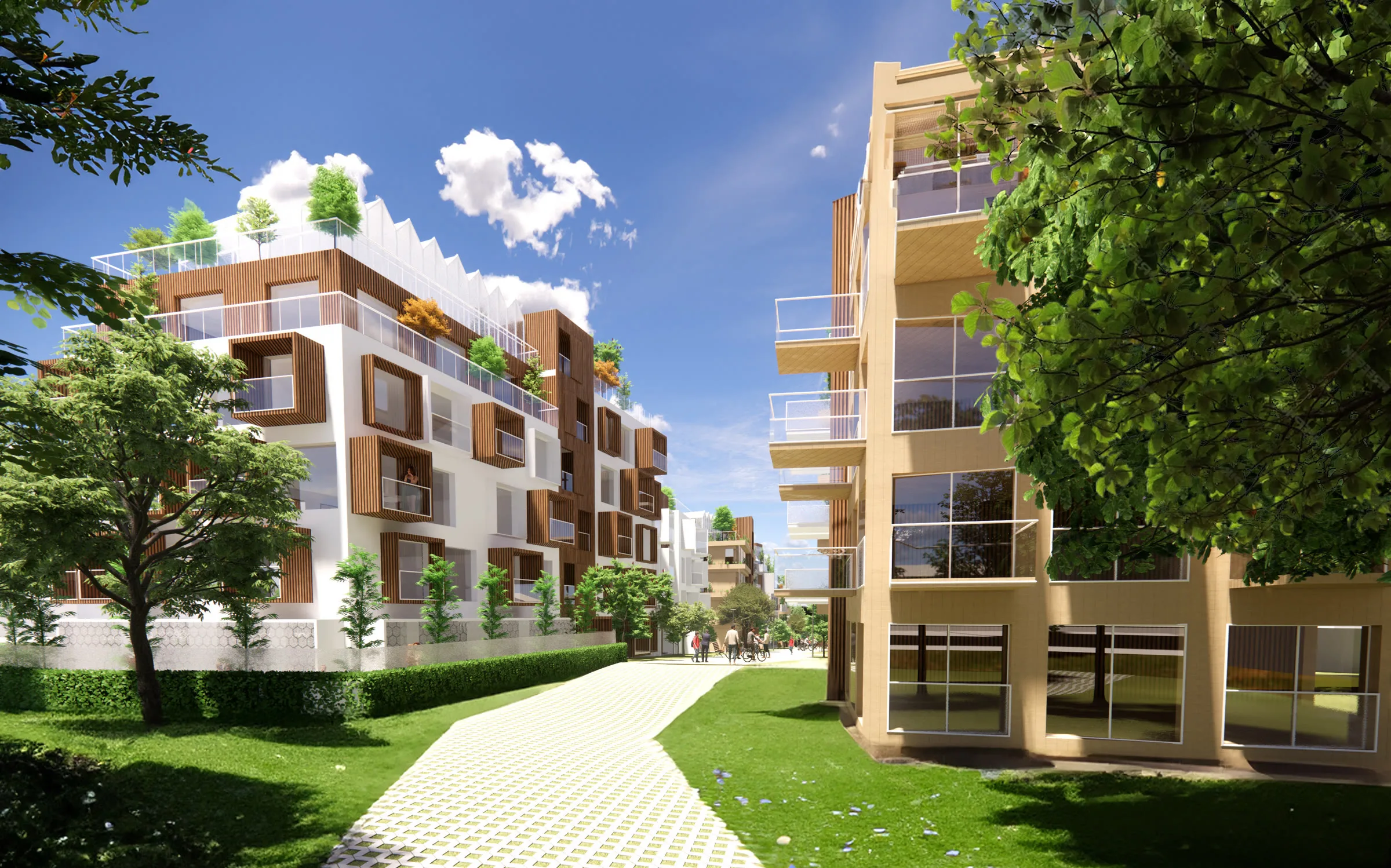
The project's materiality participates in this search for balance. We favored sober materials, capable of aging with dignity, that do not seek to seduce through effect but that build a lasting presence. The facades work with the modulation of natural light, alternating smooth surfaces and more pronounced textures, creating a subtle vibration according to the hours of the day. This attention paid to the **variability of appearance** over the long term contrasts with a certain tendency to freeze architecture in a fixed, immutable image.
The dwellings themselves have been designed to offer real qualities of use, beyond minimum standards. The floor plans favor fluidity of living spaces, generosity of openings and multiplicity of orientations. Each unit benefits from an exterior extension, balcony, loggia or terrace, which is not a simple regulatory appendage but a true habitable space, protected from views and wind, oriented according to the best exposures. This conception of private outdoor spaces participates in a broader reflection on habitability in dense environments, where access to fresh air and natural light constitutes a public health issue as much as a matter of comfort.
The project integrates an **environmental approach** that is not limited to the application of labels or certifications. We worked on the compactness of volumes to limit thermal losses, on the orientation of buildings to maximize passive solar gains in winter and natural protections in summer. Outdoor spaces are treated as bioclimatic devices in their own right: vegetation is not decorative, it actively participates in thermal regulation, rainwater management and urban biodiversity. Planted species were chosen for their resilience to climate change and their capacity to create microclimates favorable to users.
The question of water also traverses the project. We designed exterior floors to favor natural infiltration, limit runoff and feed groundwater tables. Green roofs complete this system by retaining part of precipitation and creating cool islands during summer periods. This systemic approach to water management is part of an expanded vision of architecture, where the building is no longer an autonomous object but an element integrated into a broader ecological cycle.
Common spaces, often neglected in housing operations, have received particular attention. Entrance halls, vertical and horizontal circulation, shared rooms are conceived as living spaces in their own right, not simply as residual spaces. Their material and luminous treatment seeks to create a welcoming atmosphere, to favor chance encounters between residents without forcing exchange. This **architecture of discretion** seems essential to us for constituting a community of users without imposing a model of sociability.
The La Perverie project represents for us an opportunity to demonstrate that residential architecture can be both demanding and accessible, contemporary without being demonstrative, dense without being oppressive. It does not seek to create an event but to build a fragment of sustainable city, capable of accommodating diverse lives and evolving with its inhabitants over time. It is this modest, almost silent ambition that guides our daily architectural practice.
The residential program calls for reflection on contemporary density, this often misunderstood notion that oscillates between excessive concentration and sterile dilution. We sought a form of **measured density**, capable of generating varied uses without sacrificing the privacy of residents or the quality of common spaces. The layout scheme derives directly from this ambition: it organizes built volumes according to a logic of breathing, creating visual breakthroughs from the street and preserving the green networks that structure the neighborhood.
The urban composition relies on a principle of **spatial gradation**. The buildings do not form a continuous front but a series of articulated sequences, creating thresholds between public space and private space. This articulation allows us to control views, avoid direct overlooks and create intermediate pockets of greenery. We do not seek to isolate the housing from the rest of the city, on the contrary, we multiply points of contact while protecting the privacy necessary for living. This double movement, apparently contradictory, defines in our view a pertinent residential architecture for the contemporary city.
The project's materiality participates in this search for balance. We favored sober materials, capable of aging with dignity, that do not seek to seduce through effect but that build a lasting presence. The facades work with the modulation of natural light, alternating smooth surfaces and more pronounced textures, creating a subtle vibration according to the hours of the day. This attention paid to the **variability of appearance** over the long term contrasts with a certain tendency to freeze architecture in a fixed, immutable image.
The dwellings themselves have been designed to offer real qualities of use, beyond minimum standards. The floor plans favor fluidity of living spaces, generosity of openings and multiplicity of orientations. Each unit benefits from an exterior extension, balcony, loggia or terrace, which is not a simple regulatory appendage but a true habitable space, protected from views and wind, oriented according to the best exposures. This conception of private outdoor spaces participates in a broader reflection on habitability in dense environments, where access to fresh air and natural light constitutes a public health issue as much as a matter of comfort.
The project integrates an **environmental approach** that is not limited to the application of labels or certifications. We worked on the compactness of volumes to limit thermal losses, on the orientation of buildings to maximize passive solar gains in winter and natural protections in summer. Outdoor spaces are treated as bioclimatic devices in their own right: vegetation is not decorative, it actively participates in thermal regulation, rainwater management and urban biodiversity. Planted species were chosen for their resilience to climate change and their capacity to create microclimates favorable to users.
The question of water also traverses the project. We designed exterior floors to favor natural infiltration, limit runoff and feed groundwater tables. Green roofs complete this system by retaining part of precipitation and creating cool islands during summer periods. This systemic approach to water management is part of an expanded vision of architecture, where the building is no longer an autonomous object but an element integrated into a broader ecological cycle.
Common spaces, often neglected in housing operations, have received particular attention. Entrance halls, vertical and horizontal circulation, shared rooms are conceived as living spaces in their own right, not simply as residual spaces. Their material and luminous treatment seeks to create a welcoming atmosphere, to favor chance encounters between residents without forcing exchange. This **architecture of discretion** seems essential to us for constituting a community of users without imposing a model of sociability.
The La Perverie project represents for us an opportunity to demonstrate that residential architecture can be both demanding and accessible, contemporary without being demonstrative, dense without being oppressive. It does not seek to create an event but to build a fragment of sustainable city, capable of accommodating diverse lives and evolving with its inhabitants over time. It is this modest, almost silent ambition that guides our daily architectural practice.
- Lieu
- Nantes, France
- Nature
- Logements
- Surface
- Confidentiel
- Budget
- Confidentiel
- Concours
- 2021
- MOA
- Confidentiel