Kaskade
The project's ambition is to be understood as the composition of a landscape, a whimsical, harmonious, and surprising territory. A place where one lives, an attractive place within a metropolitan district. We carry this urban project as a landscape setting: a living place that creates and transforms uses and enables an unprecedented dialogue between nature and horizon.
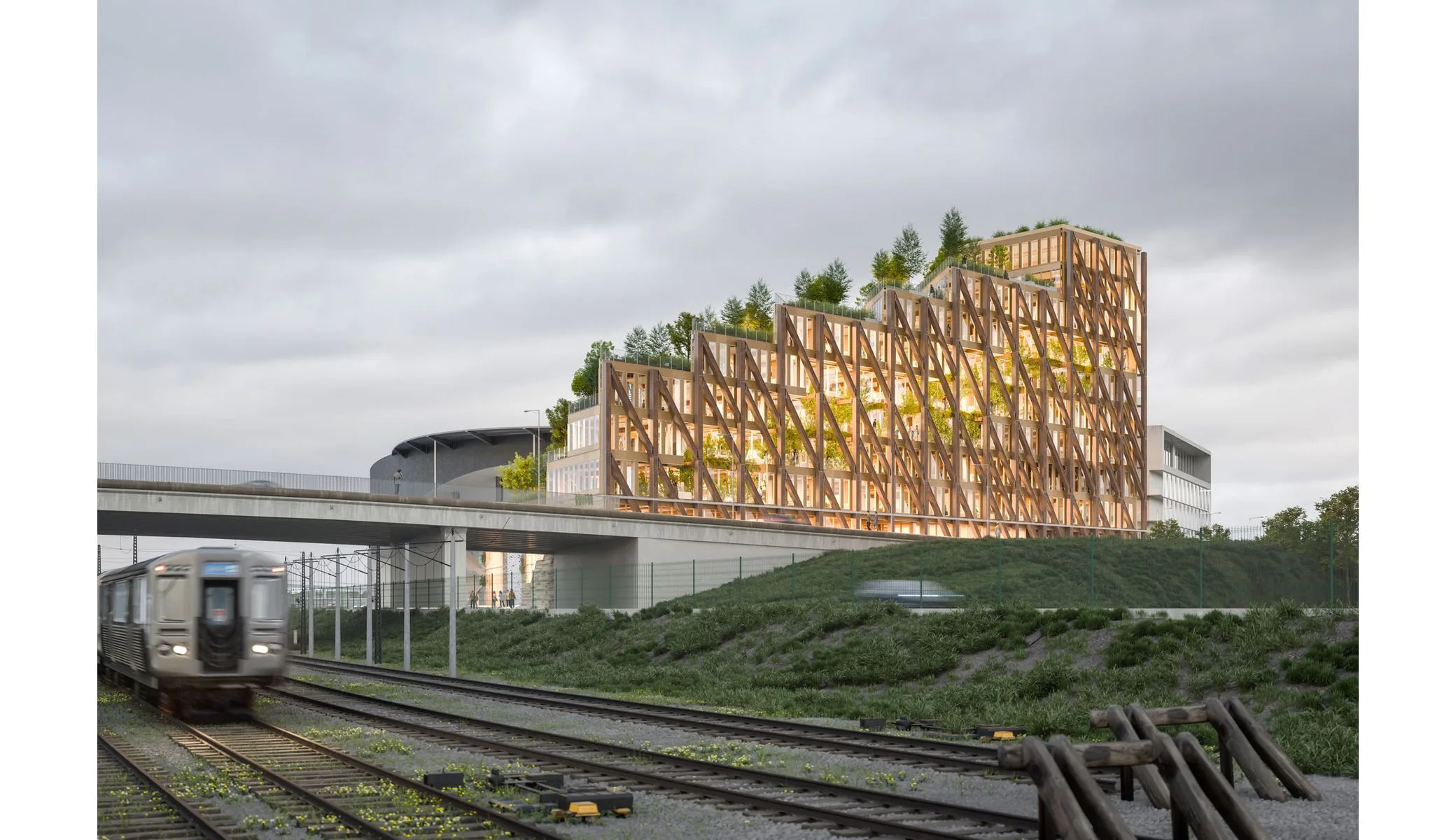
We conceived **Kaskade** as a sensitive response to the rapid transformation of Lille, a metropolis whose demographic growth and territorial expansion call for new modes of land occupation. The challenge was not merely to design an 8,000 m² office and retail building, but to invent a **fragment of urban landscape**, a place capable of combining productivity and well-being, density and breathing space. Our proposal, developed for Altarea Cogedim as part of a competition in 2020-2021, embraces a dual ambition: that of an architecture that dialogues with its metropolitan context without renouncing a certain formal whimsy, and that of a **habitable ecosystem** where nature and horizon meet.
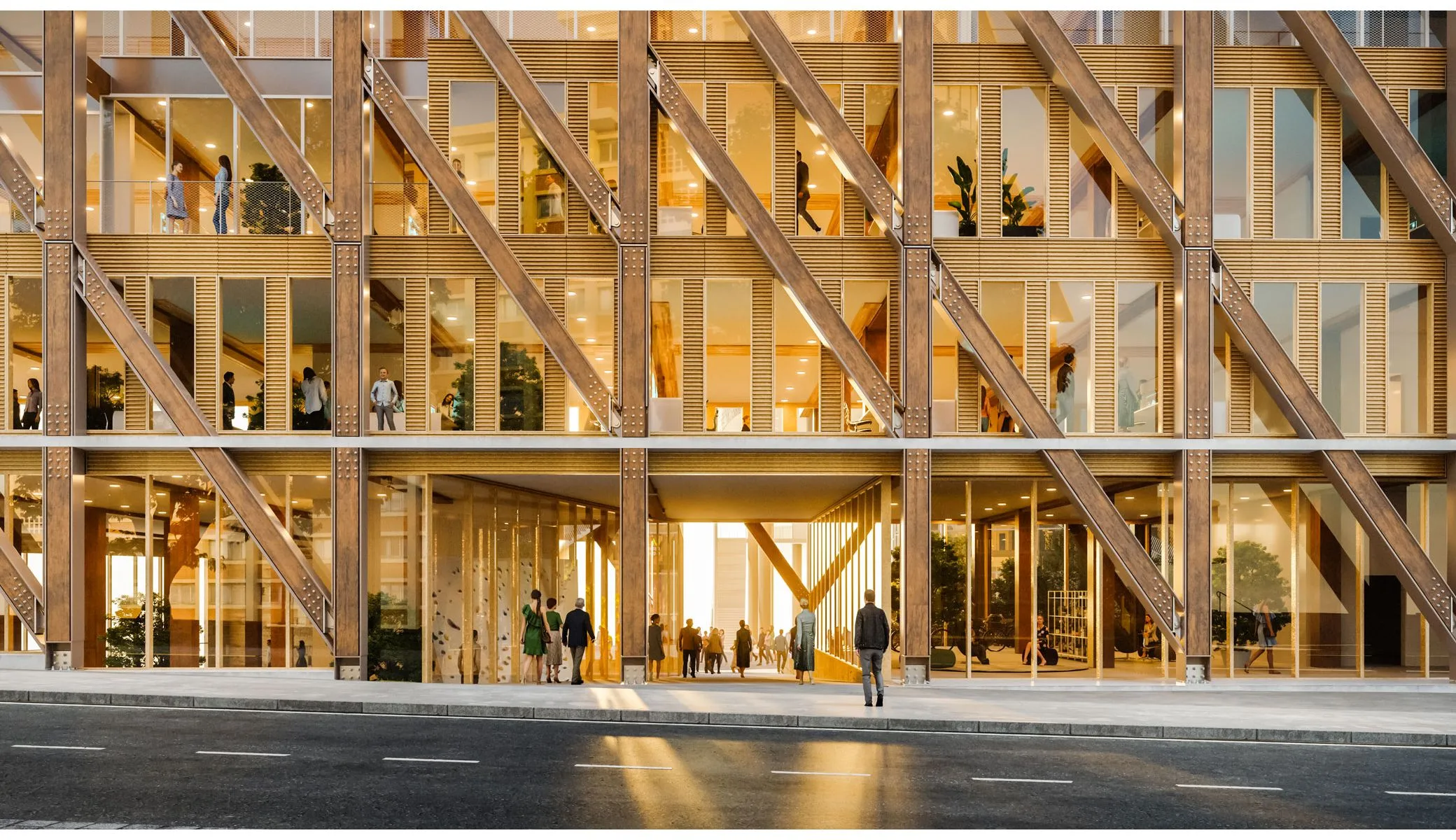
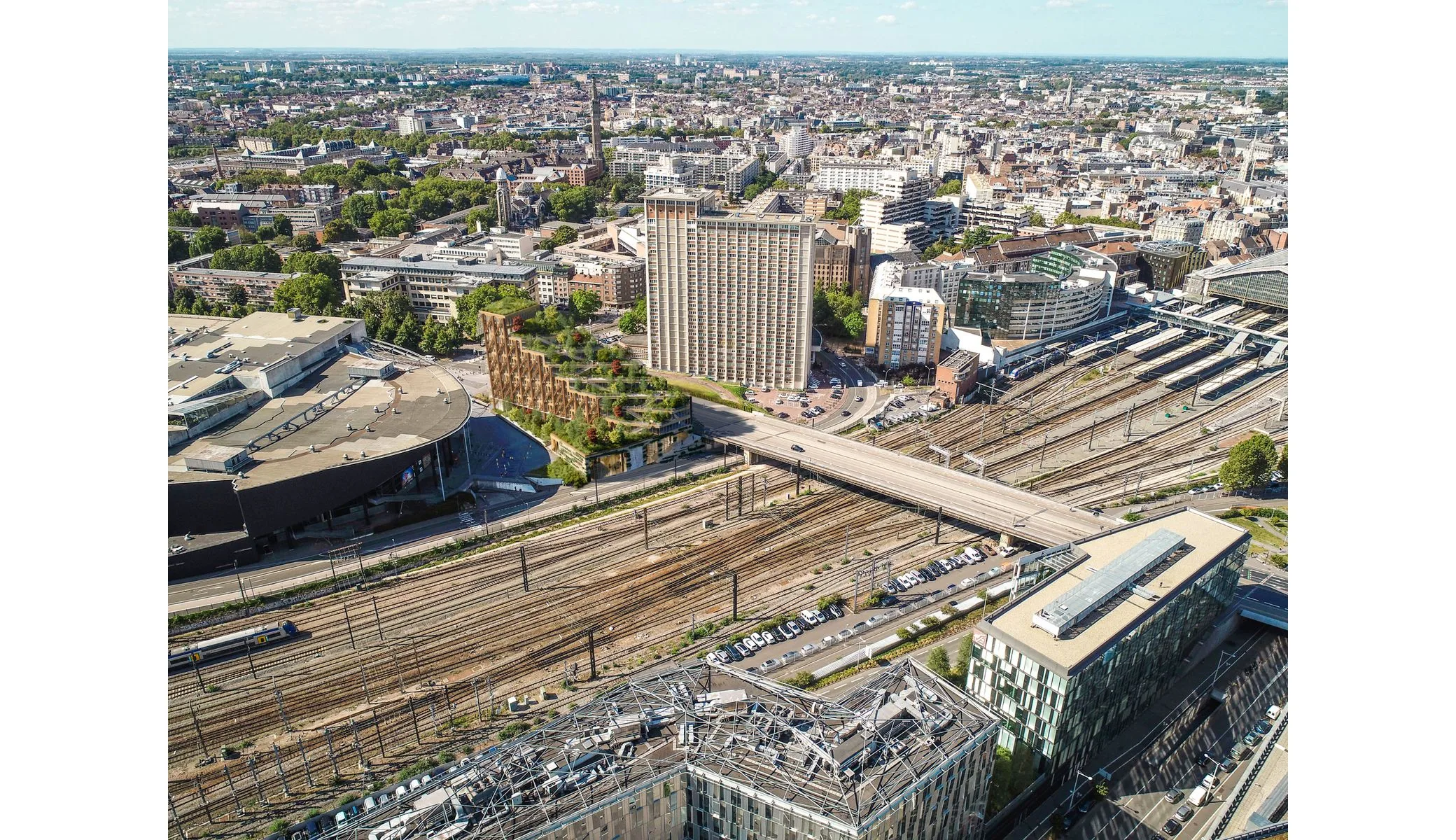
The Lille site, inscribed within a fabric undergoing transformation, required us to consider the scale of the street as much as that of the grand landscape. We wanted the project not to close in on itself, but rather to become an **open plaza**, a place of exchanges and encounters accessible to users and passersby alike. This programmatic and spatial porosity was an essential condition: it was about creating an attractive hub without monumental gesture, a discreet yet identifiable urban landmark, anchored in the daily life of the neighborhood.
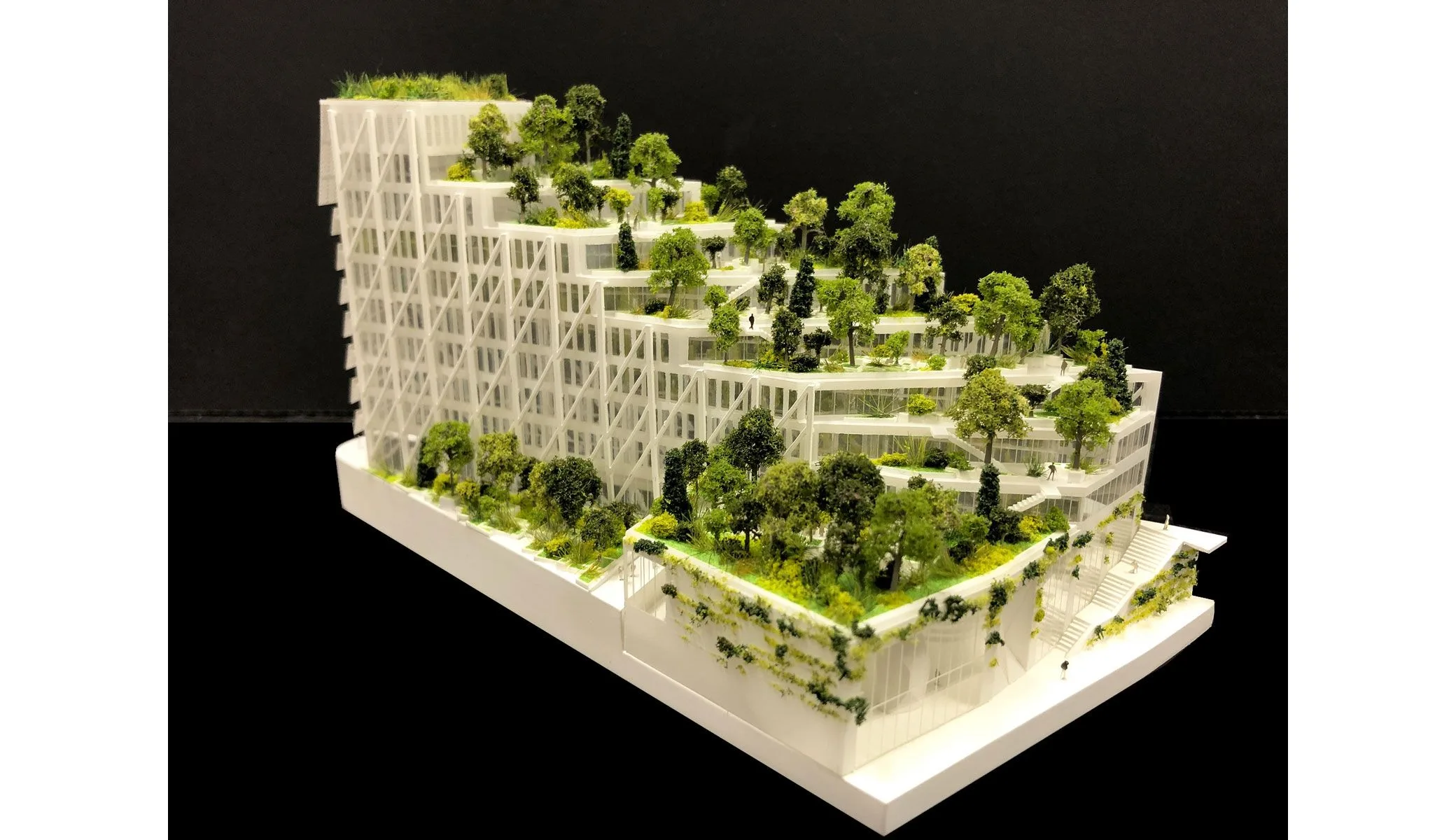
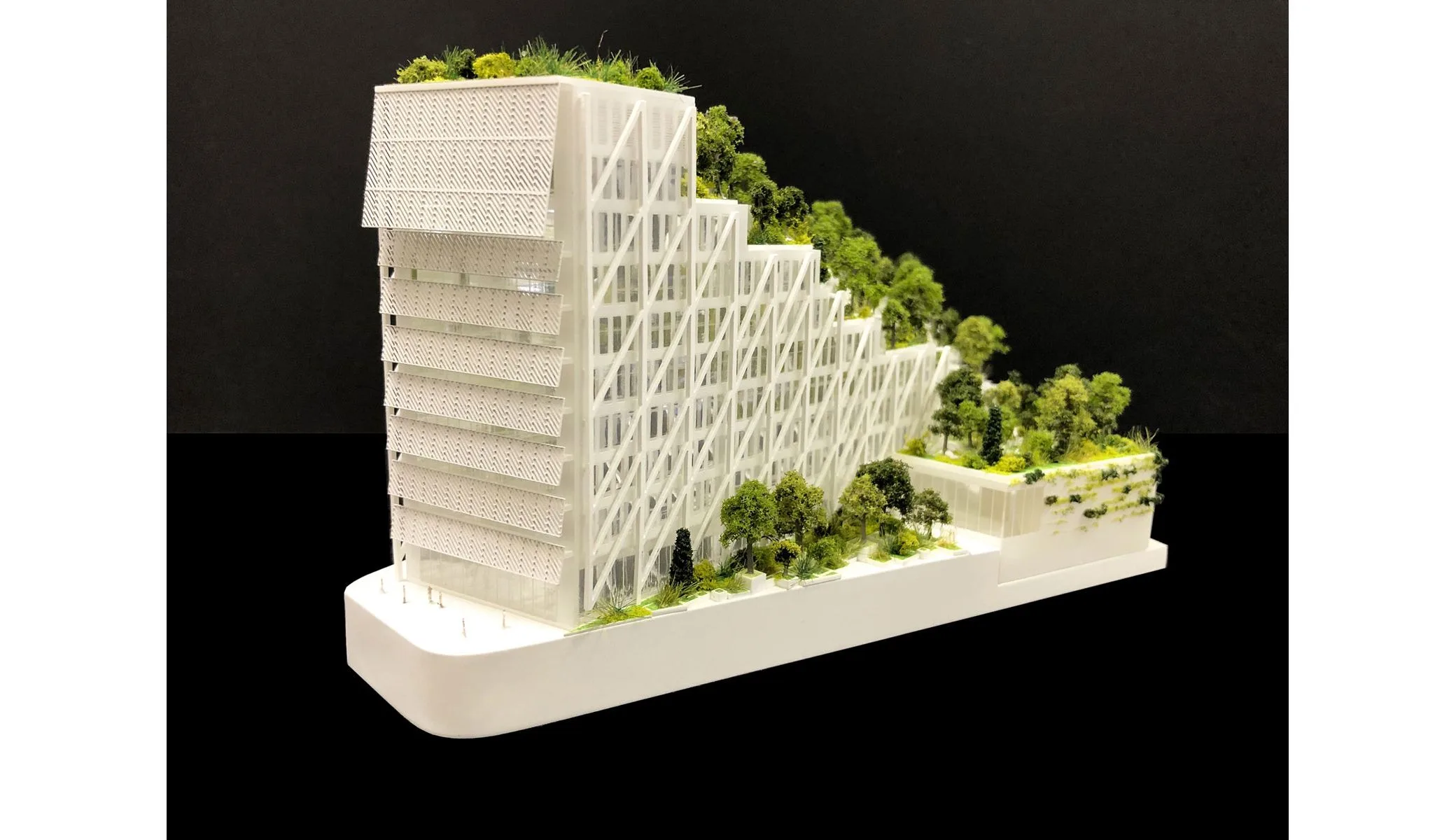
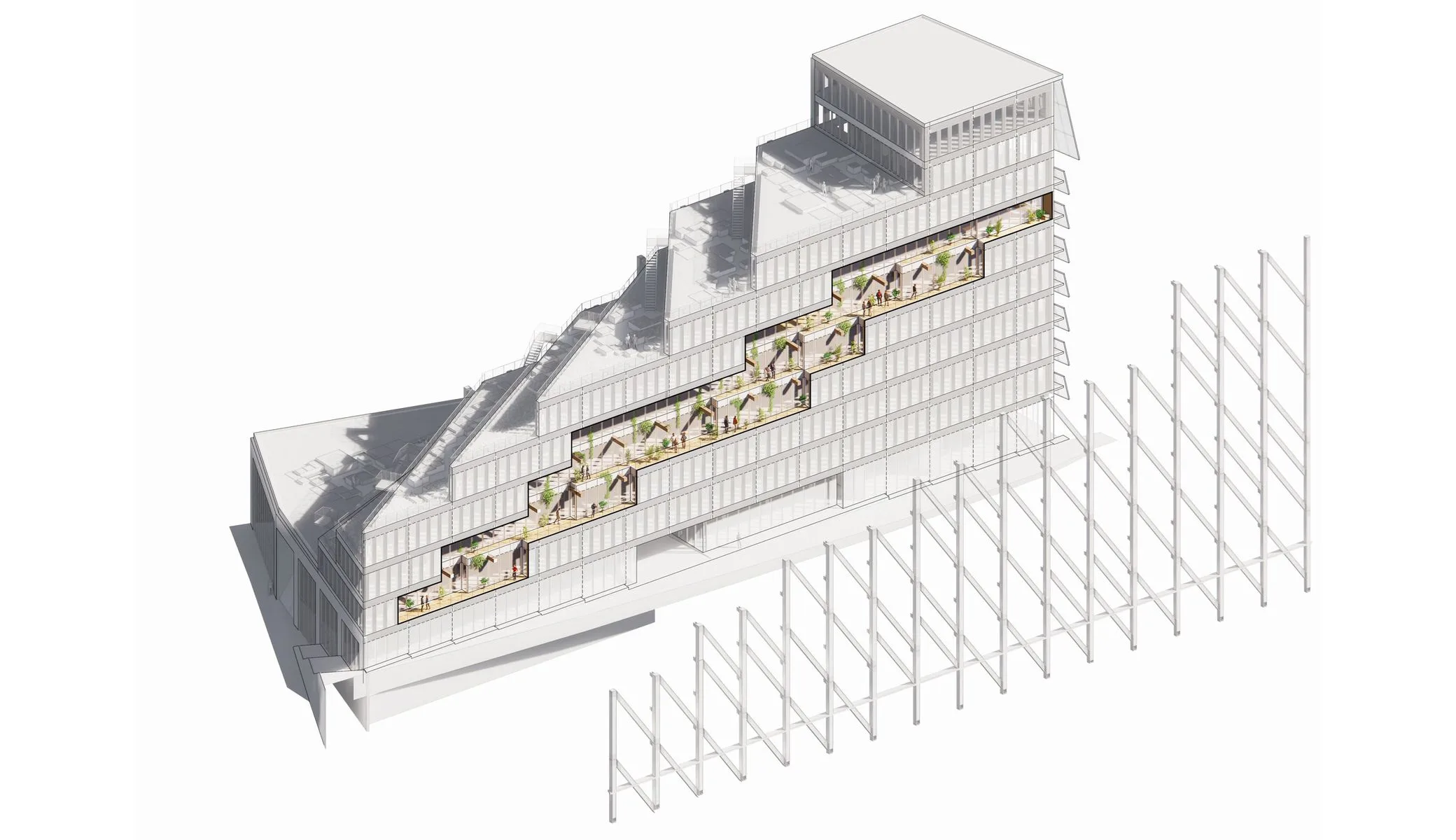
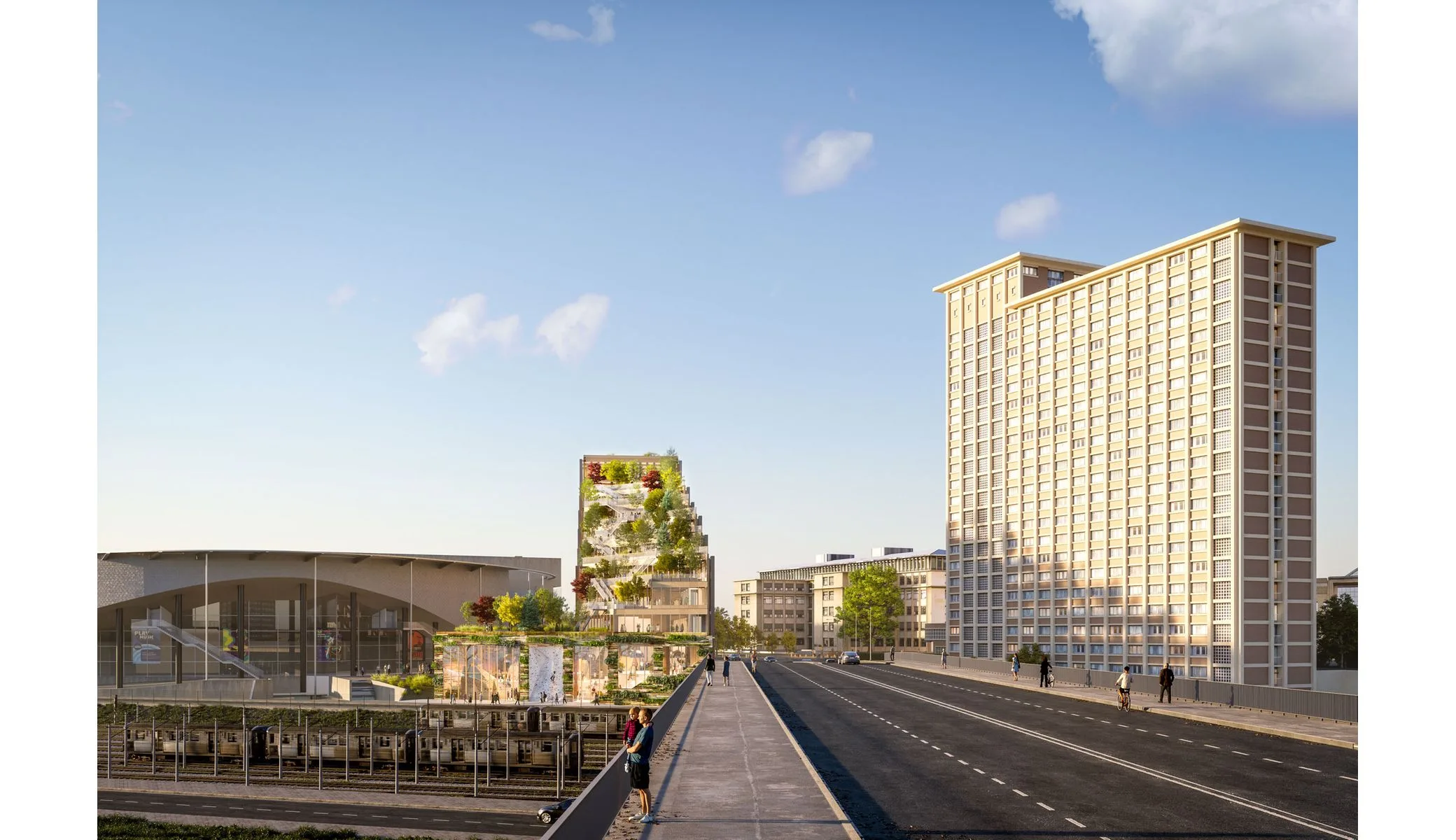
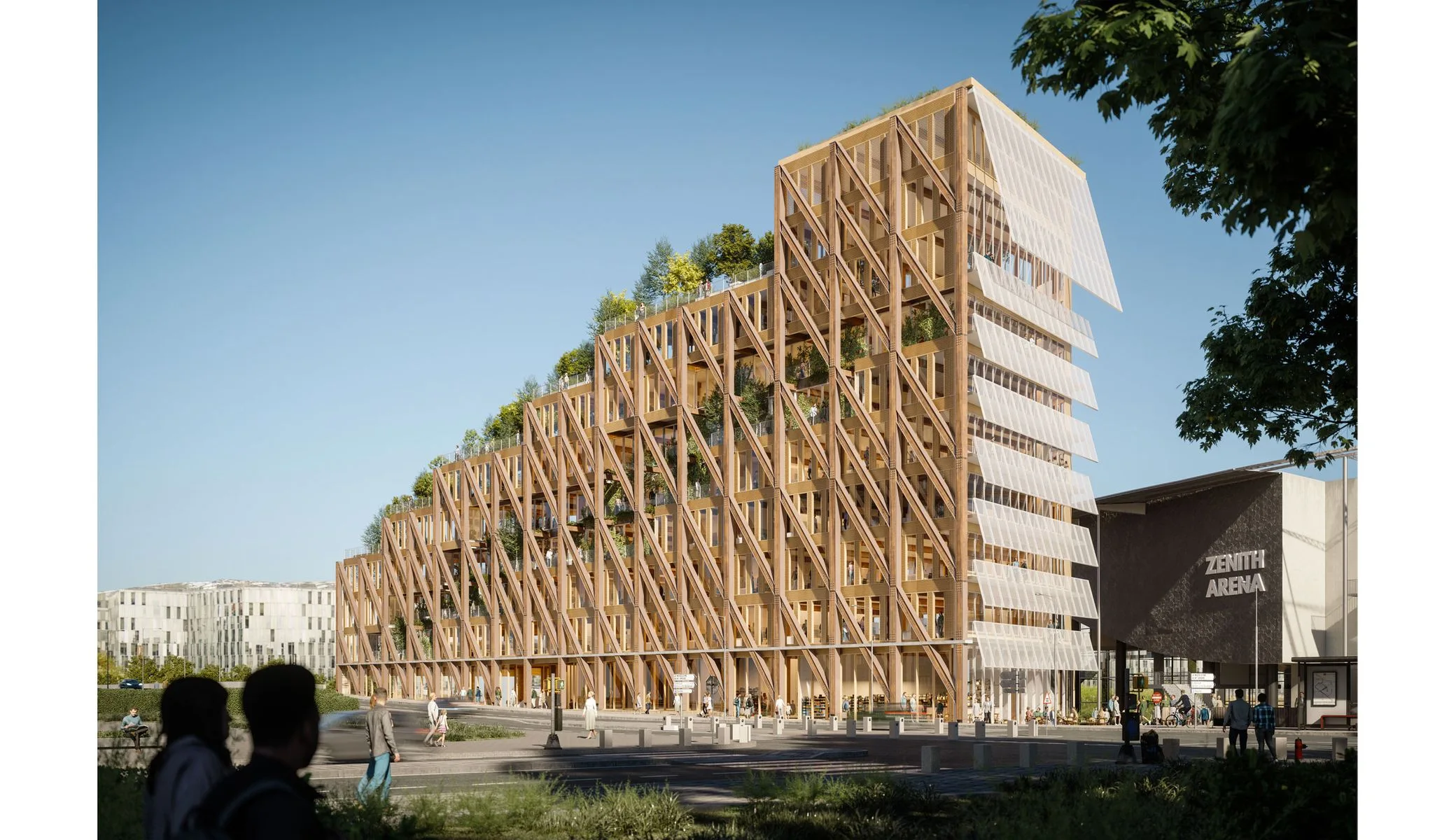
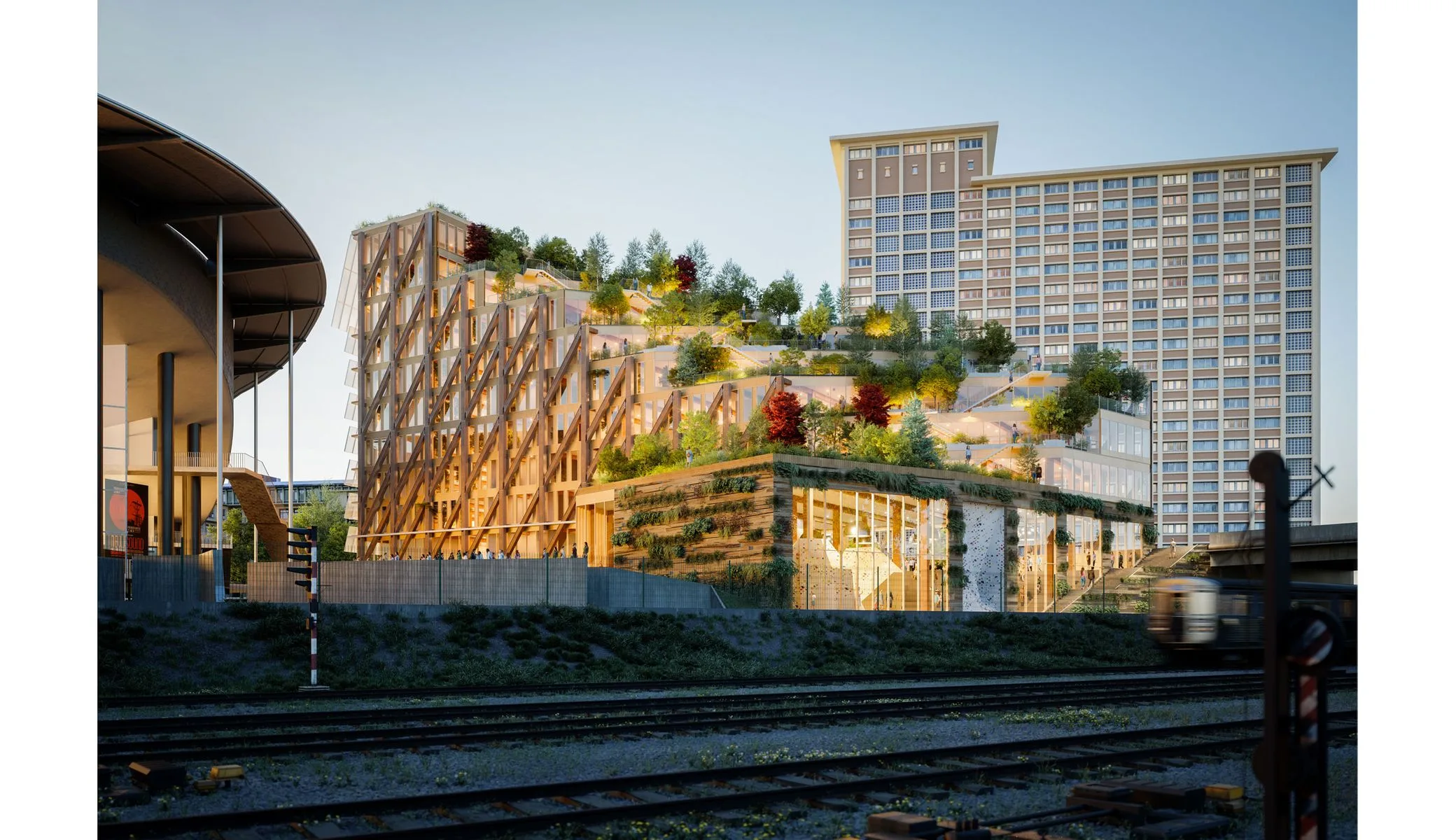
The architectural approach is based on a **tiered composition**, hence the name Kaskade. Rather than erecting a blind facade or a compact volume, we distributed the office floors in successive terraces, each generously planted. This vegetal cascade organizes a vertical respiration, offers unobstructed views toward the city, and multiplies contact points between interior and exterior. The successive setbacks draw a gentle, almost topographical silhouette, evoking less a building than the superimposition of landscape strata. Here we embrace a form of **typological hybridization**: neither a conventional office building nor a public garden, but an intermediate territory where vegetation becomes structure as much as decor.
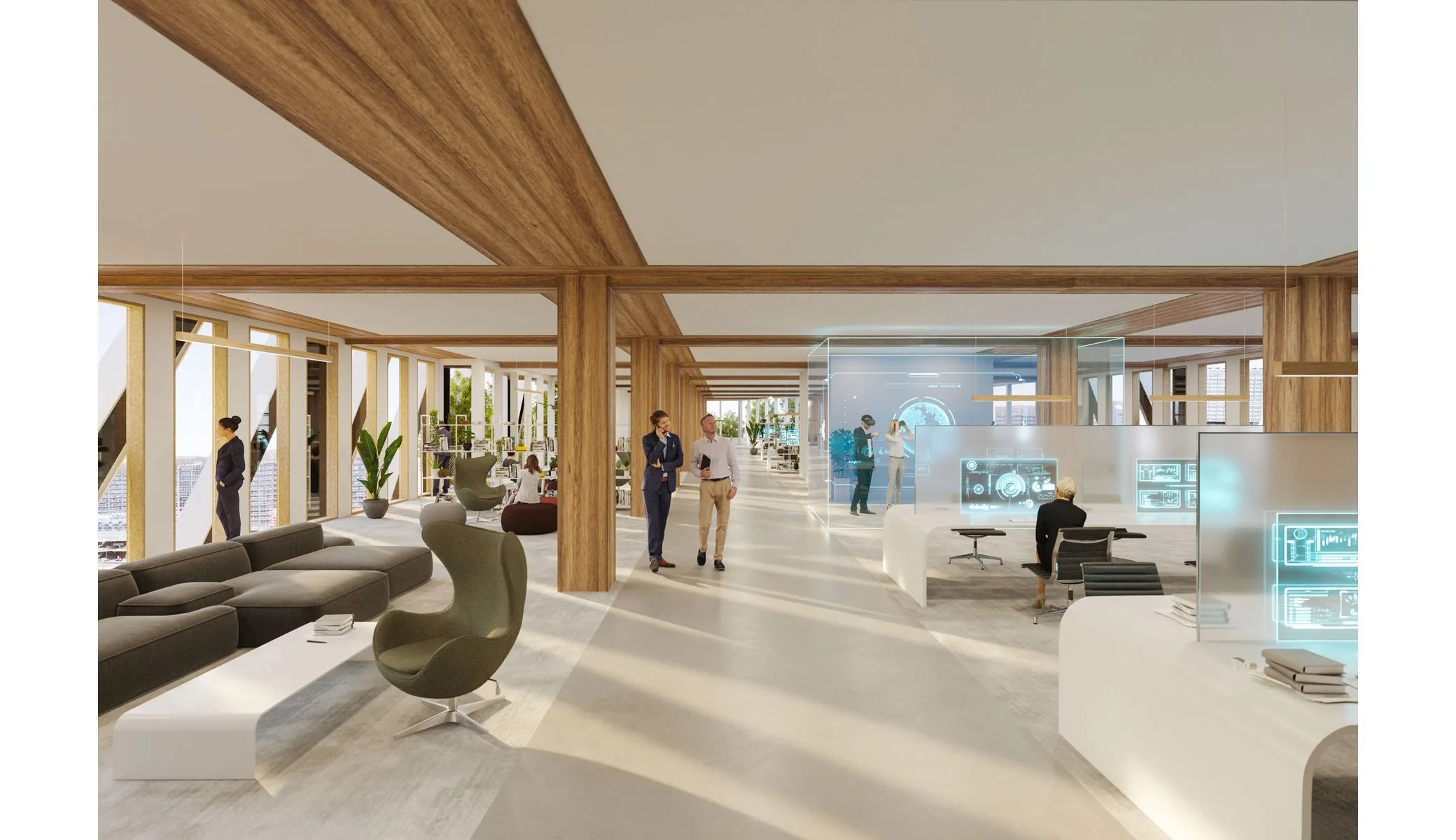
The use of vegetation is not cosmetic. We integrated it from the outset as an **architectonic component**, a material in its own right whose presence conditions the spatial organization and perception of the project. The planted terraces are not simple ornamental balconies, they constitute genuine extensions of the work floors, places for breaks, informal meetings, even outdoor coworking. This continuity between office and garden responds to a conviction: workplace well-being does not derive solely from interior fit-out, but from a building's capacity to offer permanent contact with the sky, natural light, the seasons. We therefore multiplied porosities, transparencies, crossings, so that each floor benefits from a direct relationship with the grand metropolitan landscape.
The project's **materiality** reflects this ambition of hybridization. We favored light structures in concrete and metal, capable of bearing loads of earth and vegetation without weighing down the formal expression. The railings are treated in glass or metal lattice, so as not to visually partition the terraces, and the exterior floor coverings use permeable materials, promoting rainwater infiltration. The recessed glass facades ensure visual continuity between interior and exterior, while allowing for integrated solar protections. The whole composes an architecture of **transparency and thickness**, where each stratum accumulates functions (work, vegetation, circulation, contemplation) without ever being reduced to a single use.
Our environmental approach fully aligns with this logic. The vegetated roofs and terraces contribute to the building's thermal insulation, reduce urban heat islands, promote local biodiversity, and participate in stormwater management through retention and evapotranspiration. The project also integrates cross-ventilation devices, exploiting temperature differentials between levels to limit reliance on mechanical air conditioning. We conceived **Kaskade** as a prototype of the post-carbon office, where energy performance does not come through technological sophistication, but through the spatial and climatic intelligence of the architectural design. Nature, here, is not a supplementary touch, it is a vector of efficiency.
On the ground floor, the retail program is organized in direct connection with public space, creating continuous urban animation. We avoided brutal separation between retail and office, preferring progressive thresholds, walkways, visual breakthroughs that link the different levels. This vertical stratification encourages a rich neighborhood life, where the passerby becomes a user, where the neighborhood resident encounters the worker, where temporalities overlap without excluding one another. **Kaskade** aims to be a place of convergence, a space for unexpected encounters, a catalyst for collective life.
Although the project was not selected, it testifies to our conviction that tertiary architecture can, and must, renew its models. The office is no longer a closed, repetitive space, cut off from the world: it becomes a **habitable environment**, open to the city and the living, capable of accommodating multiple and evolving uses. Through projects like this one, we seek to reconnect with a certain poetry of work, a sensitive relationship with place, light, seasons. **Kaskade** embodies this search for a generous urbanism, capable of transforming programmatic constraint into landscape opportunity, and metropolitan density into collective respiration.
The Lille site, inscribed within a fabric undergoing transformation, required us to consider the scale of the street as much as that of the grand landscape. We wanted the project not to close in on itself, but rather to become an **open plaza**, a place of exchanges and encounters accessible to users and passersby alike. This programmatic and spatial porosity was an essential condition: it was about creating an attractive hub without monumental gesture, a discreet yet identifiable urban landmark, anchored in the daily life of the neighborhood.
The architectural approach is based on a **tiered composition**, hence the name Kaskade. Rather than erecting a blind facade or a compact volume, we distributed the office floors in successive terraces, each generously planted. This vegetal cascade organizes a vertical respiration, offers unobstructed views toward the city, and multiplies contact points between interior and exterior. The successive setbacks draw a gentle, almost topographical silhouette, evoking less a building than the superimposition of landscape strata. Here we embrace a form of **typological hybridization**: neither a conventional office building nor a public garden, but an intermediate territory where vegetation becomes structure as much as decor.
The use of vegetation is not cosmetic. We integrated it from the outset as an **architectonic component**, a material in its own right whose presence conditions the spatial organization and perception of the project. The planted terraces are not simple ornamental balconies, they constitute genuine extensions of the work floors, places for breaks, informal meetings, even outdoor coworking. This continuity between office and garden responds to a conviction: workplace well-being does not derive solely from interior fit-out, but from a building's capacity to offer permanent contact with the sky, natural light, the seasons. We therefore multiplied porosities, transparencies, crossings, so that each floor benefits from a direct relationship with the grand metropolitan landscape.
The project's **materiality** reflects this ambition of hybridization. We favored light structures in concrete and metal, capable of bearing loads of earth and vegetation without weighing down the formal expression. The railings are treated in glass or metal lattice, so as not to visually partition the terraces, and the exterior floor coverings use permeable materials, promoting rainwater infiltration. The recessed glass facades ensure visual continuity between interior and exterior, while allowing for integrated solar protections. The whole composes an architecture of **transparency and thickness**, where each stratum accumulates functions (work, vegetation, circulation, contemplation) without ever being reduced to a single use.
Our environmental approach fully aligns with this logic. The vegetated roofs and terraces contribute to the building's thermal insulation, reduce urban heat islands, promote local biodiversity, and participate in stormwater management through retention and evapotranspiration. The project also integrates cross-ventilation devices, exploiting temperature differentials between levels to limit reliance on mechanical air conditioning. We conceived **Kaskade** as a prototype of the post-carbon office, where energy performance does not come through technological sophistication, but through the spatial and climatic intelligence of the architectural design. Nature, here, is not a supplementary touch, it is a vector of efficiency.
On the ground floor, the retail program is organized in direct connection with public space, creating continuous urban animation. We avoided brutal separation between retail and office, preferring progressive thresholds, walkways, visual breakthroughs that link the different levels. This vertical stratification encourages a rich neighborhood life, where the passerby becomes a user, where the neighborhood resident encounters the worker, where temporalities overlap without excluding one another. **Kaskade** aims to be a place of convergence, a space for unexpected encounters, a catalyst for collective life.
Although the project was not selected, it testifies to our conviction that tertiary architecture can, and must, renew its models. The office is no longer a closed, repetitive space, cut off from the world: it becomes a **habitable environment**, open to the city and the living, capable of accommodating multiple and evolving uses. Through projects like this one, we seek to reconnect with a certain poetry of work, a sensitive relationship with place, light, seasons. **Kaskade** embodies this search for a generous urbanism, capable of transforming programmatic constraint into landscape opportunity, and metropolitan density into collective respiration.
- Lieu
- Lille, France
- Nature
- Bureaux
- Surface
- 8 000 m²
- Budget
- 16.5 M€
- Concours
- 2020-2021
- MOA
- Altarea Cogedim