Floating Gardens
The main ambition of our project is to restore nature to its rightful place. The exceptional setting of the site provides us with all the elements necessary for this quest. The proximity of emblematic Nice landmarks such as the Var plain, the Mercantour massif, the Baie des Anges, the Var valley and Mont Boron, and on a closer scale the park located below our building, have led us to create a project in total connection with nature.
# Floating Gardens
We conceived this project for Nice as a **reconciliation between dense built form and omnipresent vegetation**, between the artificial and the living. The site is located at the crossroads of several landscape scales: the Var plain to the west, the Mercantour massif outlined in the background, the Baie des Anges to the south, the fertile valley that irrigates the Nice metropolis, and Mont Boron dominating the horizon. On a more intimate scale, a park extends below the parcel, offering a green respiration in a changing urban fabric. Our main ambition was therefore to restore nature to its rightful place, not as an applied decoration, but as a **spatial and climatic structure** of the project itself.
The exceptional setting of the site provided us with all the elements necessary for this quest. Rather than imposing an autonomous form, we developed a principle of **selective framing** on the city and landscape. It was about constructing oriented openings, visual breakthroughs that capture the valley to the north, the park below, the distant mountains, while creating interior respirations for the inhabitants. The building thus becomes an optical device, a filter between urban density and the generosity of the Nice territory.
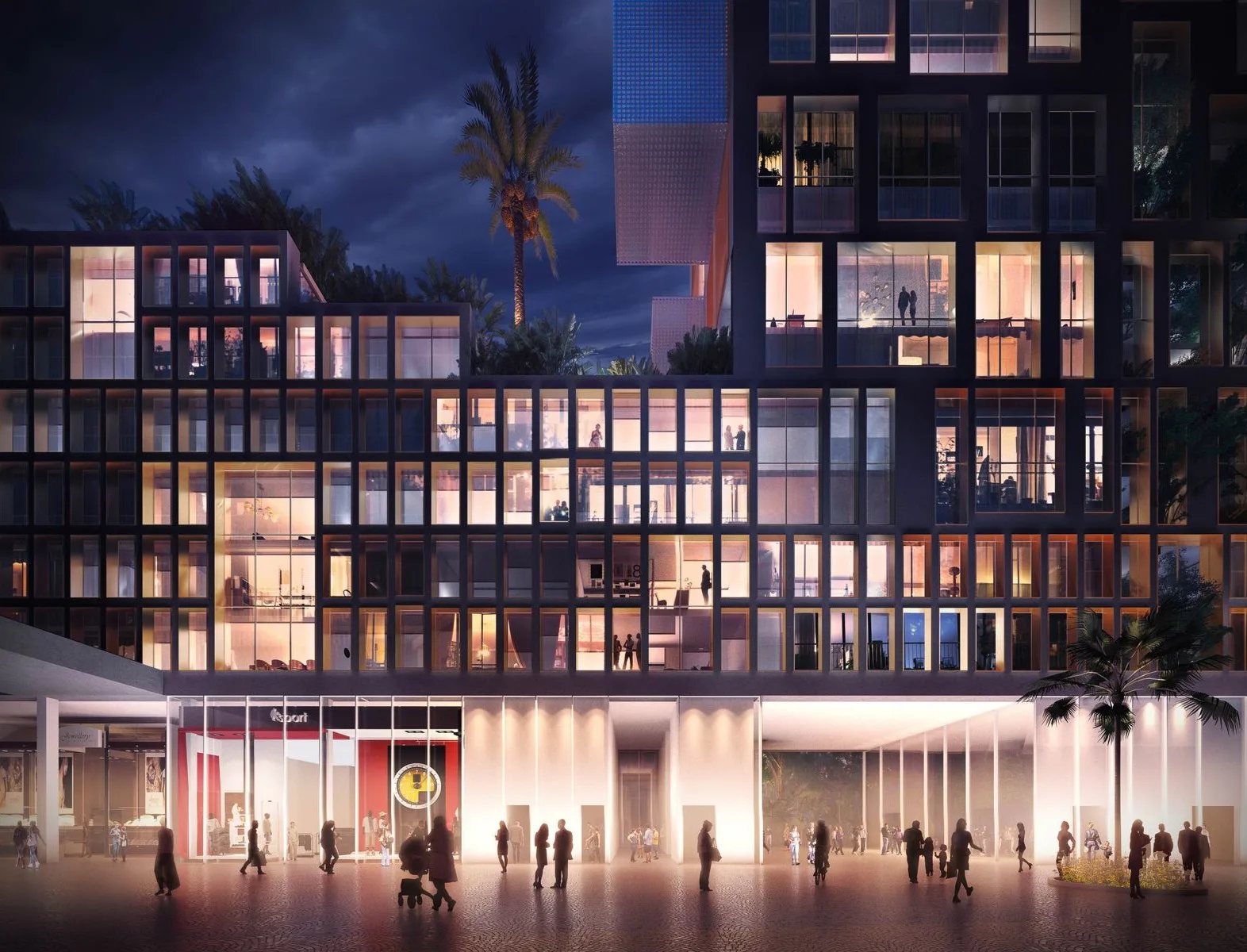
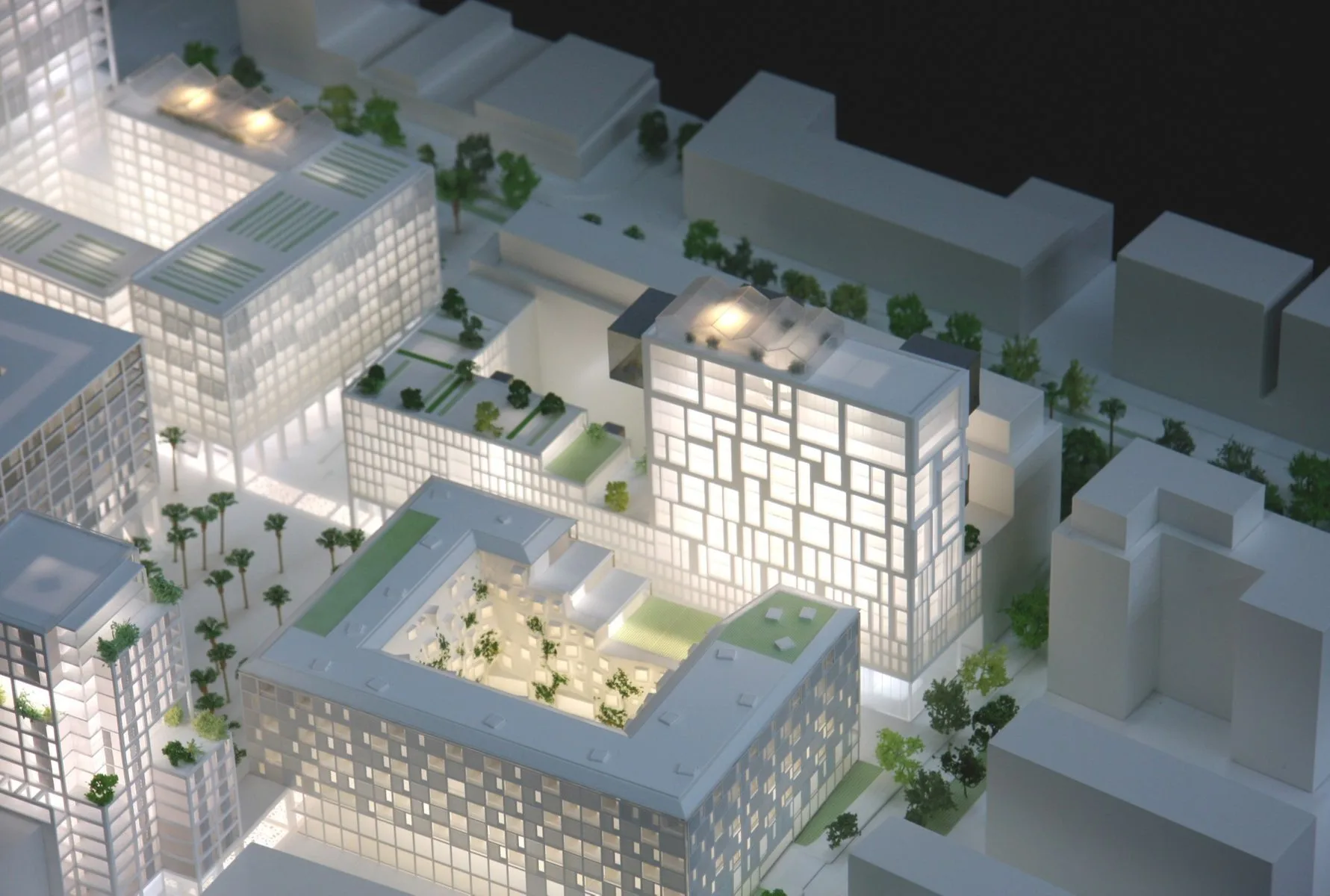
The program is **mixed and hybrid**, a condition we often seek to create urban vitality. The ground floor accommodates a set of shops that activate the street and establish porosity with public space. The upper floors house residences, social and private, as well as a business tourism residence. An underground parking garage serves the inhabitants without cluttering the surface. This programmatic stratification allows us to articulate different scales of life, from the rapid passage of the pedestrian to the slowness of residential daily life.
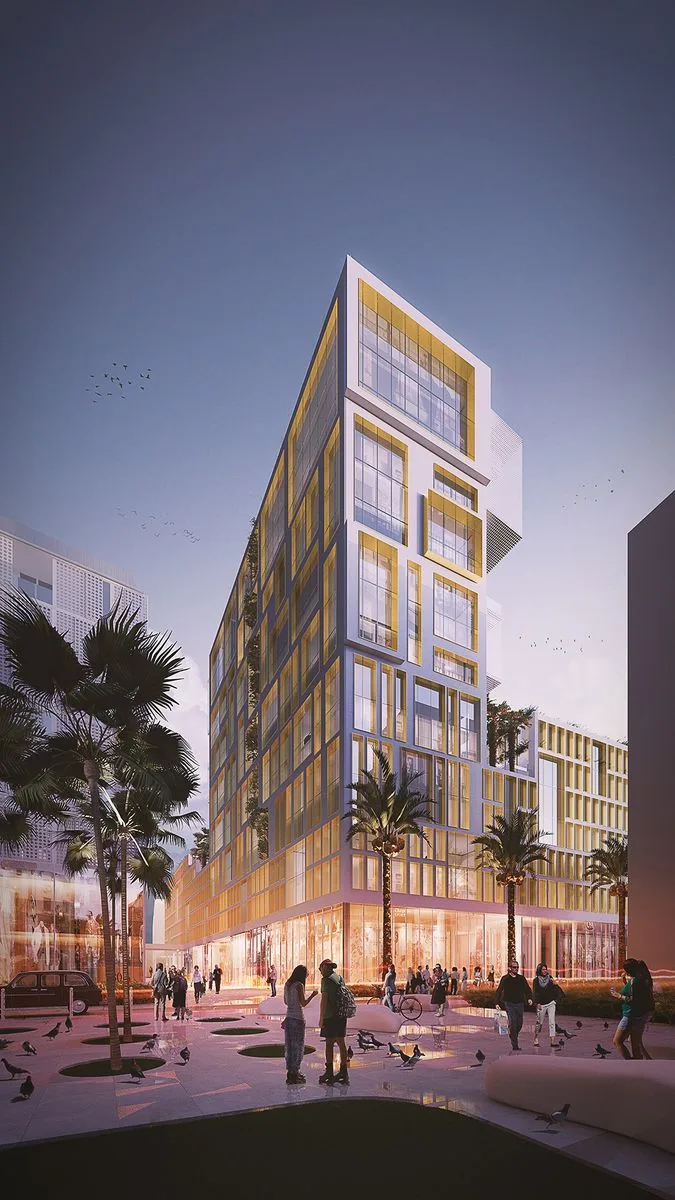
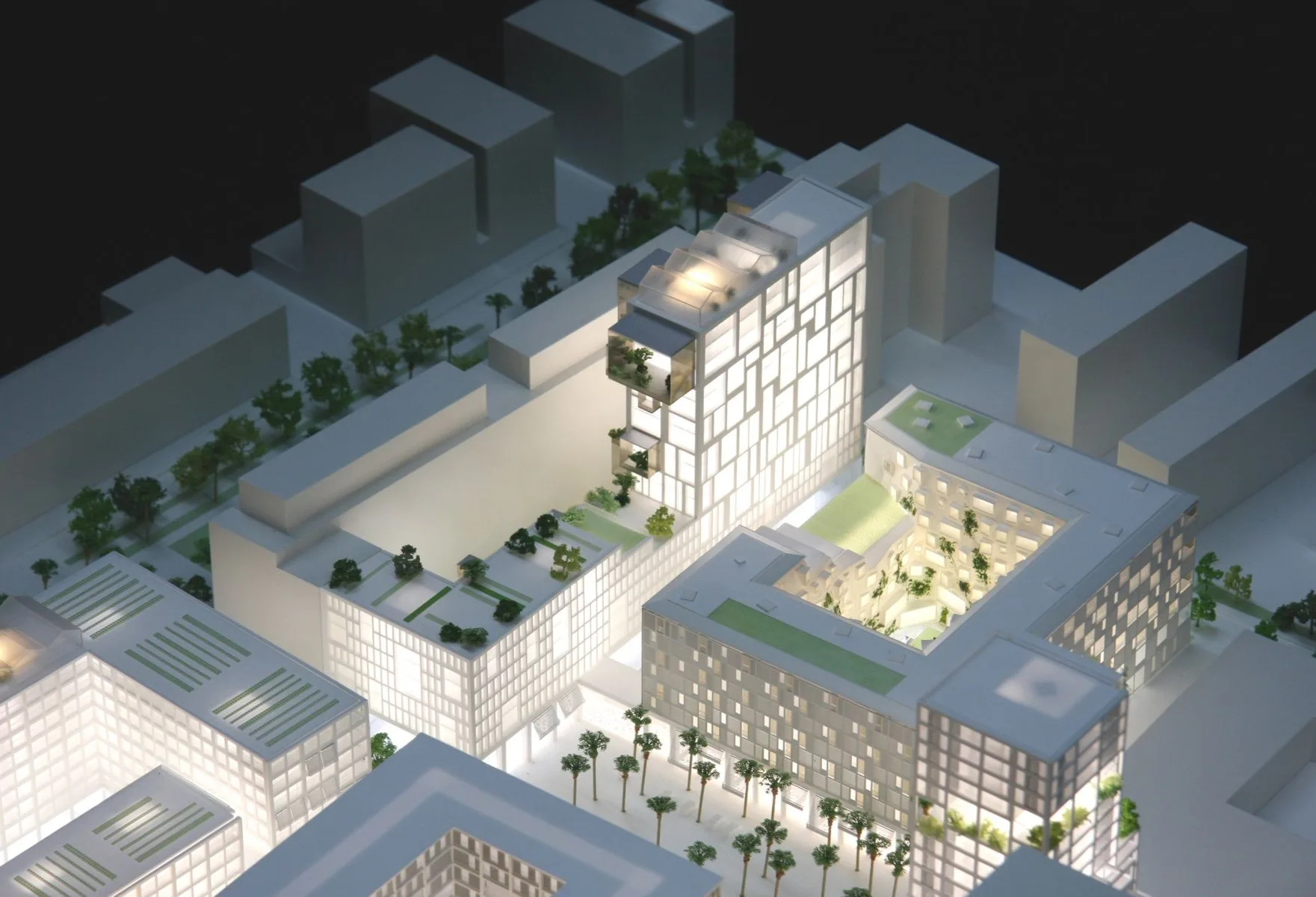
The building's facades respond to an assumed duality. On the public space, they are **smooth and gridded**, inscribing themselves in continuity with the other buildings of the urban piece. This apparent regularity masks a progressive sophistication: the grid enlarges as it rises, creating increasingly generous view frames toward the sky and valley. It is a way of negotiating the urban scale at ground level while offering visual freedom at height, where the gaze can embrace the grand landscape without obstacle. On the other face, in the heart of the block, the facades **project toward nature**, fragment, hollow out, creating a particular universe made of shadow, calm and overflowing vegetation. This duality is not only formal, it engages distinct ways of living: belonging to the street on one side, contemplative withdrawal on the other.
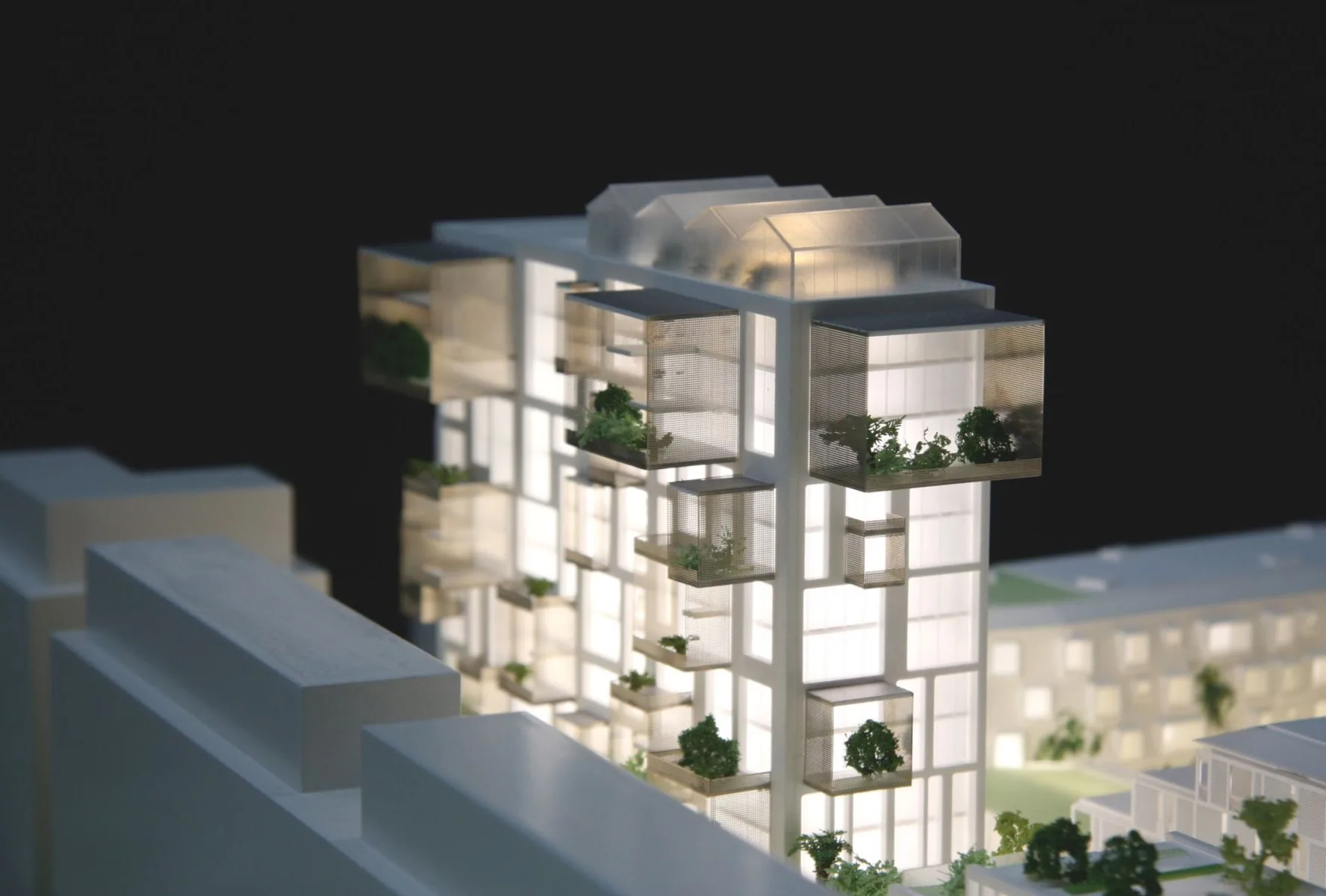
The materiality of the facades was envisioned with regard to the **urban situations encountered**. On the street, we favored constructive sobriety that does not seek immediate effect. On the other hand, on the south-facing terraces, we deployed a system of **「floating gardens」** framed by perforated metal sheet. This material, both technical and light, resonates with the Nice urban landscape, with its industrial balustrades, its metal fences, its port and railway heritage. The perforated metal sheet is not a decorative gesture: it acts as a climatic filter, attenuates the violent summer sun, diffuses light, protects privacy while preserving the view.
We carefully worked on the color and treatment of these frames. The exterior of the terraces is white, discreet, almost neutral, disappearing into the azure luminosity. The interior, on the other hand, is **golden**, a warm tint that recalls the reflection of Mediterranean sun rays on the ochre facades of the old town, on the sea in late afternoon, on the glazed roof tiles. This chromatic choice creates a **dreamlike landscape** for the inhabitant: looking up from their terrace, the resident sees the vegetation stand out against a golden background, almost unreal, that changes according to the hour and season. The perforated metal sheet, through its interplay of cast shadows and filtered light, amplifies this sensation of being in an intermediate space, neither quite inside nor quite outside.
To the north, the **through** dwellings benefit from large openings that give directly onto the valley. These views are not anecdotal: they inscribe each apartment in the grand territory, offer a depth of field that mentally enlarges the domestic space. In the morning, the light of sunrise penetrates to the heart of the rooms. In the evening, the gaze can get lost toward the mountains that turn blue in the twilight. This **visual porosity** is for us an essential condition of residential comfort.
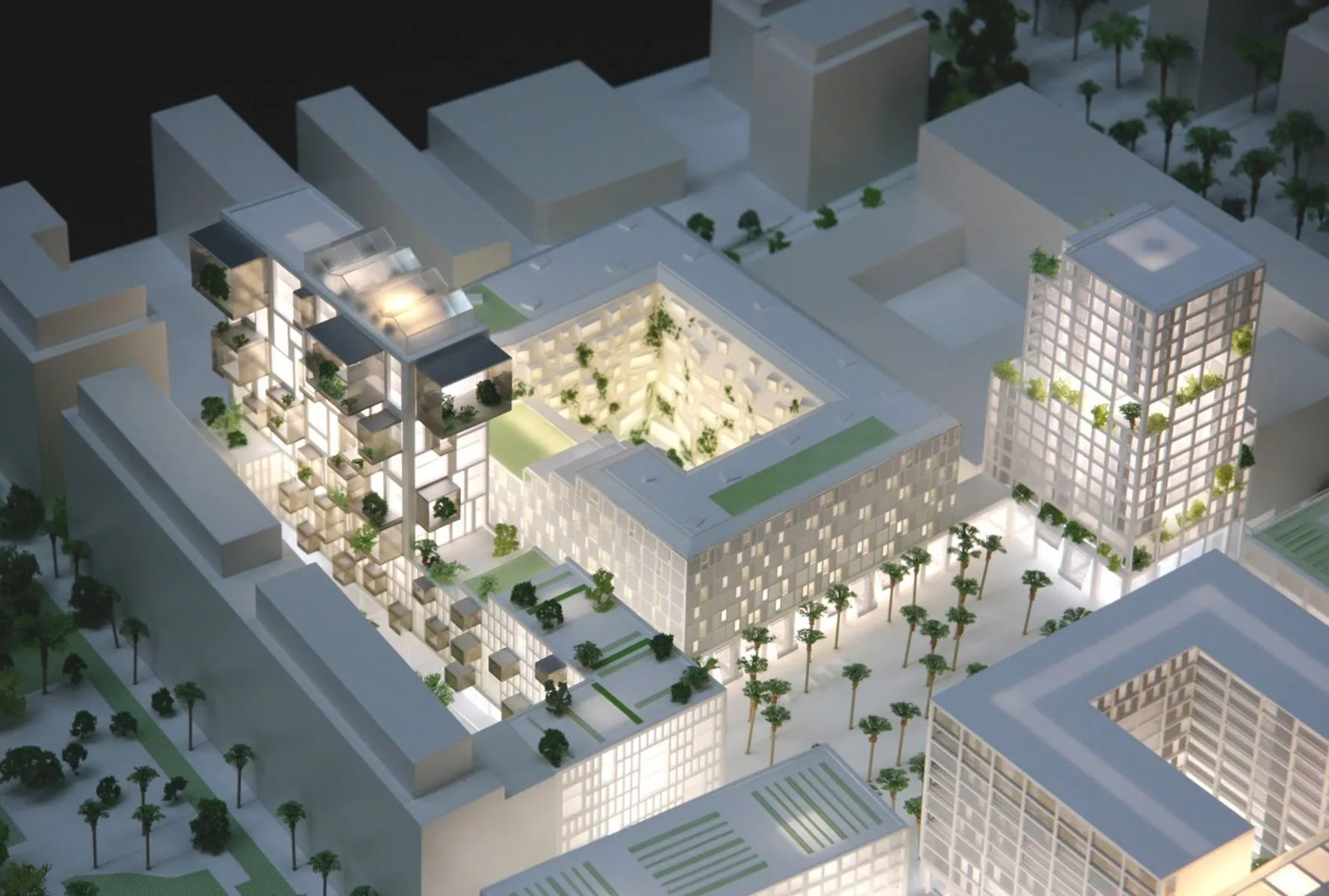
The south facade, meanwhile, is dressed with these 「framed terraces」 that evoke the **cells of a beehive**, a metaphor both formal and ecological. Each terrace accommodates generous vegetation, shrubs, climbing plants, aromatic plants, that overflow from the planters and create a moving, living green mass. During summer, these plant masses operate as a **screen of coolness**: they shade the bay windows, they evapotranspire, they lower the perceived temperature by several degrees. In winter, the deciduous foliage lets the sun pass through, naturally warming the interiors. This device is an example of **passive climatic regulation**, which reduces air conditioning and heating needs, while offering inhabitants daily contact with vegetation.
The presence of abundant and diverse vegetation outside and inside the building allows us to **extend the park onto the building**, to create ecological continuity between the ground and altitude. This is not a symbolic hanging garden, but a true green infrastructure that participates in urban biodiversity, offers refuges for birds, pollinating insects, contributes to carbon capture and stormwater management. The terraces are designed with planting substrates deep enough to allow the rooting of perennial species, and an integrated irrigation system limits water waste.
This competition project, although not realized, remains for us a **fertile exploration** of what dense urban housing can be that does not renounce nature, but makes it a structural, spatial, sensory and climatic component. The Floating Gardens carry a conviction: that we can, even on a constrained parcel, in a saturated urban context, invent ways of living where vegetation is neither accessory nor cosmetic, but constitutive of architecture itself.
We conceived this project for Nice as a **reconciliation between dense built form and omnipresent vegetation**, between the artificial and the living. The site is located at the crossroads of several landscape scales: the Var plain to the west, the Mercantour massif outlined in the background, the Baie des Anges to the south, the fertile valley that irrigates the Nice metropolis, and Mont Boron dominating the horizon. On a more intimate scale, a park extends below the parcel, offering a green respiration in a changing urban fabric. Our main ambition was therefore to restore nature to its rightful place, not as an applied decoration, but as a **spatial and climatic structure** of the project itself.
The exceptional setting of the site provided us with all the elements necessary for this quest. Rather than imposing an autonomous form, we developed a principle of **selective framing** on the city and landscape. It was about constructing oriented openings, visual breakthroughs that capture the valley to the north, the park below, the distant mountains, while creating interior respirations for the inhabitants. The building thus becomes an optical device, a filter between urban density and the generosity of the Nice territory.
The program is **mixed and hybrid**, a condition we often seek to create urban vitality. The ground floor accommodates a set of shops that activate the street and establish porosity with public space. The upper floors house residences, social and private, as well as a business tourism residence. An underground parking garage serves the inhabitants without cluttering the surface. This programmatic stratification allows us to articulate different scales of life, from the rapid passage of the pedestrian to the slowness of residential daily life.
The building's facades respond to an assumed duality. On the public space, they are **smooth and gridded**, inscribing themselves in continuity with the other buildings of the urban piece. This apparent regularity masks a progressive sophistication: the grid enlarges as it rises, creating increasingly generous view frames toward the sky and valley. It is a way of negotiating the urban scale at ground level while offering visual freedom at height, where the gaze can embrace the grand landscape without obstacle. On the other face, in the heart of the block, the facades **project toward nature**, fragment, hollow out, creating a particular universe made of shadow, calm and overflowing vegetation. This duality is not only formal, it engages distinct ways of living: belonging to the street on one side, contemplative withdrawal on the other.
The materiality of the facades was envisioned with regard to the **urban situations encountered**. On the street, we favored constructive sobriety that does not seek immediate effect. On the other hand, on the south-facing terraces, we deployed a system of **「floating gardens」** framed by perforated metal sheet. This material, both technical and light, resonates with the Nice urban landscape, with its industrial balustrades, its metal fences, its port and railway heritage. The perforated metal sheet is not a decorative gesture: it acts as a climatic filter, attenuates the violent summer sun, diffuses light, protects privacy while preserving the view.
We carefully worked on the color and treatment of these frames. The exterior of the terraces is white, discreet, almost neutral, disappearing into the azure luminosity. The interior, on the other hand, is **golden**, a warm tint that recalls the reflection of Mediterranean sun rays on the ochre facades of the old town, on the sea in late afternoon, on the glazed roof tiles. This chromatic choice creates a **dreamlike landscape** for the inhabitant: looking up from their terrace, the resident sees the vegetation stand out against a golden background, almost unreal, that changes according to the hour and season. The perforated metal sheet, through its interplay of cast shadows and filtered light, amplifies this sensation of being in an intermediate space, neither quite inside nor quite outside.
To the north, the **through** dwellings benefit from large openings that give directly onto the valley. These views are not anecdotal: they inscribe each apartment in the grand territory, offer a depth of field that mentally enlarges the domestic space. In the morning, the light of sunrise penetrates to the heart of the rooms. In the evening, the gaze can get lost toward the mountains that turn blue in the twilight. This **visual porosity** is for us an essential condition of residential comfort.
The south facade, meanwhile, is dressed with these 「framed terraces」 that evoke the **cells of a beehive**, a metaphor both formal and ecological. Each terrace accommodates generous vegetation, shrubs, climbing plants, aromatic plants, that overflow from the planters and create a moving, living green mass. During summer, these plant masses operate as a **screen of coolness**: they shade the bay windows, they evapotranspire, they lower the perceived temperature by several degrees. In winter, the deciduous foliage lets the sun pass through, naturally warming the interiors. This device is an example of **passive climatic regulation**, which reduces air conditioning and heating needs, while offering inhabitants daily contact with vegetation.
The presence of abundant and diverse vegetation outside and inside the building allows us to **extend the park onto the building**, to create ecological continuity between the ground and altitude. This is not a symbolic hanging garden, but a true green infrastructure that participates in urban biodiversity, offers refuges for birds, pollinating insects, contributes to carbon capture and stormwater management. The terraces are designed with planting substrates deep enough to allow the rooting of perennial species, and an integrated irrigation system limits water waste.
This competition project, although not realized, remains for us a **fertile exploration** of what dense urban housing can be that does not renounce nature, but makes it a structural, spatial, sensory and climatic component. The Floating Gardens carry a conviction: that we can, even on a constrained parcel, in a saturated urban context, invent ways of living where vegetation is neither accessory nor cosmetic, but constitutive of architecture itself.
- Lieu
- Nice, France
- Nature
- Logements
- Surface
- 11 122 m²
- Budget
- Confidentiel
- Concours
- 2017
- MOA
- Nexity