Bamako Hotel
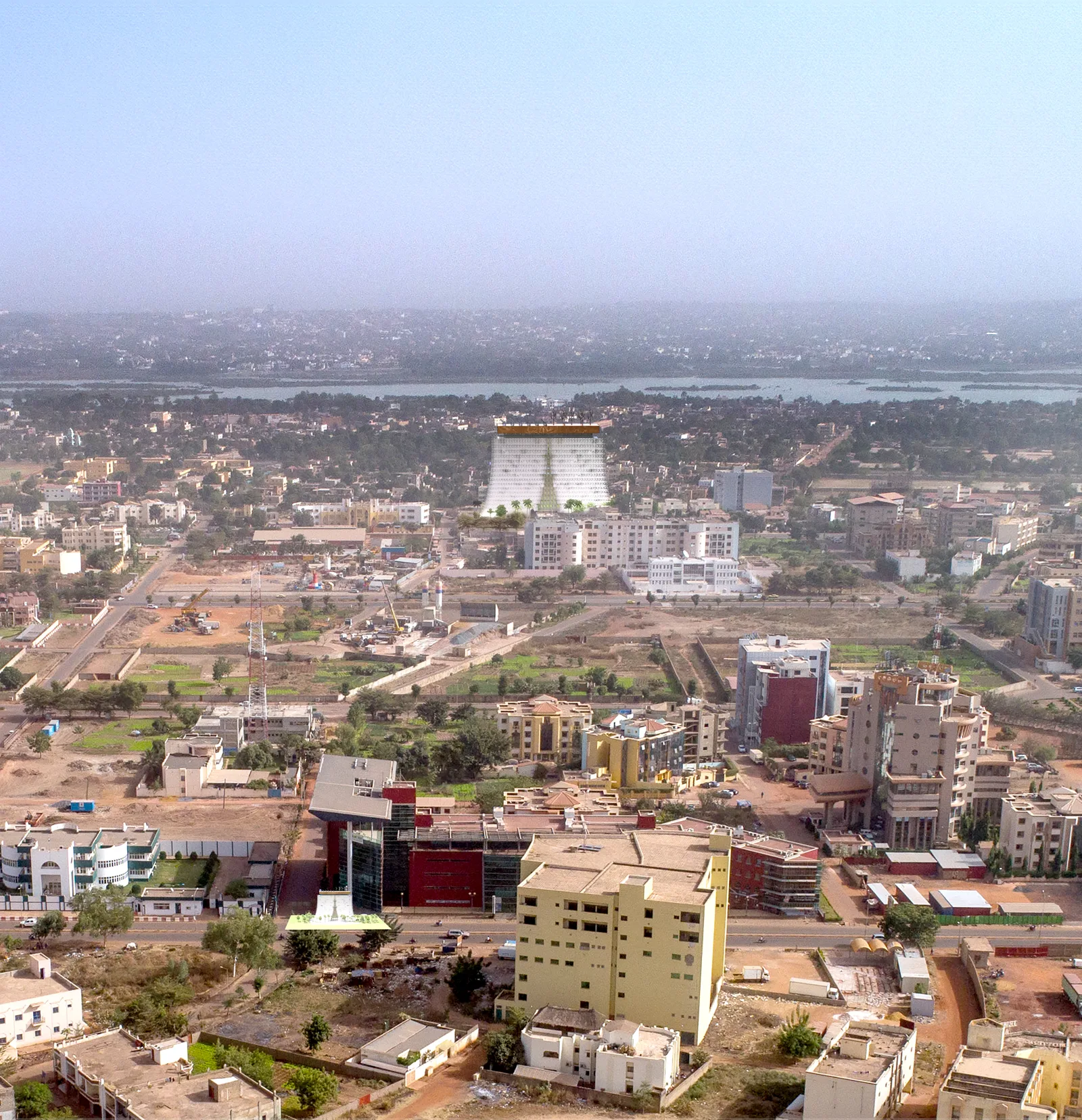
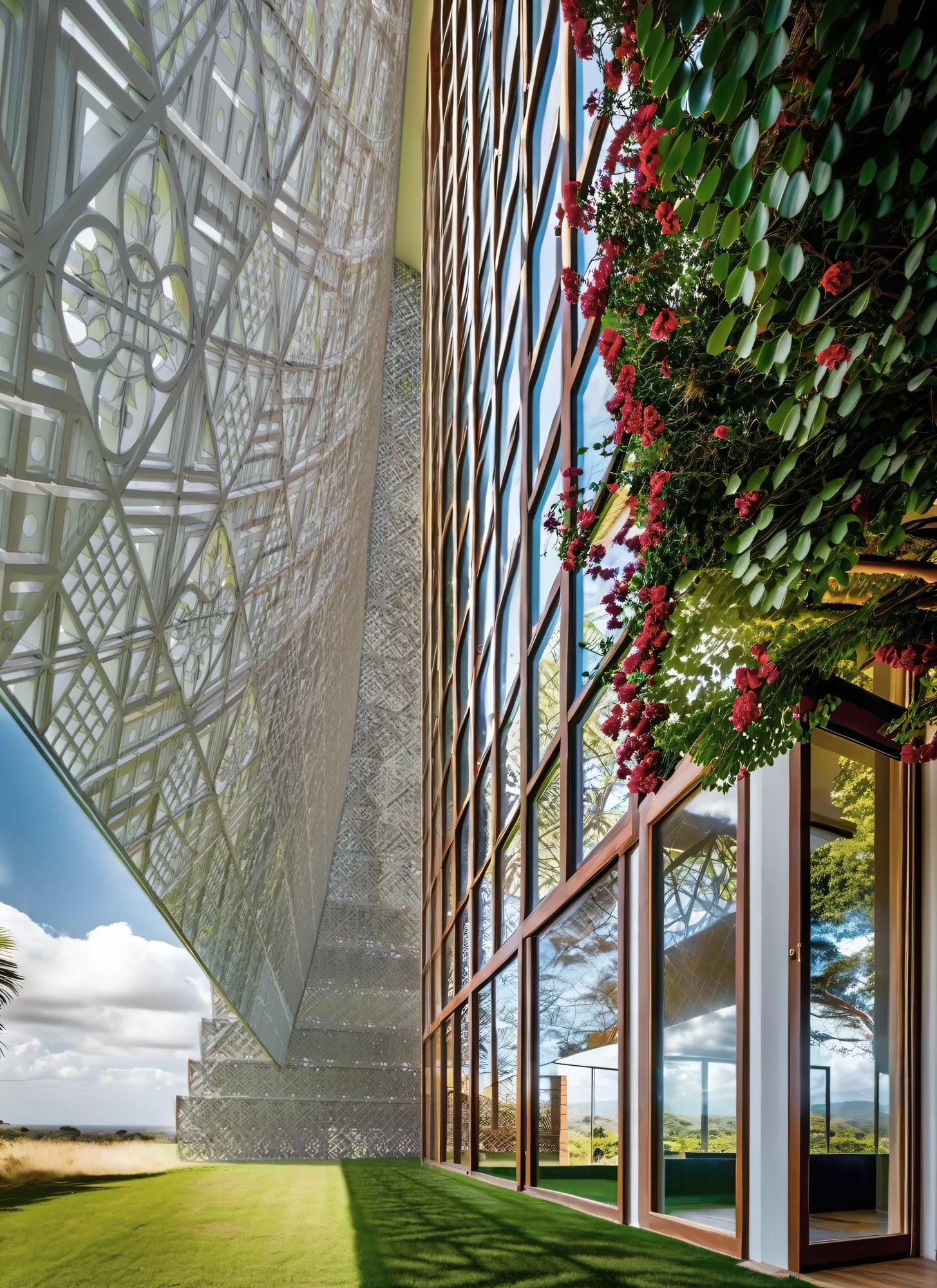
Restructuring of an existing building in Bamako, capital of Mali. An architecture that reinterprets African design languages in a contemporary way, extended by a light veil that filters light, allows air to pass through, and creates a protective skin.
In Bamako, on the banks of the Niger, this hotel project is not a blank page. It is a transformation, a contemporary graft onto a building that already existed. Restructuring rather than demolishing: this is the first gesture, the most economical, the one that respects the memory of a site and the ground that supports it.
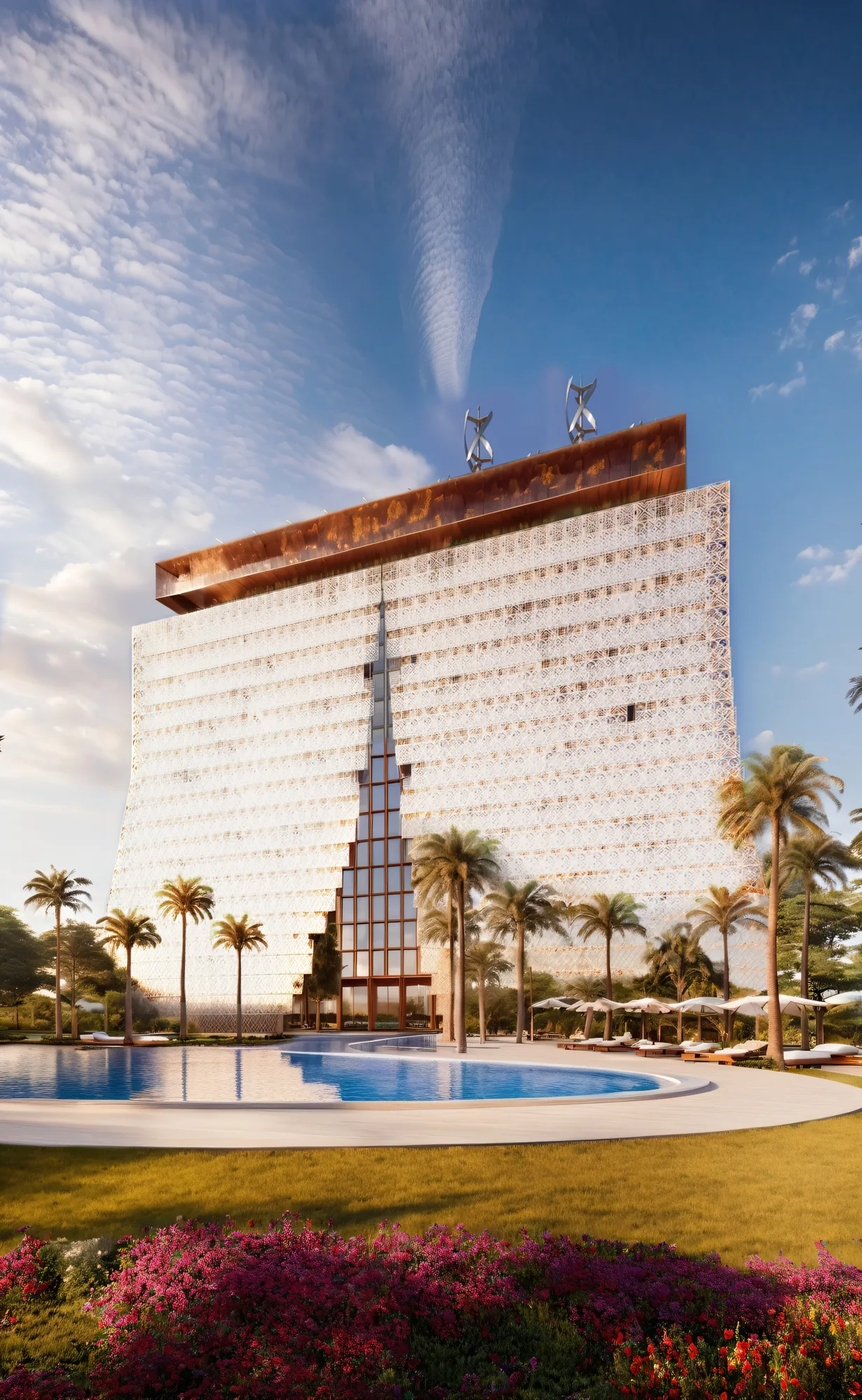
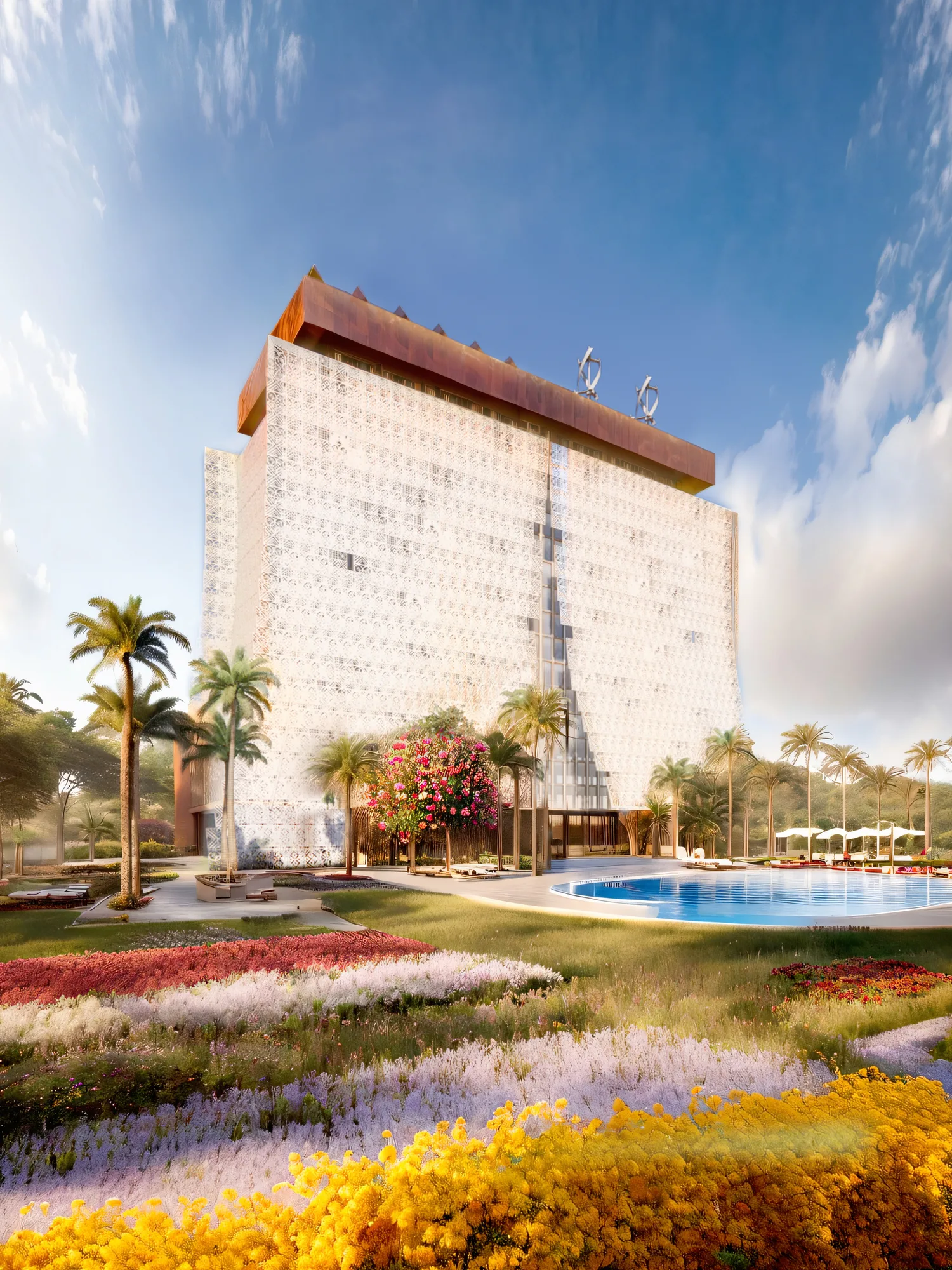
The architecture seeks a dialogue with the culture that welcomes it. Rather than importing a foreign vocabulary, it listens to what West Africa has invented over centuries to inhabit this climate, the thickness of banco walls, the wooden and earthen claustras, the courtyards that draw in coolness, the veils stretched against the sun. From these traditional gestures, the project retains the principle and updates it: a light, contemporary veil envelops the entire building and creates a second skin that filters daylight, slows the entry of the sun without preventing air circulation.
This breathing envelope has a climatic virtue before having a plastic virtue. It protects the interior facades from sahélien heat, it reduces air conditioning needs, it allows interior spaces to function naturally, through draft and shading, as traditional dwellings have always done. Environmental performance is not added to the project; it is its generating principle.
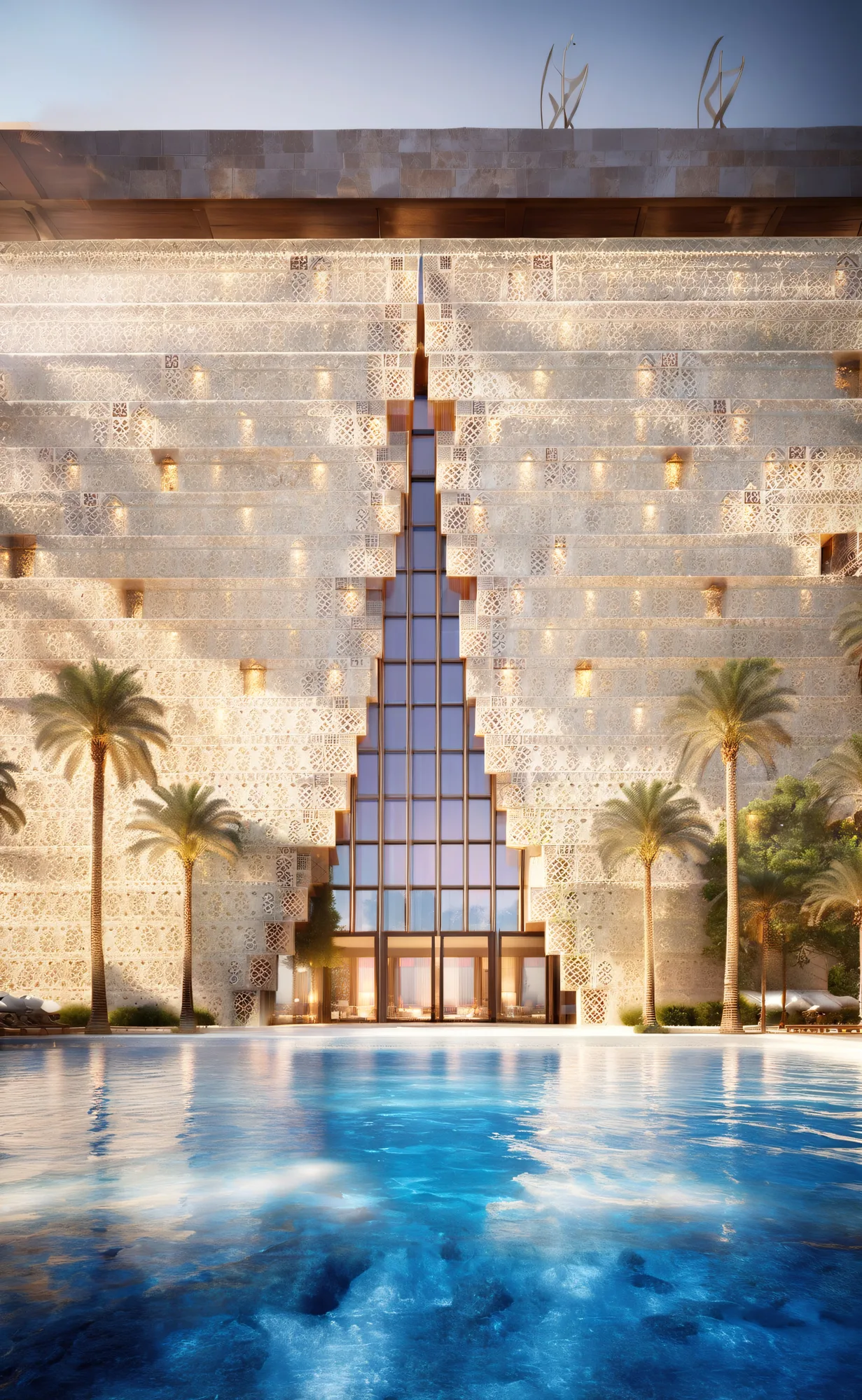
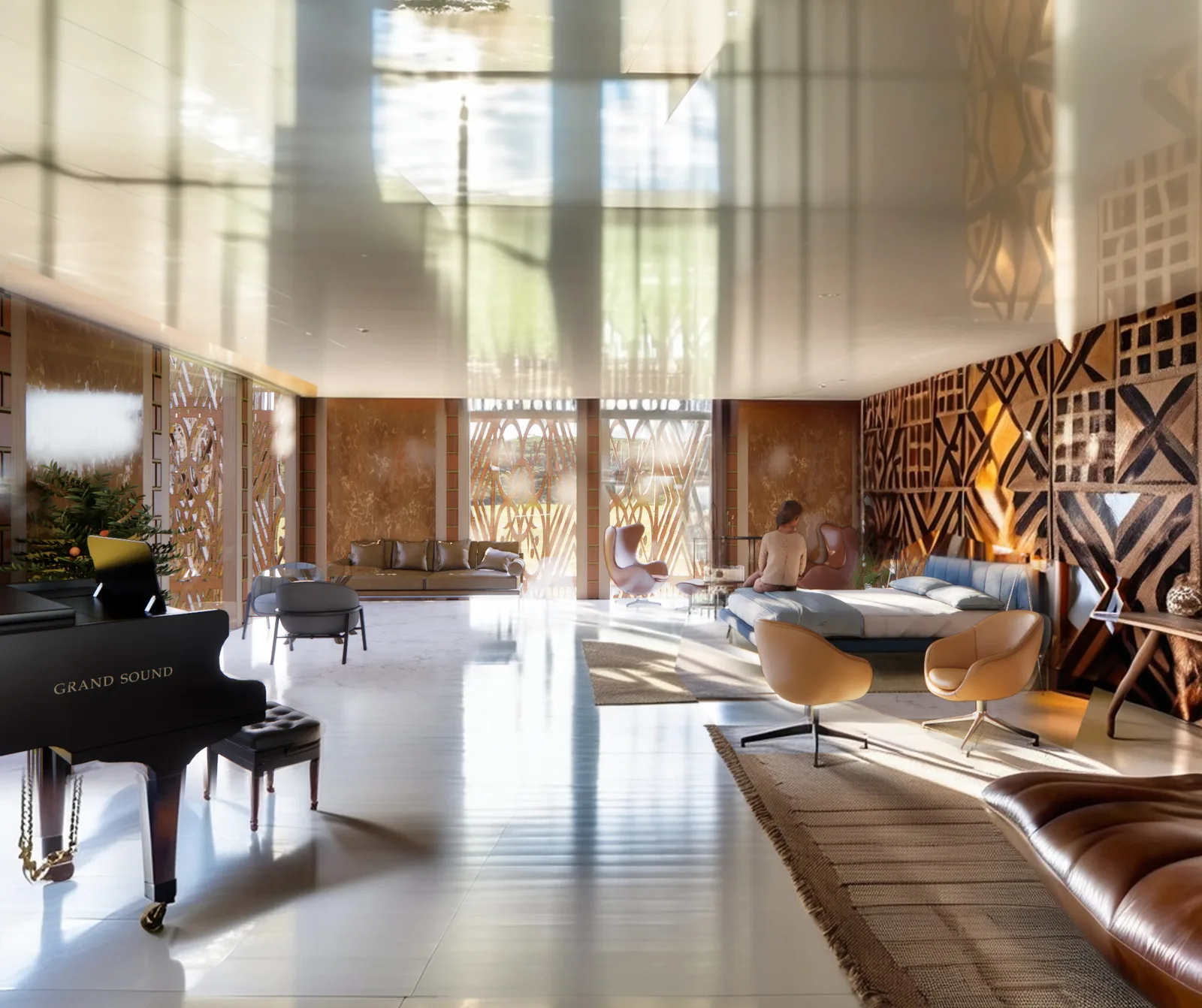
Inside, the rooms and suites open onto interstices, these breathing spaces between the outer skin and the building, where light diffracts, where air circulates, where views extend toward the sky. The veil becomes a poetic as well as thermal filter. By day, it draws moving patterns on the interior walls. By night, it lights up from within and turns the hotel into an urban lantern.
The environmental approach is deliberately local. The materials available in Bamako, the skills of Malian craftsmen, the specific climatic conditions of the sahélien zone, all of this informs the project far more than any international specifications. Building in Mali does not mean applying an attenuated global model, but inventing an architecture that would make sense nowhere else.
It is this dual requirement that makes, I believe, the value of the project: to be profoundly contemporary in its technique and form, and profoundly anchored in the place, in the climate, in the culture that welcomes it. A modern African architecture can only exist on this condition, not a copy of the past, not a copy-paste from elsewhere, but a living reinterpretation that extends ancient gestures in today's language.
The hotel thus becomes a place of hospitality in the fullest sense: it welcomes visitors, but it first welcomes its own site, by inscribing itself in the continuity of what has always been done there.
The architecture seeks a dialogue with the culture that welcomes it. Rather than importing a foreign vocabulary, it listens to what West Africa has invented over centuries to inhabit this climate, the thickness of banco walls, the wooden and earthen claustras, the courtyards that draw in coolness, the veils stretched against the sun. From these traditional gestures, the project retains the principle and updates it: a light, contemporary veil envelops the entire building and creates a second skin that filters daylight, slows the entry of the sun without preventing air circulation.
This breathing envelope has a climatic virtue before having a plastic virtue. It protects the interior facades from sahélien heat, it reduces air conditioning needs, it allows interior spaces to function naturally, through draft and shading, as traditional dwellings have always done. Environmental performance is not added to the project; it is its generating principle.
Inside, the rooms and suites open onto interstices, these breathing spaces between the outer skin and the building, where light diffracts, where air circulates, where views extend toward the sky. The veil becomes a poetic as well as thermal filter. By day, it draws moving patterns on the interior walls. By night, it lights up from within and turns the hotel into an urban lantern.
The environmental approach is deliberately local. The materials available in Bamako, the skills of Malian craftsmen, the specific climatic conditions of the sahélien zone, all of this informs the project far more than any international specifications. Building in Mali does not mean applying an attenuated global model, but inventing an architecture that would make sense nowhere else.
It is this dual requirement that makes, I believe, the value of the project: to be profoundly contemporary in its technique and form, and profoundly anchored in the place, in the climate, in the culture that welcomes it. A modern African architecture can only exist on this condition, not a copy of the past, not a copy-paste from elsewhere, but a living reinterpretation that extends ancient gestures in today's language.
The hotel thus becomes a place of hospitality in the fullest sense: it welcomes visitors, but it first welcomes its own site, by inscribing itself in the continuity of what has always been done there.
- Lieu
- Bamako, Mali
- Nature
- Hôtellerie / Restructuration