
Ecotone Arcueil
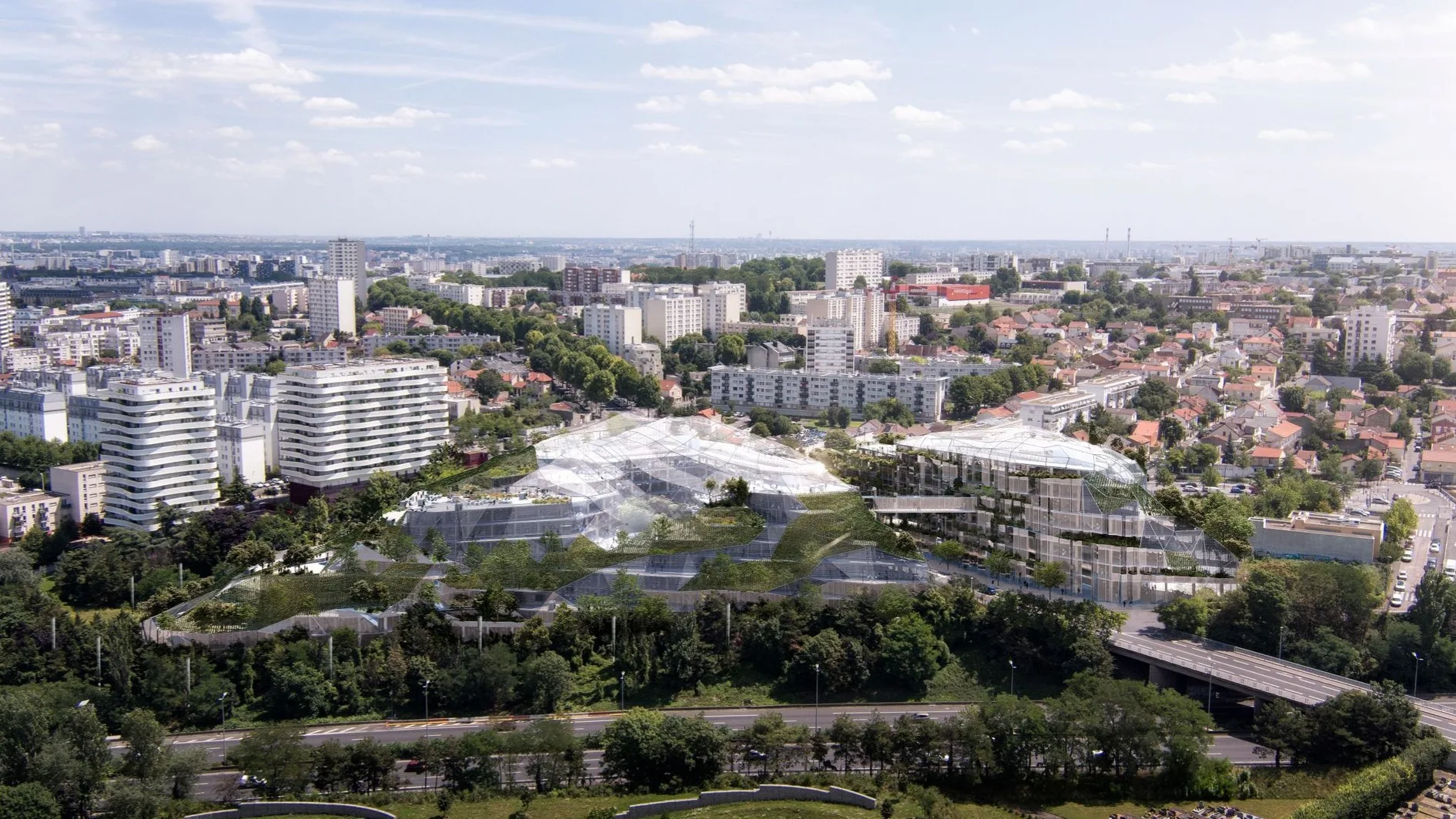
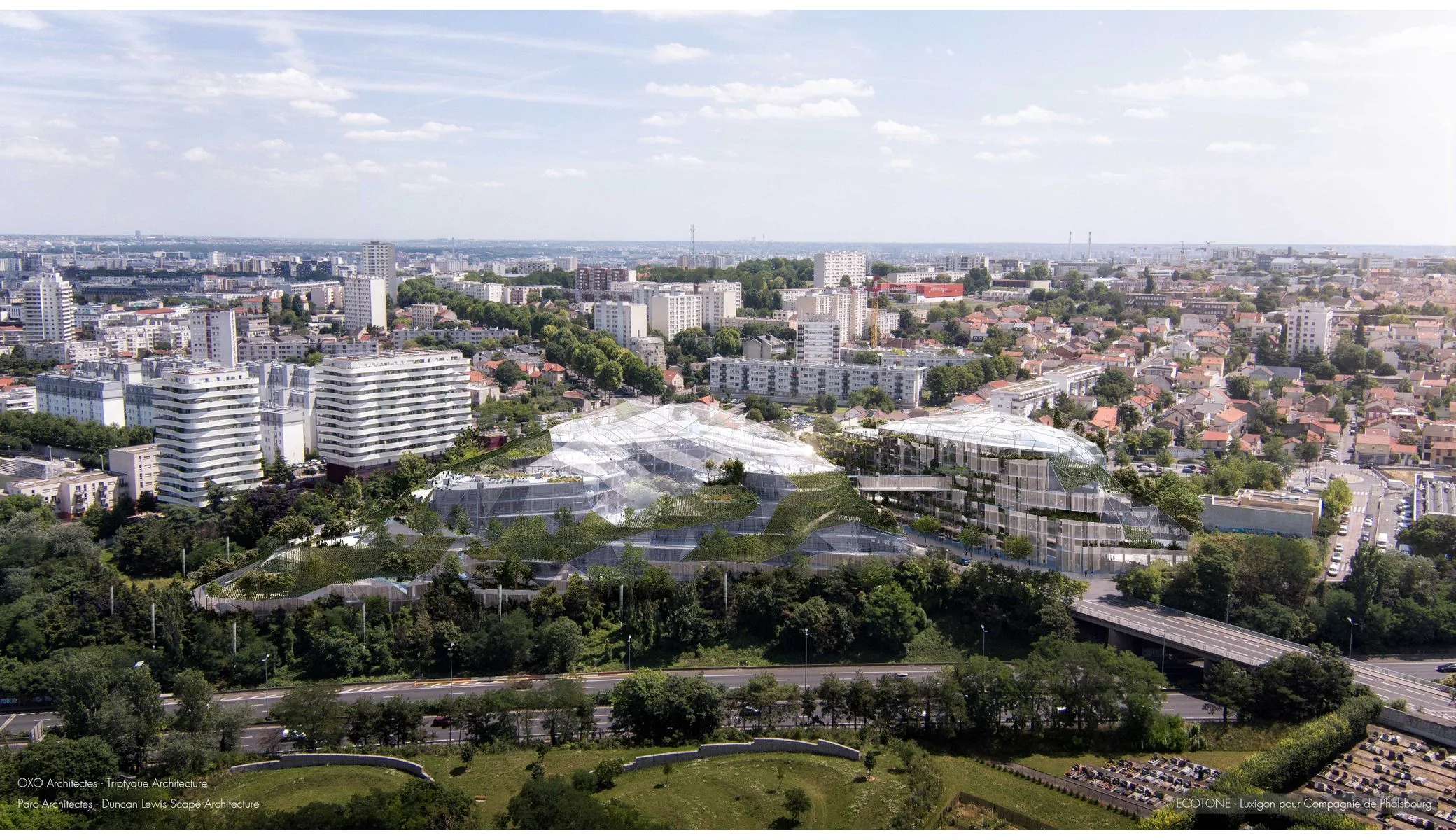
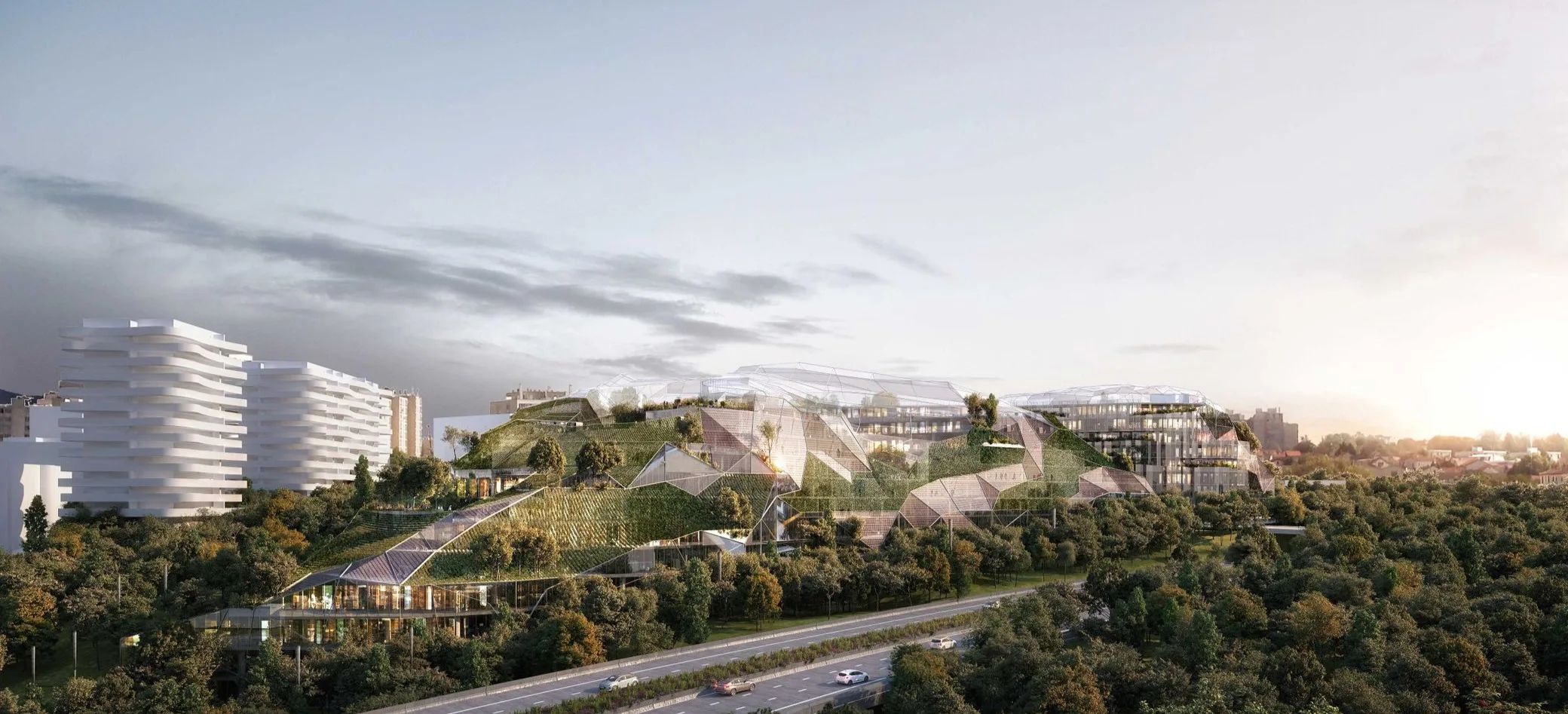
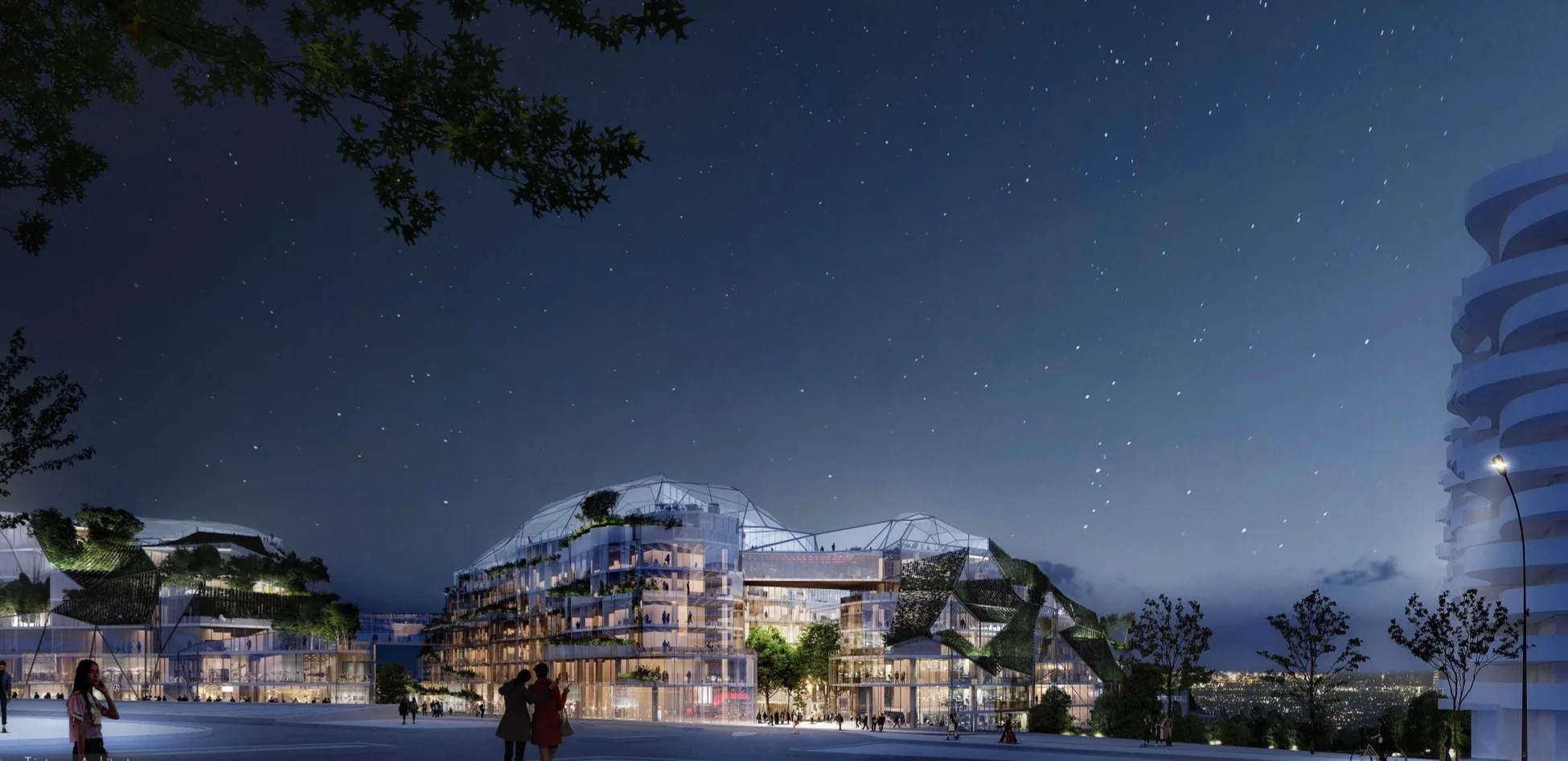
Ecotone proposes to create an unprecedented link between the city and nature. A physical transition link between the hillside park and the city, but also the desire to connect to a new model of society: by working on the porosity between the built and the vegetal, Ecotone offers the possibility of a new relationship between man and nature, a more virtuous relationship that is more respectful of the environment. This profoundly biophilic logic contributes not only to the well-being of the building's users, but also aims to orient behaviors toward greater sobriety and ecological consciousness. Our project takes the form of a building terraced along the slope and carved with patios allowing interior lighting for living and working spaces.
# Ecotone Arcueil
We conceived Ecotone as a response to a central architectural and ecological question: how to build in the city without opposing the built to the living? The Arcueil site, in contact with the Coteau park, offered us a rare opportunity to work on this porosity between two worlds, that of the dense city and that of the natural landscape. It is not a gesture of symbolic reconciliation that we sought, but a physical continuity, an architectural translation of the notion of **ecotone**, this term borrowed from ecology that designates the transition zone between two ecosystems. Here, the building itself becomes this zone of passage, of progressive transformation, a space where human uses and vegetal dynamics coexist and mutually support each other.
The site carries within it a double constraint. On one side, the immediate proximity of the highway imposes noise pollution and atmospheric pollution that must be filtered, contained. On the other, the Coteau offers a green respite, a singular topography that deserves to be extended rather than interrupted. We therefore chose to design a terraced building that follows the natural slope of the land, like a built extension of the existing relief. This principle of **built topography** organizes the entire project: each level recedes progressively, freeing generous planted terraces that form as many superimposed vegetal strata. The building does not impose itself on the landscape, it inscribes itself in it, blends into it, becomes a habitable extension of it.
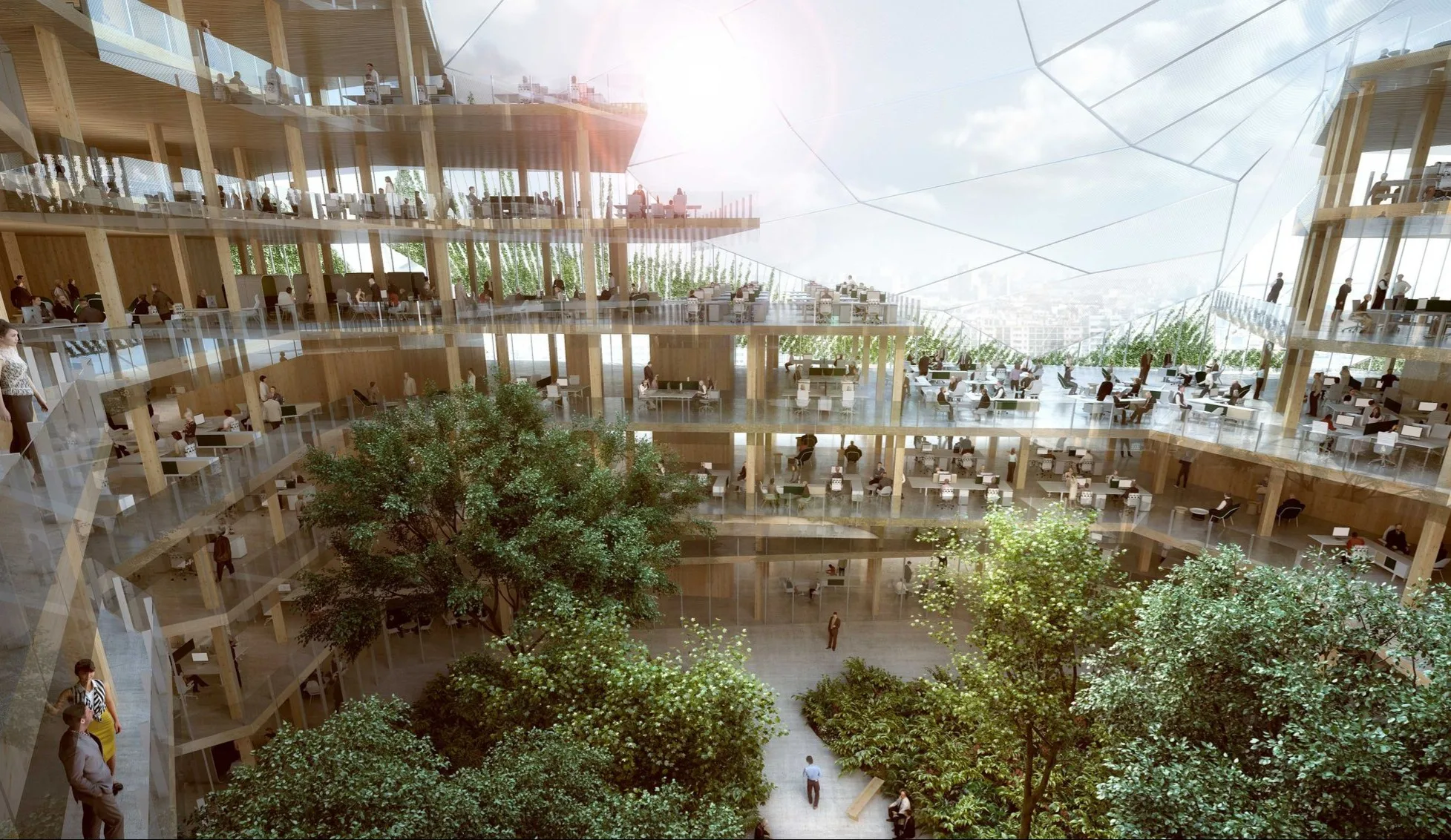
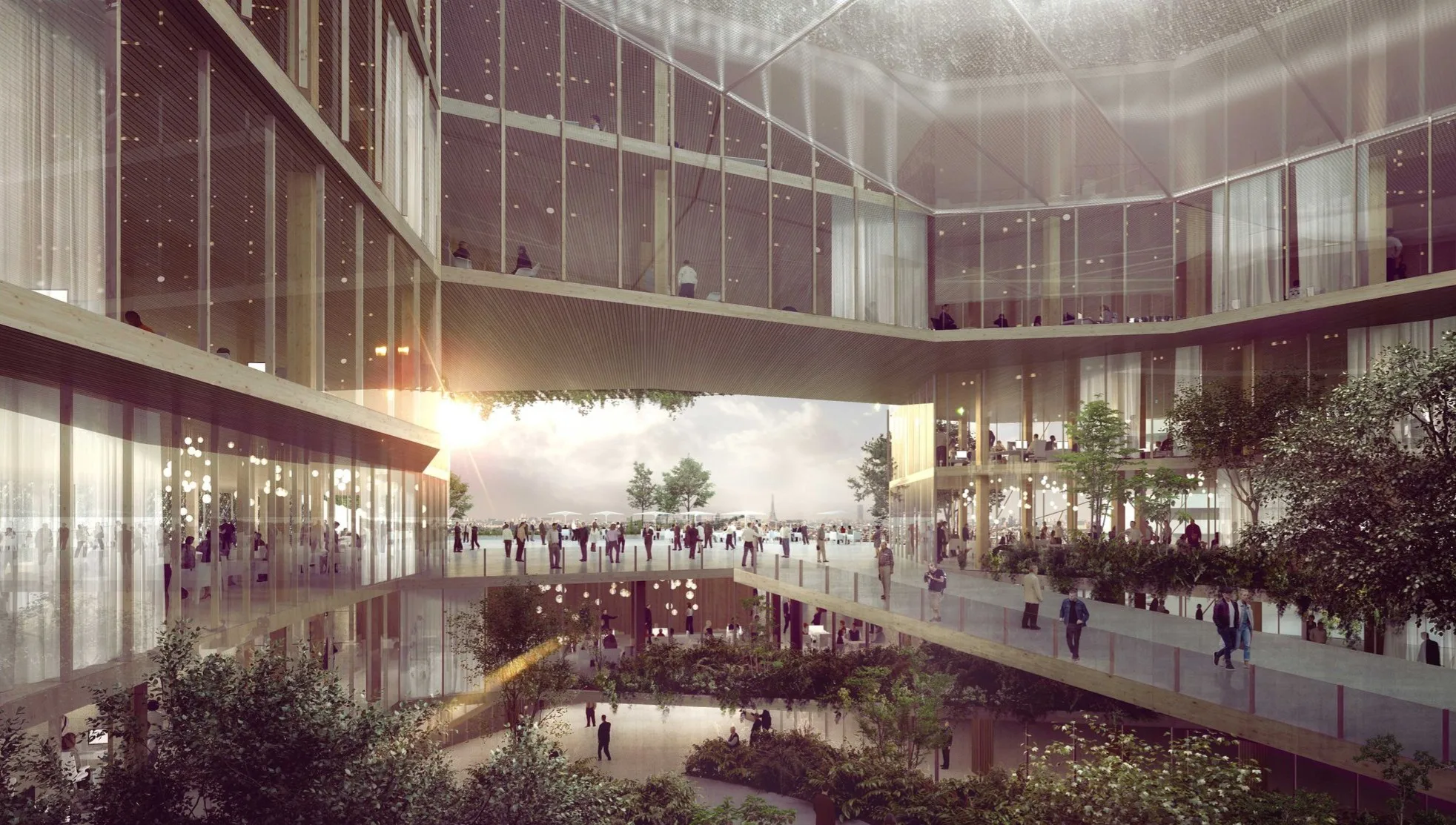
The mixed program, bringing together offices, hotel, and retail spaces over 81,870 m², could have led to a classic functional juxtaposition. We preferred to work on the porosity and articulation of uses around **carved patios**, true interior lungs that structure the project. These patios are not simple interior courtyards, they are settings for biodiversity, regulated climatic spaces that protect shared activities from external nuisances while maintaining a visual and sensory connection with the sky and vegetation. Some patios are directly accessible from work spaces, others serve as informal meeting places, shared vegetable gardens, or restaurant terraces. They establish respiration at the heart of the built mass and allow generous natural lighting of the office floors, thus reducing artificial lighting needs.
The collaboration with Duncan Lewis, Scape Architecture, Parc Architectes, and Triptyque Architecture was essential to deploy this **biophilic** ambition at all scales of the project. Duncan Lewis, with his sensitivity to organic landscape architecture, nourished our reflection on fluidity between interior and exterior. Triptyque Architecture, through its Brazilian experience of tropical architecture and intensive greening, brought valuable expertise on vegetation management in urban climate. Parc Architectes contributed to the design of public spaces and urban connections, allowing the project to be anchored in its neighborhood while preserving its strong landscape identity.
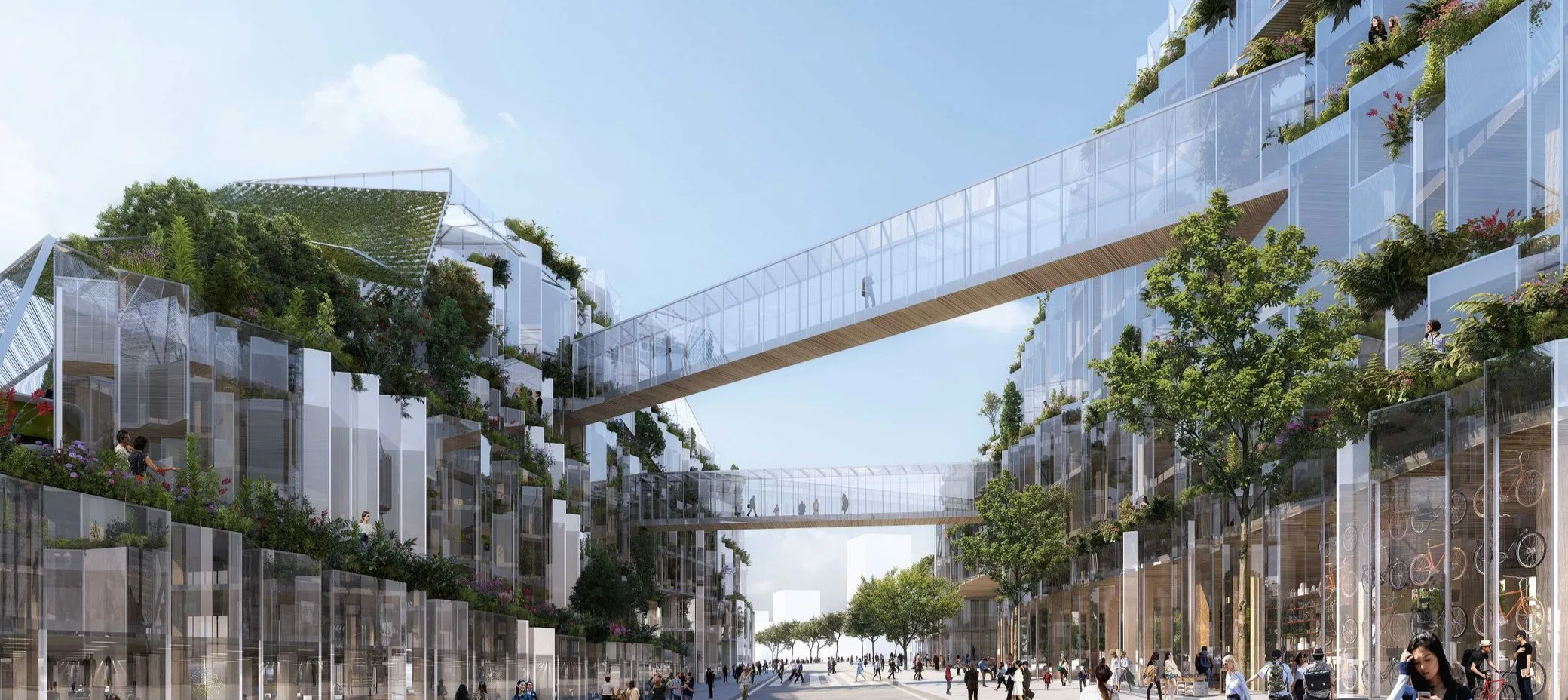
The **living epidermis** of Ecotone rests on the principle of a double facade: a glass skin, thermally efficient, protects the interior spaces, while a second vegetal skin, composed of tiered planters and trellises, envelops the entire building. This double envelope is not decoration, it has a precise climatic and acoustic function. The vegetal layer absorbs part of the noise pollution from the highway, filters fine particles, mitigates summer overheating through evapotranspiration, and creates favorable microclimates on the terraces. In winter, the glass facade captures passive solar gains, while the deciduous vegetation allows light to pass through. This low-tech system, easy to maintain and regenerate, rests on a selection of local species adapted to the Île-de-France climate, favoring hardy perennials, grasses, and light-bearing shrubs that animate the facade without weighing it down.
These planted terraces are not residual spaces. We conceived them as habitable extensions of the office floors, places where one can set up an informal meeting room, a relaxation area, a shared vegetable garden, or simply a space to have lunch outdoors. This **programmatic porosity** between interior and exterior encourages more sober behaviors, more conscious of the immediate environment. Working in contact with nature, observing the cycle of seasons, participating in the maintenance of a vegetable garden, these simple gestures contribute to transforming users' relationship to their workplace and, beyond that, to urban ecology.
At levels R+4 and R+5, footbridges connect certain spaces on either side of the patios, promoting fluid circulation and exchanges between teams. These aerial, light, and glazed connections offer plunging views onto the interior gardens and participate in the sensation of spatial continuity that characterizes the project. They avoid long detours through vertical circulations and reinforce the social cohesion of the place, a major challenge for a tertiary program of this scale.
Throughout the year, Ecotone evolves. The chromatic variations of the vegetation, from tender spring green to the coppery tones of autumn, make the building a **living landscape** in permanent transformation. This vegetal temporality, inscribed in the natural cycle of seasons, contrasts with the apparent stability of mineral architecture and reminds users that they inhabit a living organism, in fragile balance with its environment. It is this awareness of fragility, of interdependence, that we wanted to inscribe in the daily experience of the place. Ecotone is not a building decorated with plants, it is a hybrid ecosystem where architecture and vegetation cooperate to offer a healthier, more resilient, more desirable living and working environment.
We conceived Ecotone as a response to a central architectural and ecological question: how to build in the city without opposing the built to the living? The Arcueil site, in contact with the Coteau park, offered us a rare opportunity to work on this porosity between two worlds, that of the dense city and that of the natural landscape. It is not a gesture of symbolic reconciliation that we sought, but a physical continuity, an architectural translation of the notion of **ecotone**, this term borrowed from ecology that designates the transition zone between two ecosystems. Here, the building itself becomes this zone of passage, of progressive transformation, a space where human uses and vegetal dynamics coexist and mutually support each other.
The site carries within it a double constraint. On one side, the immediate proximity of the highway imposes noise pollution and atmospheric pollution that must be filtered, contained. On the other, the Coteau offers a green respite, a singular topography that deserves to be extended rather than interrupted. We therefore chose to design a terraced building that follows the natural slope of the land, like a built extension of the existing relief. This principle of **built topography** organizes the entire project: each level recedes progressively, freeing generous planted terraces that form as many superimposed vegetal strata. The building does not impose itself on the landscape, it inscribes itself in it, blends into it, becomes a habitable extension of it.
The mixed program, bringing together offices, hotel, and retail spaces over 81,870 m², could have led to a classic functional juxtaposition. We preferred to work on the porosity and articulation of uses around **carved patios**, true interior lungs that structure the project. These patios are not simple interior courtyards, they are settings for biodiversity, regulated climatic spaces that protect shared activities from external nuisances while maintaining a visual and sensory connection with the sky and vegetation. Some patios are directly accessible from work spaces, others serve as informal meeting places, shared vegetable gardens, or restaurant terraces. They establish respiration at the heart of the built mass and allow generous natural lighting of the office floors, thus reducing artificial lighting needs.
The collaboration with Duncan Lewis, Scape Architecture, Parc Architectes, and Triptyque Architecture was essential to deploy this **biophilic** ambition at all scales of the project. Duncan Lewis, with his sensitivity to organic landscape architecture, nourished our reflection on fluidity between interior and exterior. Triptyque Architecture, through its Brazilian experience of tropical architecture and intensive greening, brought valuable expertise on vegetation management in urban climate. Parc Architectes contributed to the design of public spaces and urban connections, allowing the project to be anchored in its neighborhood while preserving its strong landscape identity.
The **living epidermis** of Ecotone rests on the principle of a double facade: a glass skin, thermally efficient, protects the interior spaces, while a second vegetal skin, composed of tiered planters and trellises, envelops the entire building. This double envelope is not decoration, it has a precise climatic and acoustic function. The vegetal layer absorbs part of the noise pollution from the highway, filters fine particles, mitigates summer overheating through evapotranspiration, and creates favorable microclimates on the terraces. In winter, the glass facade captures passive solar gains, while the deciduous vegetation allows light to pass through. This low-tech system, easy to maintain and regenerate, rests on a selection of local species adapted to the Île-de-France climate, favoring hardy perennials, grasses, and light-bearing shrubs that animate the facade without weighing it down.
These planted terraces are not residual spaces. We conceived them as habitable extensions of the office floors, places where one can set up an informal meeting room, a relaxation area, a shared vegetable garden, or simply a space to have lunch outdoors. This **programmatic porosity** between interior and exterior encourages more sober behaviors, more conscious of the immediate environment. Working in contact with nature, observing the cycle of seasons, participating in the maintenance of a vegetable garden, these simple gestures contribute to transforming users' relationship to their workplace and, beyond that, to urban ecology.
At levels R+4 and R+5, footbridges connect certain spaces on either side of the patios, promoting fluid circulation and exchanges between teams. These aerial, light, and glazed connections offer plunging views onto the interior gardens and participate in the sensation of spatial continuity that characterizes the project. They avoid long detours through vertical circulations and reinforce the social cohesion of the place, a major challenge for a tertiary program of this scale.
Throughout the year, Ecotone evolves. The chromatic variations of the vegetation, from tender spring green to the coppery tones of autumn, make the building a **living landscape** in permanent transformation. This vegetal temporality, inscribed in the natural cycle of seasons, contrasts with the apparent stability of mineral architecture and reminds users that they inhabit a living organism, in fragile balance with its environment. It is this awareness of fragility, of interdependence, that we wanted to inscribe in the daily experience of the place. Ecotone is not a building decorated with plants, it is a hybrid ecosystem where architecture and vegetation cooperate to offer a healthier, more resilient, more desirable living and working environment.
- Lieu
- Arcueil, France
- Nature
- Mixte
- Surface
- 81 870 m²
- Budget
- 190 M€ HT
- Concours
- 2017
- Livraison
- 2025
- MOA
- Compagnie de Phalsbourg, Codeurs et compagnie, Hertel Investissement, Engie Avenue
- Co-architectes
- Duncan Lewis - Scape Architecture, Parc Architectes, Triptyque Architecture