
ART'CHIPEL
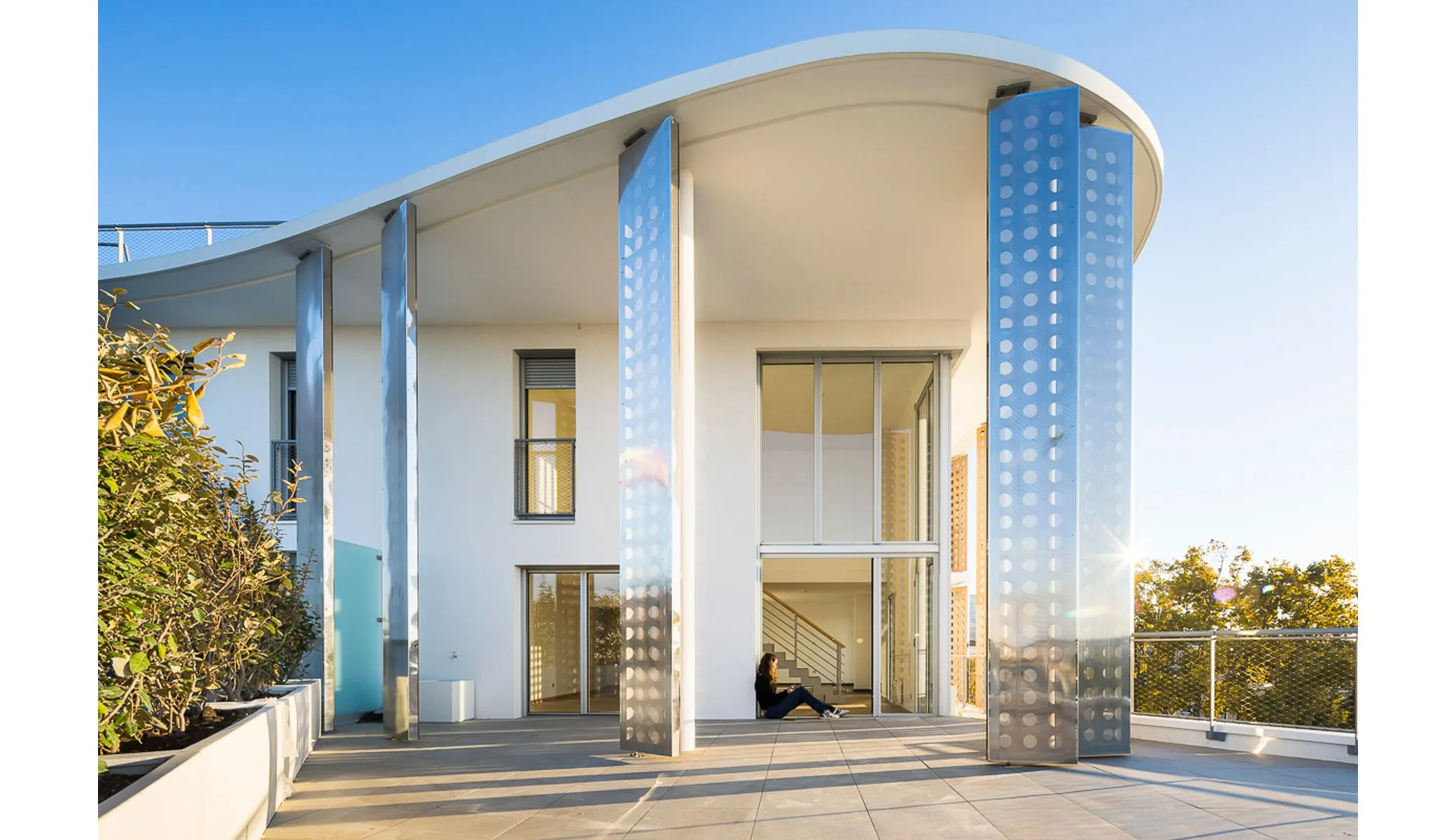
At the heart of an exceptional natural site in Marseille's 8th arrondissement, ART'CHIPEL is a collective housing program designed without air conditioning. Bioclimatic orientation, dual vegetation, cross ventilation, absorbent materials: summer comfort comes from the project itself, not from machines. Like Mediterranean people who know how to enjoy shade and summer freshness, each dwelling is designed for its exposure, its hours and its seasons. Resilient architecture that transforms the Mediterranean climatic constraint into a formal and sensory asset.
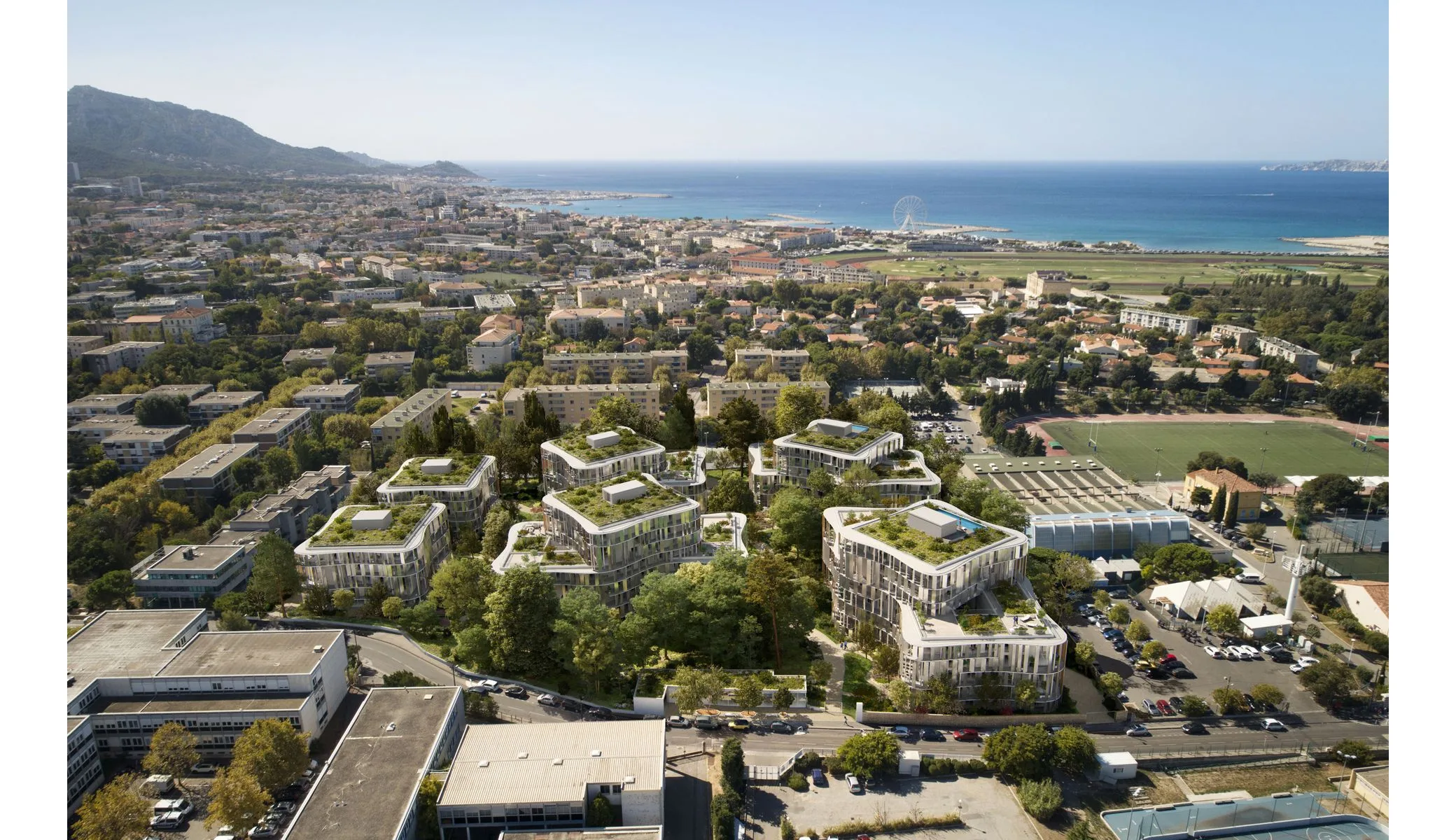
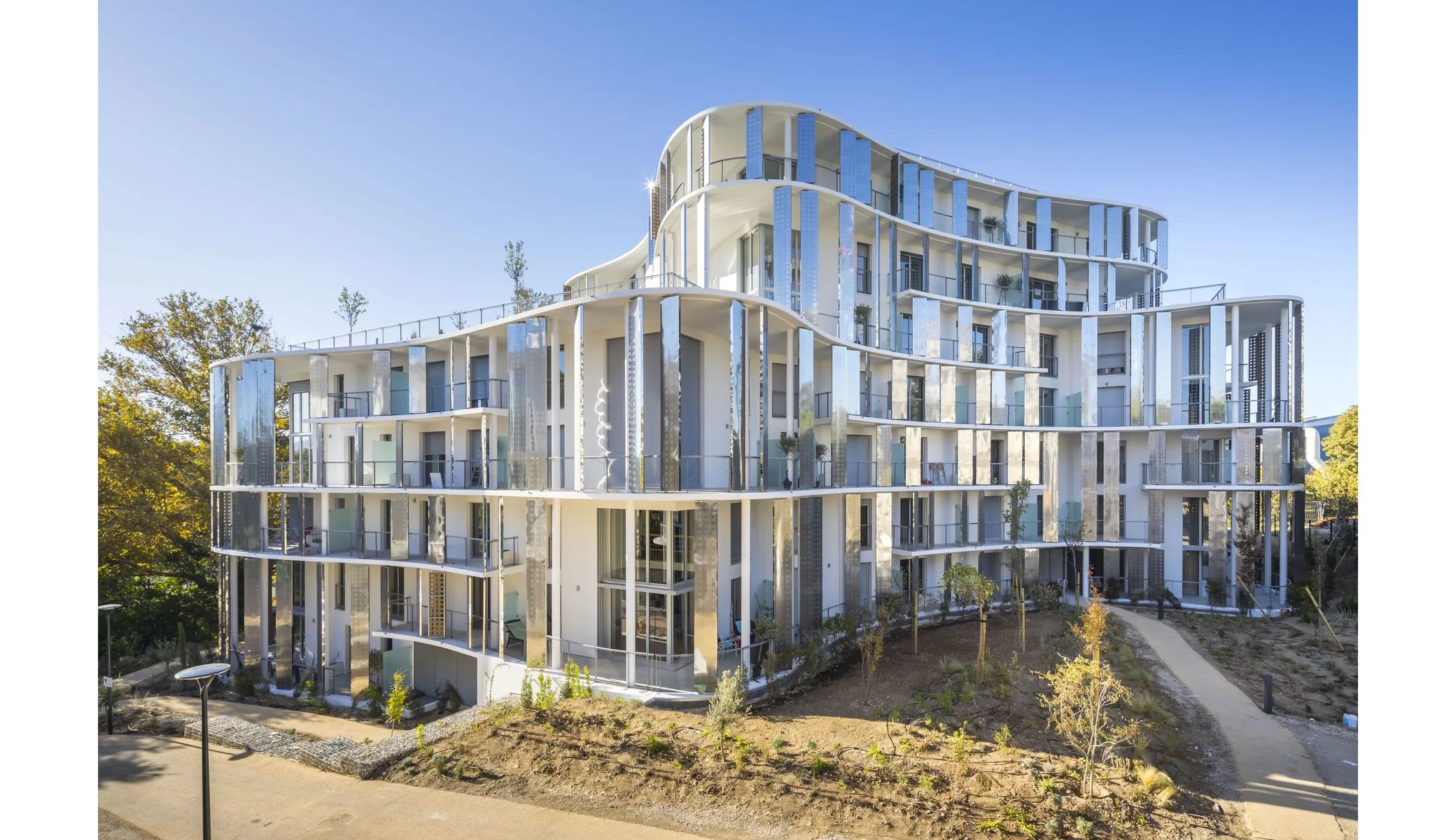
At the heart of Marseille's 8th arrondissement, on an exceptional natural site bordered by garrigue and pine forests, ART'CHIPEL is embedded in a Mediterranean landscape that guided our entire architectural thinking. This 24,000 m² collective housing program, developed between 2017 and 2024 for Nexity, was built on a radical ambition: to design dwellings without air conditioning, by making the Mediterranean climate not a technical constraint to compensate for, but a true **project material**. The site itself, with its topography, dense vegetation and views of the maritime horizon, offered us the necessary resources to imagine resilient architecture, where summer comfort comes from the project itself, not from machines.
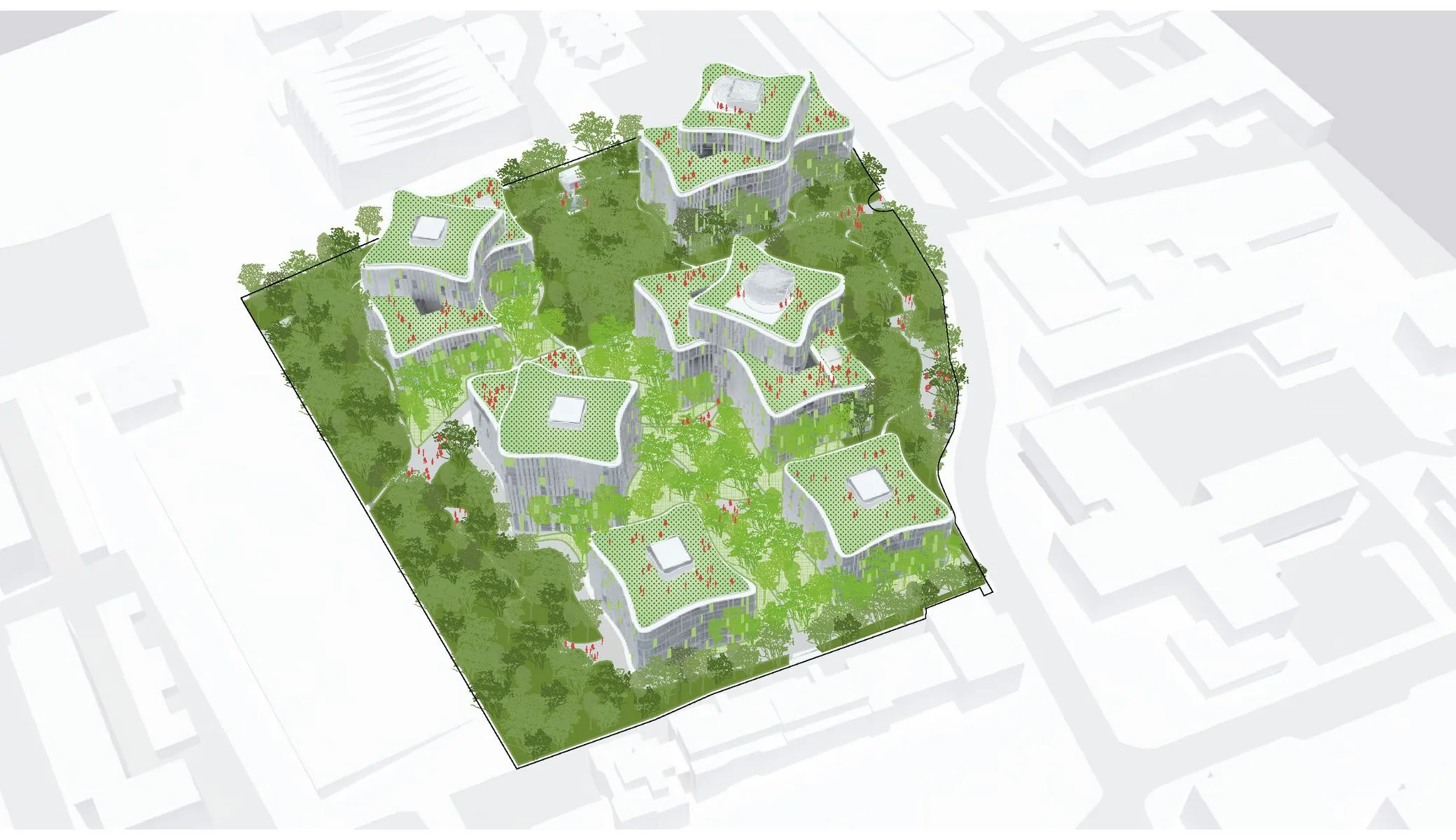
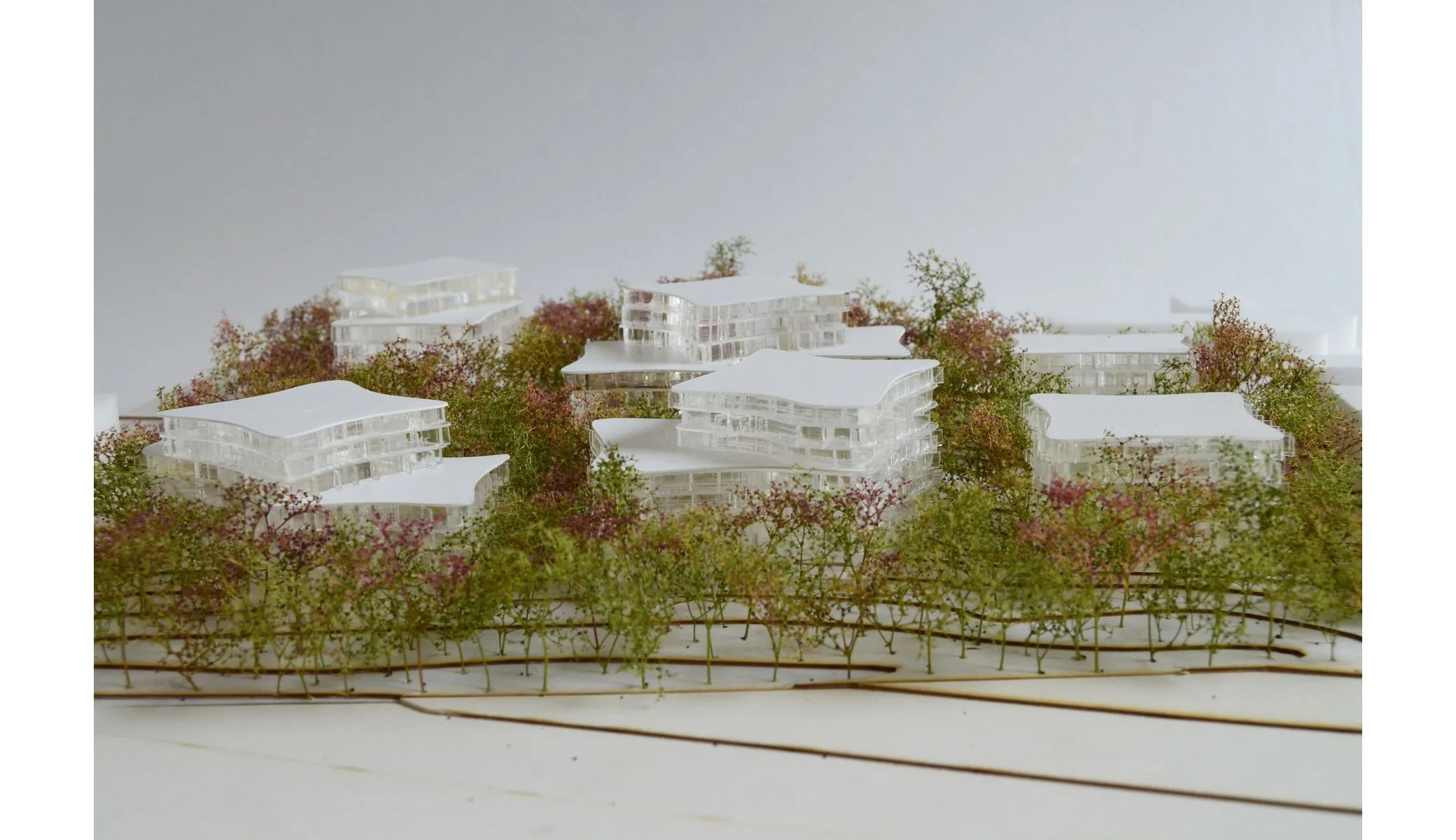
We conceived ART'CHIPEL as an **archipelago of built fragments** blending into the landscape, a succession of volumes that maintain a permanent dialogue with near and distant nature. This fragmentation strategy is not formal: it responds to refined bioclimatic logic, where each building is oriented, positioned and dimensioned to capture breezes, filter light, generate shade and promote natural cross ventilation. The buildings do not impose themselves on the site, they slip into it, embrace its curves, respect its vegetation layers. The idea was not to create a monolithic ensemble, but pieces of life immersed in nature, reflections where vegetation and architecture merge, protecting each person's privacy while opening generously onto the landscape.
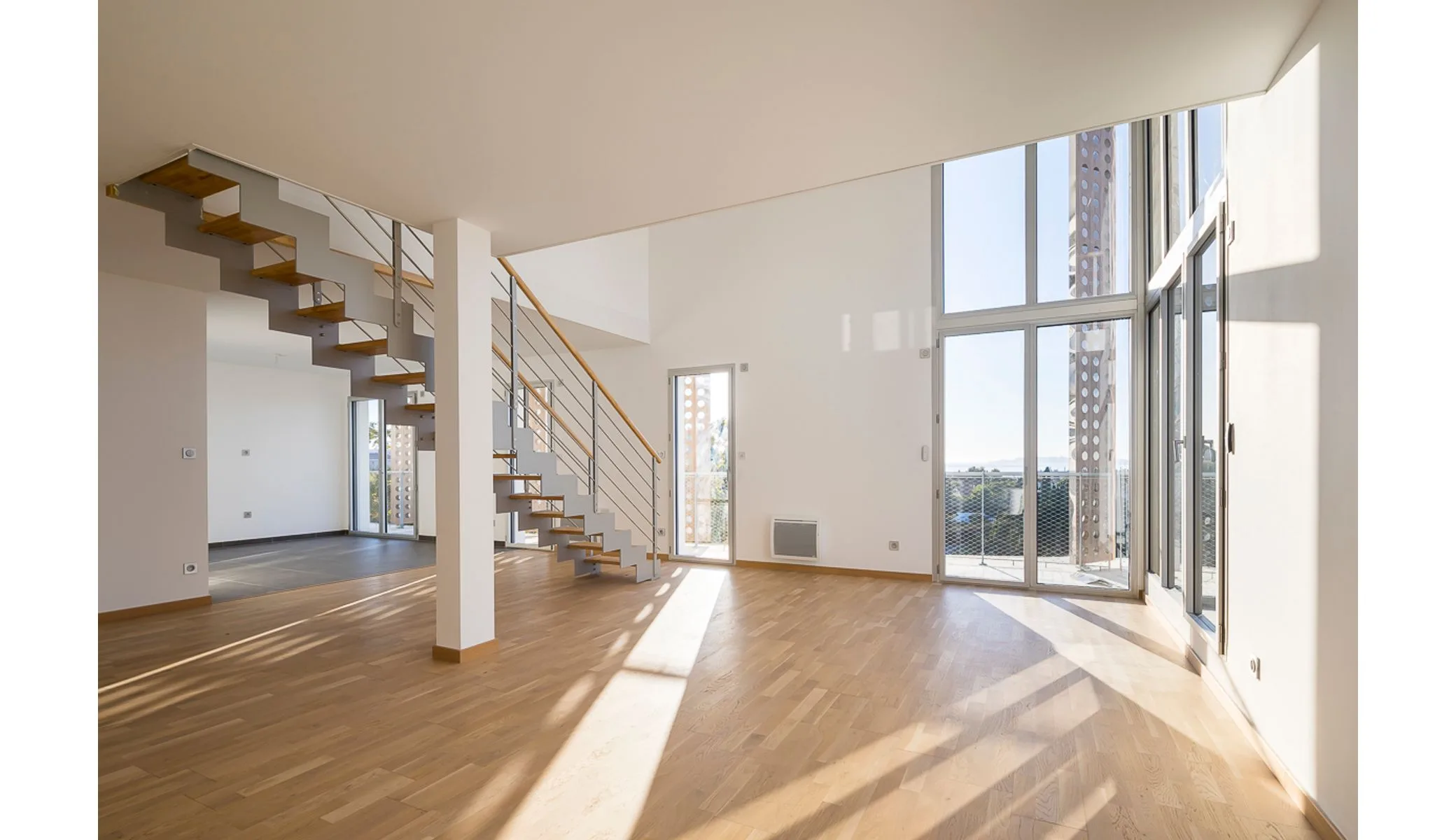
The **flexibility** of the dwellings was inscribed from the outset in the project's DNA, inspired by Le Corbusier's reflection on the free plan. We wanted to offer residents the possibility of adapting their dwelling to their practices, their future needs, their evolving lifestyles. Living goes far beyond owning an apartment: it means appropriating a place where one feels good, where one can transform the space over time, where partitions are not prison walls but modular devices. This future mutability is all the more important in a Mediterranean context where exterior and interior uses merge according to seasons, where terraces become living rooms six months a year, where light and shade constantly redefine the dwelling's boundaries.
Each apartment was designed based on three fundamental principles: **flexibility**, **natural light** and **exterior spaces**. The different typologies all favor the relationship with nature by maximizing facade openings, creating transparencies, multiplying framed views of the landscape. But each dwelling is then strongly characterized by its position and its specific relationship with nature, with the horizon, with the hours of the day. Like Mediterranean people who know how to enjoy shade and summer freshness, sun and winter mildness, light in all seasons, we worked on careful identification and arrangement of space according to solar and climatic cycles. Residents can thus easily wander between interior and exterior, rediscover their dwelling through the seasons, reinvent their domestic routes.
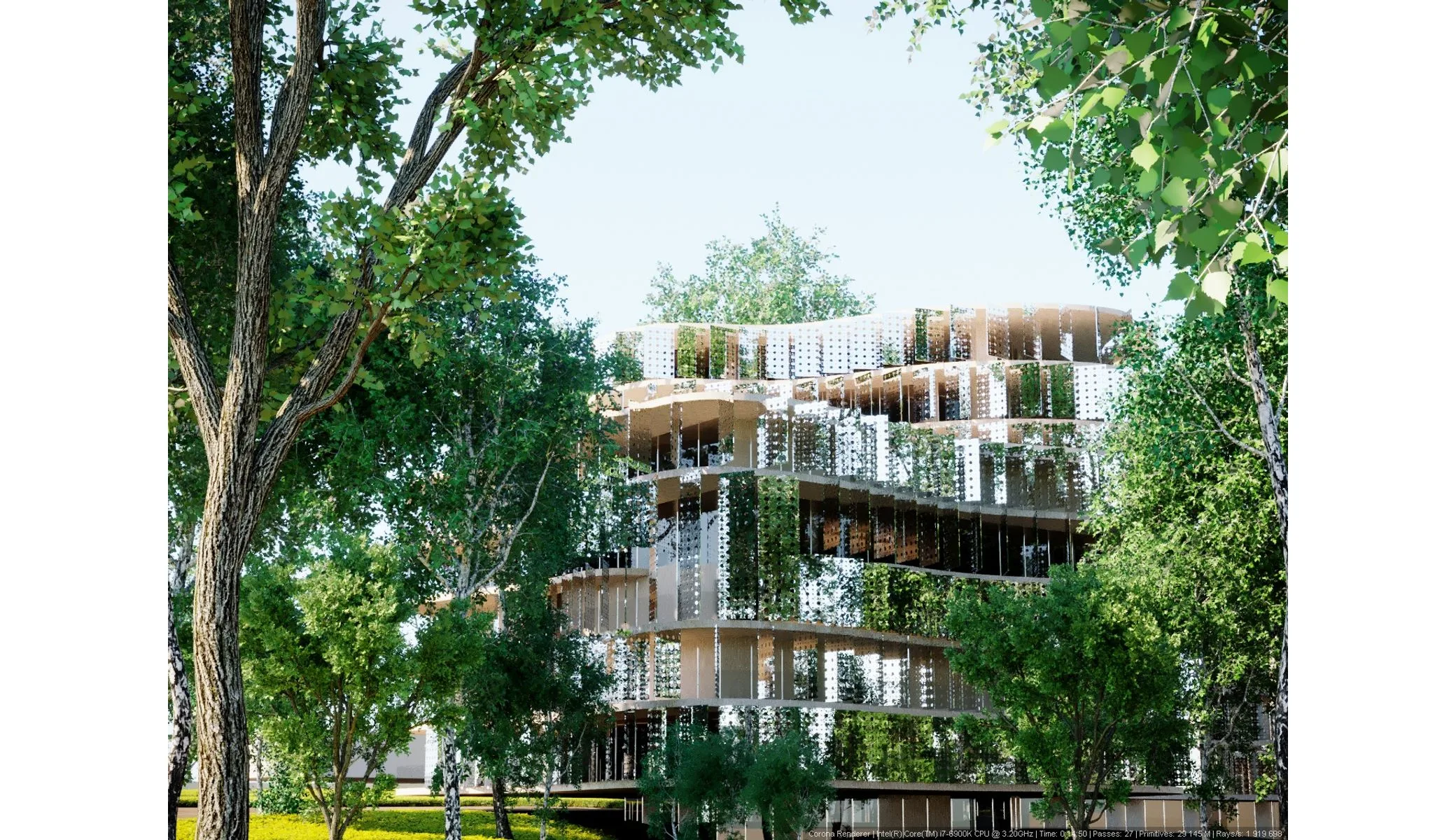
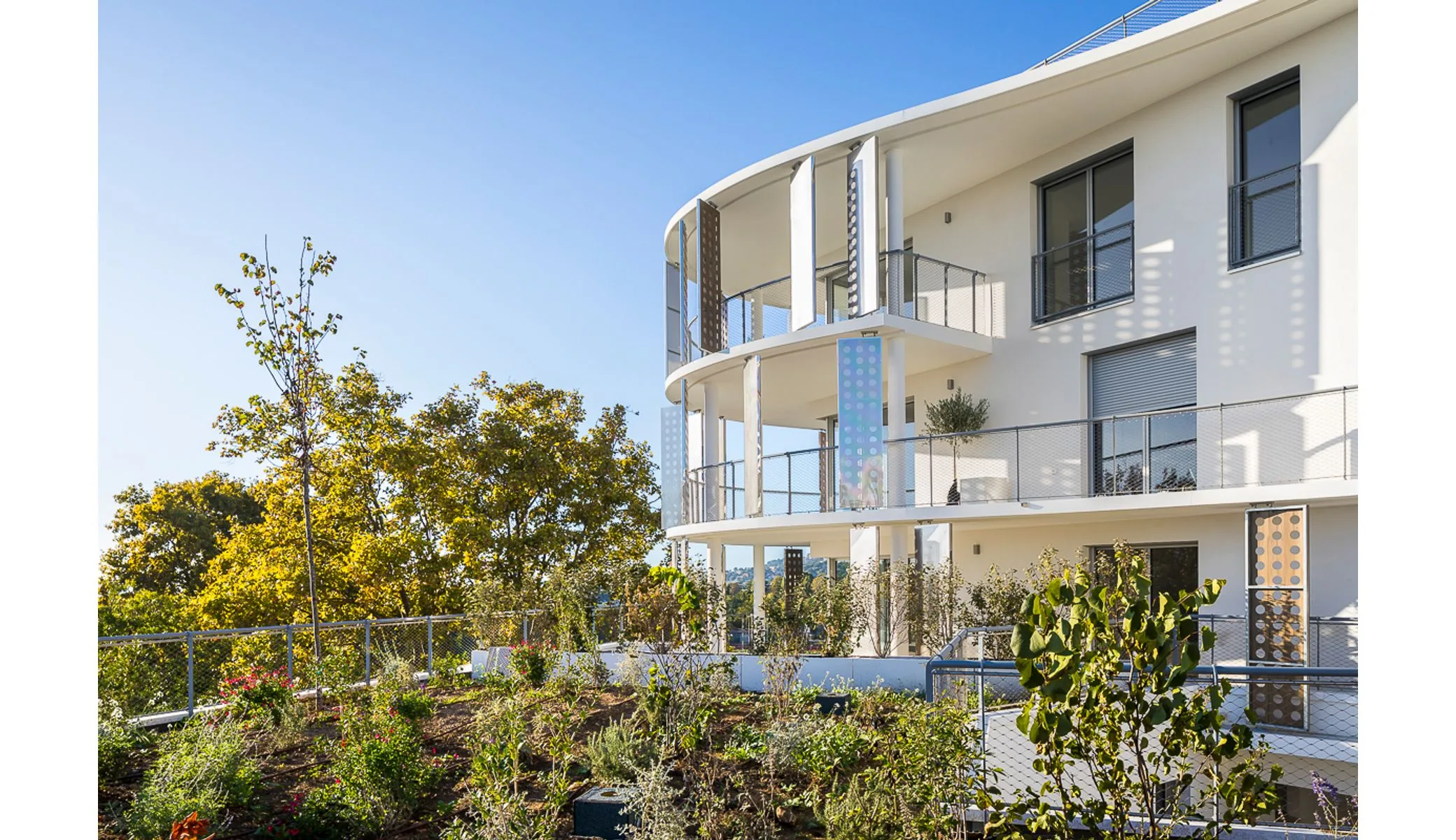
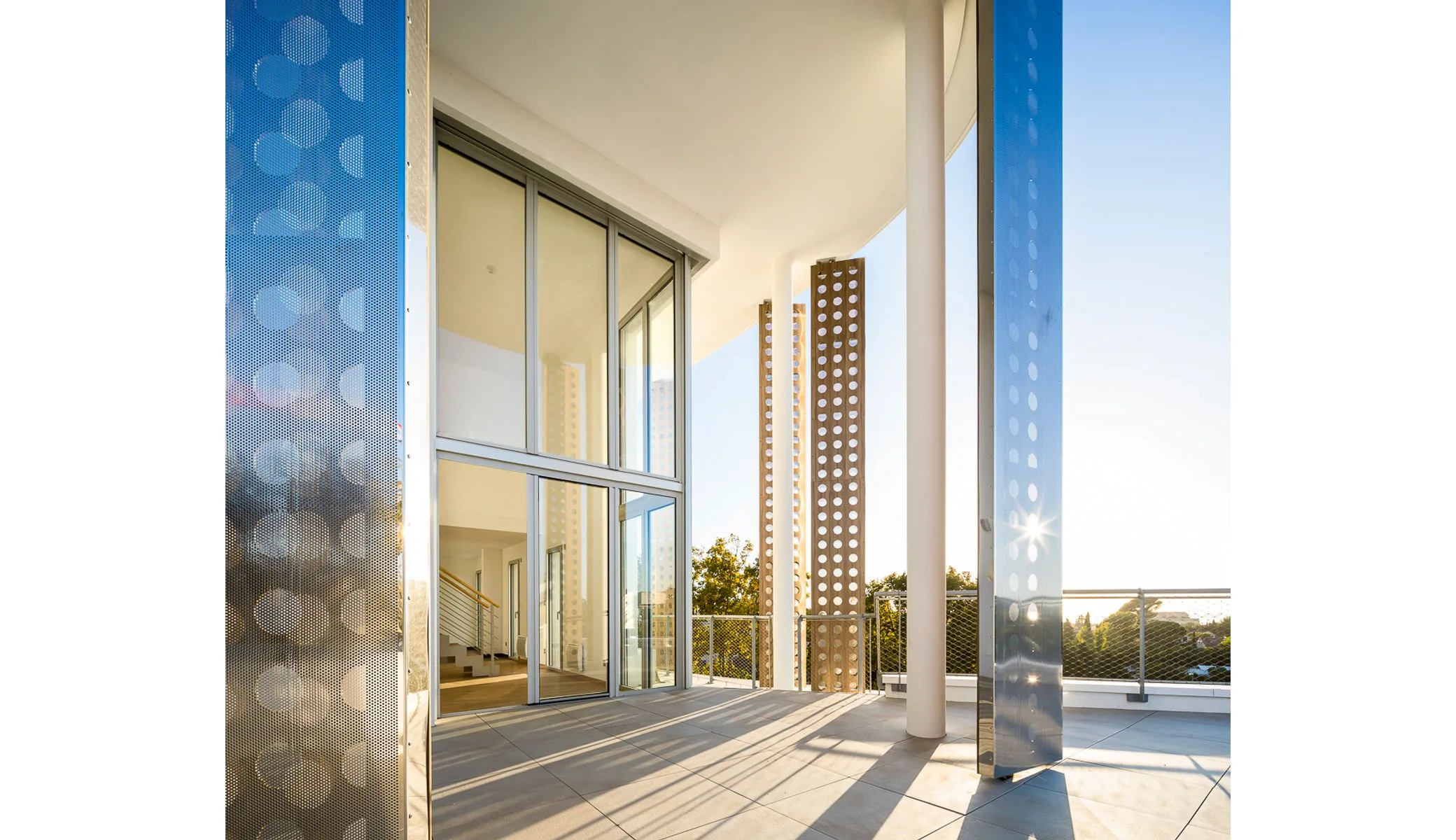
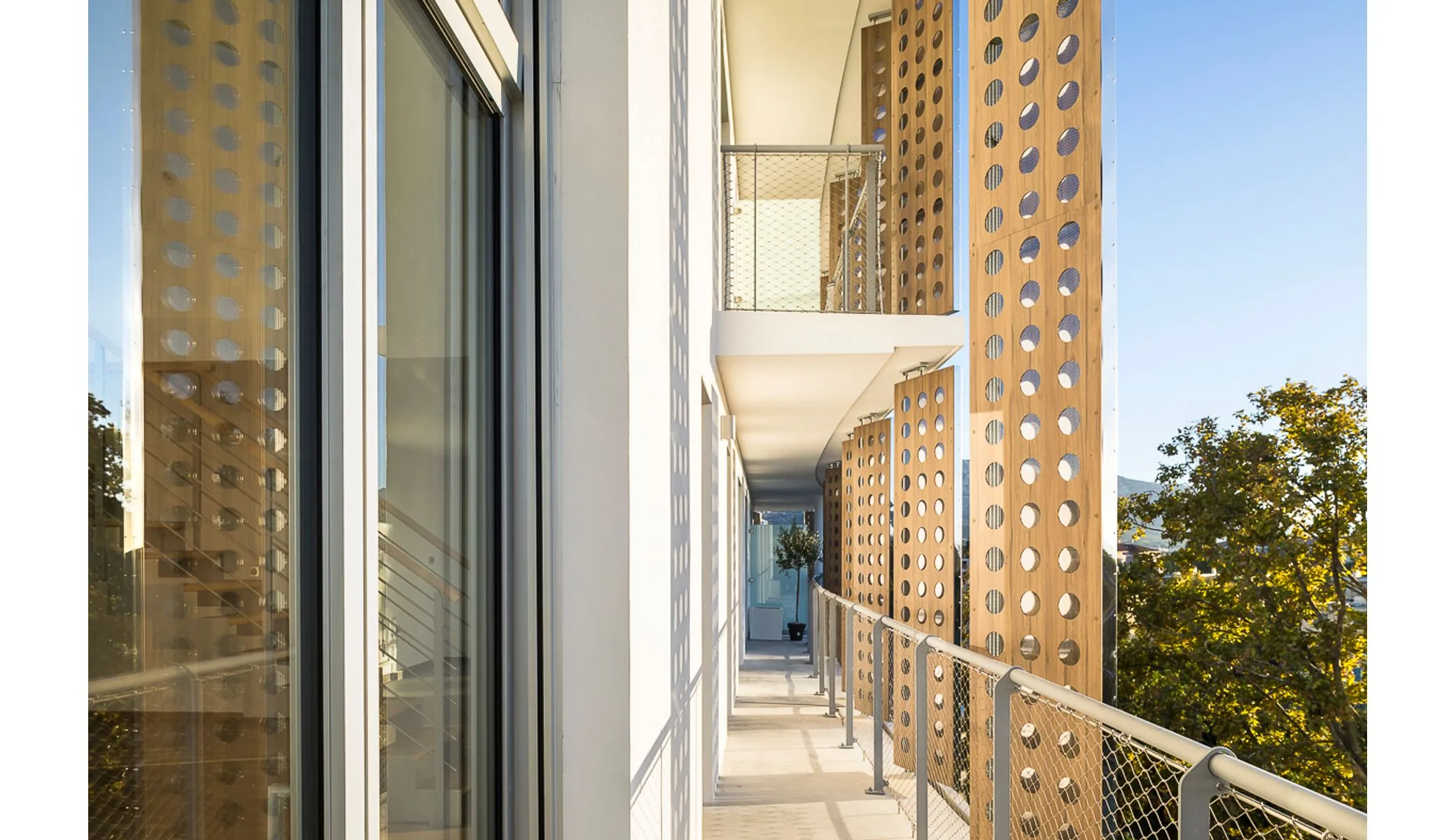
The **materiality** of ART'CHIPEL fully participates in this bioclimatic strategy. We favored absorbent materials, capable of regulating humidity and smoothing thermal variations, textures that catch light without glare, surfaces that age with dignity under the Mediterranean sun. The facades play on thickness, depth, setbacks and projections to create generous shade zones. Railings and solar protection devices become architectural elements in their own right, sculpting volumes and filtering views. The **dual vegetation** (at ground level and on terraces) creates a microclimate around the buildings, cools the ambient air, offers shaded refuges and densifies the ecological continuity between the natural site and inhabited spaces.
Our environmental approach is based on a conviction: **energy sobriety** does not only pass through equipment performance, but first through the intelligence of the architectural project. Bioclimatic orientation, natural cross ventilation, passive solar protection, thermal inertia of materials, vegetation: all these low-tech devices form a coherent system that makes air conditioning unnecessary. This is a radical choice in a context where the temptation is great to resort to expensive and energy-intensive technical solutions. We wanted to demonstrate that contemporary Mediterranean architecture can rely on ancestral principles (shade, ventilation, thermal mass) while offering optimal comfort of use and high spatial quality. ART'CHIPEL is resilient architecture that transforms the Mediterranean climatic constraint into a formal and sensory asset.
We also sought to create a link between private and common, to articulate intimate spaces and places that encourage exchange and sharing. Collective exterior spaces, pathways, shared gardens, thresholds and transitions between dwellings are all devices that weave social life without imposing it, that offer the possibility of encounter without making it an obligation. The exceptional living environment of the site thus becomes accessible to all residents, not as a distant panorama but as a daily reality, an inhabited, traversed, lived nature.
ART'CHIPEL is an attempt to rethink Mediterranean collective housing in light of contemporary climate challenges, by trusting architecture rather than machines, by favoring the sensory and usage rather than abstract technical performance.
We conceived ART'CHIPEL as an **archipelago of built fragments** blending into the landscape, a succession of volumes that maintain a permanent dialogue with near and distant nature. This fragmentation strategy is not formal: it responds to refined bioclimatic logic, where each building is oriented, positioned and dimensioned to capture breezes, filter light, generate shade and promote natural cross ventilation. The buildings do not impose themselves on the site, they slip into it, embrace its curves, respect its vegetation layers. The idea was not to create a monolithic ensemble, but pieces of life immersed in nature, reflections where vegetation and architecture merge, protecting each person's privacy while opening generously onto the landscape.
The **flexibility** of the dwellings was inscribed from the outset in the project's DNA, inspired by Le Corbusier's reflection on the free plan. We wanted to offer residents the possibility of adapting their dwelling to their practices, their future needs, their evolving lifestyles. Living goes far beyond owning an apartment: it means appropriating a place where one feels good, where one can transform the space over time, where partitions are not prison walls but modular devices. This future mutability is all the more important in a Mediterranean context where exterior and interior uses merge according to seasons, where terraces become living rooms six months a year, where light and shade constantly redefine the dwelling's boundaries.
Each apartment was designed based on three fundamental principles: **flexibility**, **natural light** and **exterior spaces**. The different typologies all favor the relationship with nature by maximizing facade openings, creating transparencies, multiplying framed views of the landscape. But each dwelling is then strongly characterized by its position and its specific relationship with nature, with the horizon, with the hours of the day. Like Mediterranean people who know how to enjoy shade and summer freshness, sun and winter mildness, light in all seasons, we worked on careful identification and arrangement of space according to solar and climatic cycles. Residents can thus easily wander between interior and exterior, rediscover their dwelling through the seasons, reinvent their domestic routes.
The **materiality** of ART'CHIPEL fully participates in this bioclimatic strategy. We favored absorbent materials, capable of regulating humidity and smoothing thermal variations, textures that catch light without glare, surfaces that age with dignity under the Mediterranean sun. The facades play on thickness, depth, setbacks and projections to create generous shade zones. Railings and solar protection devices become architectural elements in their own right, sculpting volumes and filtering views. The **dual vegetation** (at ground level and on terraces) creates a microclimate around the buildings, cools the ambient air, offers shaded refuges and densifies the ecological continuity between the natural site and inhabited spaces.
Our environmental approach is based on a conviction: **energy sobriety** does not only pass through equipment performance, but first through the intelligence of the architectural project. Bioclimatic orientation, natural cross ventilation, passive solar protection, thermal inertia of materials, vegetation: all these low-tech devices form a coherent system that makes air conditioning unnecessary. This is a radical choice in a context where the temptation is great to resort to expensive and energy-intensive technical solutions. We wanted to demonstrate that contemporary Mediterranean architecture can rely on ancestral principles (shade, ventilation, thermal mass) while offering optimal comfort of use and high spatial quality. ART'CHIPEL is resilient architecture that transforms the Mediterranean climatic constraint into a formal and sensory asset.
We also sought to create a link between private and common, to articulate intimate spaces and places that encourage exchange and sharing. Collective exterior spaces, pathways, shared gardens, thresholds and transitions between dwellings are all devices that weave social life without imposing it, that offer the possibility of encounter without making it an obligation. The exceptional living environment of the site thus becomes accessible to all residents, not as a distant panorama but as a daily reality, an inhabited, traversed, lived nature.
ART'CHIPEL is an attempt to rethink Mediterranean collective housing in light of contemporary climate challenges, by trusting architecture rather than machines, by favoring the sensory and usage rather than abstract technical performance.
- Lieu
- Marseille
- Nature
- Logements
- Surface
- 24 000 m²
- Budget
- 35 M€ HT
- Concours
- 2017
- Livraison
- 2021-2024
- MOA
- Nexity
Distinctions
- 2025 International Architecture Awards, Multi-family Housing (Art'chipel)
- 2023 BLT Built Design Awards, Double Winner (Art'chipel)
- 2023 Grands Prix du Design, Platinum Winner (Art'chipel)
- 2023 World Architecture Festival, Housing Shortlist (Art'chipel)
- 2020 SIATI, Special Mention Most Innovative Project (Art'chipel)
- 2023 ACDA Awards, Silver + Platinum (Art'chipel)