Paris already counts 219,360 trees. What if we accelerated, to plant a million more by 2050?
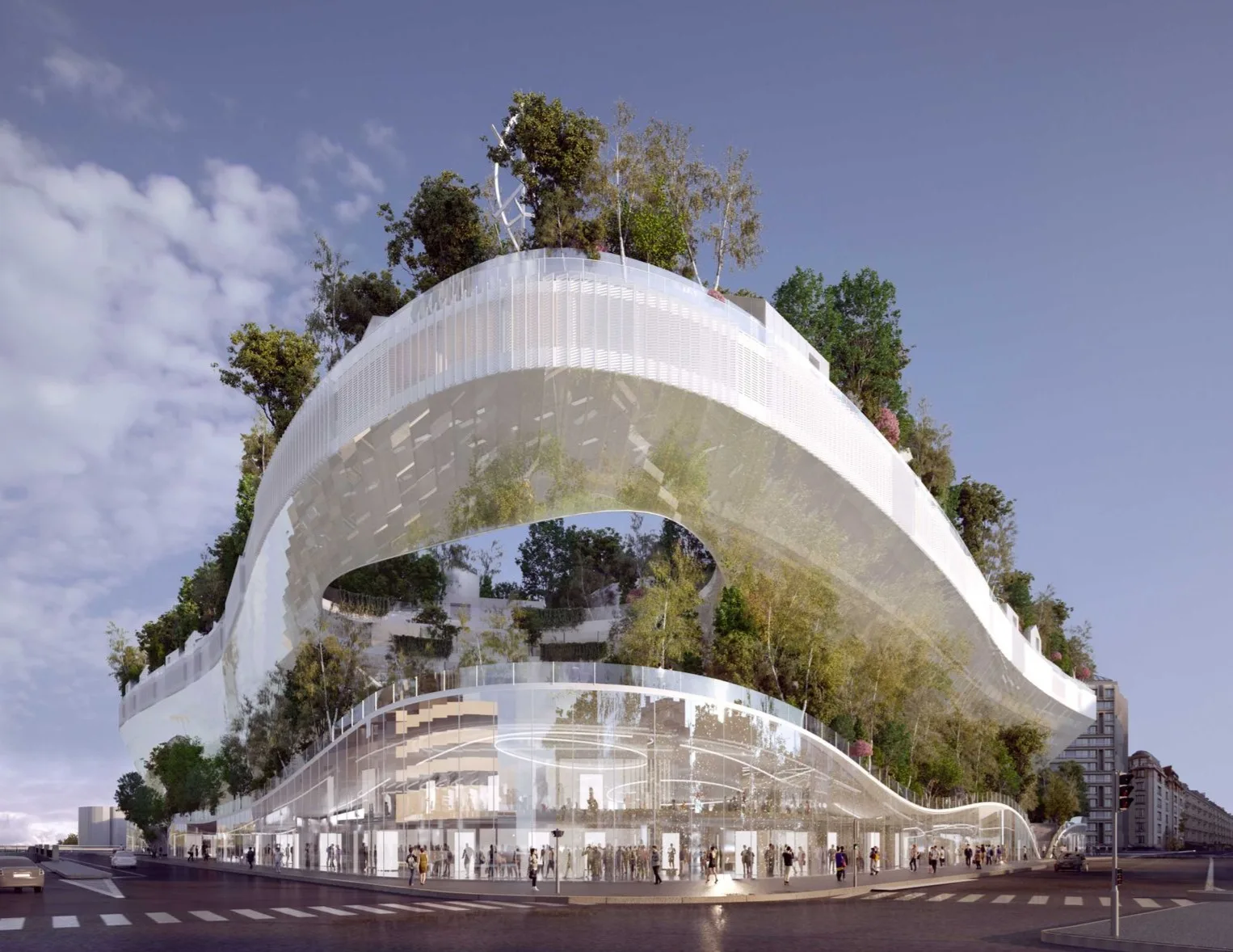
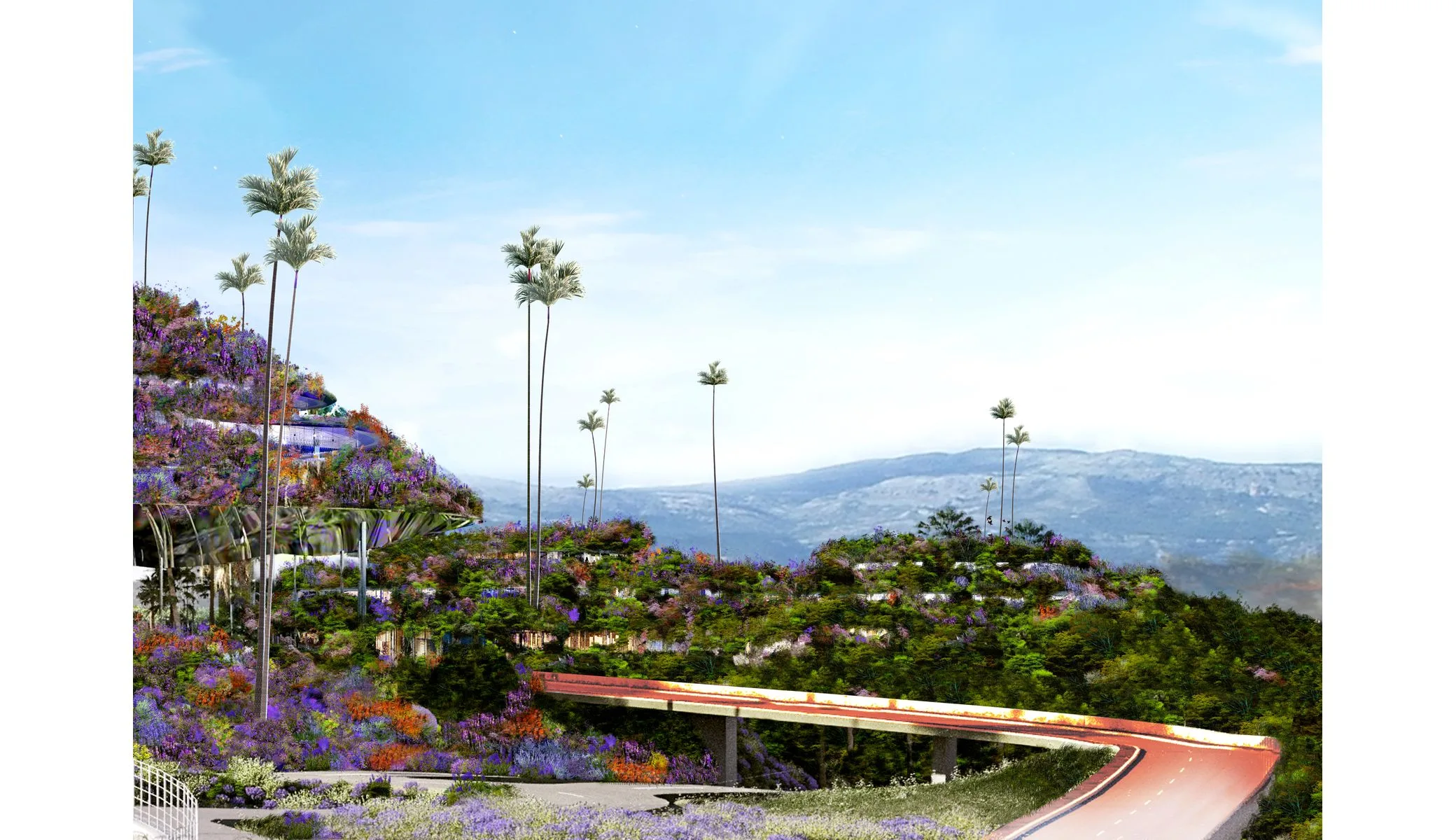
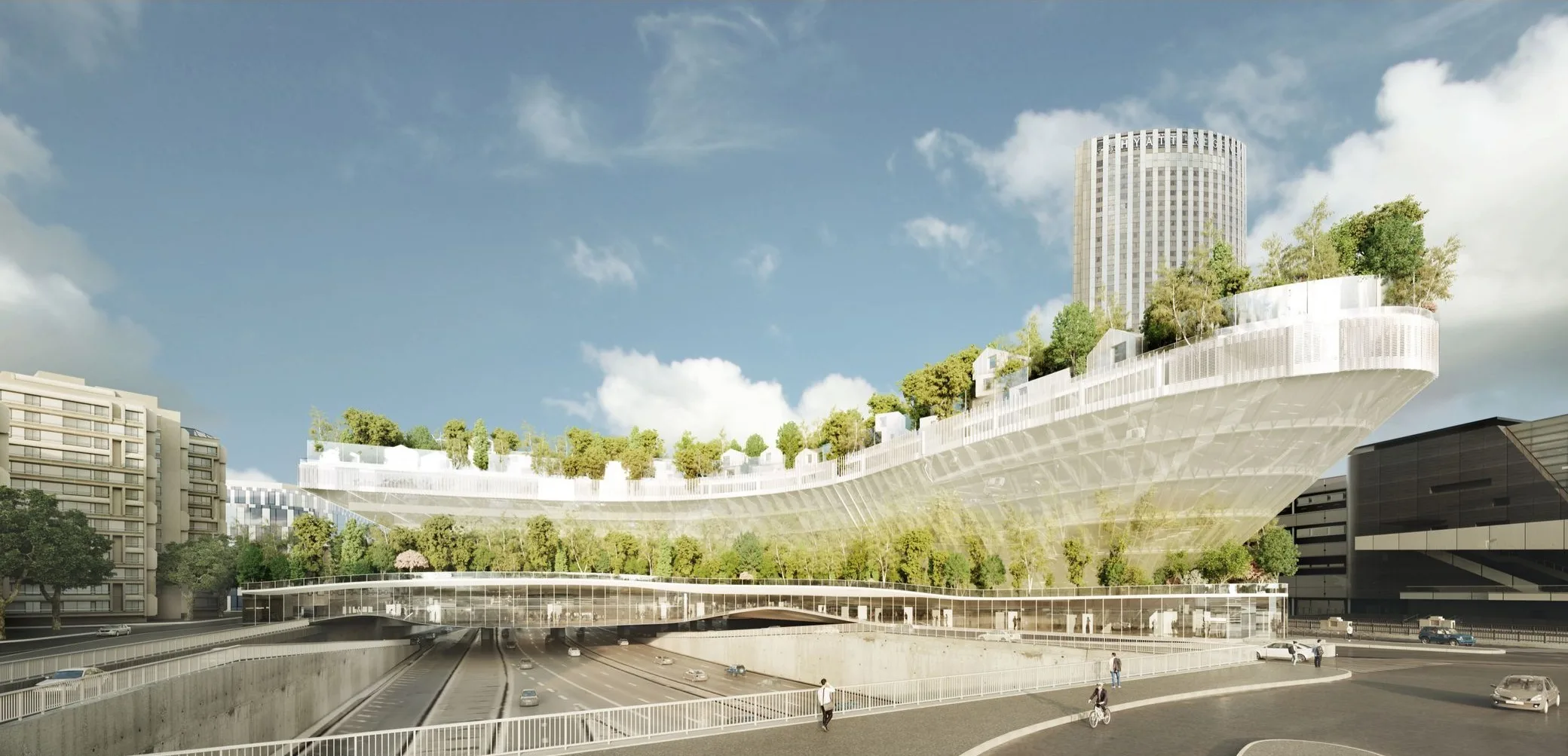
Mille Arbres project, OXO Architectes + Sou Fujimoto (competition image)
The finding
Paris is hot, and more and more often
In summer, stone and asphalt store heat during the day and release it at night. This is the urban heat island: in the middle of a heatwave, the heart of Paris stays several degrees warmer than its surrounding countryside, at the very moment when the body would need the coolness of night to recover. Paris has about 21 % canopy, one of the lowest covers among comparable major cities. The City is not standing still, but the scale of the challenge calls for a change of pace.
+3 à 6 °Cthe night-time gap between city and countryside during a heatwave (peaks of 8 to 10 °C in highly mineral areas)
21 %of canopy in Paris, against a metropolitan target of 30 % by 2030
42,6 °Call-time record, on 25 July 2019 in Paris
219 360trees already recorded by the City, excluding the Boulogne and Vincennes woods
The simulation
A million trees, but in how long?
Paris starts from 219,360 trees. The real lever is not only the number, it is the pace. Choose how many trees to plant per year, and until when. The simulator works out what that would add, at maturity.
+0
tree planted by 2050
Total Paris tree stock by the horizon219 360 trees
202624 years2050
42 000trees to plant per year to get there
Tree Plan (28,000)New York (125,000)
2030 target: 30 %
0 %Paris canopy (today 21 %)40 %
21 %
of canopy (tree cover), at maturity
0 °C
average cooling of the city during a heatwave (modelled)
0 %
of heat-related excess mortality potentially avoided
0 t
of CO₂ absorbed per year, at maturity (25 kg per tree)
0
the oxygen for roughly as many people (a real but modest benefit)
0 t
of NO₂ captured per year, a highly variable order of magnitude
How to read these figures. The pace is compared to two real benchmarks: the Paris Tree Plan (about 28,000 trees per year) and MillionTreesNYC, where New York planted a million trees in eight years, roughly 125,000 per year. Assumptions: trees at maturity (20 to 30 years of growth); canopy / temperature relationship from the Lancet 2023 study (raising the canopy to 30 % cools a city by about 0.4 °C on average and avoids nearly a third of the excess mortality linked to the heat island, values modelled, not measured in Paris); 25 kg of CO₂ per tree per year (ADEME). Oxygen is a real but scientifically modest benefit (the atmosphere already contains 21 % of it). For air quality, the drop in traffic weighs more than trees alone. In the shade, during the day, felt comfort gains 3 to 5 °C where trees are planted: an educational simulation, not a promise.
Where to plant
Five reserves, one and the same city
A tree takes up about 5 m² of ground but casts nearly 50 m² of crown. The physical space exists: the real constraint is the underground saturated with networks, the trade-off with the car, and the time it takes to grow. Here is where Paris can plant, from the easiest to the most demanding.
Easy and fast
The courtyards
School courtyards and de-paved block interiors. Paris has already transformed 203 Oasis courtyards and is aiming for 360 by 2030, out of nearly 800 school and middle-school courtyards. Few trees in number, but islands of coolness as close as possible to residents.
Strong lever
Squares and parking
The redesign of the major squares has already given more than 25,000 m² back to vegetation. The real reserve: the 133,000 on-street parking spaces. Converting a share of them frees up considerable planting potential.
Main volume
The streets
100,000 street trees today. Double rows, continuous trenches and de-paved pavements can add tens of thousands more, provided open ground is recreated where the networks run.
Strong but slow and costly
The ring road
35 km of grey belt to turn into a green belt: the City announces 50,000 trees on the embankments and a gradual covering. The largest single reserve, but the most costly. OXO's manifesto, Mille Arbres, was set here.
The accelerator
Dense urban forests
Tight plantings (Miyawaki method, up to one tree per m²) on leftover land, embankments and squares. This is what makes it possible to approach the million when counting broadly, but their maturity plays out over decades.
Not to be oversold
The rooftops
About 80 ha of roofs easily greened, but mostly with a light substrate (sedum, grasses): a roof rarely carries a tree, which requires a reinforced structure and a great deal of soil. Roofs count for coolness, very little for the tree count.
Elsewhere, it is measured
How other cities did it
These are not promises but records. Each one activated specific reserves, often by taking space back from the car. Here is how.
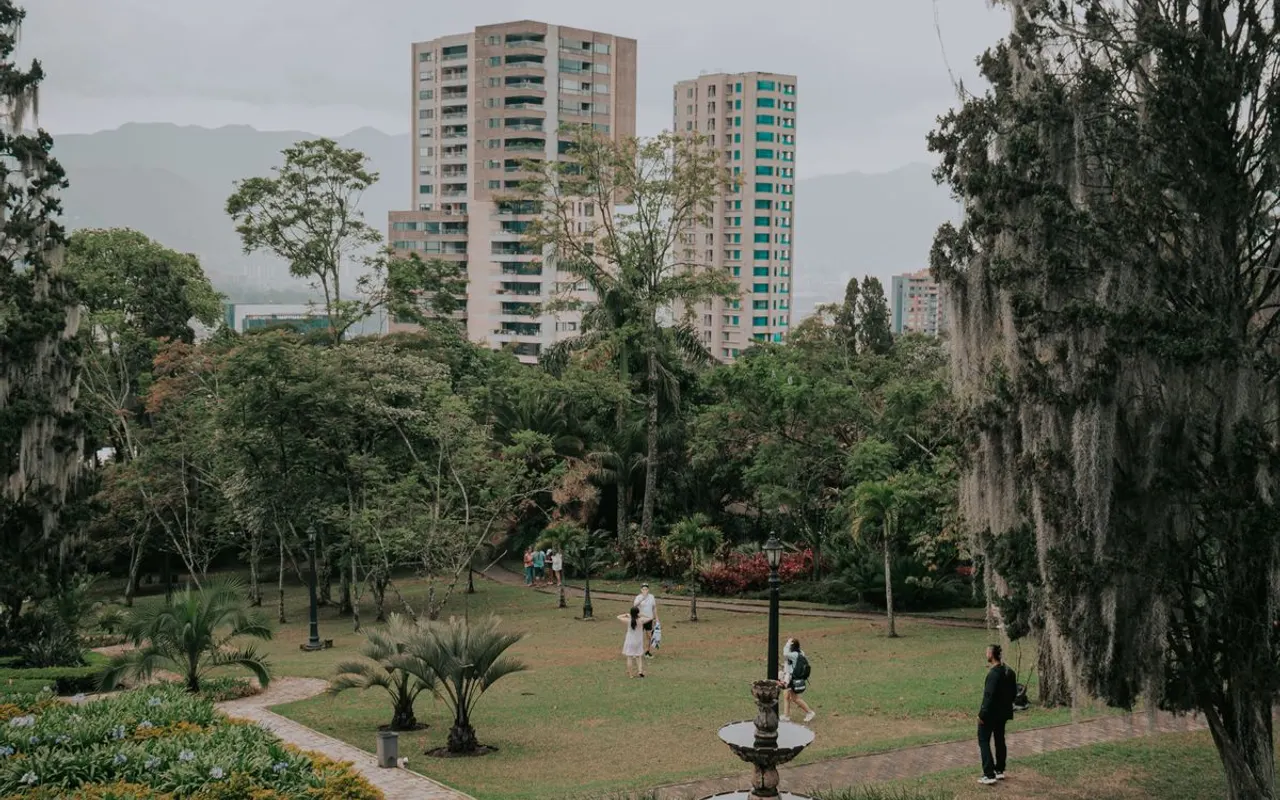
Urban park, Medellín · Pexels
Medellín
-4,5 °C
Thirty green corridors along the avenues and rivers, 880,000 trees and 2.5 million plants since 2016. The air temperature there fell from 31.6 to 27.1 °C in three years.
Reserve activated: the main roads and riverbanks, turned into continuous corridors, densely planted and maintained by gardeners trained from among the residents.
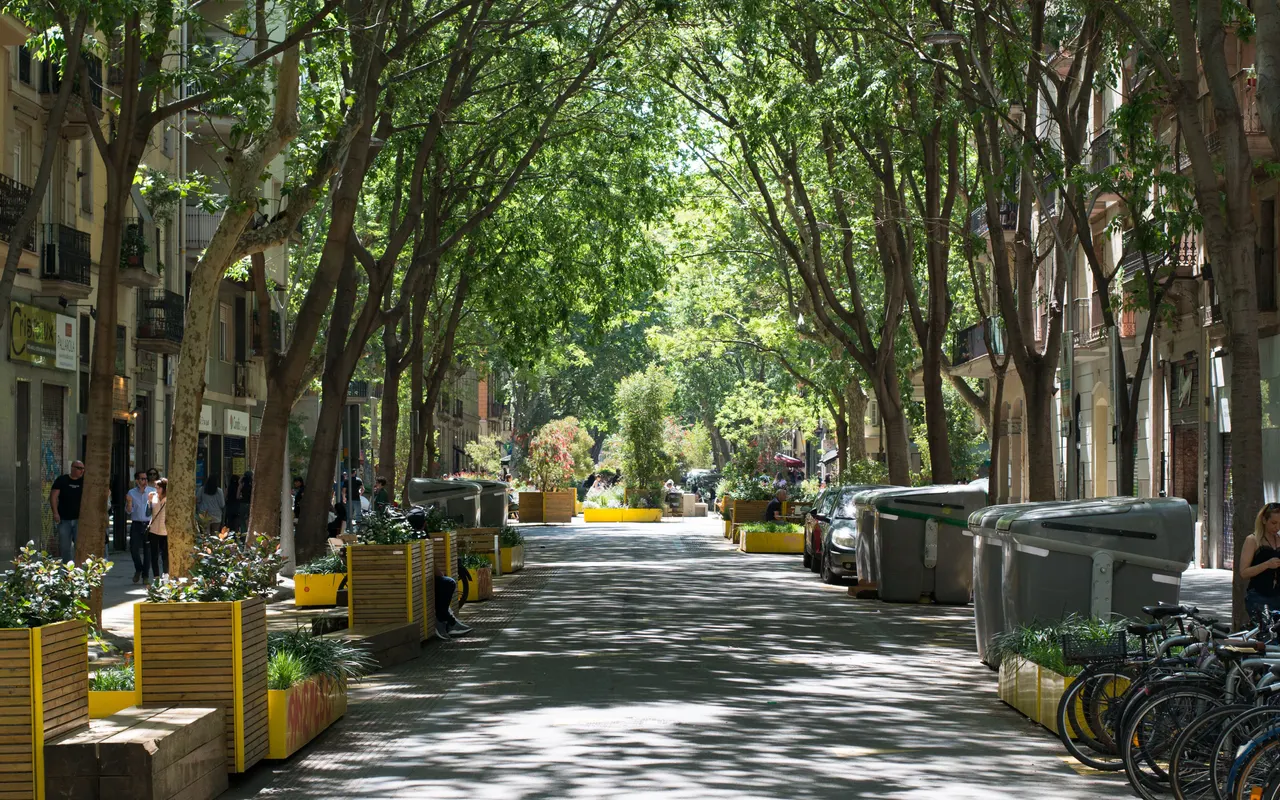
Barcelona · Pexels
Barcelone
-5 °C
The superblocks (superilles) give the interior of nine blocks back to pedestrians and trees, with a target of 80 % shading and 20 % permeable ground. At street level, in summer, up to 5 °C less.
Reserve activated: the roadway and parking, taken back from the car. Air quality improves above all thanks to lower traffic, as much as thanks to the trees.
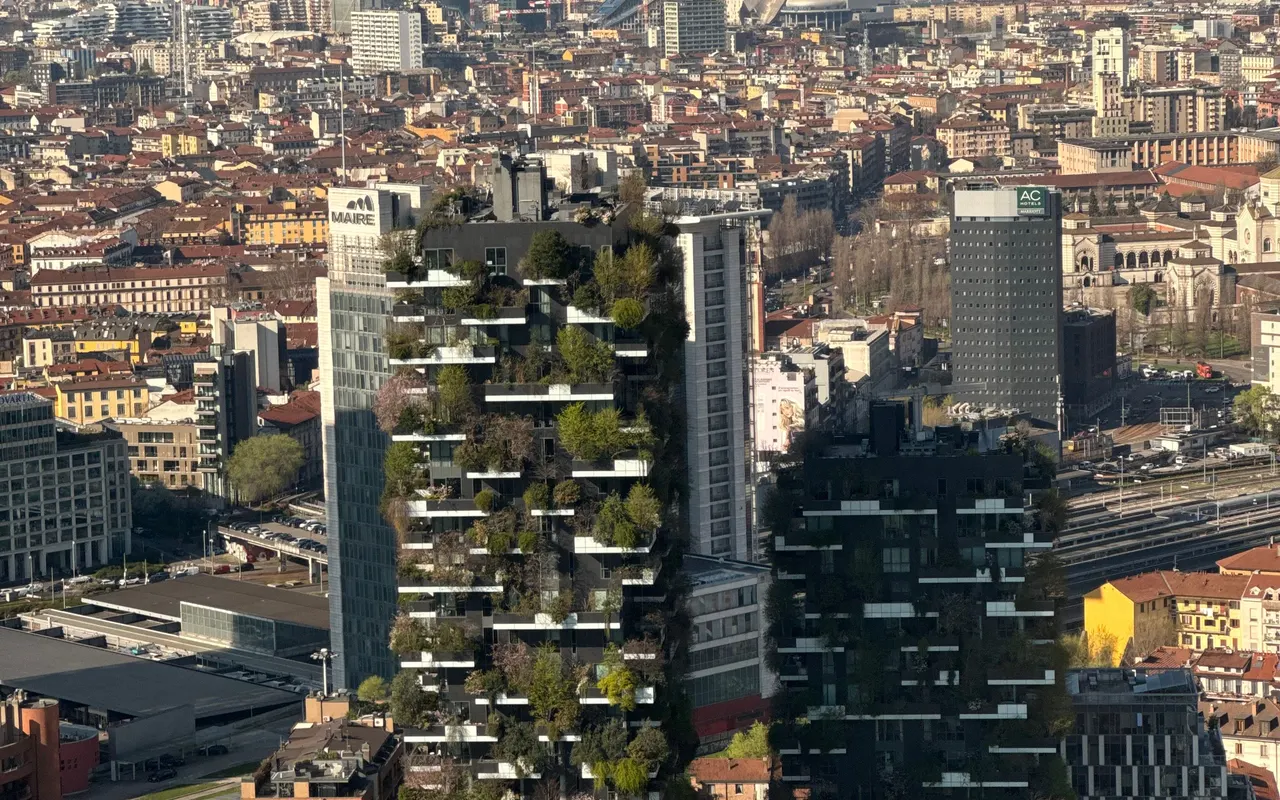
Bosco Verticale, Milan · Pexels
Milan
3 M
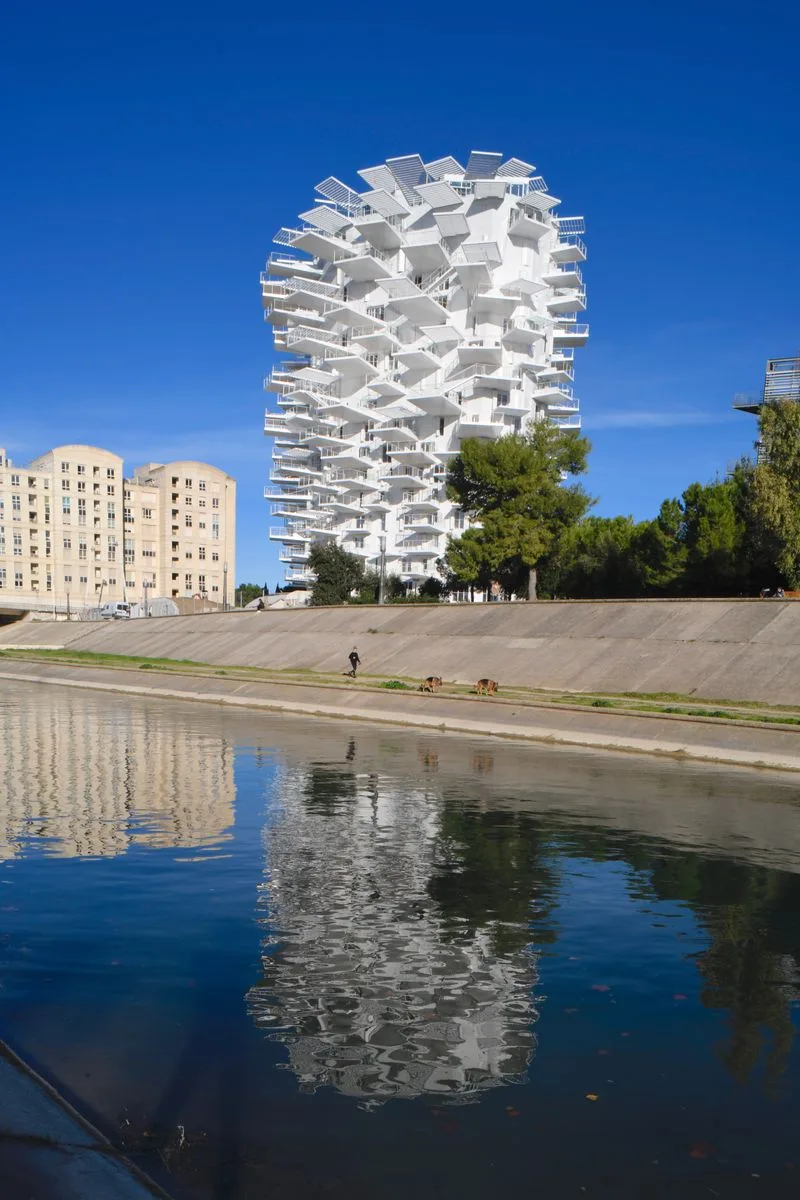
The ForestaMi programme aims for three million trees across the metropolitan area by 2030, with about 250,000 already planted. The Bosco Verticale, two towers carrying 800 trees, is its vertical emblem.
Reserve activated: metropolitan wastelands and leftover spaces for volume, and the building itself as a support for trees to set the example, costly but spectacular.
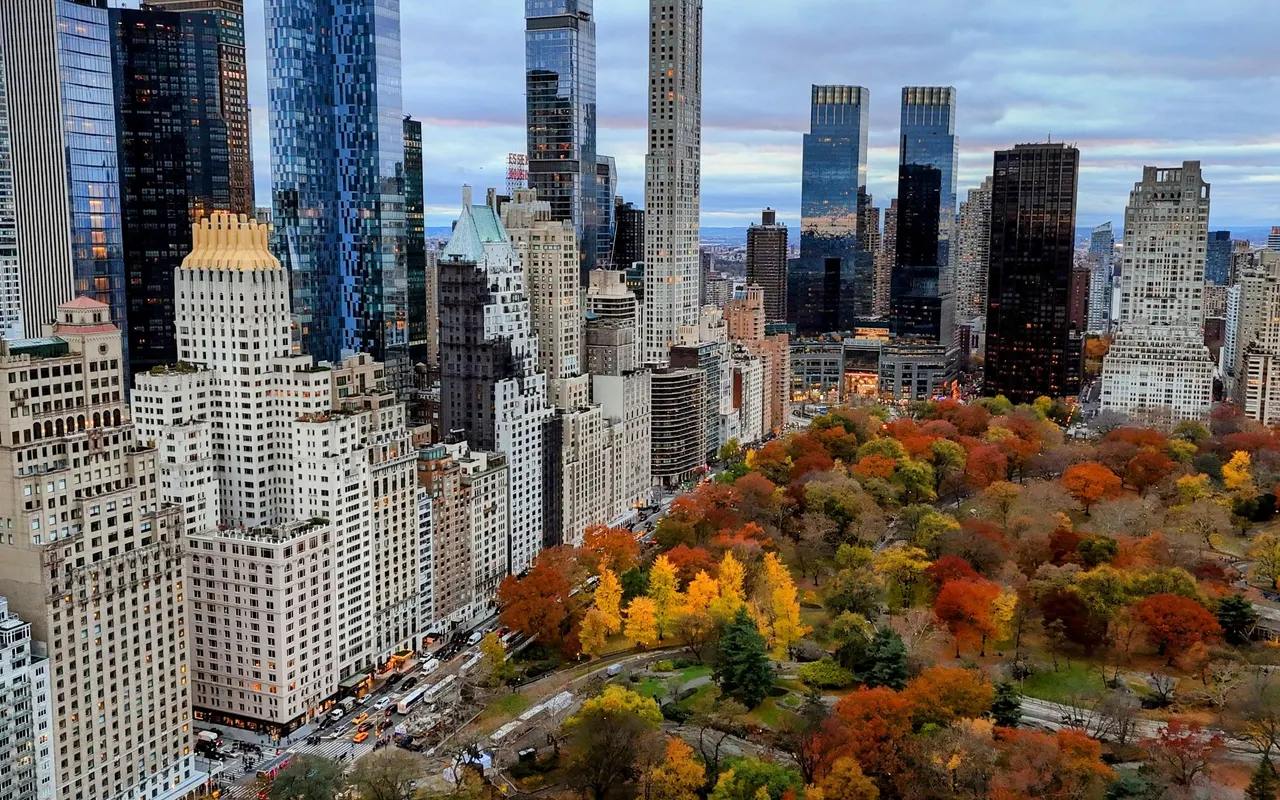
Central Park, New York · Pexels
New York
1 M
MillionTreesNYC planted a million trees in eight years (2007 to 2015), two years ahead of schedule, for about 20 % more canopy. A pace of around 125,000 trees per year.
Reserve activated: the large parks to reforest, the streets and a vast public-private and citizen partnership. Lesson: aim for equity, because affluent neighbourhoods get planted first.
Already under way
What the City has already set in motion
Paris is not standing still: the Tree Plan targeted 170,000 trees between 2020 and 2026, four urban forests have emerged (place de Catalogne, the forecourt of the Hôtel de Ville), the 2024 PLU bioclimatique requires up to 65 % of open ground on large plots and protects 100,000 street trees, and the ring road is beginning its transformation.
A necessary caveat: the Regional Court of Auditors has shown that the 170,000-tree count is largely filled by dense forestry seedlings (ring-road embankments, woods), and not by tall-stemmed street trees. That is precisely why thinking of every reserve at once, and of the building itself as a support for nature, changes the scale of what is possible.
The OXO vision
Nature is not a backdrop, it is a structure
For more than 20 years, OXO Architectes has defended a simple idea: greenery is not placed on the building, it is part of it. The Mille Arbres project was its manifesto, an inhabited forest of about a thousand trees imagined above the ring road at Porte Maillot, a winner of Réinventer Paris in 2016 with Sou Fujimoto. That particular project was ultimately not built, but the same conviction has been built elsewhere, and it stands firm. A million trees, for us, is not a slogan: it is the extension of a method already proven.
Trees cool mainly during the day and locally. At night, when the heat island is at its strongest, their effect on air temperature is more modest.
The drop in air temperature stays small, often less than 1 to 2 °C on average. It is the felt comfort, in the shade, that changes the most.
A young tree takes 20 to 30 years to give a real canopy. Planting today means cooling the city of 2050, provided the trees are kept alive (water, soils, heatwaves).
The million only makes sense by activating every reserve and by aiming first for the canopy, not just the count. Oxygen and pollutant capture are real but secondary benefits next to shade and coolness.
Sources · City of Paris open-data census (Les arbres), paris.fr and Regional Court of Auditors Île-de-France 2024 (Tree Plan, Oasis courtyards, PLU bioclimatique) · Météo-France and APUR (heat island, canopy) · The Lancet Planetary Health 2023 (canopy and excess mortality) · ADEME ArboClimat (CO₂) · Nowak et al. and i-Tree (oxygen, air quality) · Medellín, Barcelona, Milan, MillionTreesNYC (precedents). Simulation for educational purposes, values modelled at maturity.


 Urban park, Medellín · Pexels