
Marcel Paul
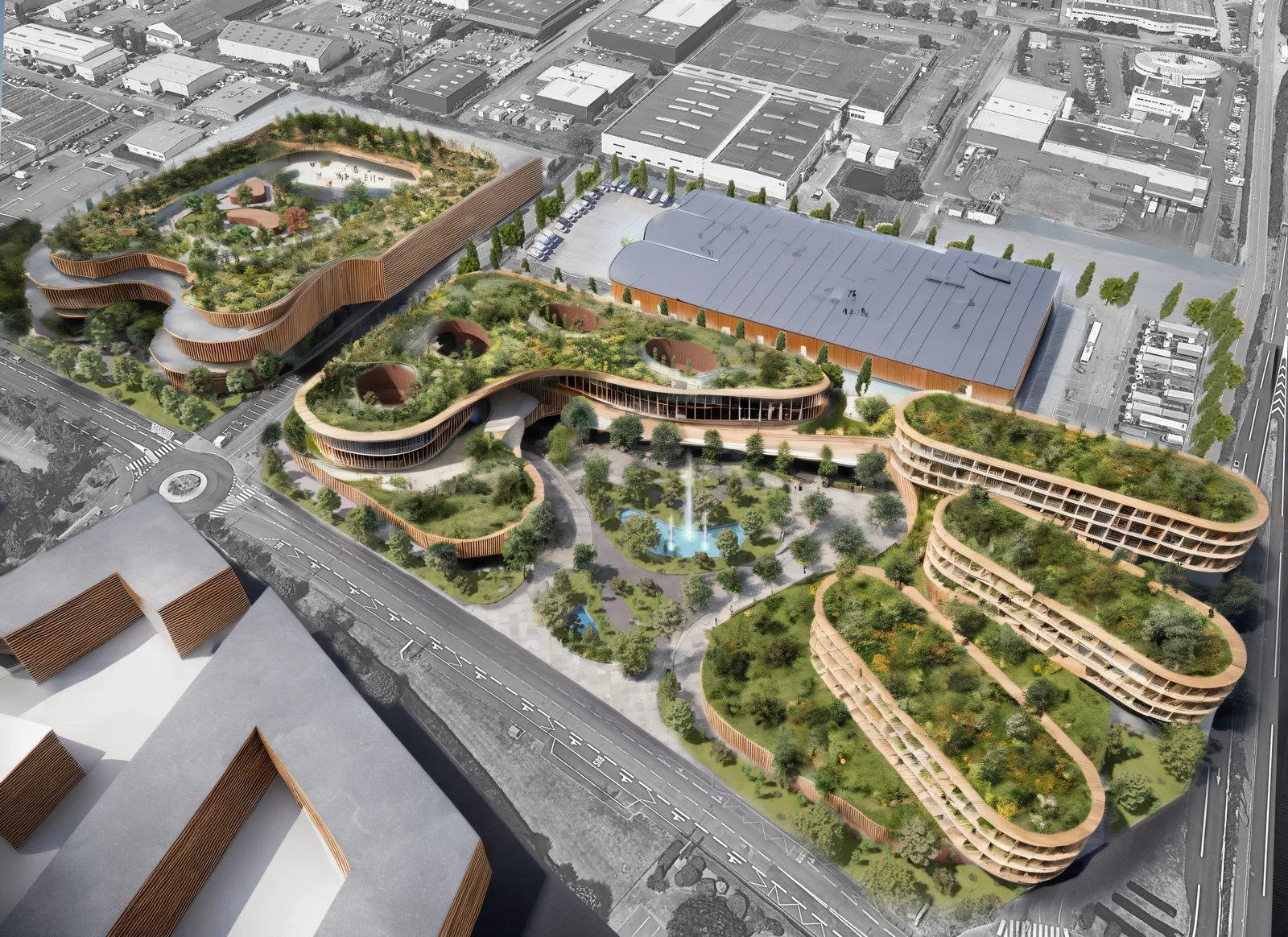
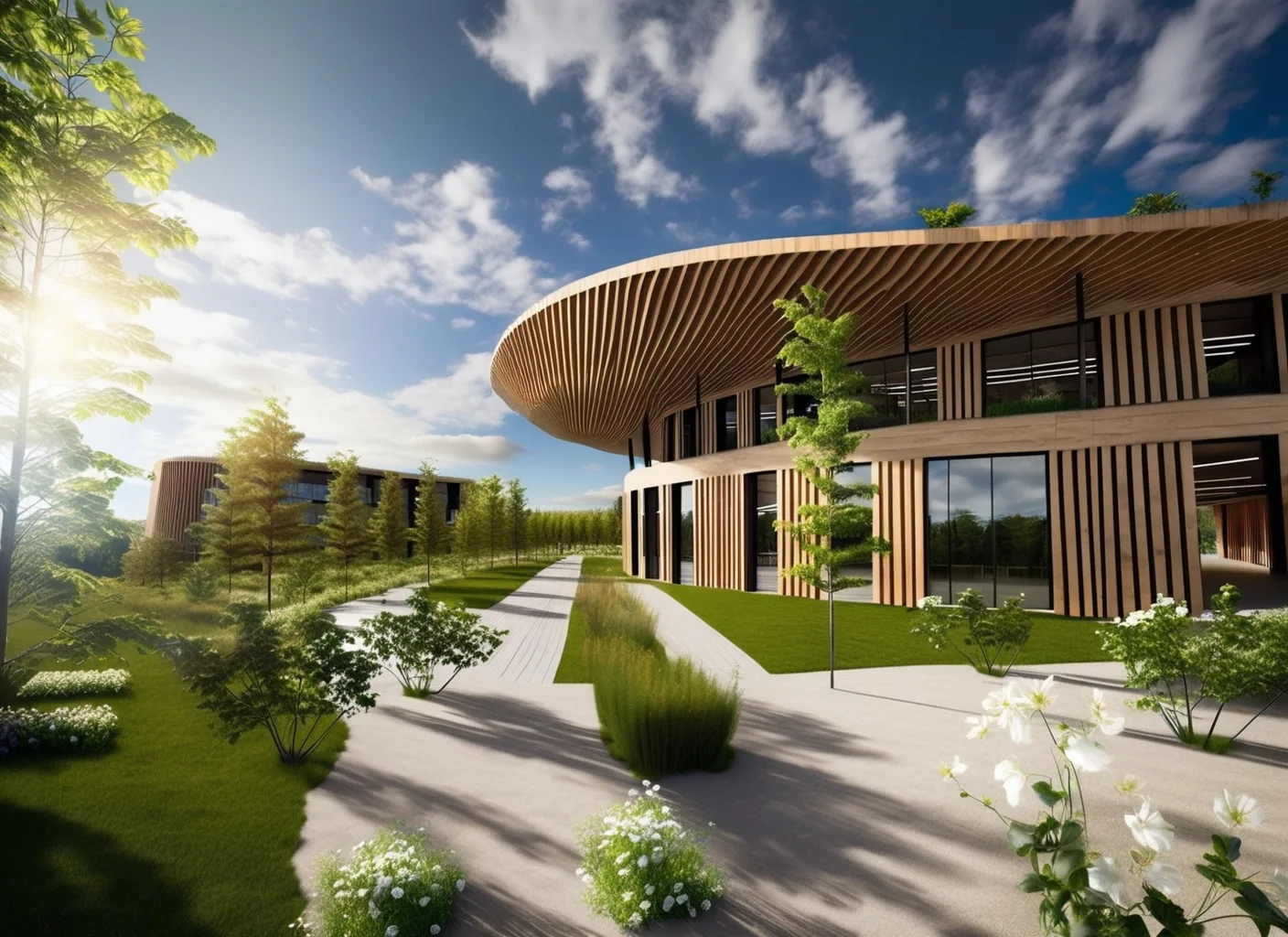
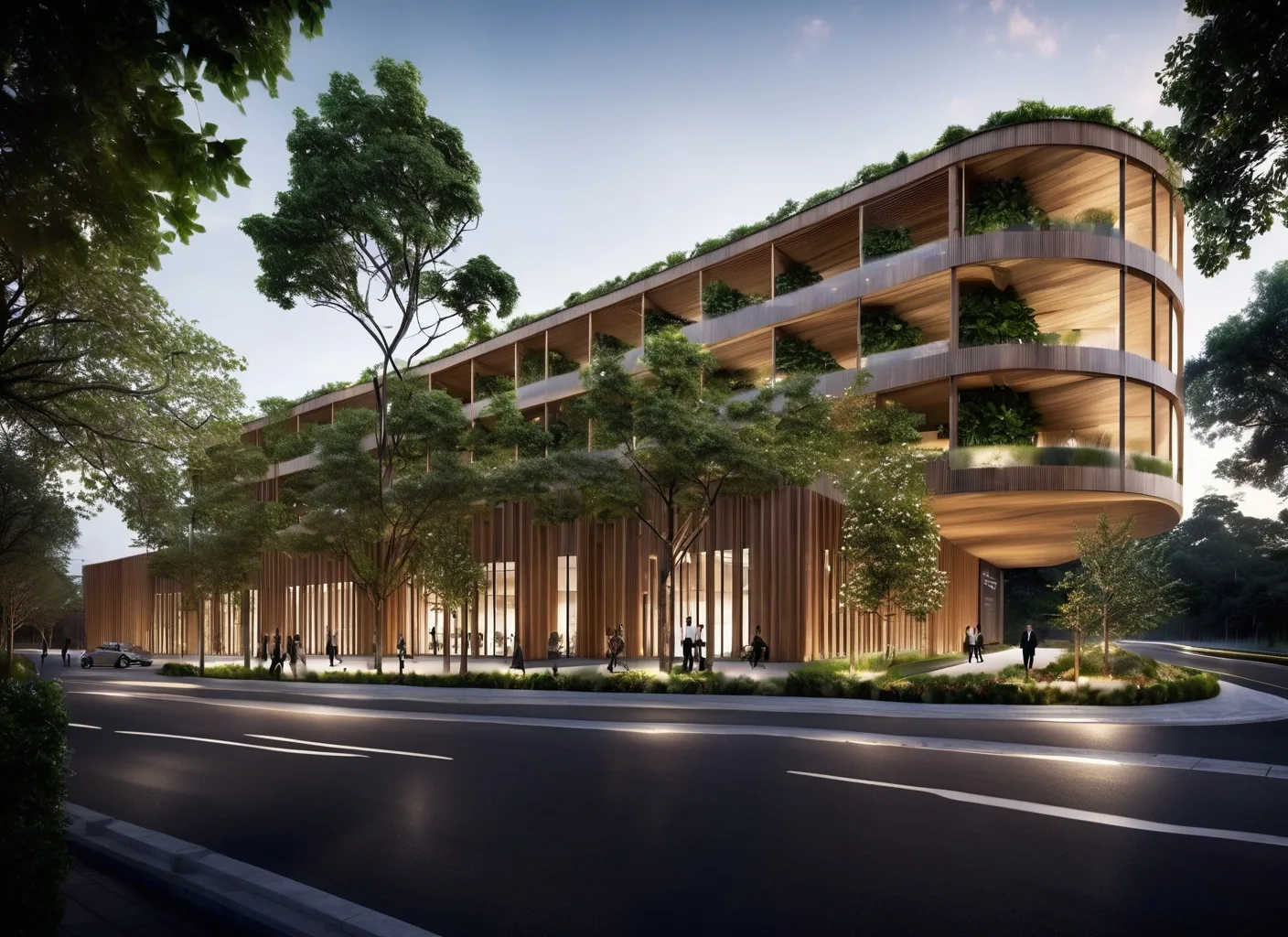
Shopping center in Saint-Herblain for Compagnie de Phalsbourg. An urban approach that reconnects the neighborhood and invites nature into the heart of commerce , a primarily wooden structure that blends retail, offices, and activities under a single landscape roof.
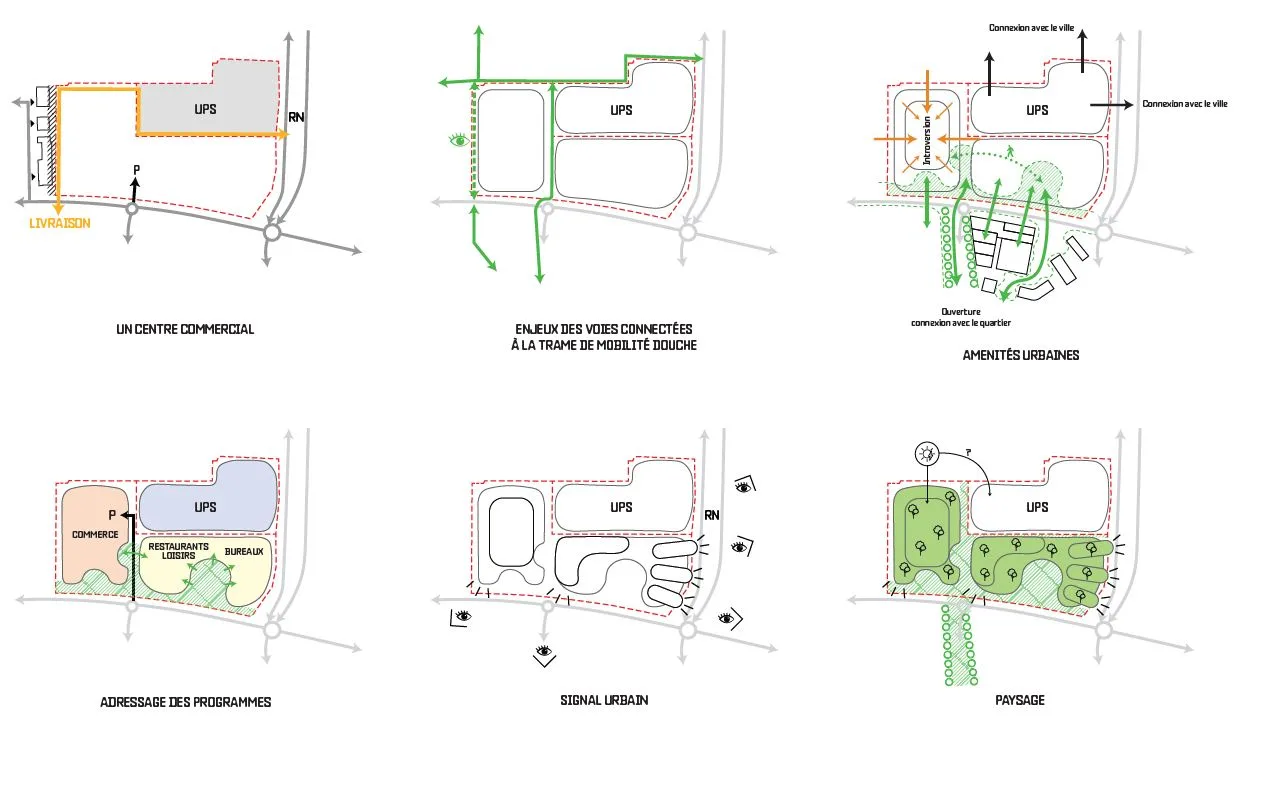
In Saint-Herblain, on the outskirts of Nantes, the Marcel Paul commercial zone has for decades been the archetype of the worst France has produced in terms of shopping centers: a box closed in on itself, set in the middle of a parking lot, indifferent to the surrounding neighborhood. It is precisely this grammar that this project proposes to undo.
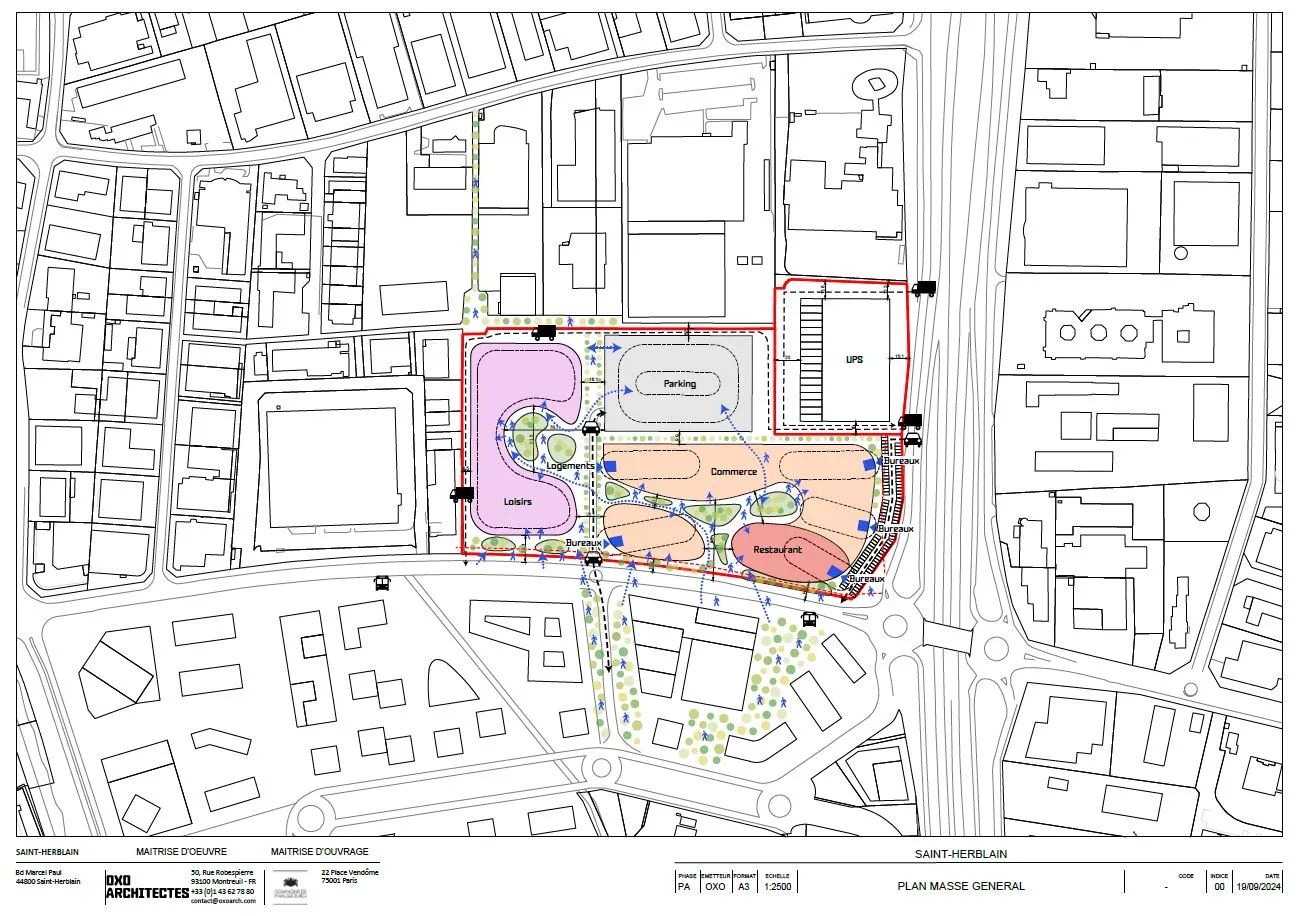
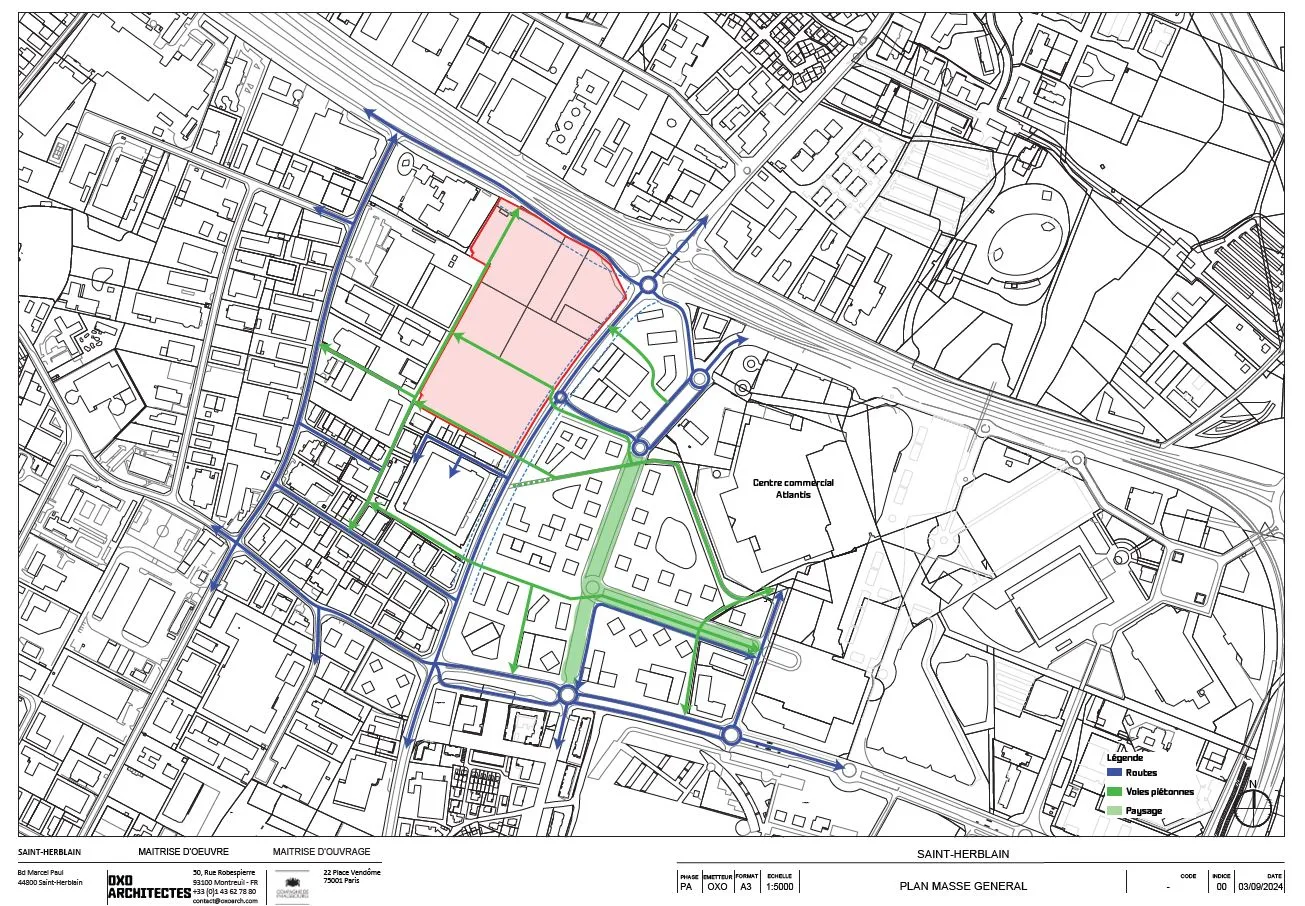
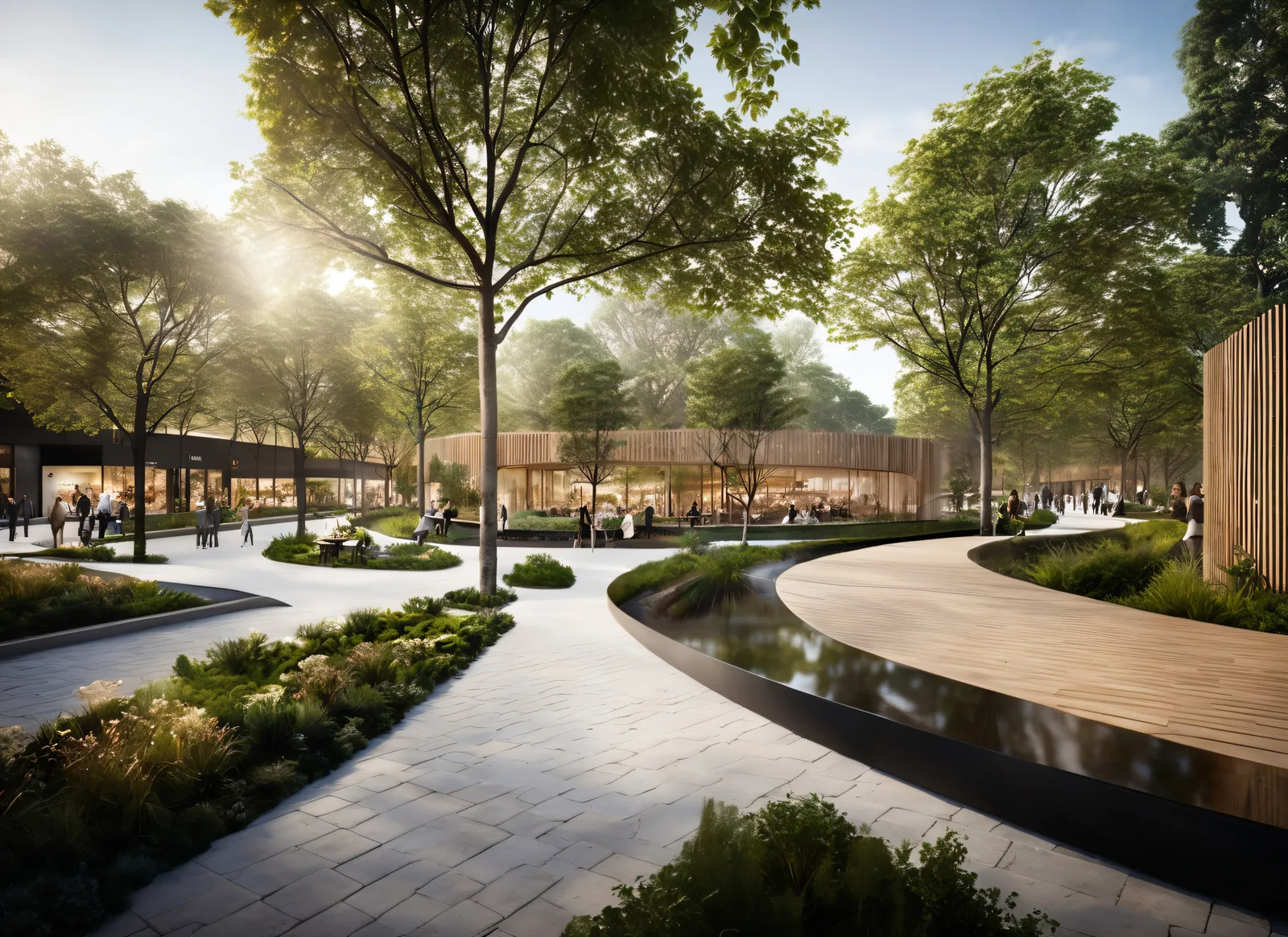
The challenge is not simply to build a new shopping center. It is to transform a hostile urban object into a coherent fragment of city, one that connects to the surrounding fabric instead of ignoring it. This begins with connections: the project reopens passages, multiplies thresholds, and restores to pedestrians and cyclists the routes that had been confiscated from them for years. Commerce no longer hides behind a blind facade; it becomes a space to pass through.
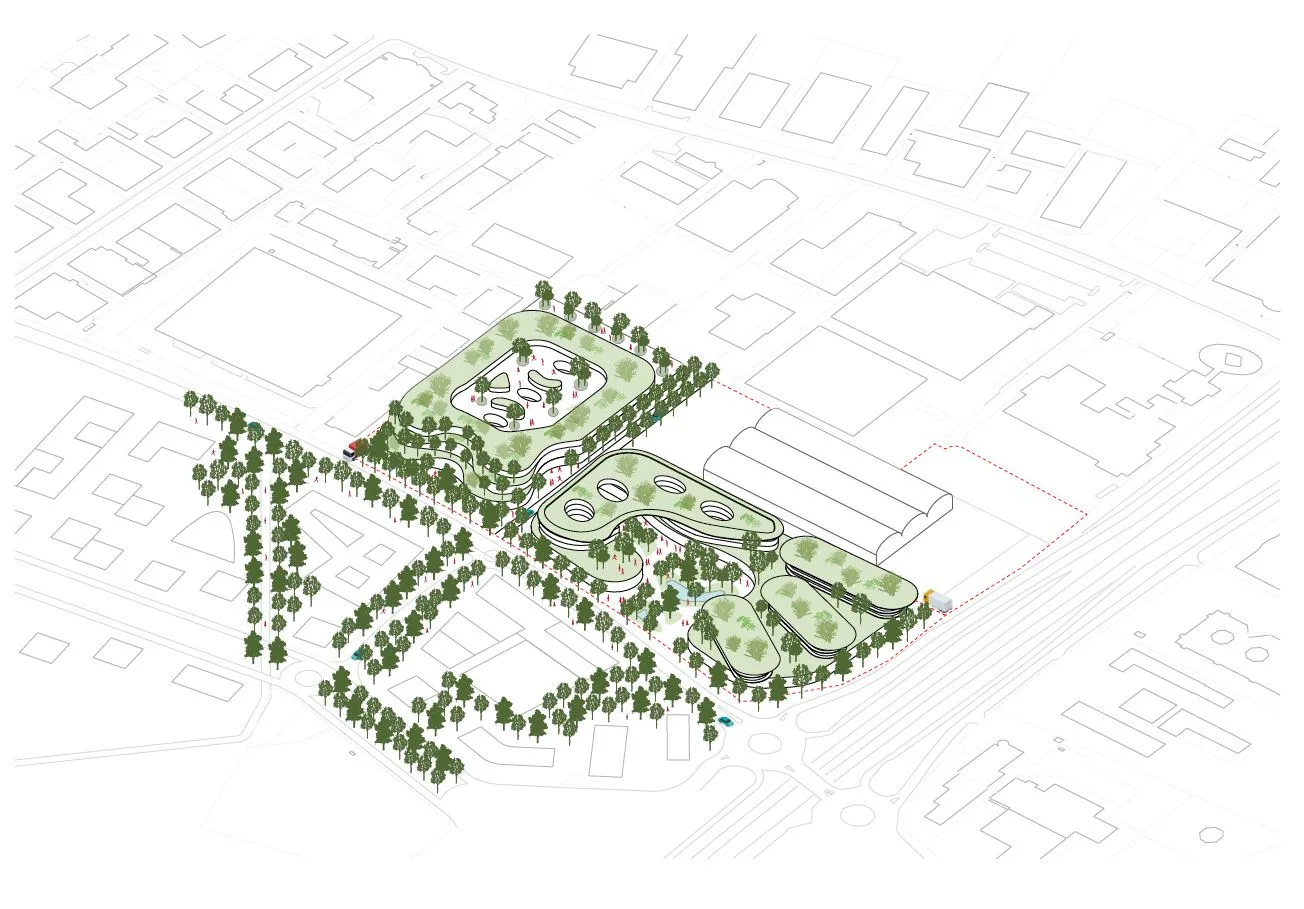
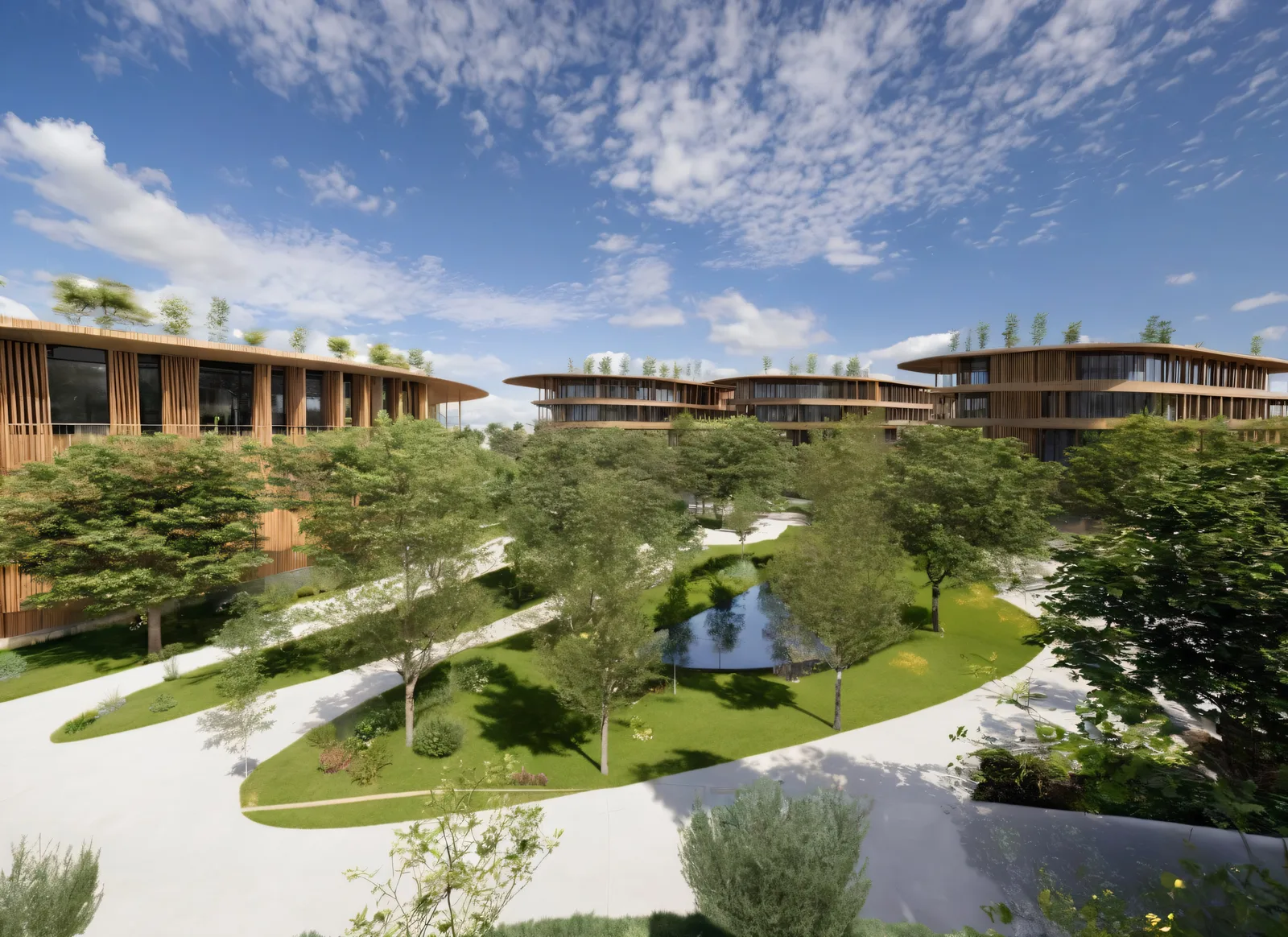
Nature enters the center, literally. Planted courtyards, vegetated patios, suspended rooftop gardens, tree-lined walkways: vegetation is not decoration to make things more appealing, it is a structuring element of the design. It provides climate control, it soothes, it absorbs rainwater, it offers moments of pause that have nothing to do with shopping. The idea is no longer to go shopping, but to spend time in a mixed-use place that also contains commerce.
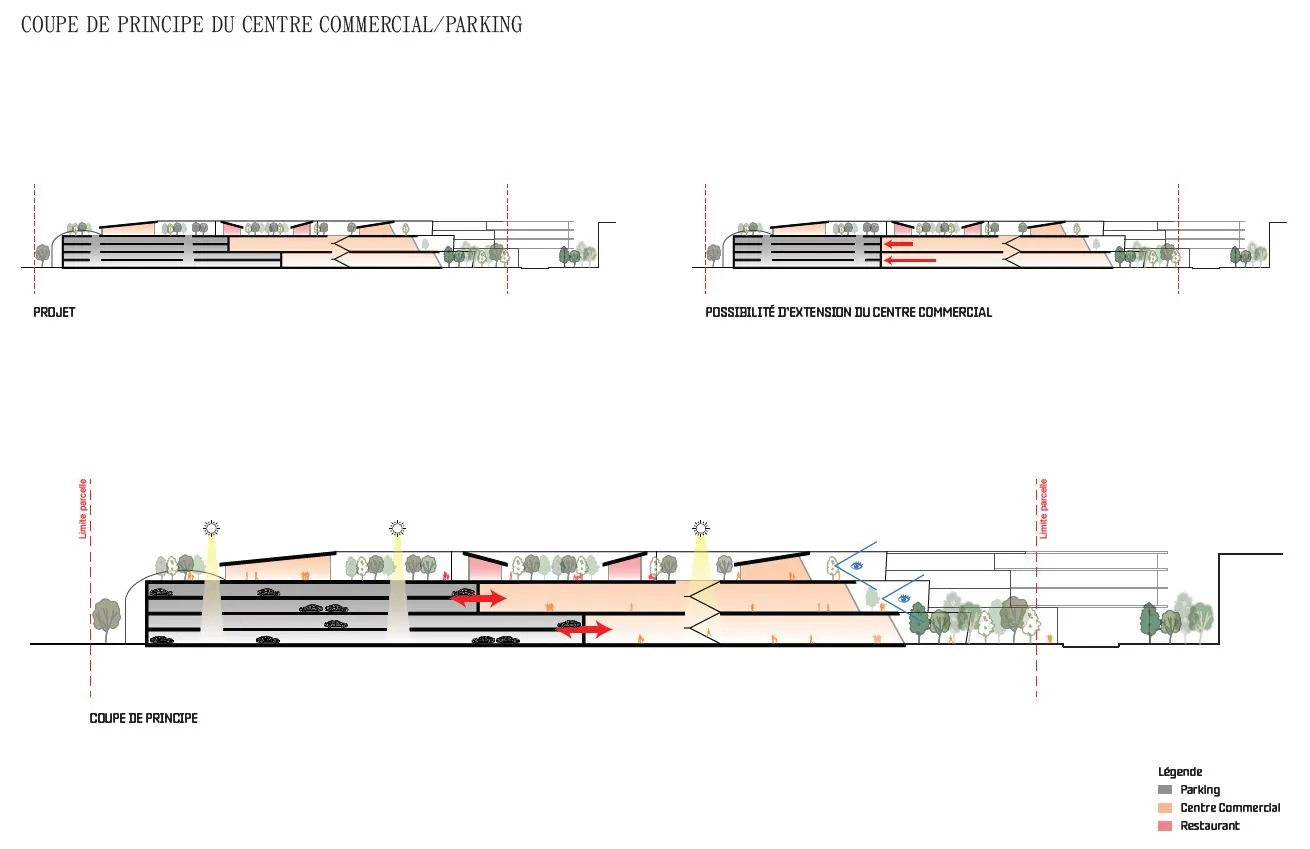
The main structure is wood. This choice is both ecological , one cubic meter of wood stores approximately one ton of CO₂, while concrete emits it, and architectural. Wood gives the project warmth, materiality, a grain that breaks with the usual metallic aesthetic of commercial zones. The frames, screens, ceilings, and timber structures are left exposed and legible. The construction shows itself; it doesn't hide behind suspended ceilings.
Above the shops: offices and activities. This is the mixed-program idea pushed to its conclusion: not making a commercial parcel a monofunctional object dead as soon as stores close, but a place inhabited by multiple temporalities. Offices work during the day, shops open until evening, sports and leisure activities extend use beyond. The building is no longer an appendage to the city; it is a piece of it.
The developer, Compagnie de Phalsbourg, is one of the rare commercial developers to champion this ambition of transforming the sector. Marcel Paul is, in this regard, a manifesto project: it demonstrates that a shopping center can be a useful, beautiful, sustainable fragment of city. It provides proof by example that the obsolete commercial zones of the 1970s-80s can be reinvented rather than perpetuated.
This, ultimately, is the project's true ambition: to set a precedent. If Marcel Paul works, then other peripheral shopping centers in France can follow the same transformation. And the face of urban periphery , which concentrates an enormous share of our soil artificialisation and our daily relationship to consumption, can begin to change. An architecture that doesn't simply content itself with being good in itself, but that prepares the ground for others.
The challenge is not simply to build a new shopping center. It is to transform a hostile urban object into a coherent fragment of city, one that connects to the surrounding fabric instead of ignoring it. This begins with connections: the project reopens passages, multiplies thresholds, and restores to pedestrians and cyclists the routes that had been confiscated from them for years. Commerce no longer hides behind a blind facade; it becomes a space to pass through.
Nature enters the center, literally. Planted courtyards, vegetated patios, suspended rooftop gardens, tree-lined walkways: vegetation is not decoration to make things more appealing, it is a structuring element of the design. It provides climate control, it soothes, it absorbs rainwater, it offers moments of pause that have nothing to do with shopping. The idea is no longer to go shopping, but to spend time in a mixed-use place that also contains commerce.
The main structure is wood. This choice is both ecological , one cubic meter of wood stores approximately one ton of CO₂, while concrete emits it, and architectural. Wood gives the project warmth, materiality, a grain that breaks with the usual metallic aesthetic of commercial zones. The frames, screens, ceilings, and timber structures are left exposed and legible. The construction shows itself; it doesn't hide behind suspended ceilings.
Above the shops: offices and activities. This is the mixed-program idea pushed to its conclusion: not making a commercial parcel a monofunctional object dead as soon as stores close, but a place inhabited by multiple temporalities. Offices work during the day, shops open until evening, sports and leisure activities extend use beyond. The building is no longer an appendage to the city; it is a piece of it.
The developer, Compagnie de Phalsbourg, is one of the rare commercial developers to champion this ambition of transforming the sector. Marcel Paul is, in this regard, a manifesto project: it demonstrates that a shopping center can be a useful, beautiful, sustainable fragment of city. It provides proof by example that the obsolete commercial zones of the 1970s-80s can be reinvented rather than perpetuated.
This, ultimately, is the project's true ambition: to set a precedent. If Marcel Paul works, then other peripheral shopping centers in France can follow the same transformation. And the face of urban periphery , which concentrates an enormous share of our soil artificialisation and our daily relationship to consumption, can begin to change. An architecture that doesn't simply content itself with being good in itself, but that prepares the ground for others.
- Lieu
- Saint-Herblain, France
- Nature
- Mixte / Commerce
- MOA
- Compagnie de Phalsbourg