
Fragonard, Avenue de Clichy
Transformation of a city block on Avenue de Clichy, housing, cafeteria and curved suspended mezzanine, urban architectural signature.
# Fragonard, Avenue de Clichy
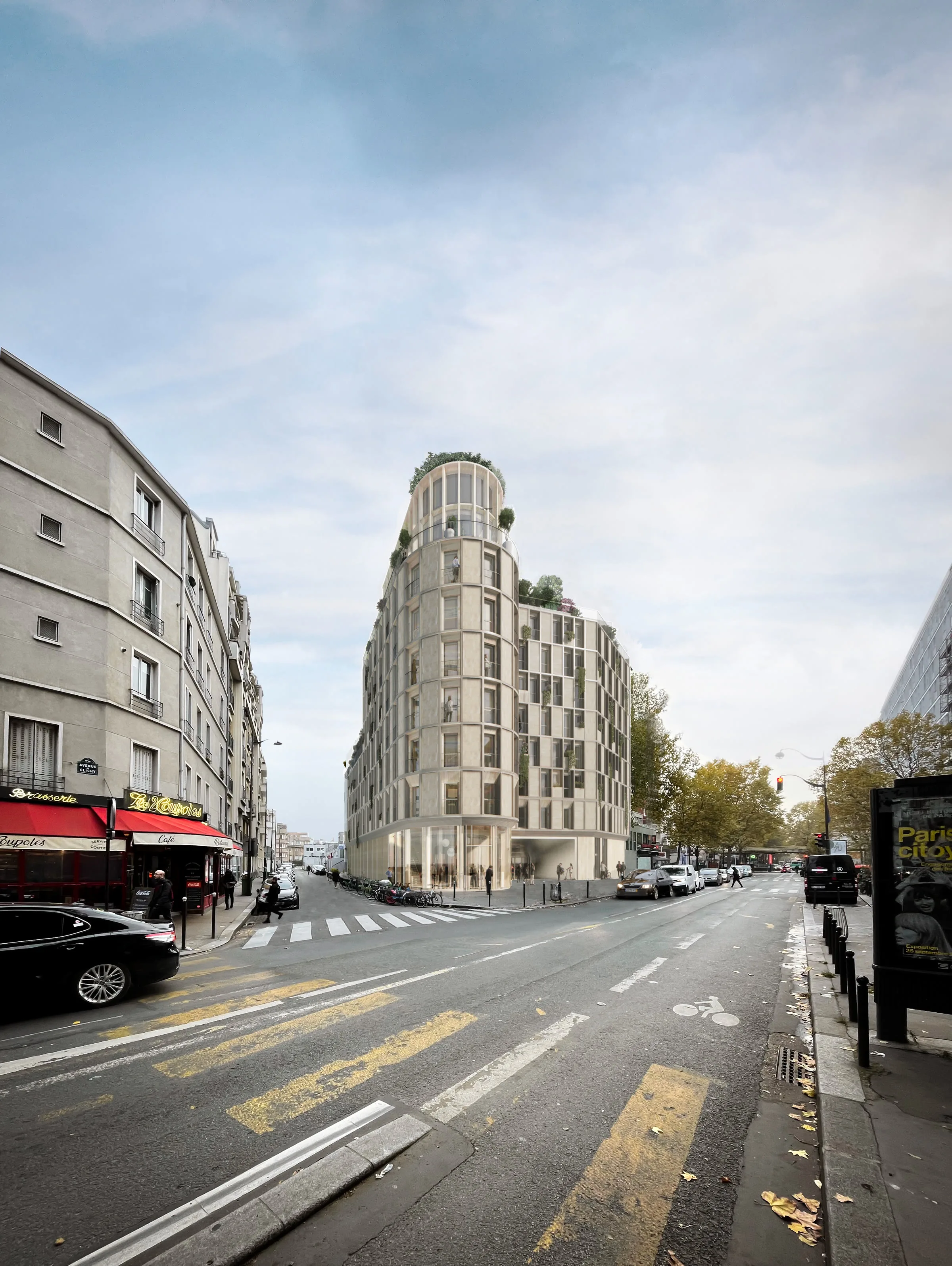
Avenue de Clichy belongs to those Parisian arteries that still bear the imprint of Haussmannian transformations while having accumulated the layers of the twentieth century. We intervene here on an existing city block, with the awareness that an architectural transformation in a dense environment cannot ignore either the memory of the place or the ongoing urban mutations. The neighborhood retains that particular energy of Paris's northern edges, where tertiary activities, local shops and housing intermingle. Our project for this mixed-use ensemble is part of this living geography, with the ambition to reactivate the block while weaving continuities with its immediate environment.
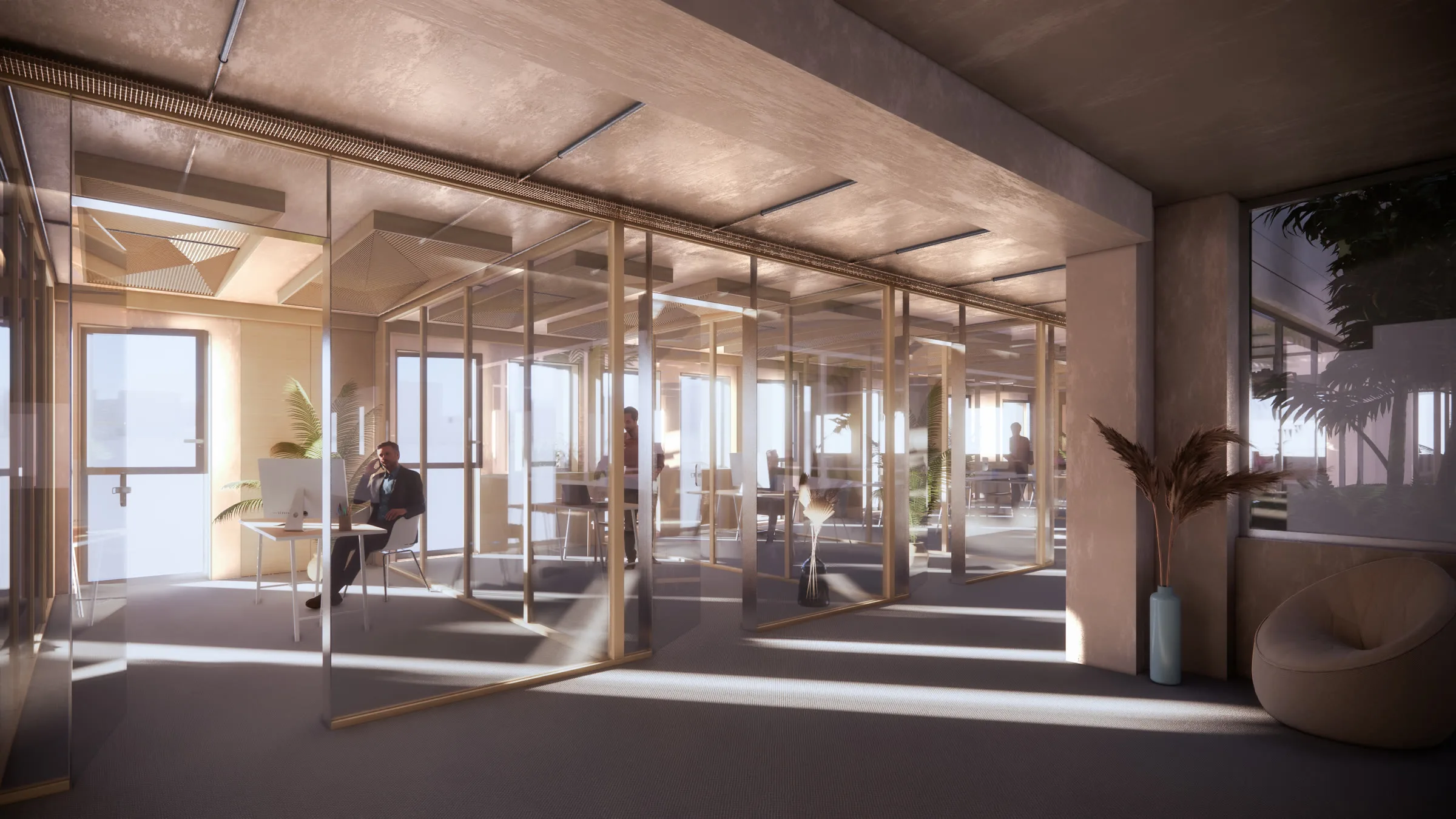
The program combines **housing**, **cafeteria** and **shared spaces**, a mix that particularly interests us in a Parisian context where monofunctional neighborhoods show their limits. We seek to create a place that inhabits urban time differently, where uses intersect without merging, where residents encounter workers, where a coffee break can become an unexpected moment of encounter. This programmatic coexistence requires us to think about thresholds, spatial transitions that allow everyone to find their place without the site fragmenting into sealed zones.
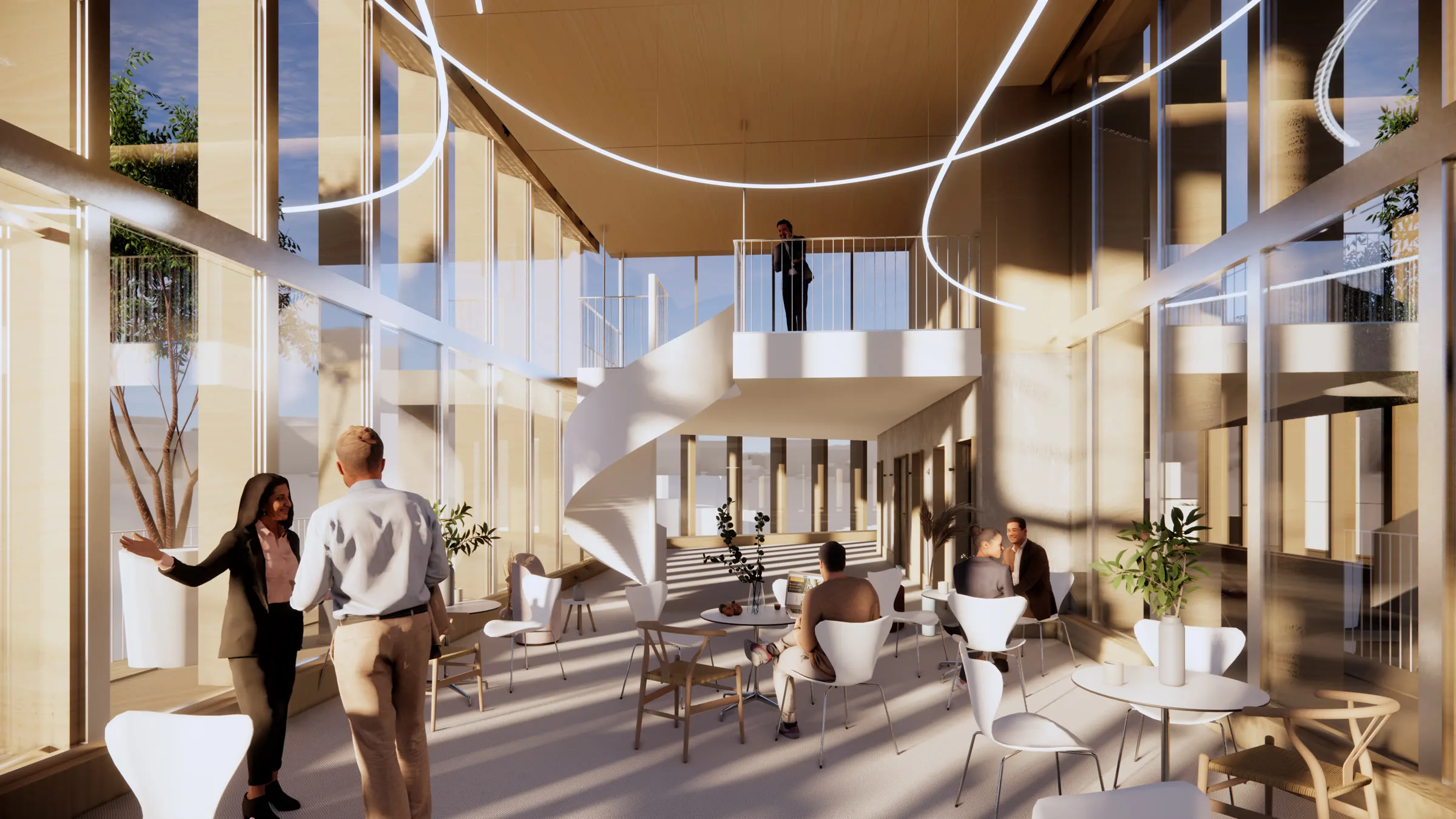
The **curved suspended mezzanine** quickly becomes the project's generative element. We did not want a simple intermediate level, but rather an *inhabited sculpture* that redesigns the interior space and engages the body in a spatial experience. This suspended structure frees the ground floor, creating visual and functional fluidity while offering a shifted viewpoint on the whole. The curve is not a gratuitous gesture here, it responds to a desire to counter the rigidity of existing grids, to introduce softness into an often orthogonal urban environment. The staircase leading to it transforms into an **architectural promenade**, a moment of wandering where one becomes aware of the space before even reaching the destination.
This mezzanine dialogues with the cafeteria located on the ground floor. From the upper level, the gaze plunges toward the cafe's activity, creating porosity between the building's different levels of life. We believe that architecture can produce collectivity not by imposing meeting spaces, but by creating *visual relationships*, perspectives that make the presence of others perceptible. The curve of the mezzanine accompanies this idea, it envelops without enclosing, it frames without partitioning.
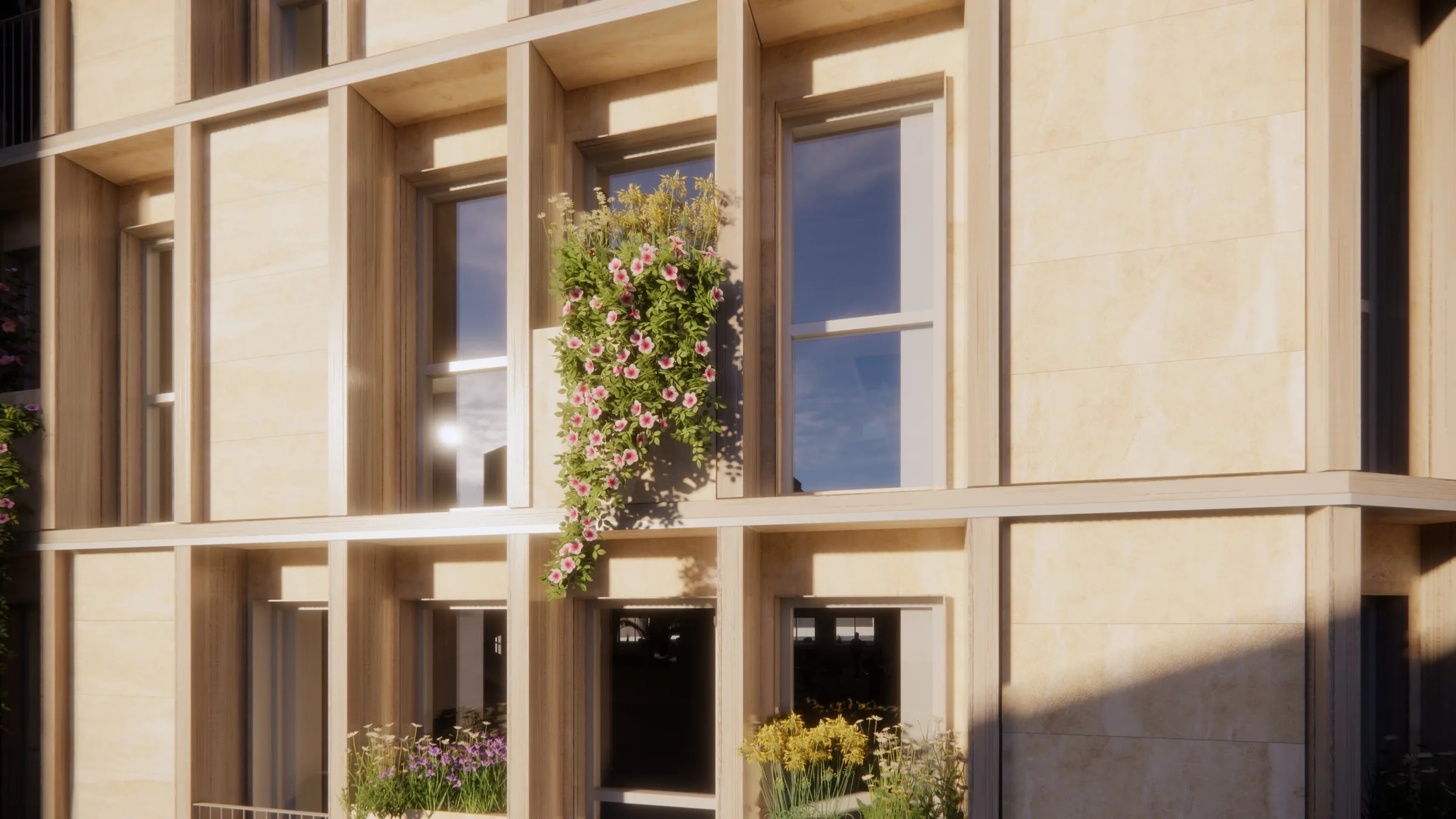
In terms of **materiality**, we work with the existing rather than against it. The block's facades bear traces of multiple interventions, a stratigraphy that we choose not to completely erase. Our approach consists of **recomposing** rather than tabula rasa, articulating old and new in a writing that assumes heterogeneity. Materials are chosen for their capacity to age, to inscribe themselves in duration, far from the aesthetic of permanent novelty. Window rhythms are reworked, densified or spaced according to programmatic needs, while maintaining an overall coherence that dialogues with the surrounding urban fabric.
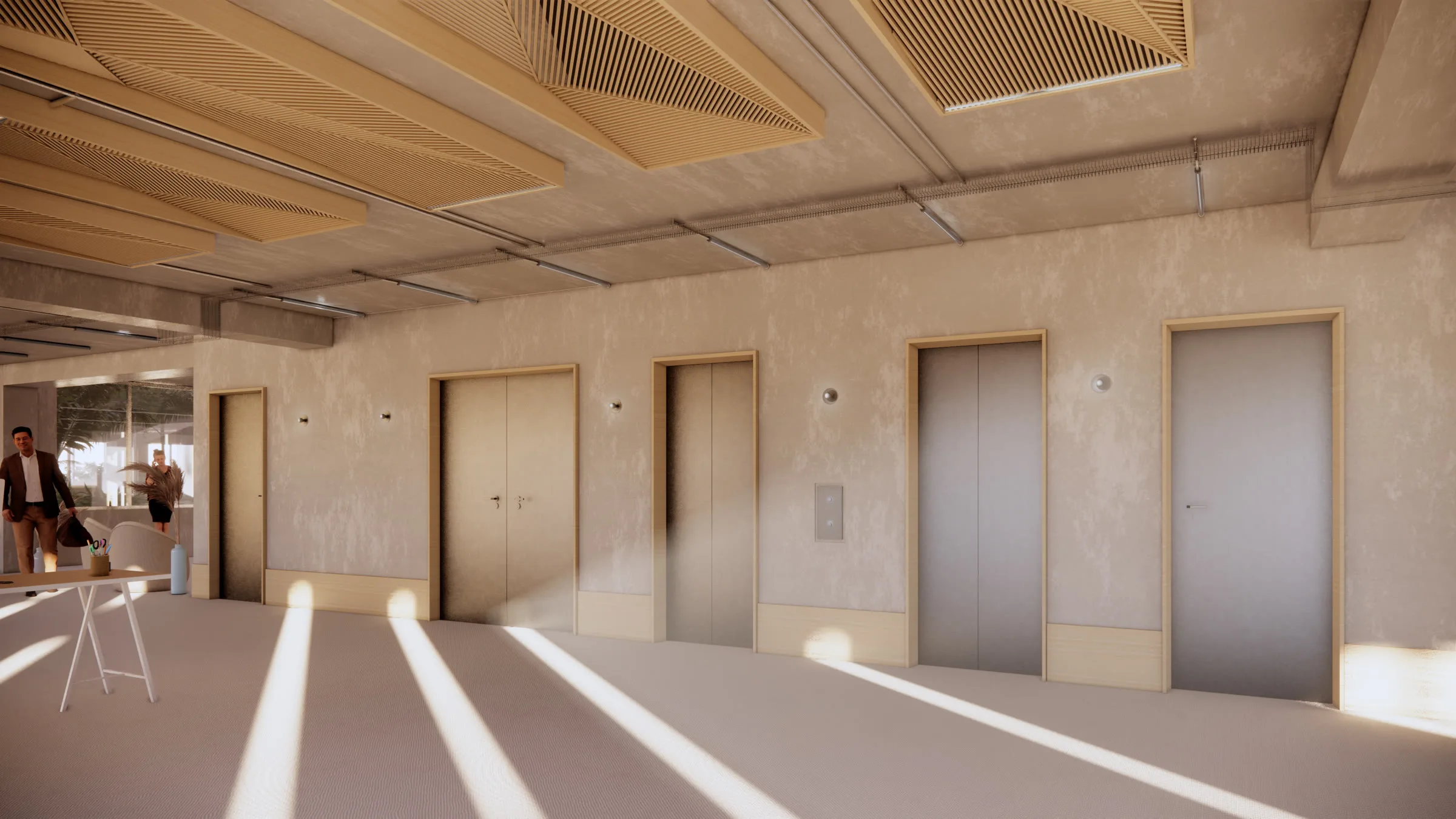
This attention to context extends into our environmental approach. Transforming an existing building constitutes an ecological act in itself, avoiding demolition and massive waste production. We optimize natural light inputs, notably thanks to the mezzanine's geometry which never obstructs visual openings toward the exterior. Common spaces are designed to favor natural ventilation, limiting recourse to air conditioning. Each constructive decision is weighed against its carbon impact, its reversibility, its capacity to evolve with future uses.
The project is also part of a broader reflection on the **contemporary identity** of Parisian architecture. We refuse both pastiche and brutal rupture. It is about affirming an architectural presence that recognizes the neighborhood's memory without dissolving into it, that proposes current writing without ostentation. This ridge line is difficult to maintain, it demands constant attention to details, proportions, transitions between materials. The curved mezzanine, through its strong plastic presence, becomes the *signature* of this approach, a gesture that claims its contemporaneity while dialoguing with the complexity of the place.
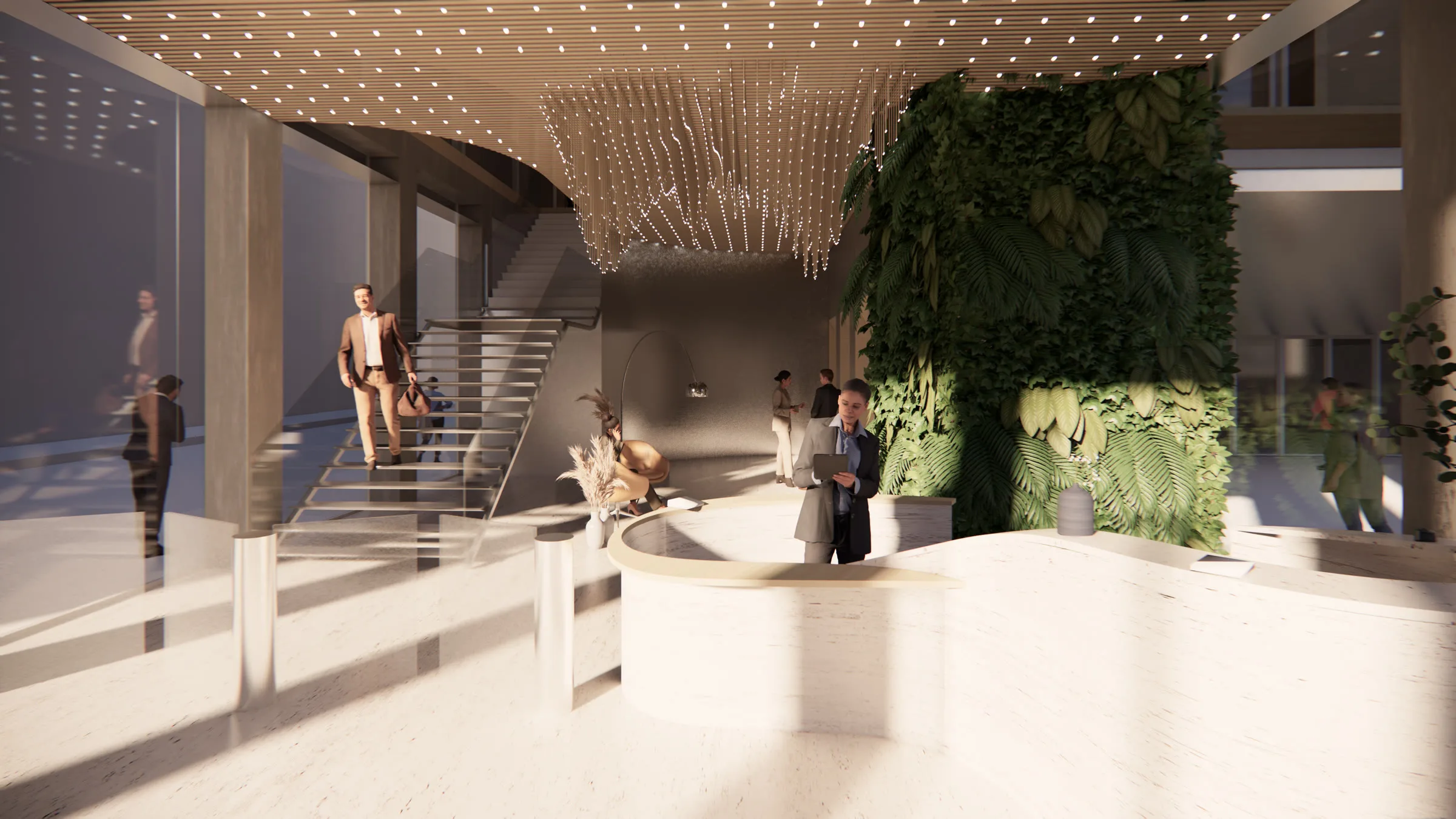
We imagine the future inhabitants and users of this project in a renewed relationship to collective space. The cafeteria becomes a threshold between street and building, an accessible place that opens the block toward the city. The mezzanine, with its promenade staircase, invites slowing down, taking the time for a journey that is not only functional but also sensory. The housing units benefit from this common infrastructure without being prisoners of it, they maintain their autonomy while belonging to a shared ensemble.
On Avenue de Clichy, this project carries our conviction that contemporary urban architecture must know how to compose with the existing, renew typologies without erasing memory, create the common without imposing, affirm a strong identity while remaining generous. The suspended mezzanine, through its plasticity and use, embodies this ambition: to be both an affirmed architectural object and a spatial device serving collective life.
Avenue de Clichy belongs to those Parisian arteries that still bear the imprint of Haussmannian transformations while having accumulated the layers of the twentieth century. We intervene here on an existing city block, with the awareness that an architectural transformation in a dense environment cannot ignore either the memory of the place or the ongoing urban mutations. The neighborhood retains that particular energy of Paris's northern edges, where tertiary activities, local shops and housing intermingle. Our project for this mixed-use ensemble is part of this living geography, with the ambition to reactivate the block while weaving continuities with its immediate environment.
The program combines **housing**, **cafeteria** and **shared spaces**, a mix that particularly interests us in a Parisian context where monofunctional neighborhoods show their limits. We seek to create a place that inhabits urban time differently, where uses intersect without merging, where residents encounter workers, where a coffee break can become an unexpected moment of encounter. This programmatic coexistence requires us to think about thresholds, spatial transitions that allow everyone to find their place without the site fragmenting into sealed zones.
The **curved suspended mezzanine** quickly becomes the project's generative element. We did not want a simple intermediate level, but rather an *inhabited sculpture* that redesigns the interior space and engages the body in a spatial experience. This suspended structure frees the ground floor, creating visual and functional fluidity while offering a shifted viewpoint on the whole. The curve is not a gratuitous gesture here, it responds to a desire to counter the rigidity of existing grids, to introduce softness into an often orthogonal urban environment. The staircase leading to it transforms into an **architectural promenade**, a moment of wandering where one becomes aware of the space before even reaching the destination.
This mezzanine dialogues with the cafeteria located on the ground floor. From the upper level, the gaze plunges toward the cafe's activity, creating porosity between the building's different levels of life. We believe that architecture can produce collectivity not by imposing meeting spaces, but by creating *visual relationships*, perspectives that make the presence of others perceptible. The curve of the mezzanine accompanies this idea, it envelops without enclosing, it frames without partitioning.
In terms of **materiality**, we work with the existing rather than against it. The block's facades bear traces of multiple interventions, a stratigraphy that we choose not to completely erase. Our approach consists of **recomposing** rather than tabula rasa, articulating old and new in a writing that assumes heterogeneity. Materials are chosen for their capacity to age, to inscribe themselves in duration, far from the aesthetic of permanent novelty. Window rhythms are reworked, densified or spaced according to programmatic needs, while maintaining an overall coherence that dialogues with the surrounding urban fabric.
This attention to context extends into our environmental approach. Transforming an existing building constitutes an ecological act in itself, avoiding demolition and massive waste production. We optimize natural light inputs, notably thanks to the mezzanine's geometry which never obstructs visual openings toward the exterior. Common spaces are designed to favor natural ventilation, limiting recourse to air conditioning. Each constructive decision is weighed against its carbon impact, its reversibility, its capacity to evolve with future uses.
The project is also part of a broader reflection on the **contemporary identity** of Parisian architecture. We refuse both pastiche and brutal rupture. It is about affirming an architectural presence that recognizes the neighborhood's memory without dissolving into it, that proposes current writing without ostentation. This ridge line is difficult to maintain, it demands constant attention to details, proportions, transitions between materials. The curved mezzanine, through its strong plastic presence, becomes the *signature* of this approach, a gesture that claims its contemporaneity while dialoguing with the complexity of the place.
We imagine the future inhabitants and users of this project in a renewed relationship to collective space. The cafeteria becomes a threshold between street and building, an accessible place that opens the block toward the city. The mezzanine, with its promenade staircase, invites slowing down, taking the time for a journey that is not only functional but also sensory. The housing units benefit from this common infrastructure without being prisoners of it, they maintain their autonomy while belonging to a shared ensemble.
On Avenue de Clichy, this project carries our conviction that contemporary urban architecture must know how to compose with the existing, renew typologies without erasing memory, create the common without imposing, affirm a strong identity while remaining generous. The suspended mezzanine, through its plasticity and use, embodies this ambition: to be both an affirmed architectural object and a spatial device serving collective life.
- Lieu
- Paris, France
- Nature
- Mixte
- Surface
- Confidentiel
- Budget
- Confidentiel
- Concours
- 2023
- MOA
- Confidentiel