
Lycée Jean Moulin
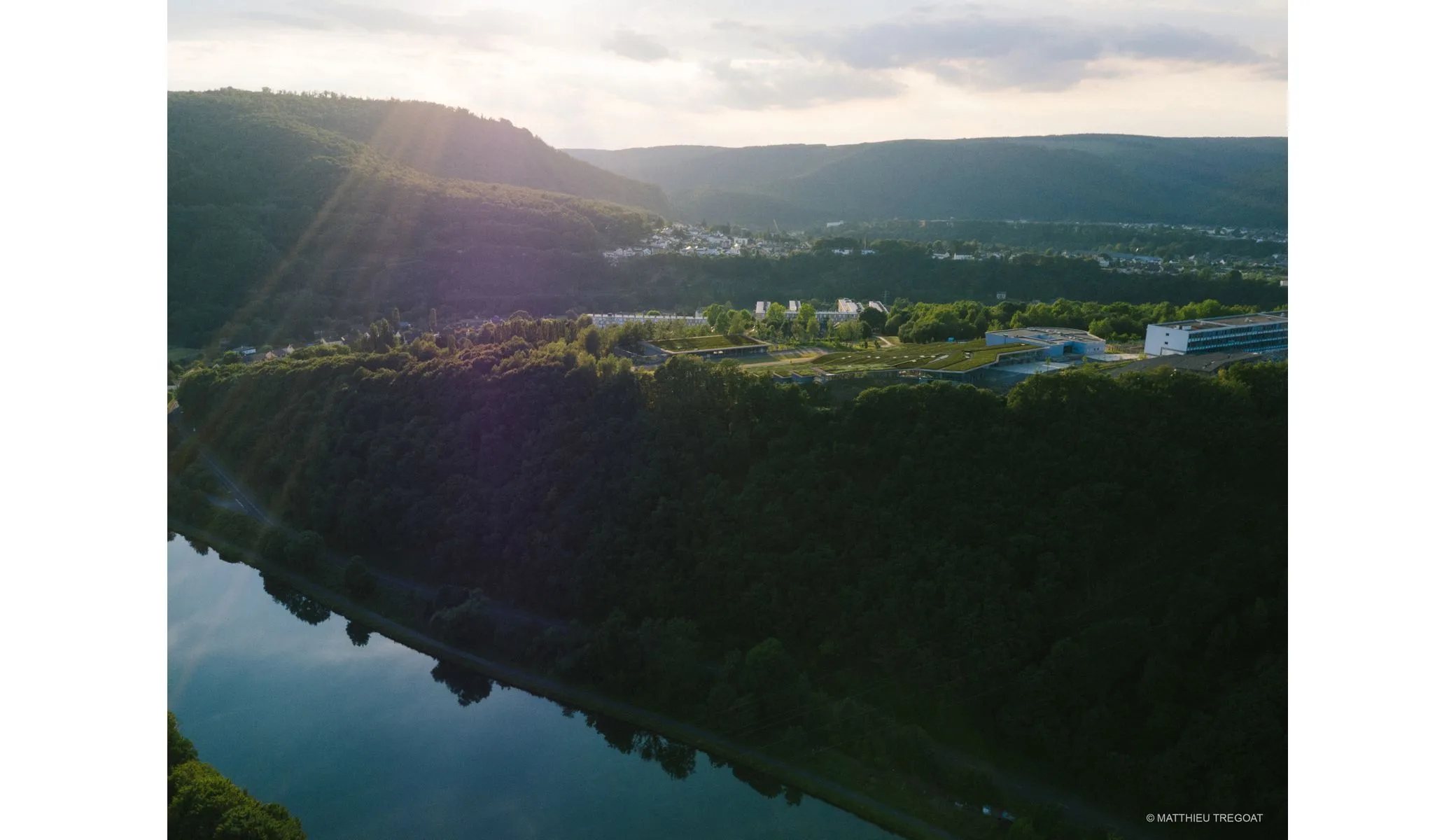
The site is a vast, undulating landscape shaped by the meanders of the Meuse, a landscape of gentle curves and broad, distant views. We became one with this grand landscape, embracing it in its fullest dimension. We nestled into this particular and magical topography, keeping our eyes on the mountain at all costs.
We discovered the site of Revin as a territory that reveals itself slowly, in successive layers. The Meuse traces broad meanders there, sculpting a geography made of curves and counter-curves, where the gaze naturally slides toward the mountainous horizon. This rolling landscape of the Ardennes possesses a quiet strength, a presence that asserts itself without brutality. We understood from our first visits that this was not about placing an architectural object on this terrain, but about working with it, embracing its movements, revealing its intrinsic qualities. The topography was not a constraint to overcome, but the primary material of the project.
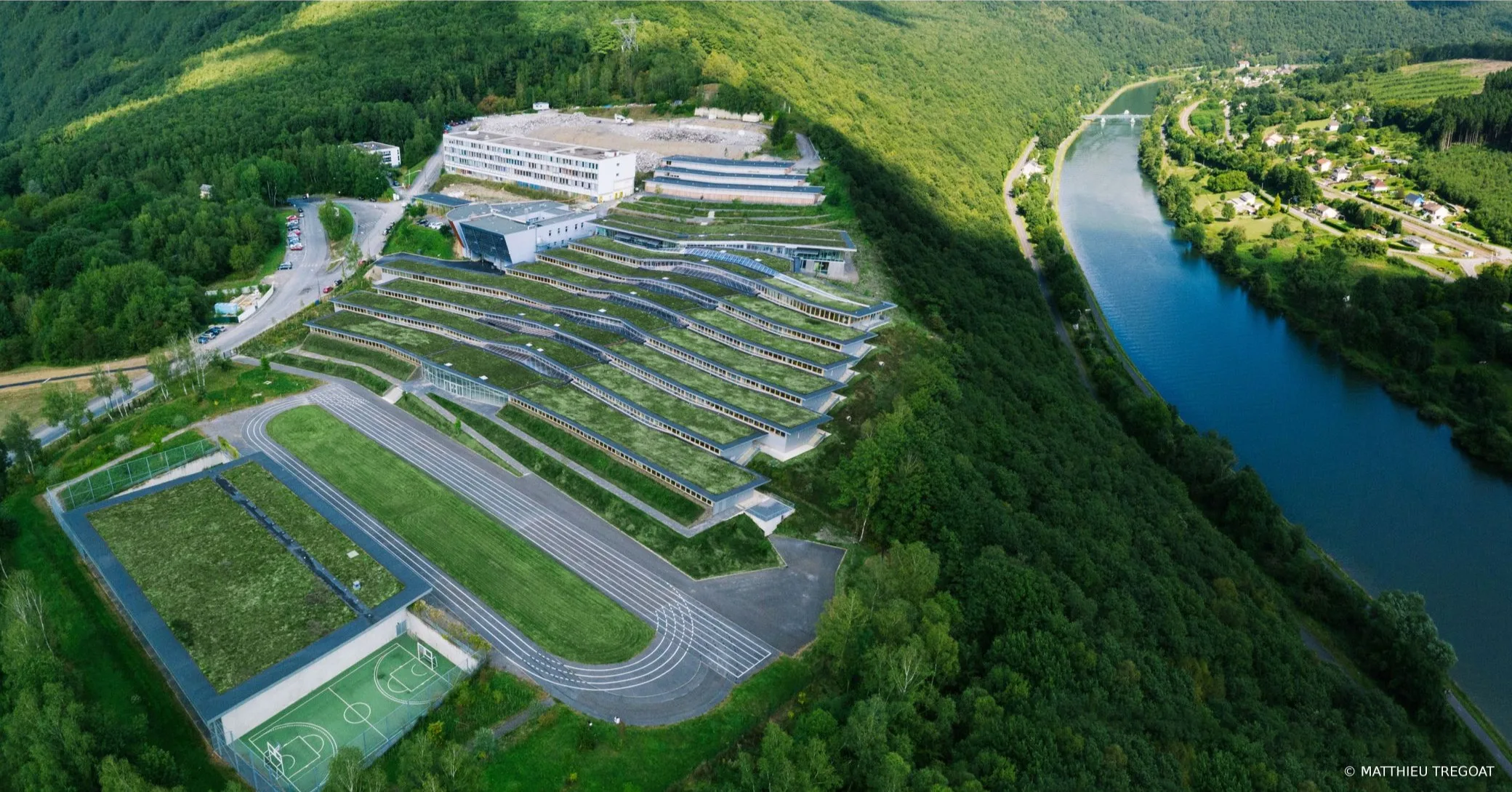
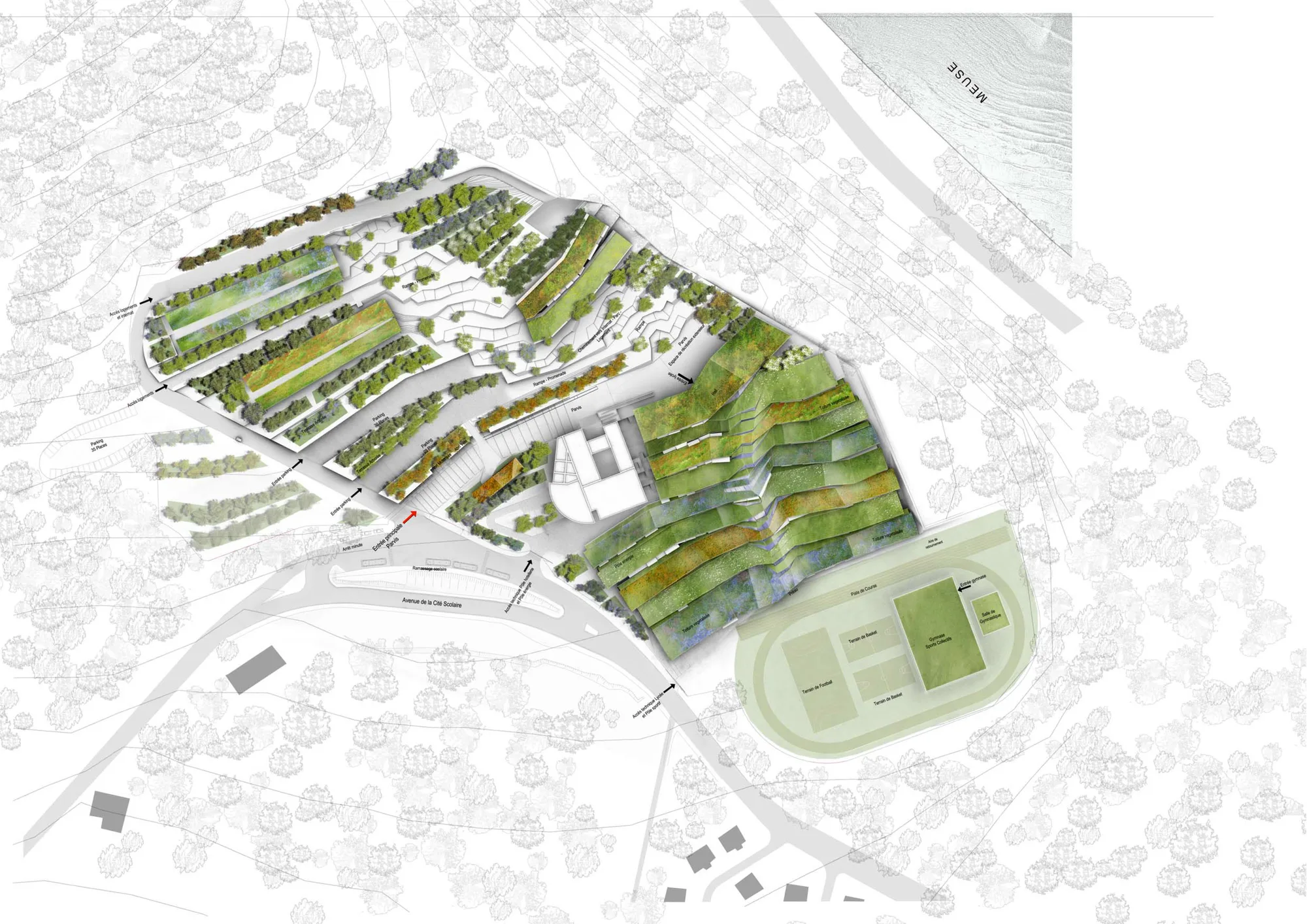
The program went far beyond that of a conventional lycée. The Champagne-Ardennes Region wanted to create a true **living campus**, integrating the school, sports fields, a gymnasium, staff housing, a hotel facility, and boarding facilities. This programmatic diversity seemed to us an opportunity rather than a difficulty: it allowed us to conceive the project not as a monolithic building, but as a **built archipelago**, a series of distinct entities connected by a circulation system that follows the relief. Each function finds its place in the site's geography, at the height that suits it, according to its degree of intimacy or publicness.
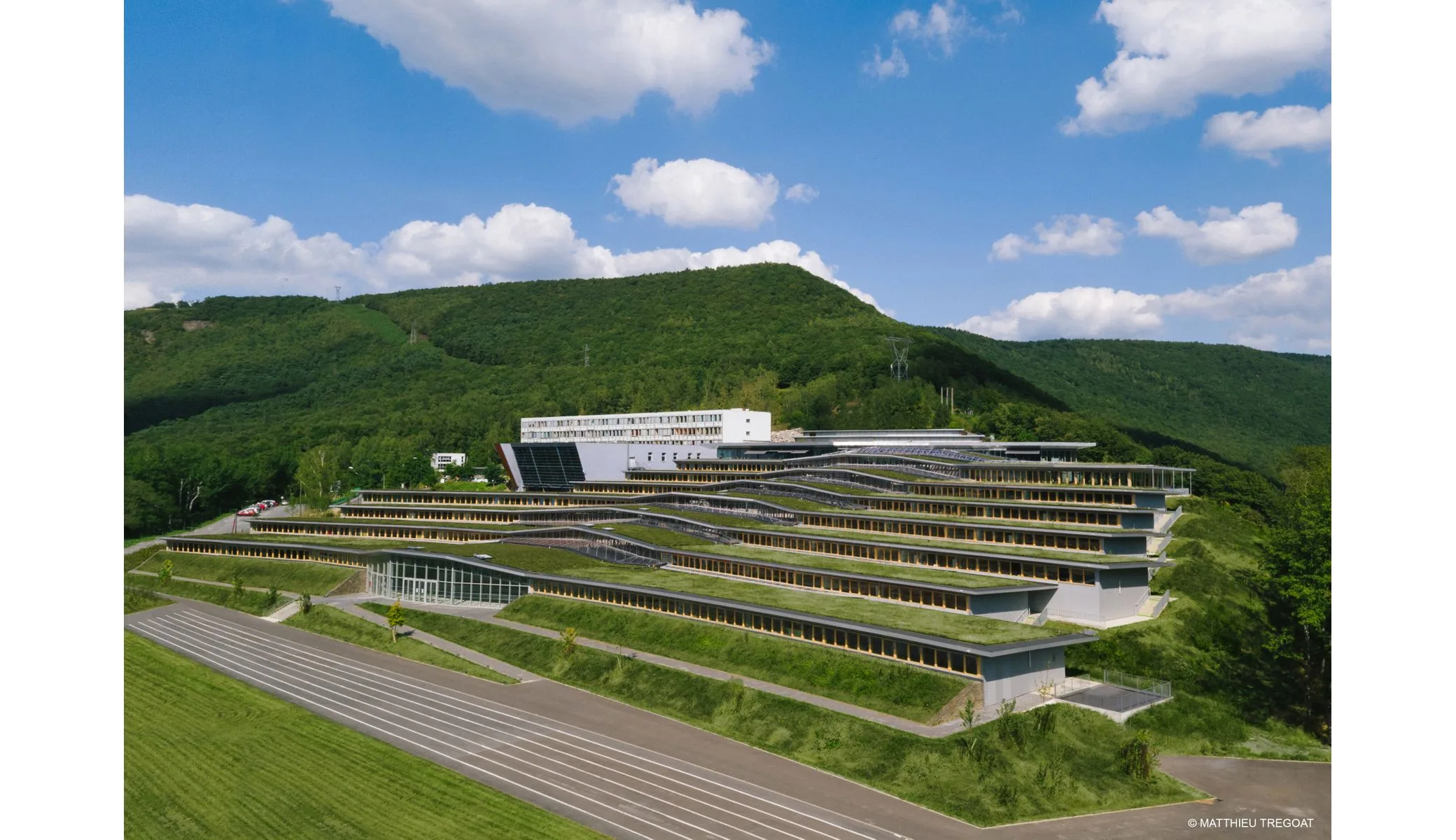
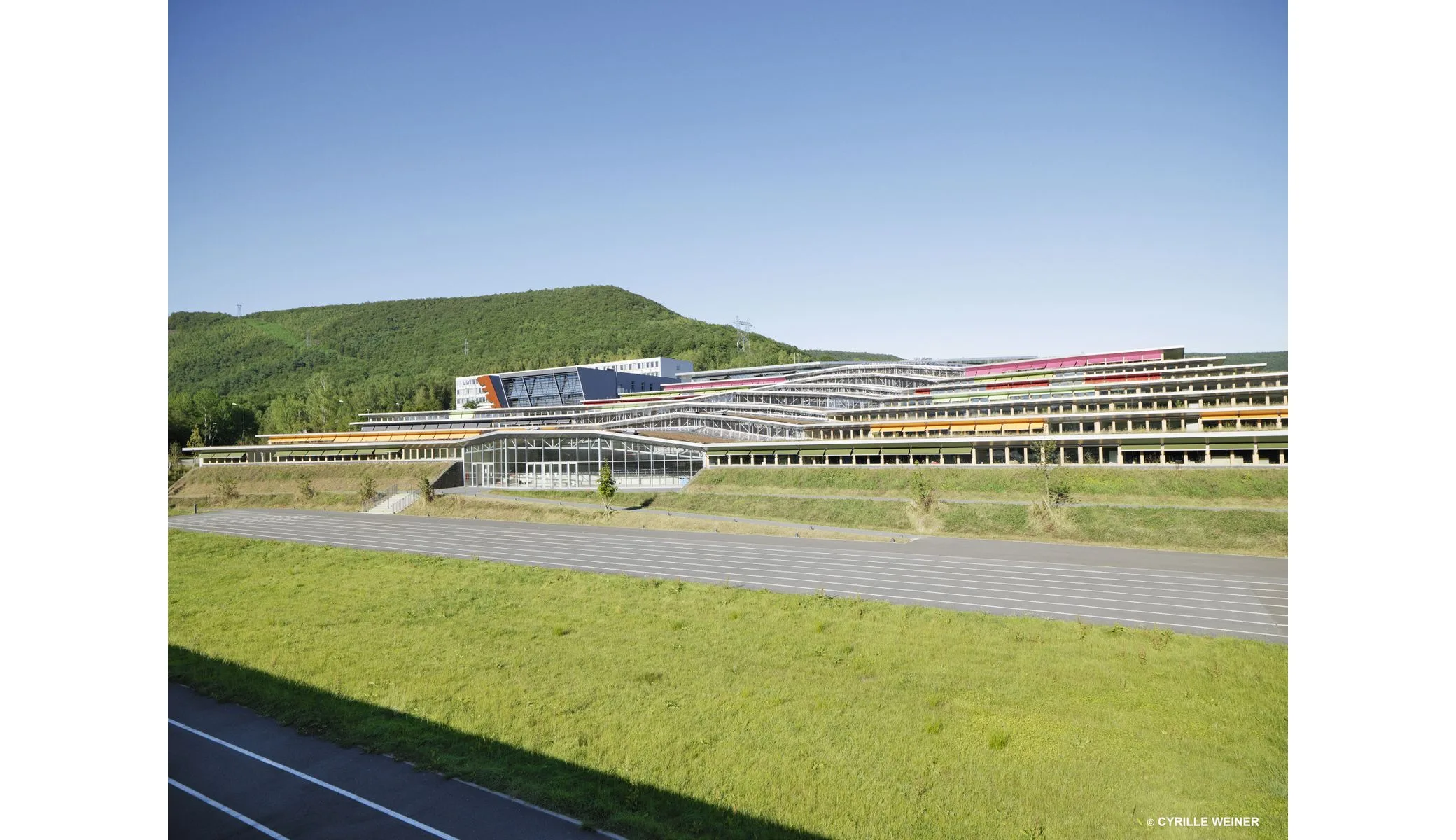
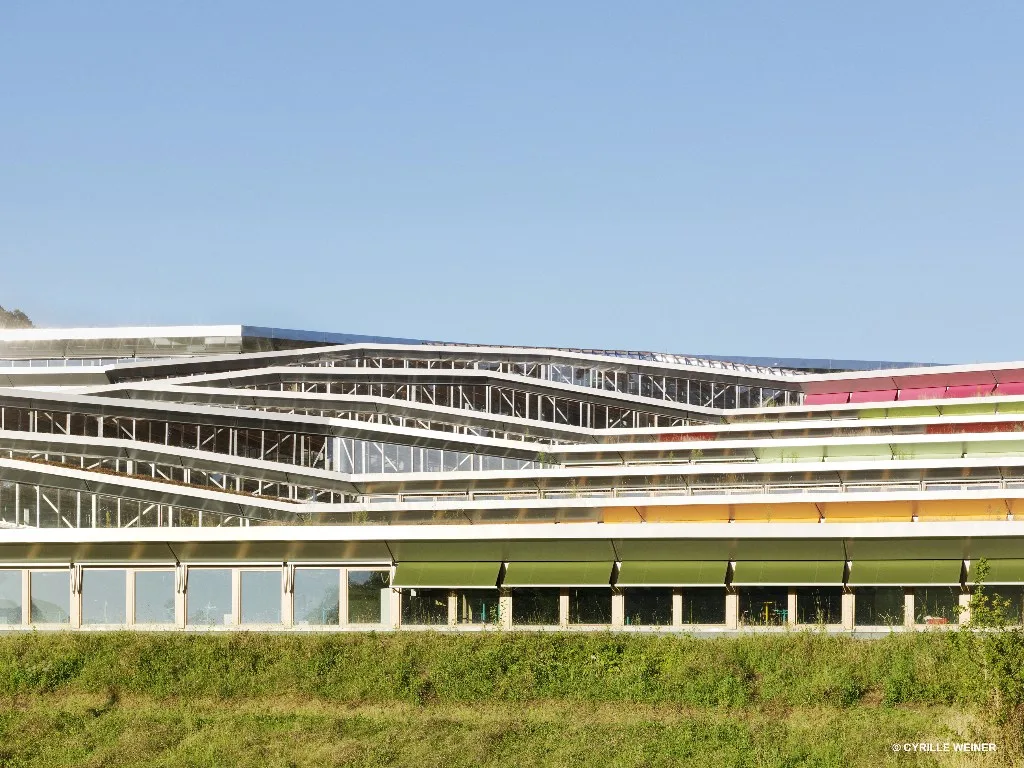
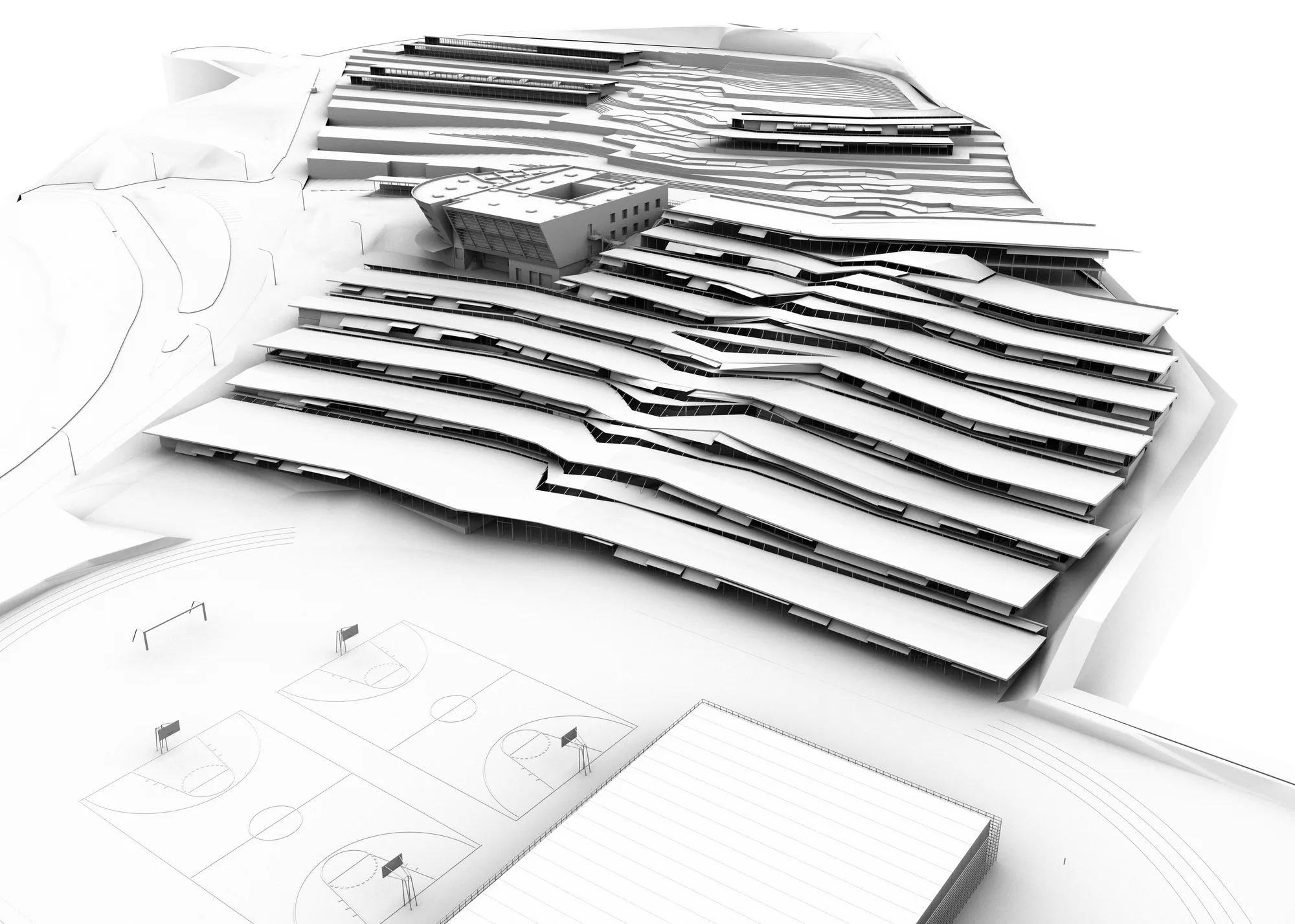
With **Duncan Lewis, Tanguy Vermet, and Jean de Giacinto**, we developed an architectural approach radical in its simplicity: making the slope itself the very structure of the project. Rather than leveling the terrain to create an artificial platform, we chose to **terrace in successive tiers**, allowing each programmatic layer to anchor at a different level. The buildings stack and partially overlap, creating a spatial depth that multiplies perceptions. A system of **gentle circulation paths** winds across the site, connecting the different levels through generous ramps rather than stairs. These pathways are not mere functional devices: they constitute the project's framework, its circulatory system.
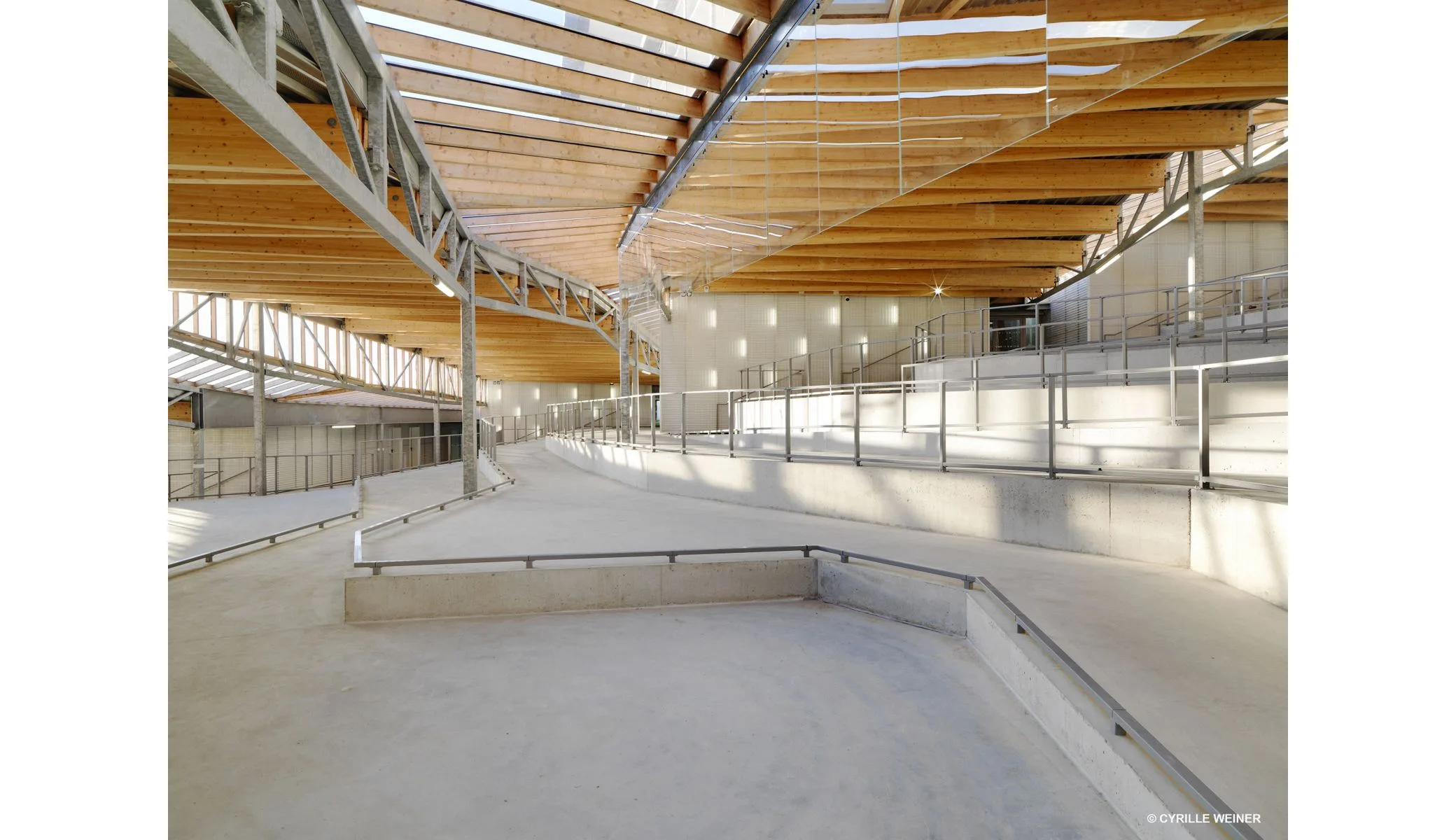
At the heart of the campus, a central volume housing vertical circulation becomes a **covered agora**, a meeting and exchange place imbued with the surrounding geography. The ramps attach to this core, creating oblique perspectives, low-angle views toward the valley, moments of pause where the landscape frames itself naturally. Each landing becomes a potential belvedere. Students don't endure circulation as a chore: they traverse the building by traversing the landscape, they ascend to their classrooms as one climbs a mountain trail. This almost **topographical dimension of architecture** transforms daily movements into conscious spatial experience.
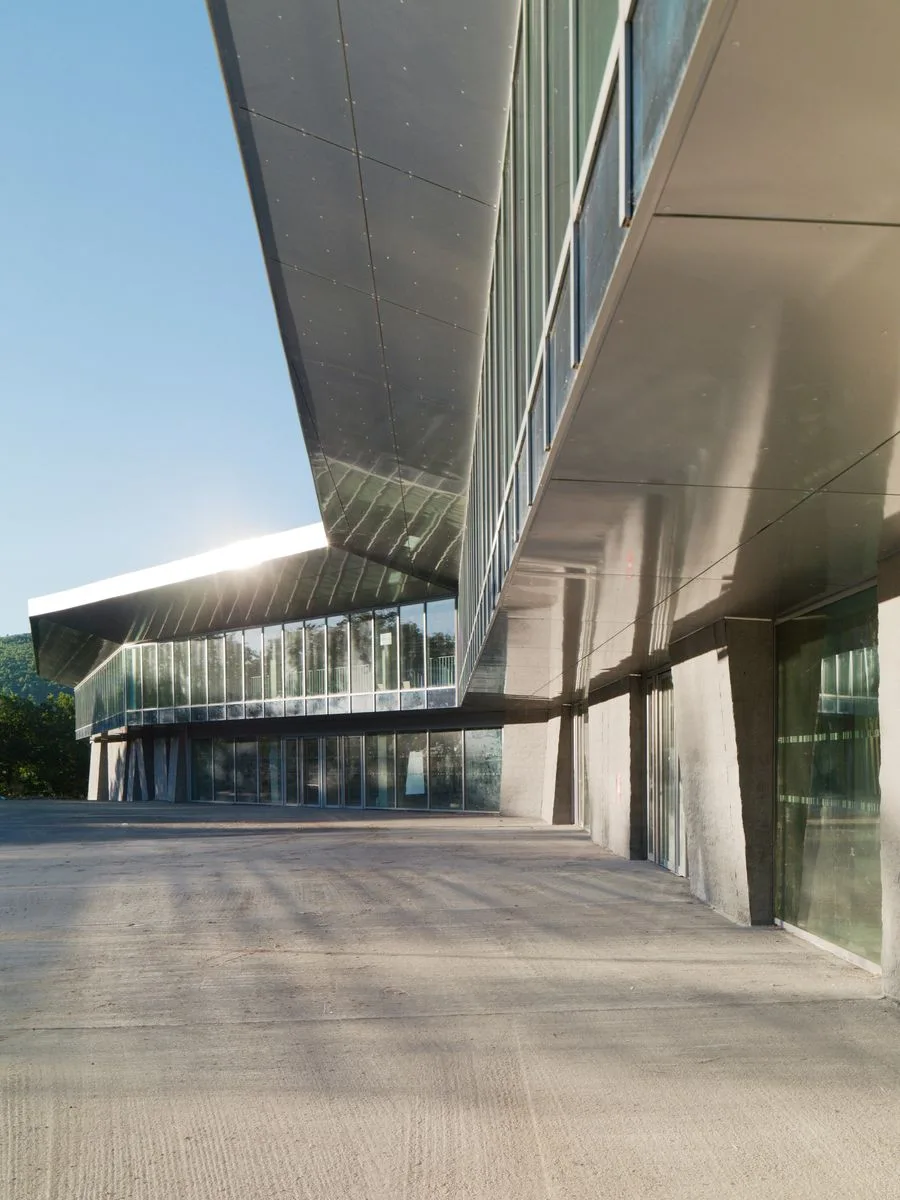
The orientation of the volumes obeys a simple and absolute rule: **all spaces look toward the valley**. Whatever their function, classroom, boarding room, sports hall, each place benefits from an opening toward the grand landscape. This obsession with the view is not a formal luxury: it anchors users in their territory, it reminds them daily that this lycée is not disconnected from the ground, that it belongs to this Ardennes geography. The windows don't cut out fragments of landscape: they offer generous, almost cinematic panoramas.
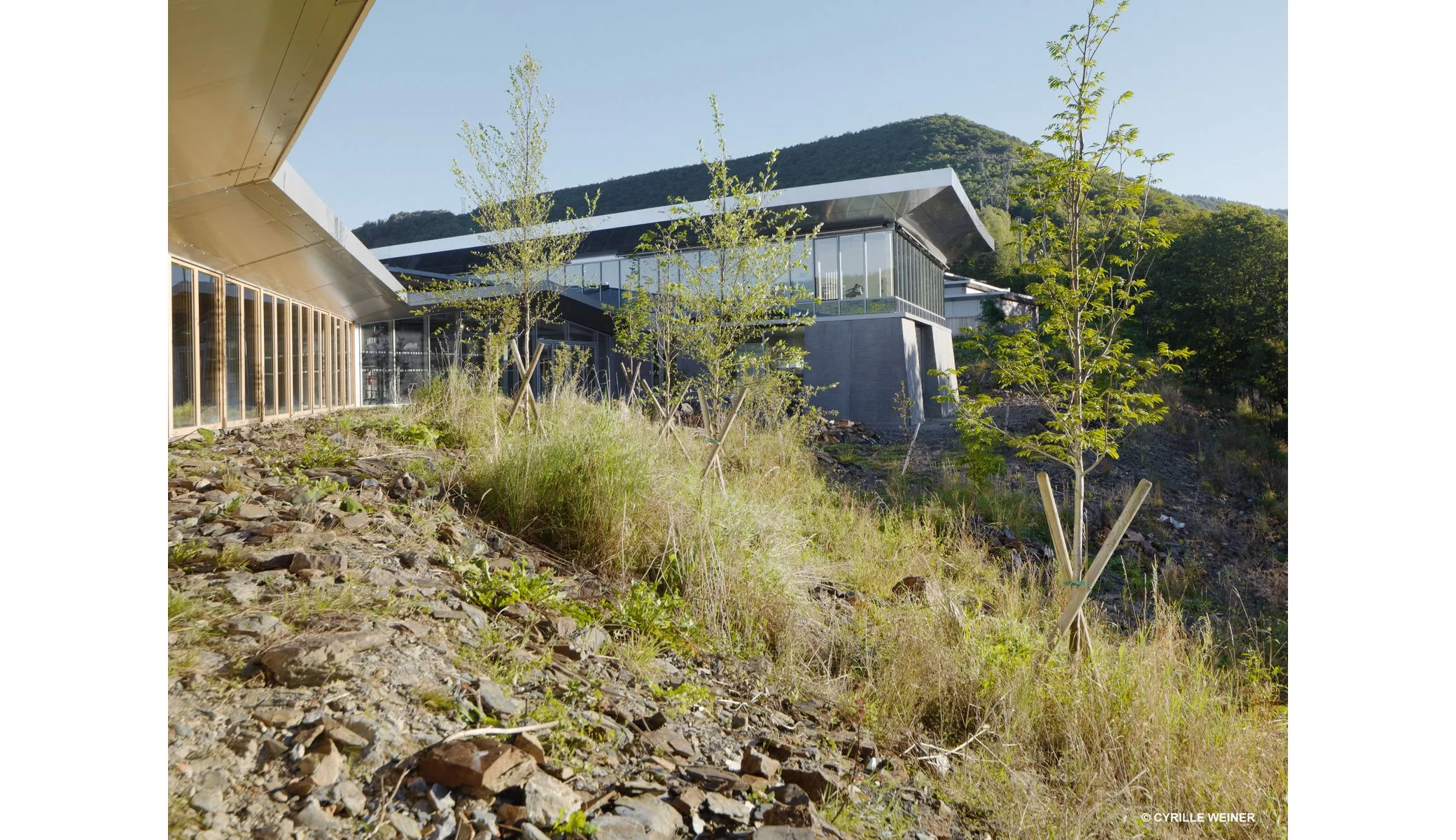
The project's materiality extends this desire for **territorial anchoring**. The facades don't seek to assert themselves as autonomous vertical planes. On the contrary, the terrain's modeling partially absorbs them, erases them in places. The roofs undulate in echo of the valley's curves, creating visual continuity between the built and the natural. We worked on **extensive roof greening**, not as a cosmetic gesture, but as an assumed camouflage strategy. The building flirts with invisibility, it blends into its context while remaining perfectly legible as a contemporary facility.
This approach also responds to a coherent **environmental approach**. The roof greening participates in stormwater management, improves thermal inertia, promotes local biodiversity. The work on terracing limits emerging built volumes, reduces visual impact, naturally protects certain facades from prevailing winds. Natural circulation, favored wherever possible, reduces dependence on elevators. Systematic orientation toward the valley optimizes passive solar gains in winter while allowing natural cross-ventilation in summer. We didn't conceive sustainable development as a catalog of technical solutions applied afterward, but as the logical result of **site intelligence**.
Lycée Jean Moulin has become, over the eight years separating the competition from its completion, a place inhabited in all its complexity. Students appropriate the ramps as informal sociability spaces, the green terraces become pause areas, the central agora functions as a true forum. The campus is not merely an efficient school facility: it is a **fragment of city in itself**, with its streets, its squares, its belvederes. This programmatic density creates a life that extends far beyond school hours, notably thanks to the hotel facility and boarding that maintain a continuous presence.
More than a building placed in the landscape, Lycée Jean Moulin is a **constructed landscape**. It doesn't oppose the Ardennes geography: it becomes an element of it, it amplifies its qualities, it reveals its often discreet beauty. Each morning, arriving at this campus nestled against the mountain, the lycée students experience an architecture that doesn't seek to dominate its context but to dialogue with it, to inscribe itself there with humility and precision.
The program went far beyond that of a conventional lycée. The Champagne-Ardennes Region wanted to create a true **living campus**, integrating the school, sports fields, a gymnasium, staff housing, a hotel facility, and boarding facilities. This programmatic diversity seemed to us an opportunity rather than a difficulty: it allowed us to conceive the project not as a monolithic building, but as a **built archipelago**, a series of distinct entities connected by a circulation system that follows the relief. Each function finds its place in the site's geography, at the height that suits it, according to its degree of intimacy or publicness.
With **Duncan Lewis, Tanguy Vermet, and Jean de Giacinto**, we developed an architectural approach radical in its simplicity: making the slope itself the very structure of the project. Rather than leveling the terrain to create an artificial platform, we chose to **terrace in successive tiers**, allowing each programmatic layer to anchor at a different level. The buildings stack and partially overlap, creating a spatial depth that multiplies perceptions. A system of **gentle circulation paths** winds across the site, connecting the different levels through generous ramps rather than stairs. These pathways are not mere functional devices: they constitute the project's framework, its circulatory system.
At the heart of the campus, a central volume housing vertical circulation becomes a **covered agora**, a meeting and exchange place imbued with the surrounding geography. The ramps attach to this core, creating oblique perspectives, low-angle views toward the valley, moments of pause where the landscape frames itself naturally. Each landing becomes a potential belvedere. Students don't endure circulation as a chore: they traverse the building by traversing the landscape, they ascend to their classrooms as one climbs a mountain trail. This almost **topographical dimension of architecture** transforms daily movements into conscious spatial experience.
The orientation of the volumes obeys a simple and absolute rule: **all spaces look toward the valley**. Whatever their function, classroom, boarding room, sports hall, each place benefits from an opening toward the grand landscape. This obsession with the view is not a formal luxury: it anchors users in their territory, it reminds them daily that this lycée is not disconnected from the ground, that it belongs to this Ardennes geography. The windows don't cut out fragments of landscape: they offer generous, almost cinematic panoramas.
The project's materiality extends this desire for **territorial anchoring**. The facades don't seek to assert themselves as autonomous vertical planes. On the contrary, the terrain's modeling partially absorbs them, erases them in places. The roofs undulate in echo of the valley's curves, creating visual continuity between the built and the natural. We worked on **extensive roof greening**, not as a cosmetic gesture, but as an assumed camouflage strategy. The building flirts with invisibility, it blends into its context while remaining perfectly legible as a contemporary facility.
This approach also responds to a coherent **environmental approach**. The roof greening participates in stormwater management, improves thermal inertia, promotes local biodiversity. The work on terracing limits emerging built volumes, reduces visual impact, naturally protects certain facades from prevailing winds. Natural circulation, favored wherever possible, reduces dependence on elevators. Systematic orientation toward the valley optimizes passive solar gains in winter while allowing natural cross-ventilation in summer. We didn't conceive sustainable development as a catalog of technical solutions applied afterward, but as the logical result of **site intelligence**.
Lycée Jean Moulin has become, over the eight years separating the competition from its completion, a place inhabited in all its complexity. Students appropriate the ramps as informal sociability spaces, the green terraces become pause areas, the central agora functions as a true forum. The campus is not merely an efficient school facility: it is a **fragment of city in itself**, with its streets, its squares, its belvederes. This programmatic density creates a life that extends far beyond school hours, notably thanks to the hotel facility and boarding that maintain a continuous presence.
More than a building placed in the landscape, Lycée Jean Moulin is a **constructed landscape**. It doesn't oppose the Ardennes geography: it becomes an element of it, it amplifies its qualities, it reveals its often discreet beauty. Each morning, arriving at this campus nestled against the mountain, the lycée students experience an architecture that doesn't seek to dominate its context but to dialogue with it, to inscribe itself there with humility and precision.
- Lieu
- Revin
- Nature
- Enseignement
- Surface
- 15 000 m²
- Budget
- 27
- Concours
- 2008
- Livraison
- 2016
- MOA
- Région Champagne Ardennes
- Co-architectes
- Duncan Lewis, Tanguy Vermet, Jean de Giacinto
Distinctions