
Asnières Tower
Residential complex in Asnières-sur-Seine, positive vegetation balance, management of planted containers and soft architecture inspired by balsa wood models.
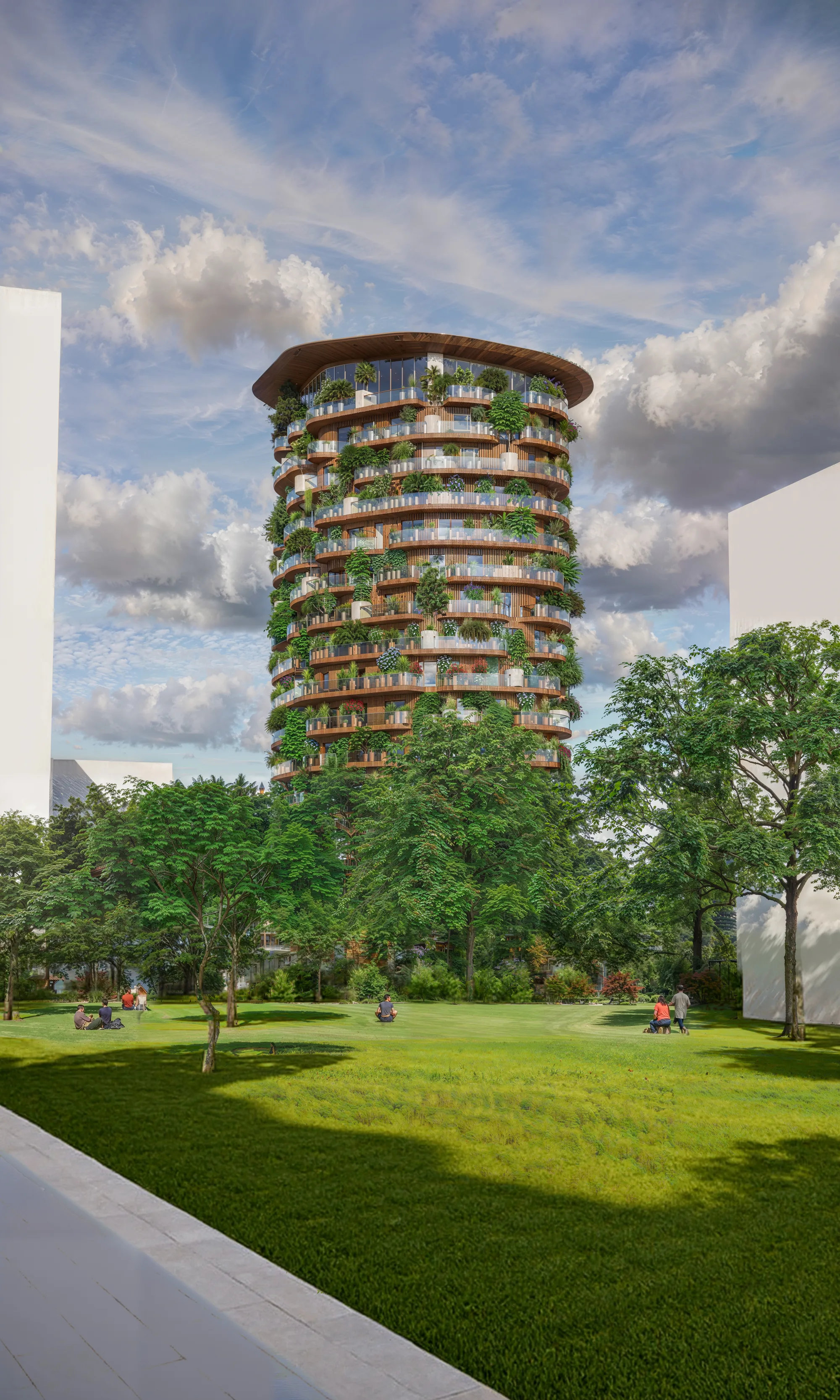
In Asnières-sur-Seine, we developed a residential complex and nursery school that questions the place of vegetation in dense urban environments. The site, in transition between suburban housing and consolidated urban fabric, called for architecture capable of responding both to densification expectations and a collective desire for nature in the city. **We did not want to graft vegetation onto standard buildings, but rather to think of plants as a constitutive material of the project**, on the same level as brick or concrete.
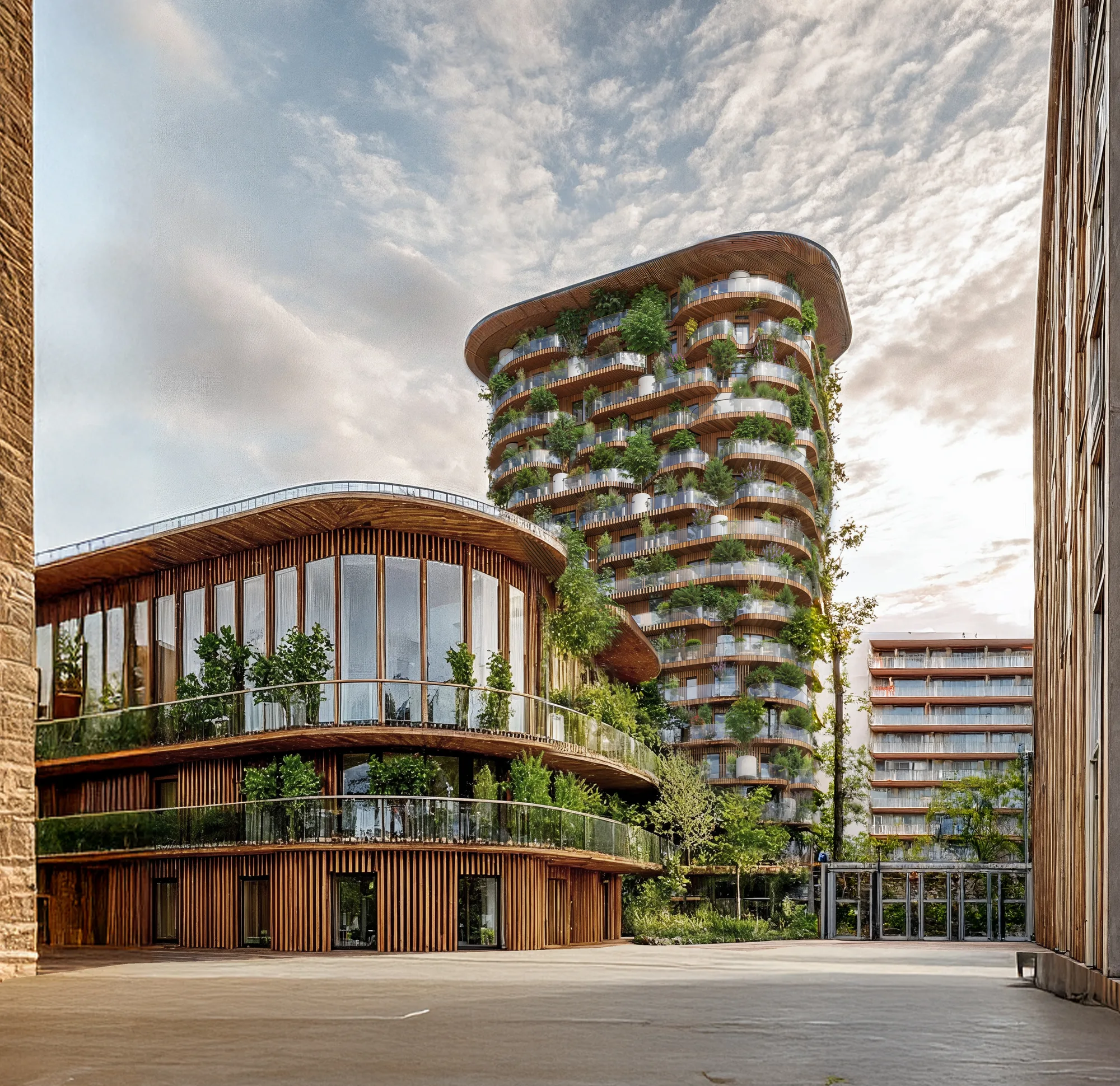
The program articulates two distinct scales: a nursery school on the ground floor, opening onto a generous and protected courtyard, and above, varied housing units (from one-bedroom to four-bedroom) organized to maximize cross-ventilation, dual orientations, and above all, direct access to the outdoors. **Each apartment has a calibrated outdoor extension**, whether a continuous balcony, deep loggia, or corner terrace. This systematic repetition creates horizontal breathing room, a habitable depth that dialogues with the sky and the street.
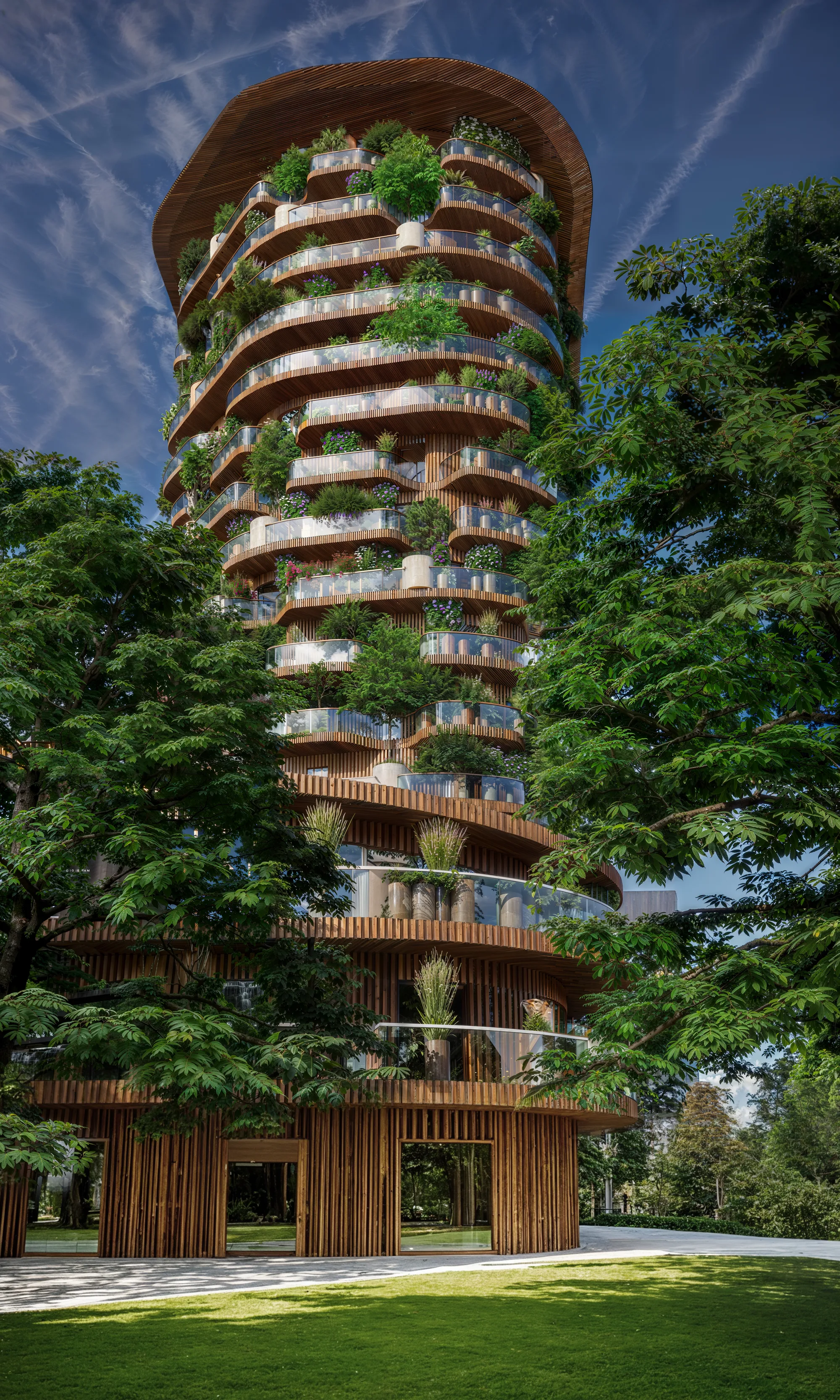
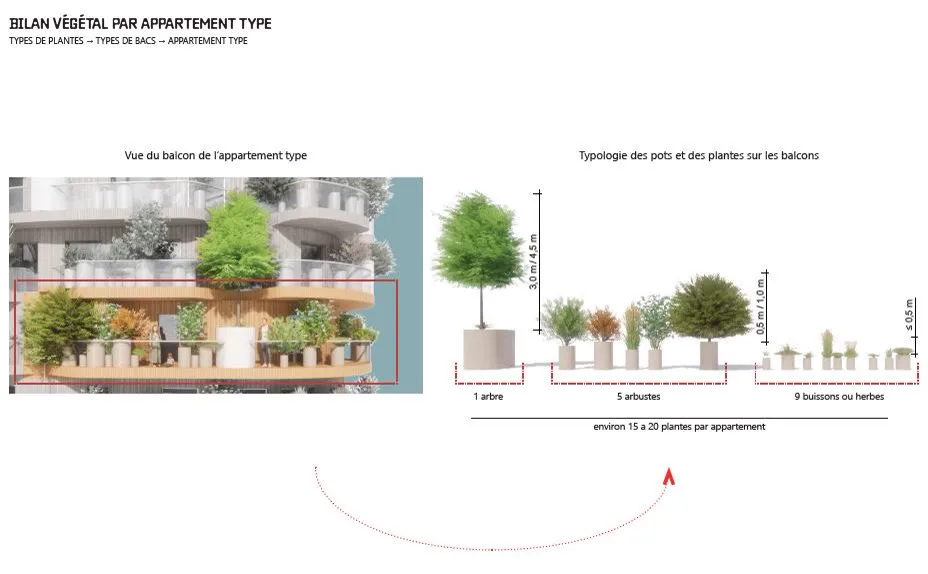
The **positive vegetation balance** is at the heart of our approach. From the initial sketch, we worked with landscape architects to determine the necessary soil quantity, drainage systems, exposure of each facade, and suitable plant species. No greenwashing: each pot, each planter is sized to accommodate shrubs, grasses, and perennials capable of withstanding the climatic variations of Île-de-France (summer heat waves, winter frosts, prevailing winds). We favored indigenous and hardy species, capable of developing without intensive watering or heavy maintenance. The balconies thus become true micro-gardens, supporting local biodiversity (pollinating insects, birds). The inhabitant is not a mere spectator but becomes a gardener, manager of a fragment of nature for which they are responsible. This active relationship with vegetation transforms the relationship to housing: one observes, prunes, harvests, composes.
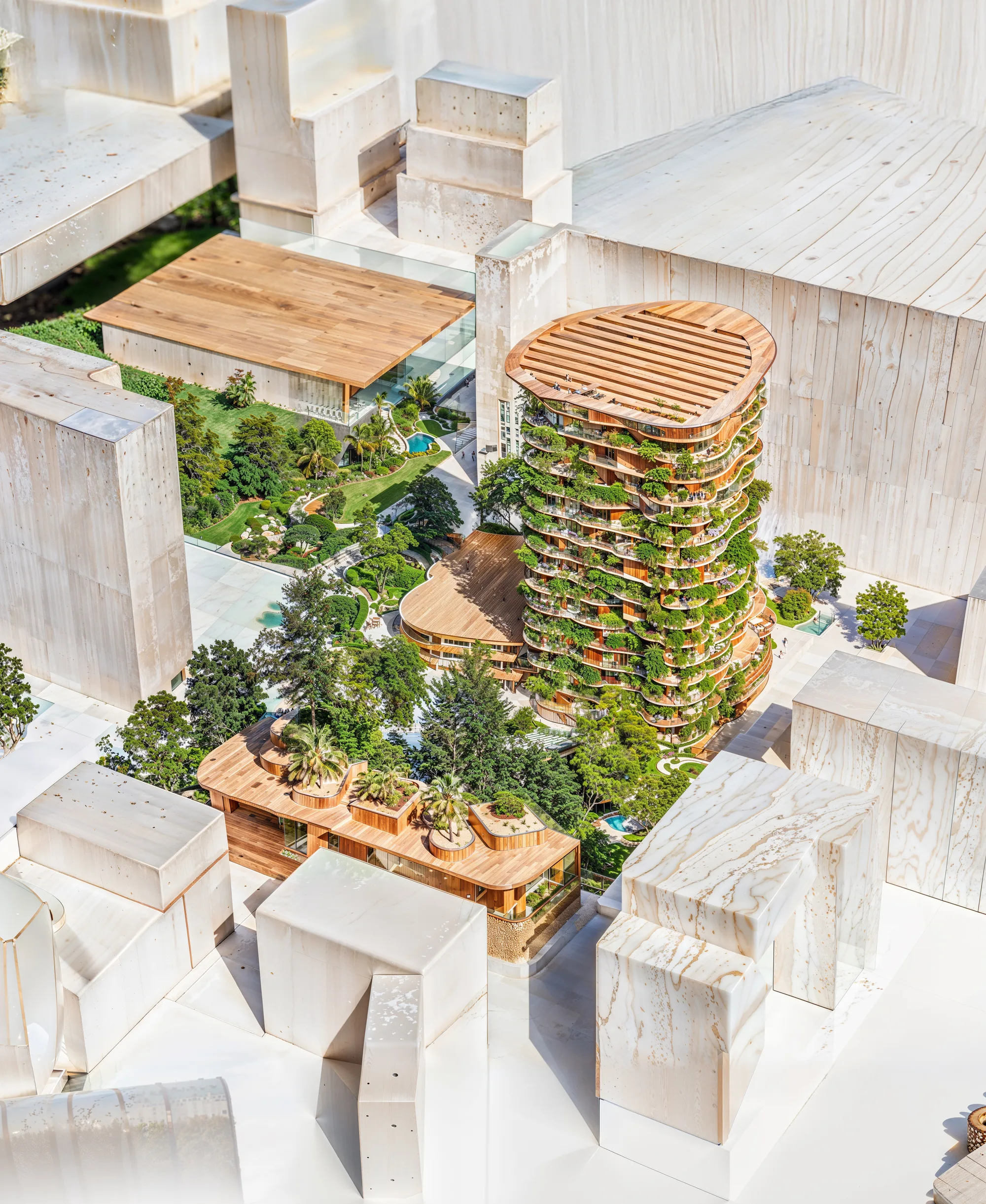
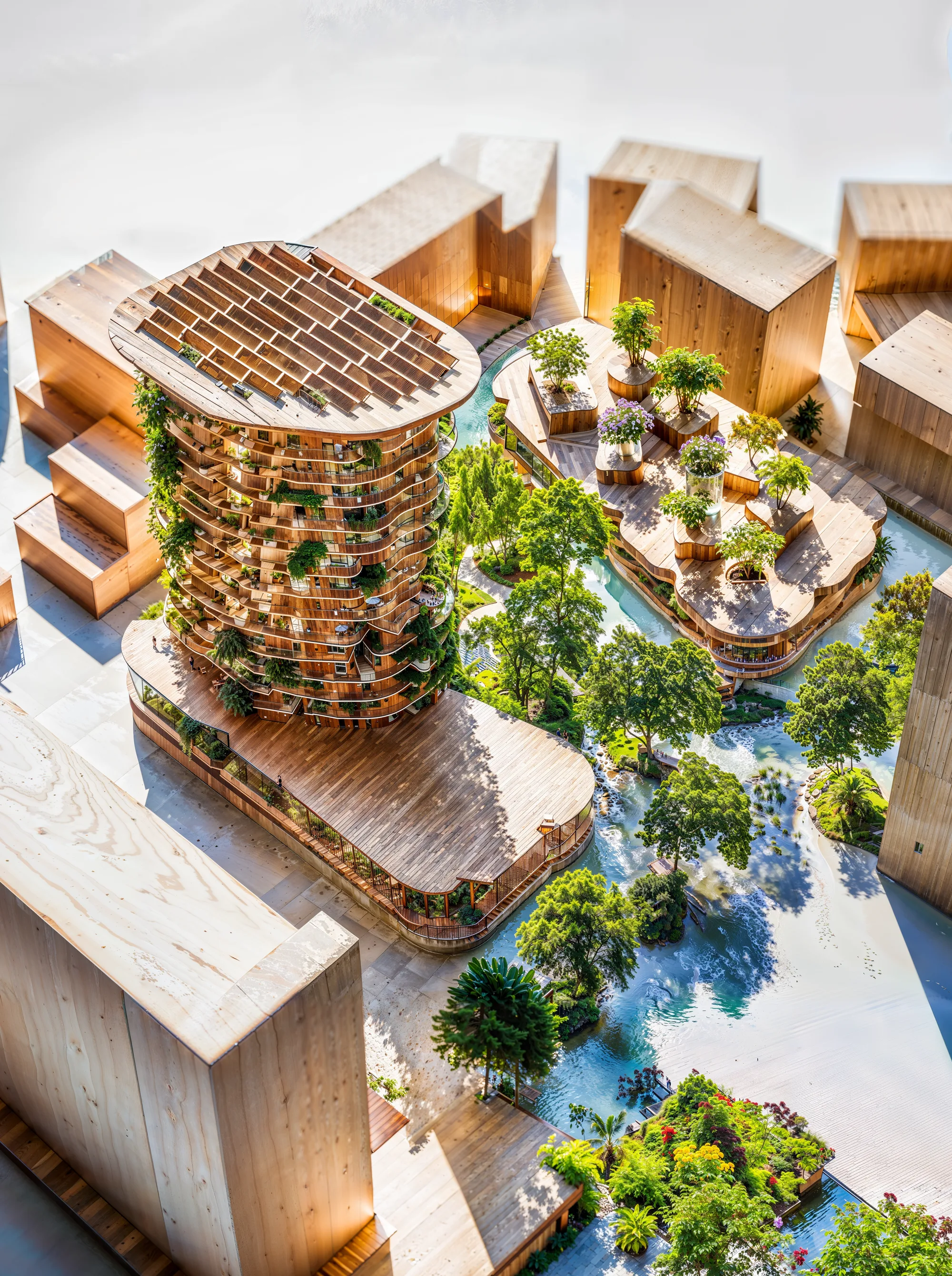
**The architecture itself draws inspiration from this constructive and vegetal logic.** During the early design phases, we created a balsa wood model, a light and rigid material that demands great rigor in cutting and assembly. Balsa does not forgive approximation: each strip must be calibrated, each notch precise. This formal constraint guided the design of the facades, their rhythm, the depth of the setbacks. The projecting elements (balconies, canopies, setbacks) are conceived as cut planes, stacked, articulated. This structural legibility is found in the built project: slender metal railings, cantilevered slabs, generous glazed walls. Everything contributes to a refined, almost diagrammatic expression, where each constructive gesture is visible, assumed.
The **materiality of the project** extends this desire for simplicity and honesty. We opted for a mixed concrete and wood structure, allowing us to reduce the carbon footprint while guaranteeing the programmatic flexibility necessary for mixed uses (school, housing). The facades are treated with light, matte mineral render, whose texture evolves with daylight. This neutral color choice allows the vegetation to take its full place, without chromatic competition. The aluminum windows, sober and generous, offer framed views of the neighborhood and let in abundant light. Inside, wood floors and dry partition walls reduce construction disturbances and facilitate future changes (reversibility, plan adaptation). This sober constructive approach, economical in material and embodied energy, is part of a comprehensive environmental approach: waste limitation, use of local supply chains, anticipation of reuse.
**The nursery school, at the base of the project, benefits from independent access and a direct relationship to a pedagogical garden.** The classrooms, facing due south, open onto a planted courtyard where children can play, observe, and learn. This interface between inside and outside, filtered by awnings and wooden screens, creates a bright and protected atmosphere. The circulation spaces are generous, the ceiling heights comfortable. We ensured that each room (classrooms, dormitories, dining hall) benefits from cross views, natural light, and cross ventilation.
Above, the housing units unfold in tiers, creating successive terraces and unobstructed views. This **layered architecture** recalls modern compositions while integrating contemporary requirements of energy performance (reinforced insulation, dual-flow ventilation, solar protection). Each landing serves a limited number of apartments, encouraging encounters and conviviality. The common spaces (lobbies, walkways, accessible rooftops) are conceived as shared living spaces, supporting informal uses (drying areas, shared gardens, play spaces).
This project for Asnières-sur-Seine testifies to our conviction: **architecture must be soft, generous, attentive to inhabitants and the living world.** It is not about producing a spectacular object, but creating the conditions for sustainable, evolving housing, habitable in the full sense of the term. Vegetation is not an ornament, but an active, structuring component that engages the inhabitant in a sensitive relationship to time, seasons, and the cycle of life. This attention to material, construction, and use seems essential to us today for building resilient neighborhoods, capable of spanning decades without obsolescence or disaffection.
The program articulates two distinct scales: a nursery school on the ground floor, opening onto a generous and protected courtyard, and above, varied housing units (from one-bedroom to four-bedroom) organized to maximize cross-ventilation, dual orientations, and above all, direct access to the outdoors. **Each apartment has a calibrated outdoor extension**, whether a continuous balcony, deep loggia, or corner terrace. This systematic repetition creates horizontal breathing room, a habitable depth that dialogues with the sky and the street.
The **positive vegetation balance** is at the heart of our approach. From the initial sketch, we worked with landscape architects to determine the necessary soil quantity, drainage systems, exposure of each facade, and suitable plant species. No greenwashing: each pot, each planter is sized to accommodate shrubs, grasses, and perennials capable of withstanding the climatic variations of Île-de-France (summer heat waves, winter frosts, prevailing winds). We favored indigenous and hardy species, capable of developing without intensive watering or heavy maintenance. The balconies thus become true micro-gardens, supporting local biodiversity (pollinating insects, birds). The inhabitant is not a mere spectator but becomes a gardener, manager of a fragment of nature for which they are responsible. This active relationship with vegetation transforms the relationship to housing: one observes, prunes, harvests, composes.
**The architecture itself draws inspiration from this constructive and vegetal logic.** During the early design phases, we created a balsa wood model, a light and rigid material that demands great rigor in cutting and assembly. Balsa does not forgive approximation: each strip must be calibrated, each notch precise. This formal constraint guided the design of the facades, their rhythm, the depth of the setbacks. The projecting elements (balconies, canopies, setbacks) are conceived as cut planes, stacked, articulated. This structural legibility is found in the built project: slender metal railings, cantilevered slabs, generous glazed walls. Everything contributes to a refined, almost diagrammatic expression, where each constructive gesture is visible, assumed.
The **materiality of the project** extends this desire for simplicity and honesty. We opted for a mixed concrete and wood structure, allowing us to reduce the carbon footprint while guaranteeing the programmatic flexibility necessary for mixed uses (school, housing). The facades are treated with light, matte mineral render, whose texture evolves with daylight. This neutral color choice allows the vegetation to take its full place, without chromatic competition. The aluminum windows, sober and generous, offer framed views of the neighborhood and let in abundant light. Inside, wood floors and dry partition walls reduce construction disturbances and facilitate future changes (reversibility, plan adaptation). This sober constructive approach, economical in material and embodied energy, is part of a comprehensive environmental approach: waste limitation, use of local supply chains, anticipation of reuse.
**The nursery school, at the base of the project, benefits from independent access and a direct relationship to a pedagogical garden.** The classrooms, facing due south, open onto a planted courtyard where children can play, observe, and learn. This interface between inside and outside, filtered by awnings and wooden screens, creates a bright and protected atmosphere. The circulation spaces are generous, the ceiling heights comfortable. We ensured that each room (classrooms, dormitories, dining hall) benefits from cross views, natural light, and cross ventilation.
Above, the housing units unfold in tiers, creating successive terraces and unobstructed views. This **layered architecture** recalls modern compositions while integrating contemporary requirements of energy performance (reinforced insulation, dual-flow ventilation, solar protection). Each landing serves a limited number of apartments, encouraging encounters and conviviality. The common spaces (lobbies, walkways, accessible rooftops) are conceived as shared living spaces, supporting informal uses (drying areas, shared gardens, play spaces).
This project for Asnières-sur-Seine testifies to our conviction: **architecture must be soft, generous, attentive to inhabitants and the living world.** It is not about producing a spectacular object, but creating the conditions for sustainable, evolving housing, habitable in the full sense of the term. Vegetation is not an ornament, but an active, structuring component that engages the inhabitant in a sensitive relationship to time, seasons, and the cycle of life. This attention to material, construction, and use seems essential to us today for building resilient neighborhoods, capable of spanning decades without obsolescence or disaffection.
- Lieu
- Asnières-sur-Seine, France
- Nature
- Logements
- Surface
- Confidentiel
- Budget
- Confidentiel
- Concours
- 2024
- MOA
- Confidentiel