
A10 Tower, Tours
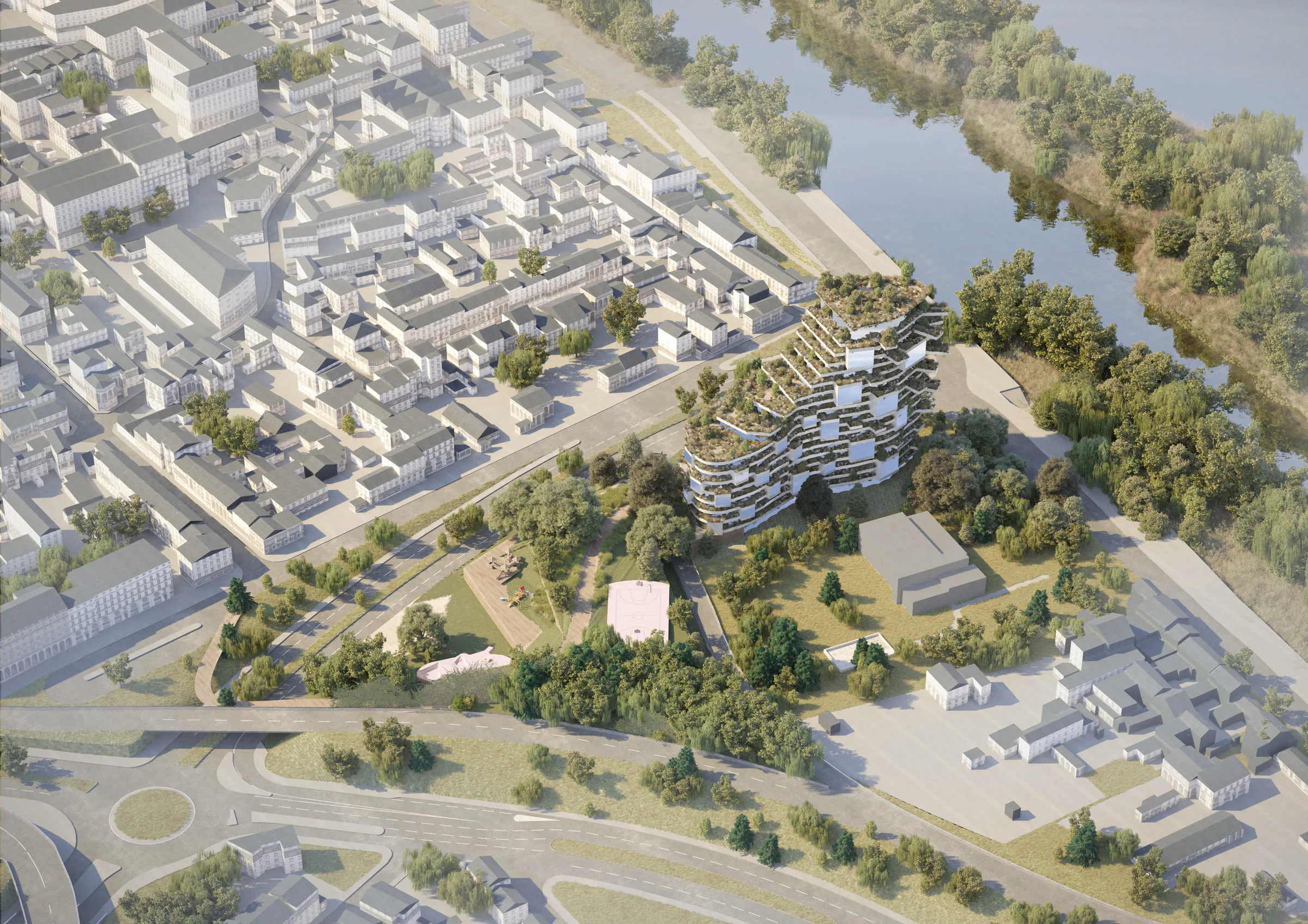
An inhabited tower at the crossroads of the A10 highway, the Loire River, and the roundabout, a vegetal landmark at the entrance to Tours, conceived with botanist Claude Figureau.
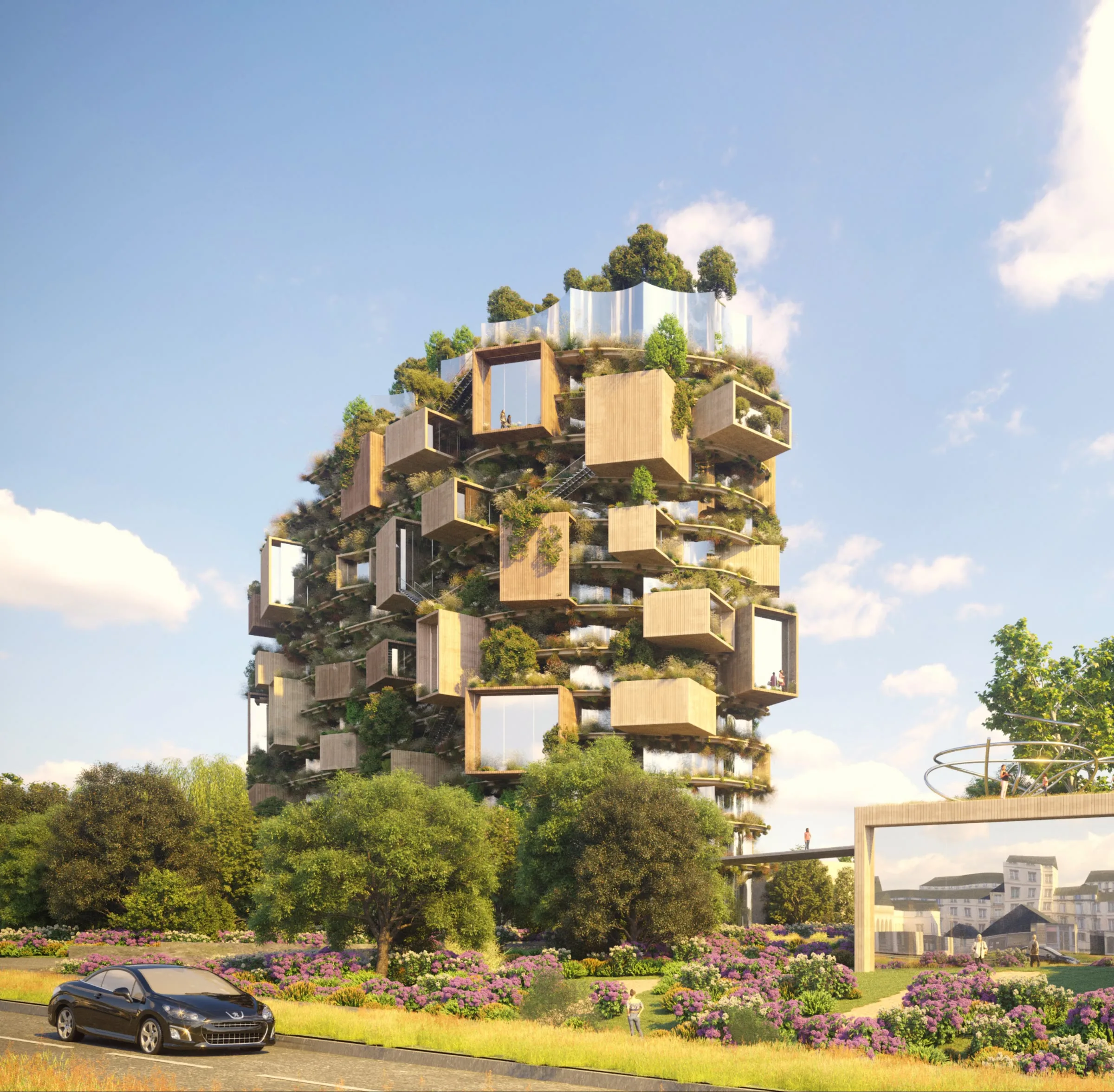
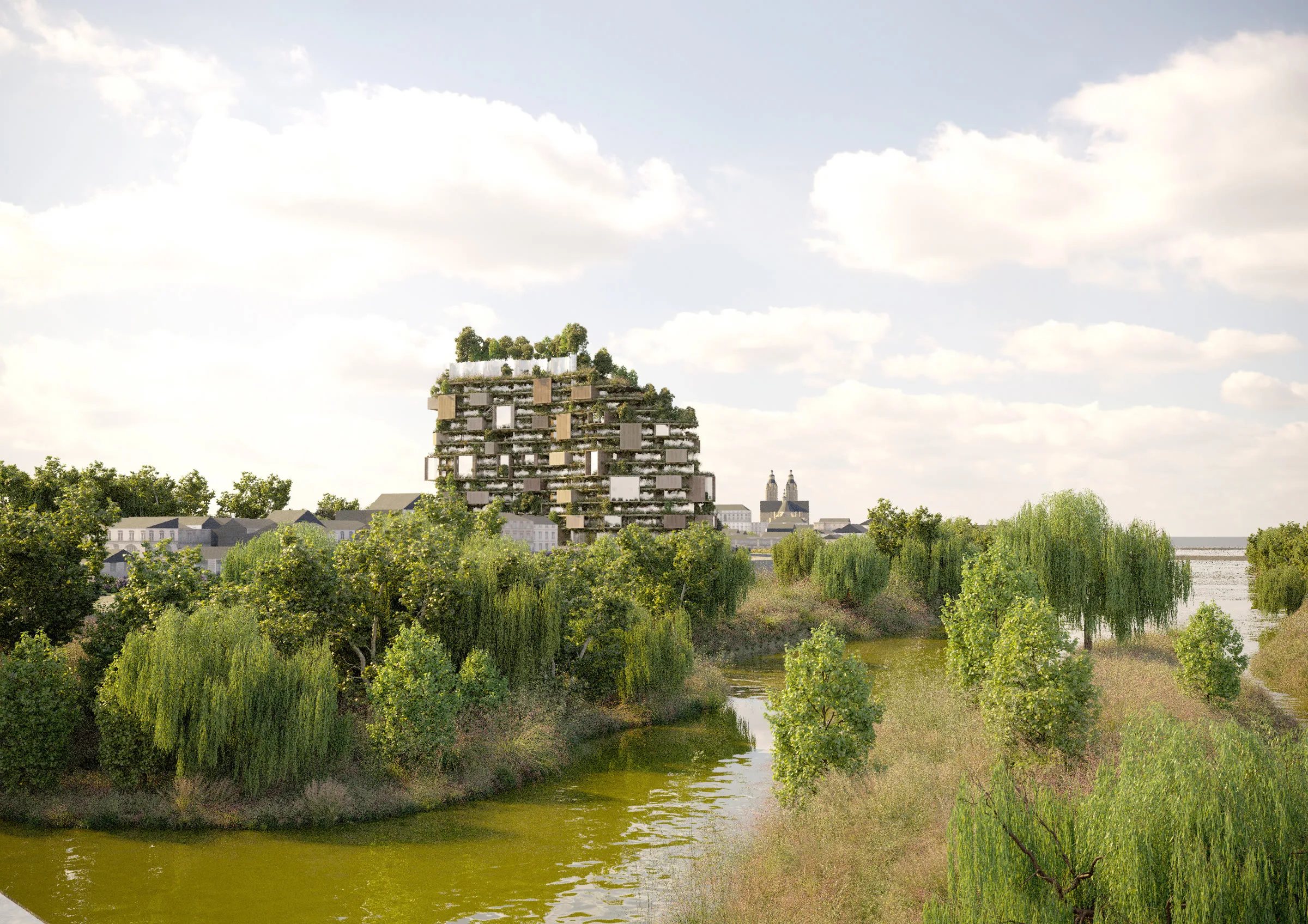
At the intersection of the A10 highway, the Loire River, and the large roundabout marking the northern entrance to Tours, we imagined a building capable of transforming a roadway signal into an inhabited landmark. The A10 Tower is born from a fertile contradiction: that of a site spectacular in its scale and exposure, but also profoundly marked by highway infrastructure, noise, and speed. Rather than denying this contemporary condition, we sought to sublimate it by proposing a **landscape-architecture**, a vertical fragment of nature that detaches itself from the surrounding mineral to constitute a vegetal anchor point at the territorial scale.
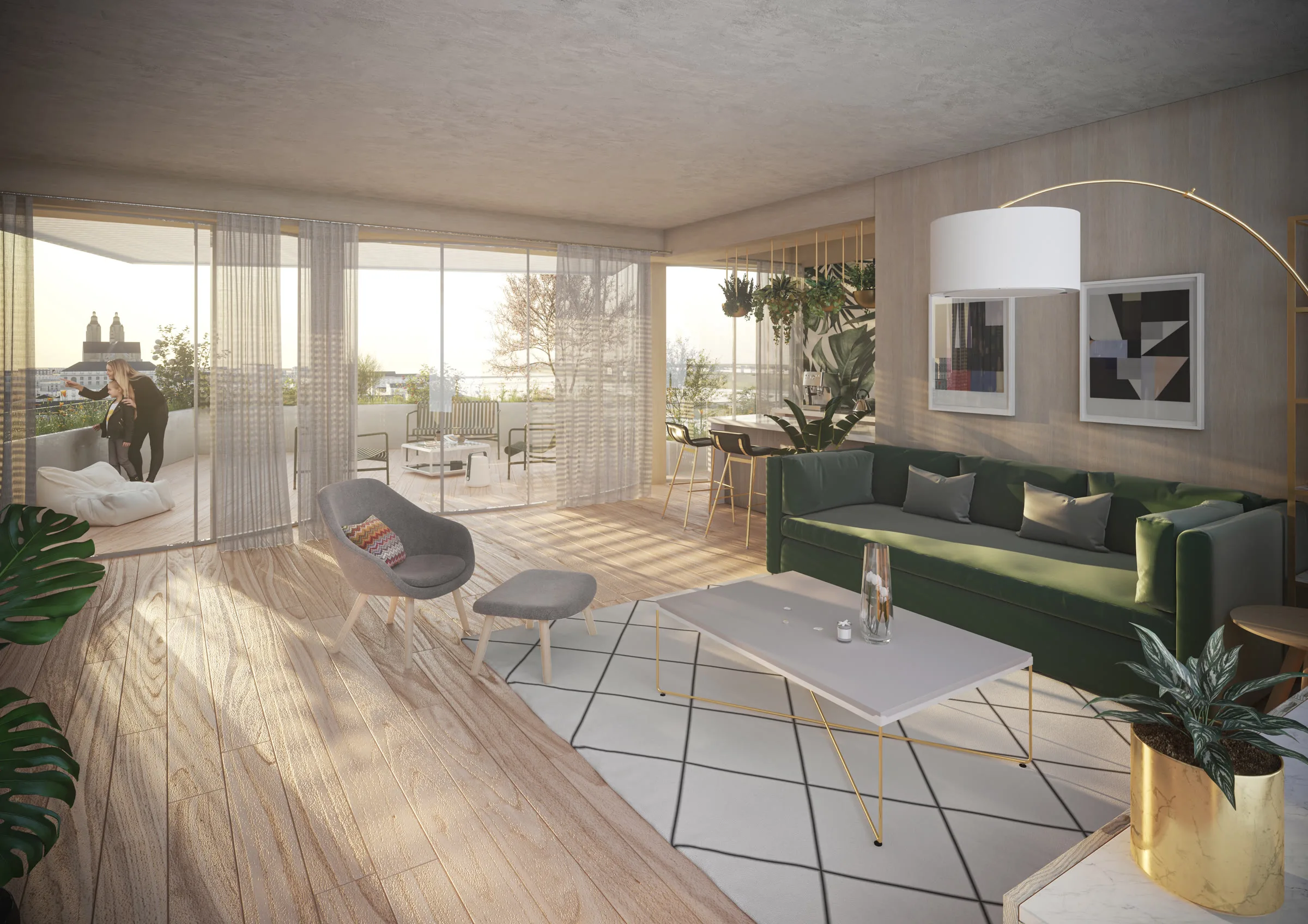
The program combines student housing and family housing, an unusual mix that led us to rethink the cohabitation of typologies and ways of living. We organized the units around a **central planted core**, a common breathing space that crosses the tower from side to side and allows each dwelling to benefit from dual orientation. This vegetal vertebral column is not simply a light well, but a true biotope cultivated at altitude, an appropriable collective space that reinvents the notion of shared garden in verticality.
The collaboration with **Claude Figureau**, botanist and landscape designer, was essential from the first sketches. We did not want a decorative overlay of vegetation, but an intimate association between built structure and living systems. Together, we selected **pioneer plants**, resilient species capable of adapting to the specific conditions of the site (exposure to winds, atmospheric pollution, thermal amplitude) and to the tower's own microclimate. Grasses, perennials with low water needs, shrubs adapted to the Loire Valley climate compose an evolving plant palette, conceived to grow with the building and to require minimal maintenance.
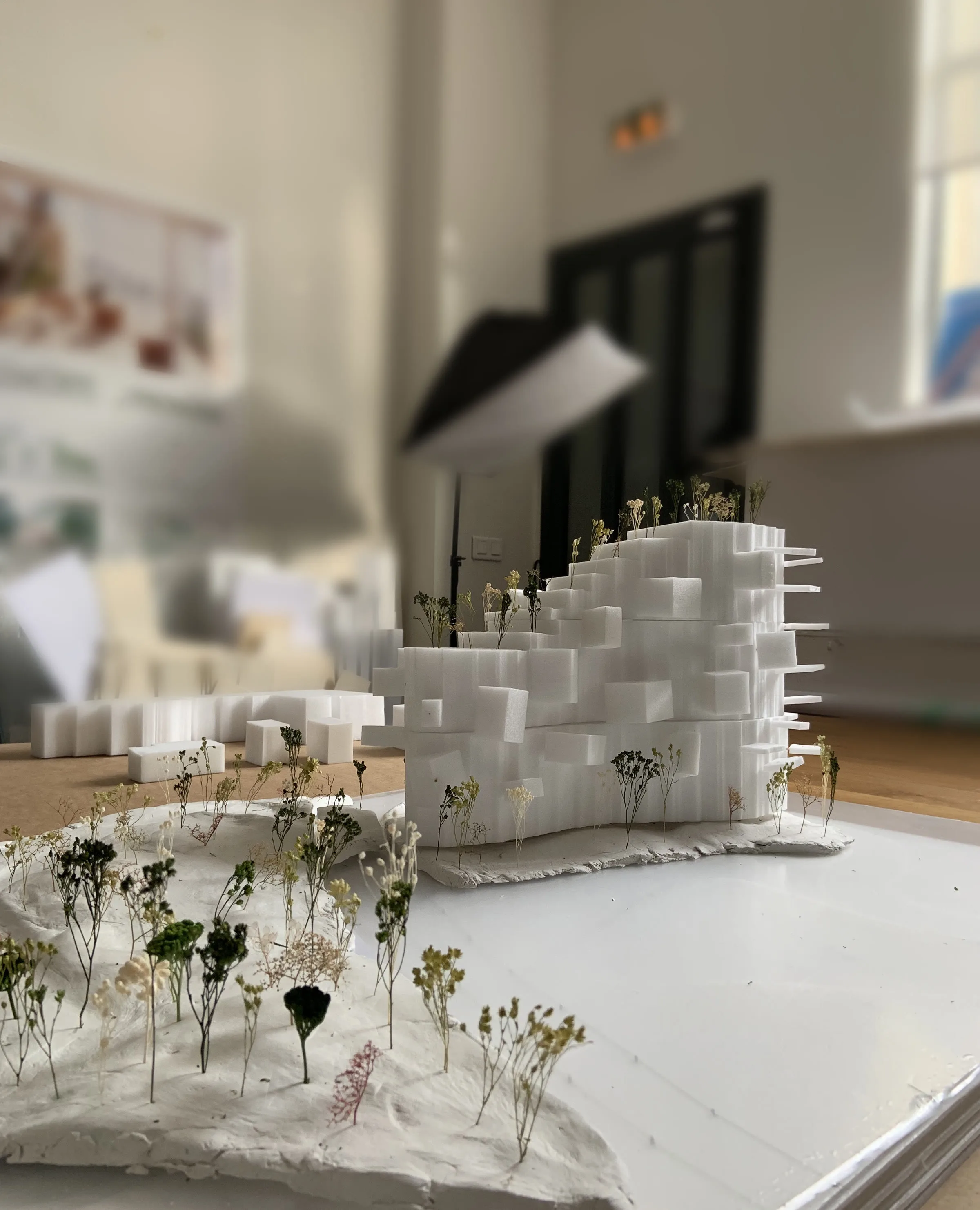
The **facades become habitat for biodiversity**. We designed continuous balconies that resemble suspended terraces, horizontal strata where vegetation takes its place in planters integrated into the structure. These planted walkways create microclimates, attenuate thermal variations, offer natural shade zones in summer. They also constitute ecological corridors in height, niches for birdlife and pollinating insects. The tower does not merely accommodate its human inhabitants, it becomes a **hybrid ecosystem** where various forms of life coexist.
Structurally, we opted for a **central concrete core** that concentrates vertical circulation and networks, thus freeing the peripheral floors for housing. This organization minimizes the ground footprint and optimizes structural performance while facilitating irrigation of the vegetal core by gravity. The floors are conceived as light platforms, partially perforated to allow light to filter down to the lower levels of the central garden. The balcony railings integrate fixing systems for the planted containers, avoiding any subsequent additions and guaranteeing overall formal coherence.
The question of **water management** was central to our environmental approach. We imagined a rainwater collection and redistribution system that primarily supplies the planted core and facade planters. Greywater from the dwellings is also treated and reused for irrigation, drastically reducing potable water consumption. This closed cycle makes the tower an almost autonomous organism in terms of water, a necessity in a context of resource scarcity. Vegetated roofs complete this system by retaining part of the precipitation and limiting runoff.
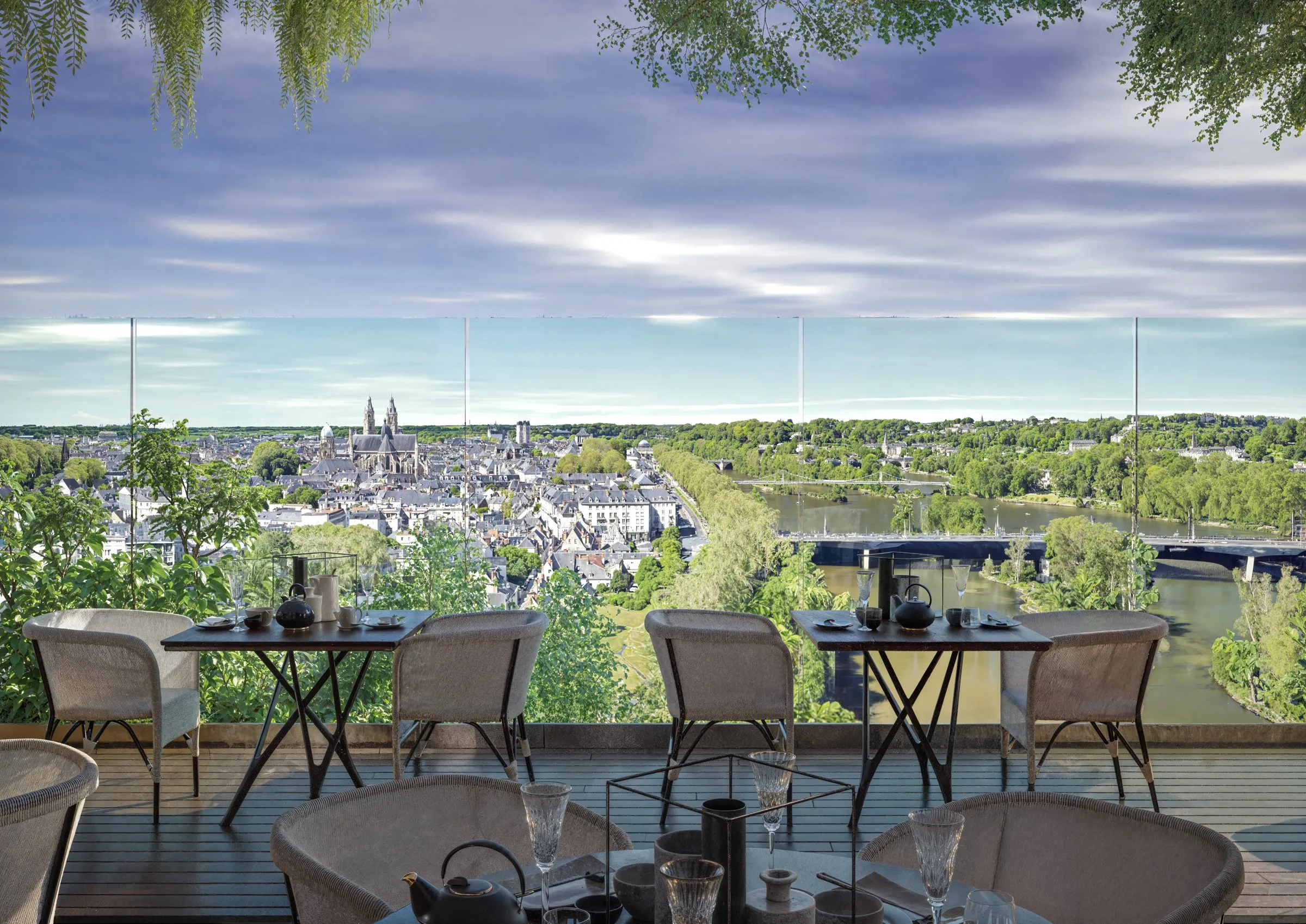
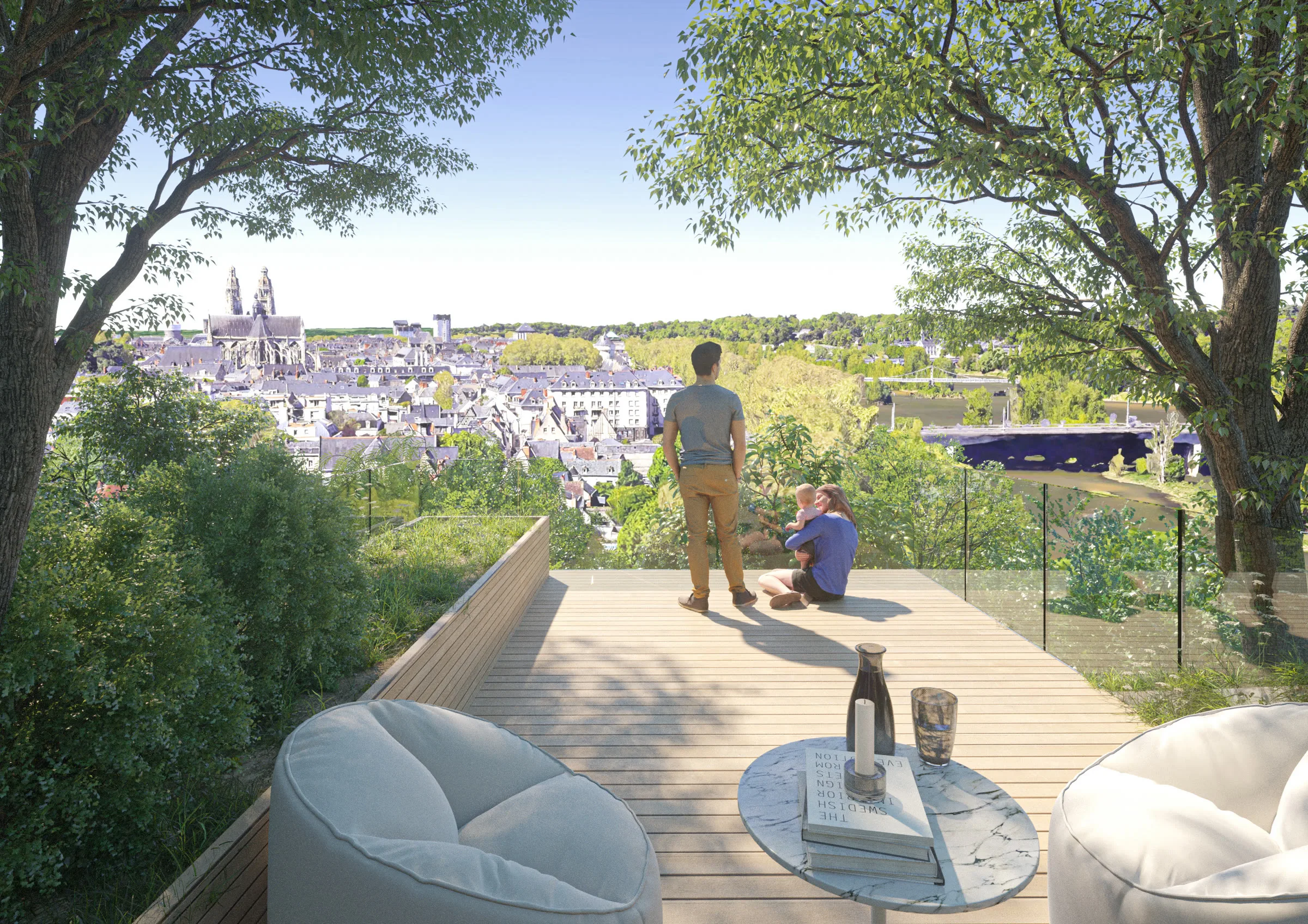
The relationship to the **great Loire Valley landscape** guided us throughout the project. From the dwellings, views of the Loire unfold broadly, and we worked on the orientation of the balconies to maximize these perspectives while creating visual and acoustic protections vis-à-vis the highway. The tower does not dominate the landscape, it **continues it in verticality**, like a natural geological accident where vegetation has taken over. This architectural gesture claims a strong presence without aggression, an ecological signal that perhaps prefigures what other city entrances could become, transition places where road infrastructure coexists with cultivated nature.
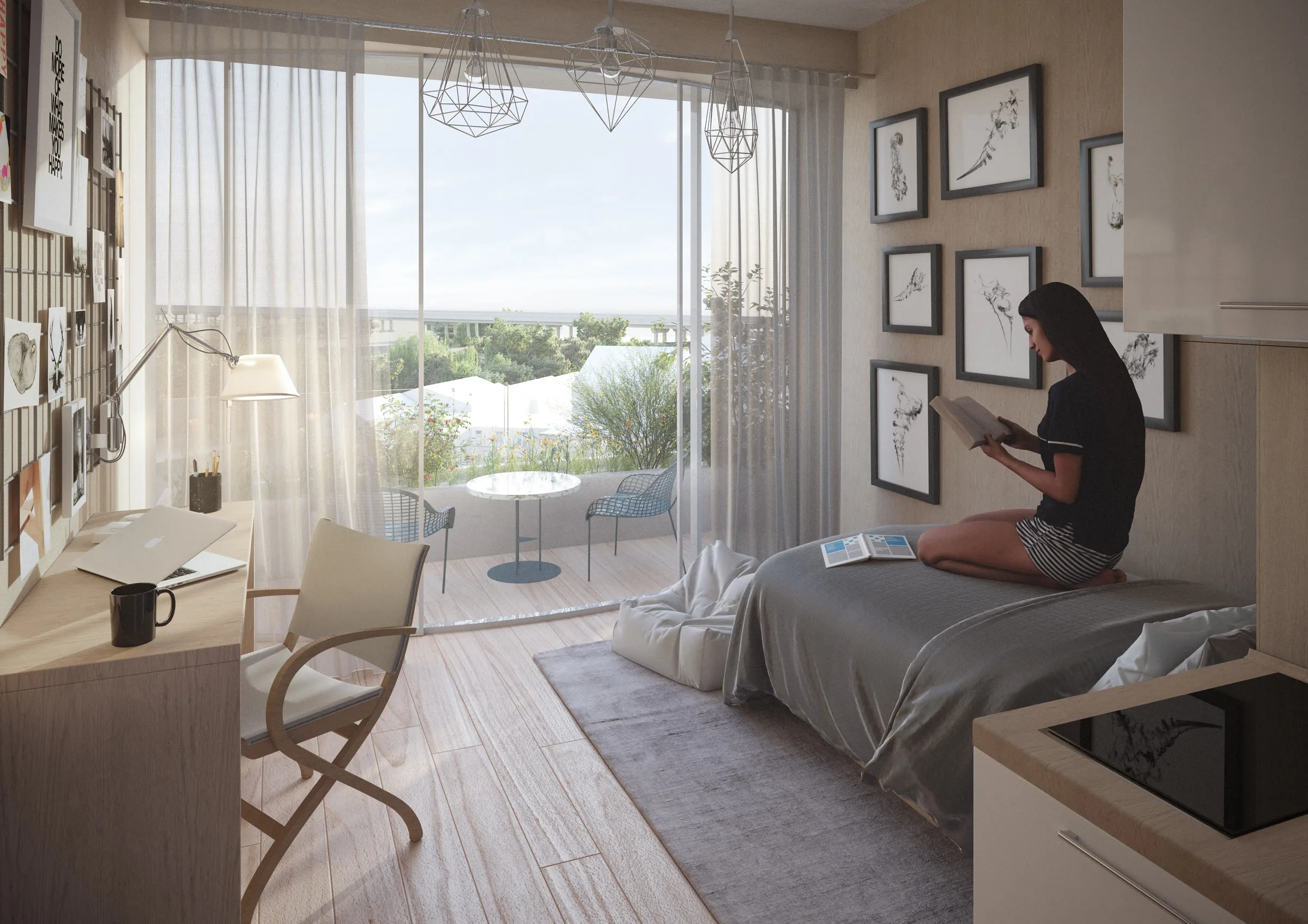
We also paid attention to the **transition spaces** between inside and outside. Each dwelling has a generous balcony, conceived as an extension of the living space, a place to cultivate, observe, and breathe. These thresholds become places of individual appropriation within a collective composition. Students as well as families can thus develop their own suspended garden, participate in the evolution of the tower's vegetal face. This participatory dimension seemed essential to us to guarantee the project's acceptance and sustainability.
The A10 Tower remains a concept, an architectural and landscape manifesto that questions our way of inhabiting infrastructures and their surroundings. It proposes a **model of vegetal urbanity** at the territorial scale, a landmark that does not seek to erase highway modernity but to transcend it through the living. In a context of ecological transition, urban densification, and search for new ways of living, this project outlines a possible path, that of an architecture that becomes a vertical garden, that welcomes and protects, that inhabits as much as it is inhabited.
The program combines student housing and family housing, an unusual mix that led us to rethink the cohabitation of typologies and ways of living. We organized the units around a **central planted core**, a common breathing space that crosses the tower from side to side and allows each dwelling to benefit from dual orientation. This vegetal vertebral column is not simply a light well, but a true biotope cultivated at altitude, an appropriable collective space that reinvents the notion of shared garden in verticality.
The collaboration with **Claude Figureau**, botanist and landscape designer, was essential from the first sketches. We did not want a decorative overlay of vegetation, but an intimate association between built structure and living systems. Together, we selected **pioneer plants**, resilient species capable of adapting to the specific conditions of the site (exposure to winds, atmospheric pollution, thermal amplitude) and to the tower's own microclimate. Grasses, perennials with low water needs, shrubs adapted to the Loire Valley climate compose an evolving plant palette, conceived to grow with the building and to require minimal maintenance.
The **facades become habitat for biodiversity**. We designed continuous balconies that resemble suspended terraces, horizontal strata where vegetation takes its place in planters integrated into the structure. These planted walkways create microclimates, attenuate thermal variations, offer natural shade zones in summer. They also constitute ecological corridors in height, niches for birdlife and pollinating insects. The tower does not merely accommodate its human inhabitants, it becomes a **hybrid ecosystem** where various forms of life coexist.
Structurally, we opted for a **central concrete core** that concentrates vertical circulation and networks, thus freeing the peripheral floors for housing. This organization minimizes the ground footprint and optimizes structural performance while facilitating irrigation of the vegetal core by gravity. The floors are conceived as light platforms, partially perforated to allow light to filter down to the lower levels of the central garden. The balcony railings integrate fixing systems for the planted containers, avoiding any subsequent additions and guaranteeing overall formal coherence.
The question of **water management** was central to our environmental approach. We imagined a rainwater collection and redistribution system that primarily supplies the planted core and facade planters. Greywater from the dwellings is also treated and reused for irrigation, drastically reducing potable water consumption. This closed cycle makes the tower an almost autonomous organism in terms of water, a necessity in a context of resource scarcity. Vegetated roofs complete this system by retaining part of the precipitation and limiting runoff.
The relationship to the **great Loire Valley landscape** guided us throughout the project. From the dwellings, views of the Loire unfold broadly, and we worked on the orientation of the balconies to maximize these perspectives while creating visual and acoustic protections vis-à-vis the highway. The tower does not dominate the landscape, it **continues it in verticality**, like a natural geological accident where vegetation has taken over. This architectural gesture claims a strong presence without aggression, an ecological signal that perhaps prefigures what other city entrances could become, transition places where road infrastructure coexists with cultivated nature.
We also paid attention to the **transition spaces** between inside and outside. Each dwelling has a generous balcony, conceived as an extension of the living space, a place to cultivate, observe, and breathe. These thresholds become places of individual appropriation within a collective composition. Students as well as families can thus develop their own suspended garden, participate in the evolution of the tower's vegetal face. This participatory dimension seemed essential to us to guarantee the project's acceptance and sustainability.
The A10 Tower remains a concept, an architectural and landscape manifesto that questions our way of inhabiting infrastructures and their surroundings. It proposes a **model of vegetal urbanity** at the territorial scale, a landmark that does not seek to erase highway modernity but to transcend it through the living. In a context of ecological transition, urban densification, and search for new ways of living, this project outlines a possible path, that of an architecture that becomes a vertical garden, that welcomes and protects, that inhabits as much as it is inhabited.
- Lieu
- Tours, France
- Nature
- Mixte
- Surface
- Confidentiel
- Budget
- Confidentiel
- Concours
- 2019
- MOA
- Confidentiel
- Co-architectes
- Claude Figureau (paysagiste)