
Nice 3.2
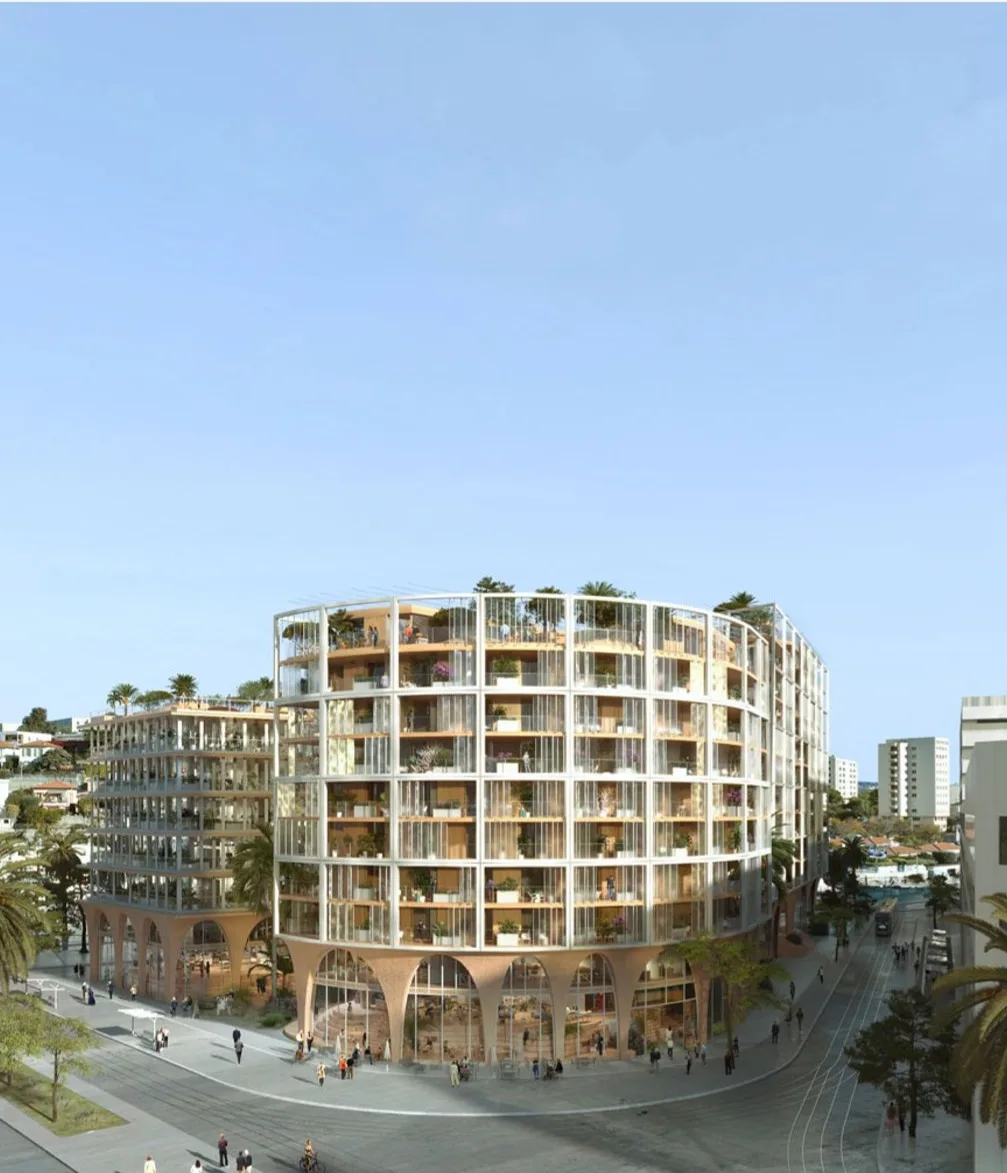
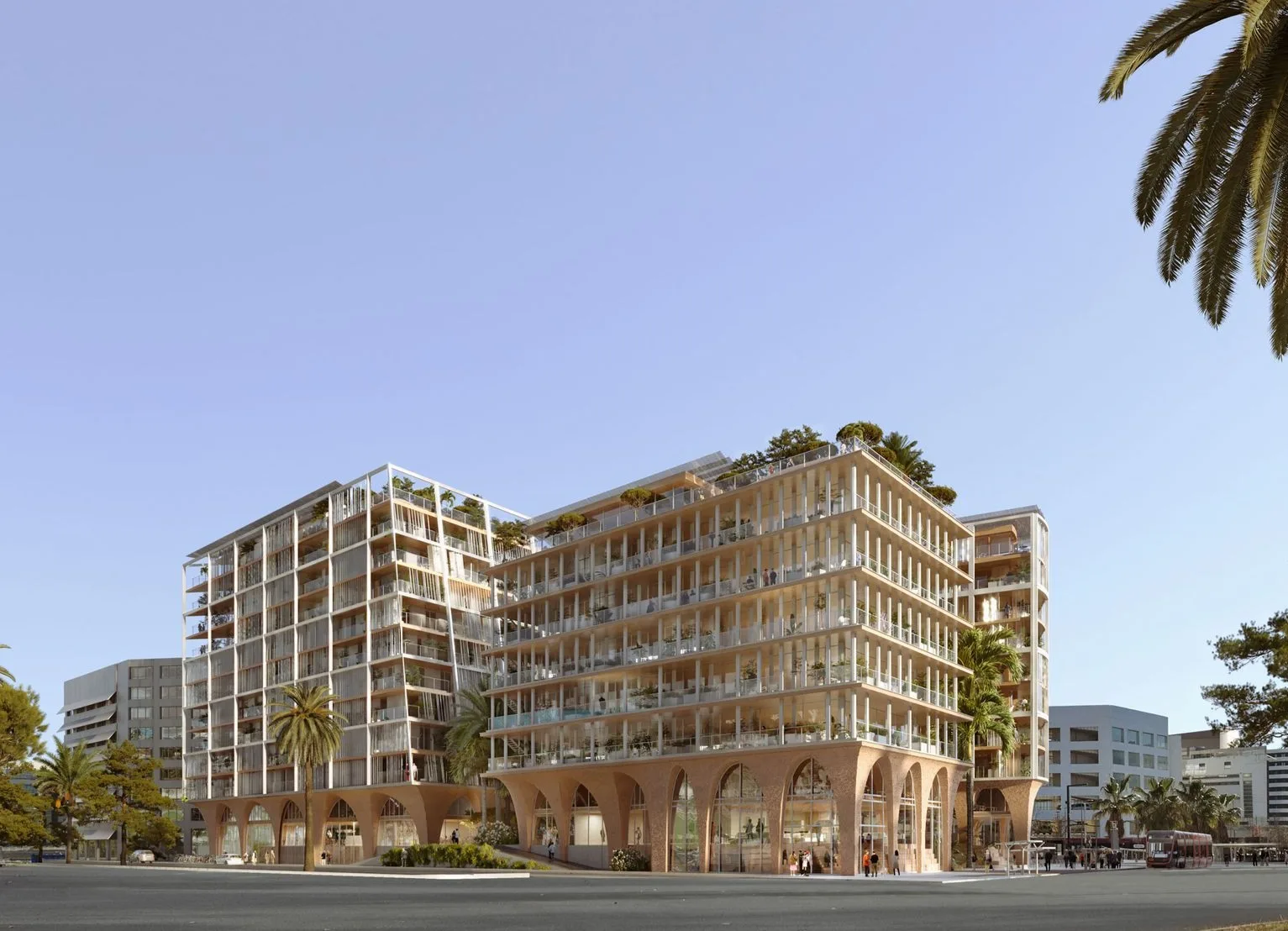
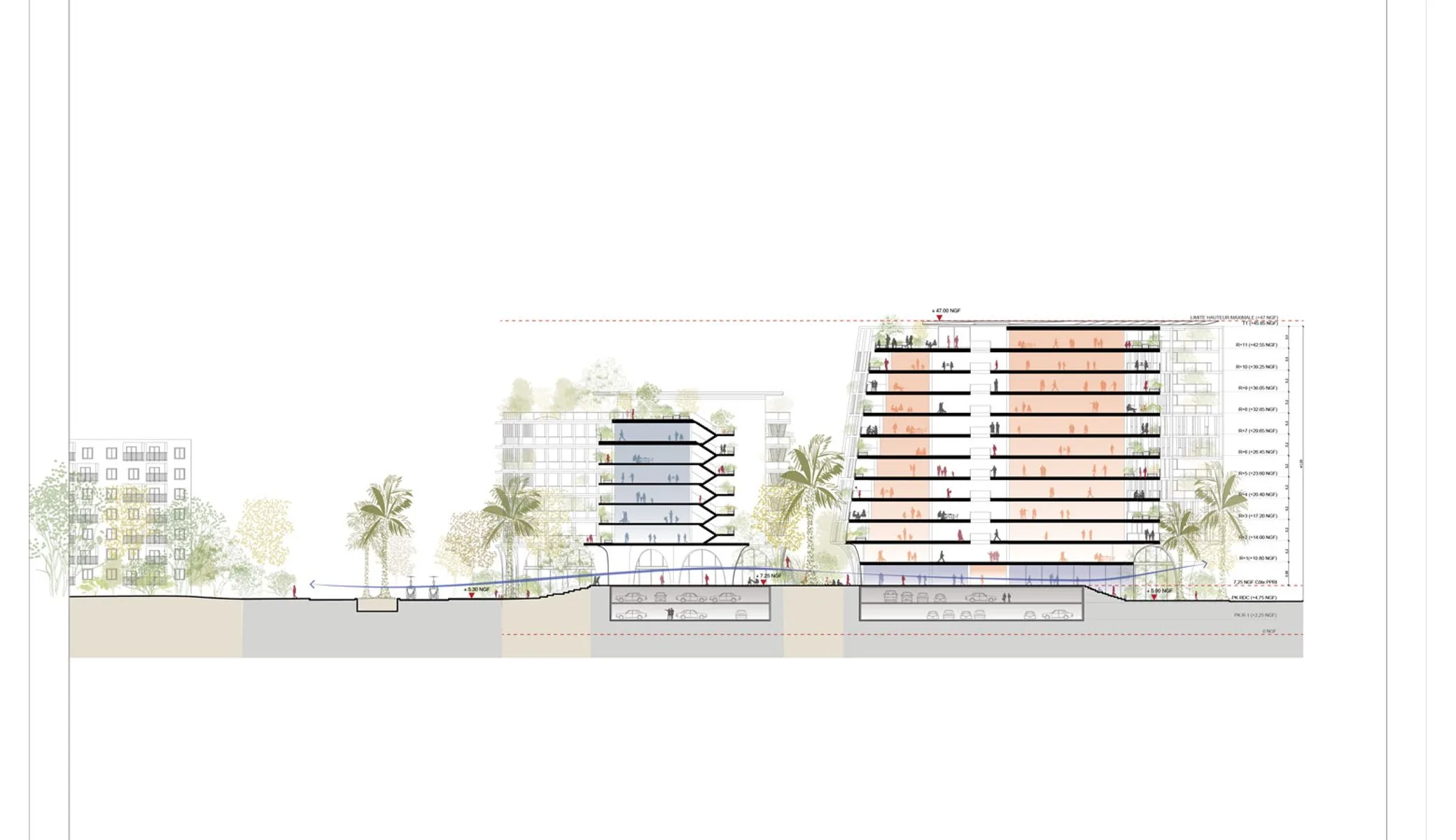
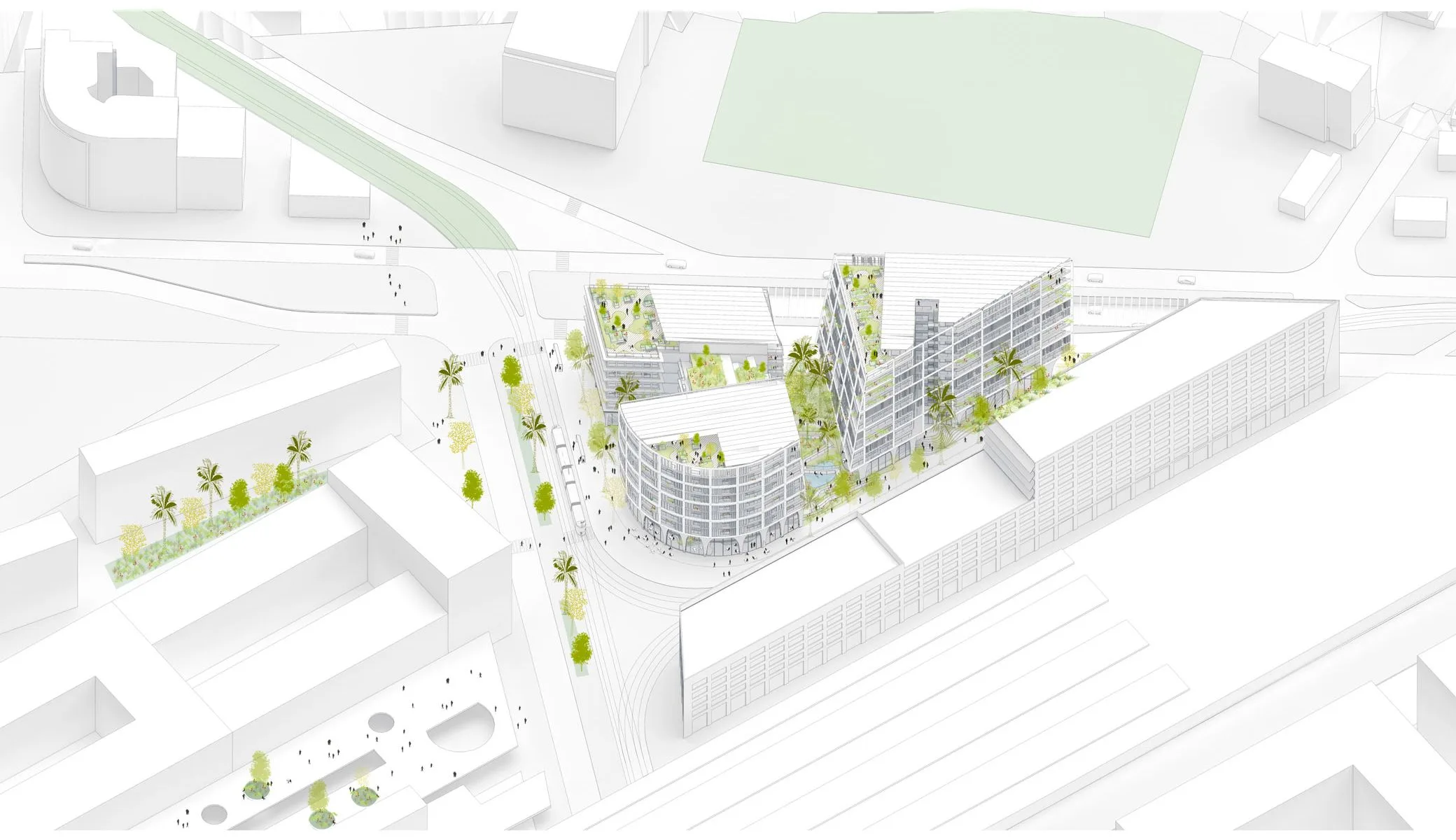
Our project for block 3.2 reinforces Nice's identity while absorbing its atmosphere. The project's anchoring relates to its natural topography, multiplying interior and exterior access points and making its base highly fluid. This freedom of access enhances the quality of different uses and allows everyone to fully appropriate the block. The block becomes open and enriched by neighborhood life.
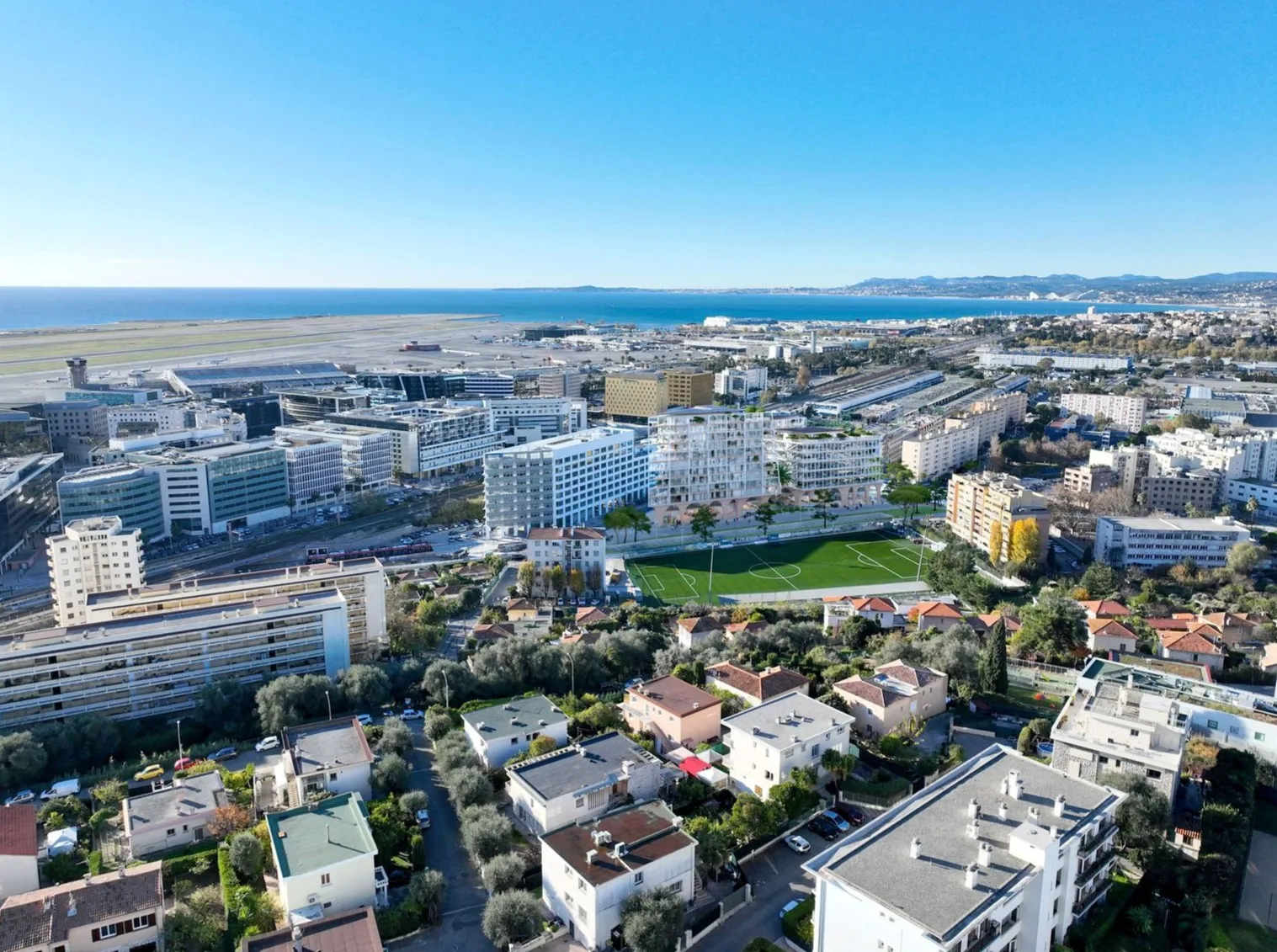
We approached block 3.2 in Nice as an opportunity to reinvent Mediterranean density, moving beyond the binary opposition between city and nature. The site, situated in a changing metropolitan territory, invited us to think of architecture not as a finished object but as a support for life, an inhabited ground that extends the city's natural topography. This logic of **topographic anchoring** guides the entire project: rather than placing a building on neutral ground, we sought to multiply access levels, create continuities between interior and exterior, and make the base fluid and permeable.
The initial program, rich and complex (housing, shops, offices, student residence, gastronomy school, sports spaces, mobility hub), could have led to a conventional functional juxtaposition. Instead, we sought to **articulate these uses** so they would mutually enrich each other, thus creating an urban centrality active day and night. The gastronomy school dialogues with restaurants opening onto the street, coworking spaces neighbor housing, sports facilities extend shared gardens. This programmatic diversity creates temporal mixing: students animate the neighborhood during the day, residents occupy common spaces in the evening, local shops maintain a continuous presence. The block thus becomes a fragment of real city, far from the monofunctions that create dead neighborhoods at certain hours.
Our architectural approach rests on a **vertical stratification of uses and landscapes**. The base accommodates public and semi-public functions (shops, school, mobility hub), creating a generous interface with urban space. The intermediate floors house offices and the student residence, benefiting from ground-floor activity while maintaining a certain autonomy. Housing occupies the upper levels, where it can fully enjoy views of Nice's grand landscape: the backcountry mountains, the Mediterranean horizon, the sea. But it is especially the roof that constitutes the project's most singular architectural gesture. We conceived it as a **fifth ground**, an inhabited territory in its own right, accessible to all residents and users of the block.
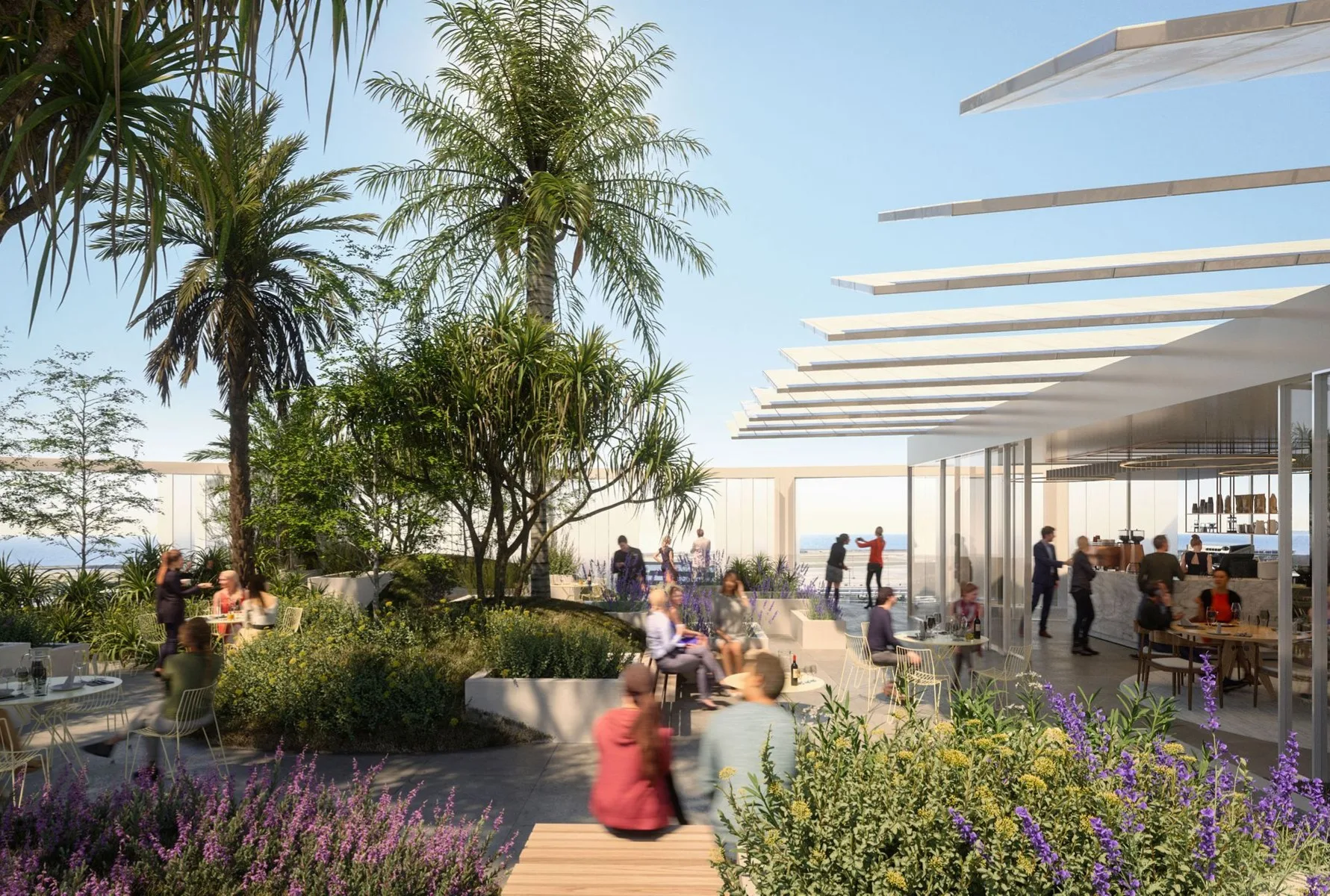
This garden roof does not represent a simple decorative ecological gesture. It inscribes itself in a Mediterranean tradition of the roof-terrace as a living place, of coolness, of territorial observation. We implanted shared vegetable gardens, shaded relaxation spaces, belvederes oriented toward remarkable viewpoints, light installations allowing collective activities (yoga, outdoor cinema, neighborhood meals). This additional level becomes a **territory of exploration and sharing**, where residents meet outside the private frame of their housing, where students find an outdoor study space, where visitors discover an unprecedented perspective on Nice. This approach extends our reflection on the **gentle intensification** of the city: densifying without compressing, inhabiting vertically without renouncing the ground.
The project's materiality draws directly from the **local Nice biotope**. We favored light tones, mineral textures recalling the city's historic facades (smooth renders, white concretes, reconstructed stone), while introducing resistant Mediterranean vegetation (olive trees, lavenders, grasses, citrus trees). Housing benefits from **generous terraces** with multiple orientations, true exterior extensions of interior spaces, allowing natural cross-ventilation. This device inscribes itself in the traditional Nice housing model, energy-efficient, taking advantage of the climate to reduce air conditioning needs. Common spaces (circulation, halls, walkways) are treated as **climate transition spaces**, semi-open, naturally ventilated, participating in the ensemble's thermal regulation.
Our **environmental approach** was not limited to applying standards: it structures the project in depth. The relative compactness of volumes, the pooling of spaces, extensive vegetation (roof, stepped terraces, interior patios), the choice of bio-sourced or geo-sourced materials complementing traditional construction systems, rainwater recovery for irrigation, maximization of natural light in common circulation, all contribute to reducing the operation's ecological footprint. Biodiversity is increased through the creation of varied environments: permeable soils, multiple plant strata, refuges for urban fauna. The block thus becomes a **fragment of productive urban nature**, not a simple green backdrop.
The project for Nice 3.2 was not selected, but it testifies to our conviction that it is possible to build dense, mixed, economical and desirable. It embodies a certain idea of the contemporary Mediterranean city: open, shared, climatically intelligent, generous in exterior spaces, attentive to the grand landscape. An architecture that dialogues with its context without nostalgia, that recomposes Nice's DNA (light, porosity, relationship to sky and sea) in a contemporary vocabulary. A place where living is not reduced to inhabiting four walls, but where each resident has a multiplicity of spaces, thresholds, landscapes, contributing to making the block not a closed ensemble but a true **metropolitan neighborhood**, irrigated by collective life.
The initial program, rich and complex (housing, shops, offices, student residence, gastronomy school, sports spaces, mobility hub), could have led to a conventional functional juxtaposition. Instead, we sought to **articulate these uses** so they would mutually enrich each other, thus creating an urban centrality active day and night. The gastronomy school dialogues with restaurants opening onto the street, coworking spaces neighbor housing, sports facilities extend shared gardens. This programmatic diversity creates temporal mixing: students animate the neighborhood during the day, residents occupy common spaces in the evening, local shops maintain a continuous presence. The block thus becomes a fragment of real city, far from the monofunctions that create dead neighborhoods at certain hours.
Our architectural approach rests on a **vertical stratification of uses and landscapes**. The base accommodates public and semi-public functions (shops, school, mobility hub), creating a generous interface with urban space. The intermediate floors house offices and the student residence, benefiting from ground-floor activity while maintaining a certain autonomy. Housing occupies the upper levels, where it can fully enjoy views of Nice's grand landscape: the backcountry mountains, the Mediterranean horizon, the sea. But it is especially the roof that constitutes the project's most singular architectural gesture. We conceived it as a **fifth ground**, an inhabited territory in its own right, accessible to all residents and users of the block.
This garden roof does not represent a simple decorative ecological gesture. It inscribes itself in a Mediterranean tradition of the roof-terrace as a living place, of coolness, of territorial observation. We implanted shared vegetable gardens, shaded relaxation spaces, belvederes oriented toward remarkable viewpoints, light installations allowing collective activities (yoga, outdoor cinema, neighborhood meals). This additional level becomes a **territory of exploration and sharing**, where residents meet outside the private frame of their housing, where students find an outdoor study space, where visitors discover an unprecedented perspective on Nice. This approach extends our reflection on the **gentle intensification** of the city: densifying without compressing, inhabiting vertically without renouncing the ground.
The project's materiality draws directly from the **local Nice biotope**. We favored light tones, mineral textures recalling the city's historic facades (smooth renders, white concretes, reconstructed stone), while introducing resistant Mediterranean vegetation (olive trees, lavenders, grasses, citrus trees). Housing benefits from **generous terraces** with multiple orientations, true exterior extensions of interior spaces, allowing natural cross-ventilation. This device inscribes itself in the traditional Nice housing model, energy-efficient, taking advantage of the climate to reduce air conditioning needs. Common spaces (circulation, halls, walkways) are treated as **climate transition spaces**, semi-open, naturally ventilated, participating in the ensemble's thermal regulation.
Our **environmental approach** was not limited to applying standards: it structures the project in depth. The relative compactness of volumes, the pooling of spaces, extensive vegetation (roof, stepped terraces, interior patios), the choice of bio-sourced or geo-sourced materials complementing traditional construction systems, rainwater recovery for irrigation, maximization of natural light in common circulation, all contribute to reducing the operation's ecological footprint. Biodiversity is increased through the creation of varied environments: permeable soils, multiple plant strata, refuges for urban fauna. The block thus becomes a **fragment of productive urban nature**, not a simple green backdrop.
The project for Nice 3.2 was not selected, but it testifies to our conviction that it is possible to build dense, mixed, economical and desirable. It embodies a certain idea of the contemporary Mediterranean city: open, shared, climatically intelligent, generous in exterior spaces, attentive to the grand landscape. An architecture that dialogues with its context without nostalgia, that recomposes Nice's DNA (light, porosity, relationship to sky and sea) in a contemporary vocabulary. A place where living is not reduced to inhabiting four walls, but where each resident has a multiplicity of spaces, thresholds, landscapes, contributing to making the block not a closed ensemble but a true **metropolitan neighborhood**, irrigated by collective life.
- Lieu
- Nice, France
- Nature
- Logements
- Surface
- 17 600 m²
- Concours
- 2021
- MOA
- Icade Promotion, Axis