
PARIS XIII
As the backdrop of an urban perspective spanning over 600 meters, the T10 block project combines two strong ideas: an architectural skyline accentuated by vegetation, and a vibrant, inhabited facade. Linking both, nature plays a predominant role. The three buildings unite progressively as landscape sequences are constructed. The garden at the heart of the block, a space for strolling and wandering, connects with the mineral quality of the forecourt. It presents itself as an invitation to current use while evoking the past.
We conceived the T10 block in the 13th arrondissement as a sensitive response to a site laden with history and traversed by a singular urban geography. The project is part of a vast requalification program led by Paris Habitat, alongside Sou Fujimoto Architects and Nicolas Laisné Architectes. Together, we worked to compose a built front that dialogues with an urban perspective over 600 meters long, inherited from the railway infrastructures that marked this neighborhood. This context led us to conceive the project not as an isolated object, but as an **architectural backdrop**, capable of articulating the memory of place with contemporary life.
The site bears traces of the Freyssinet hall and former railway circuits. Rather than erasing them, we chose to make them the conceptual foundation of the project. The compositional lines of the three buildings that constitute our intervention follow the tracings of these vanished flows, creating **historical continuity through design**. This play of tracings is not a simple nostalgic citation, it structures the block, orients pathways, organizes public and private spaces. The garden at the heart of the block thus becomes a space for strolling and wandering that connects the mineral quality of the forecourt with the vegetal depth we wanted to install at the project's core. It is an invitation to current use, but also a sensitive evocation of the neighborhood's railway past.
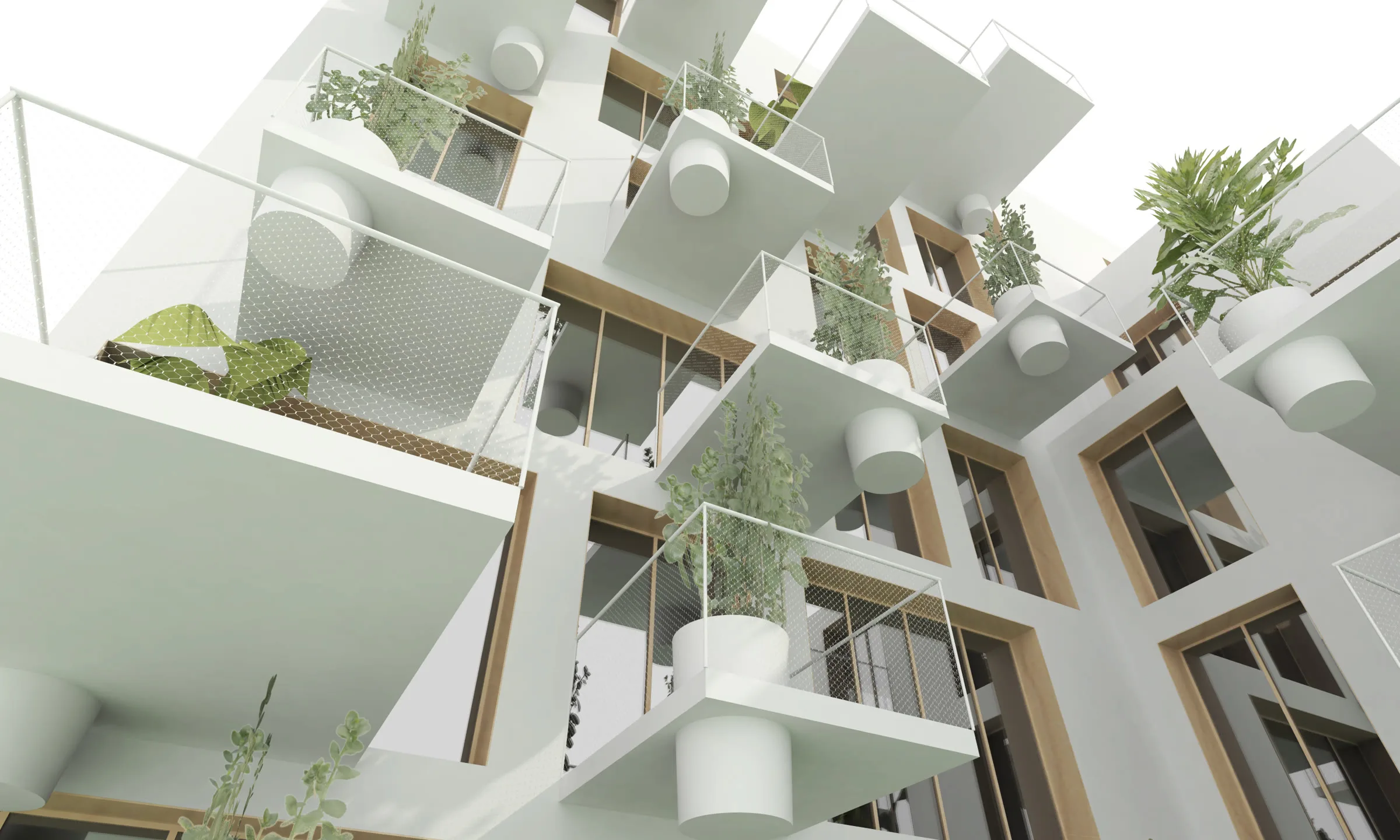
We conceived the facade as an **inhabited device**, far beyond a simple envelope. It multiplies exterior spaces, planters, planted terraces that ascend along the buildings' heights. These generous and comfortable places are true interstices between dwelling and city, intermediate spaces where inhabitants can settle, read, contemplate. They create thickness, breathing room, a way of living that escapes the strict interior-exterior separation. The vibrant facade we designed is not decoration, it organizes these uses, makes them possible.
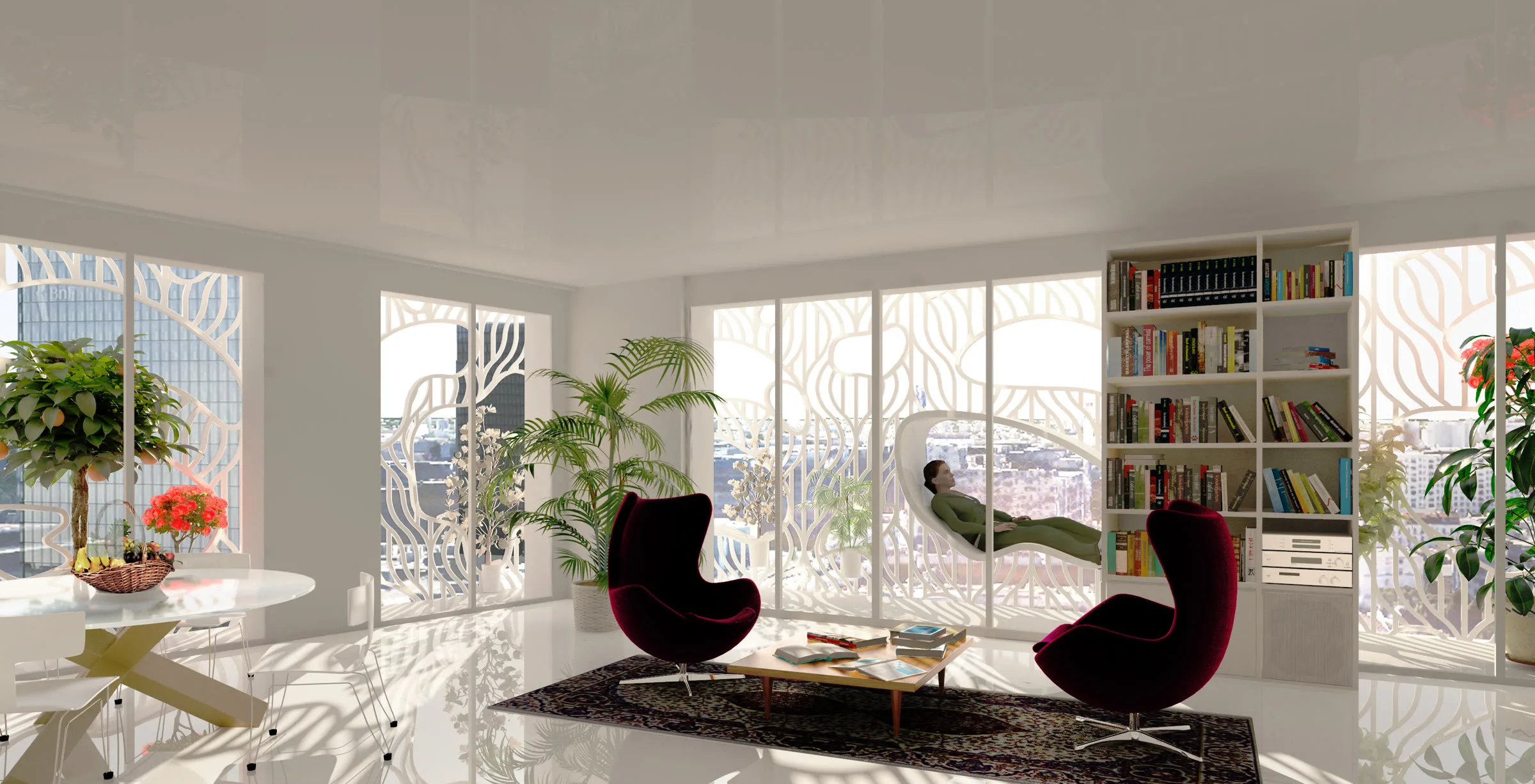
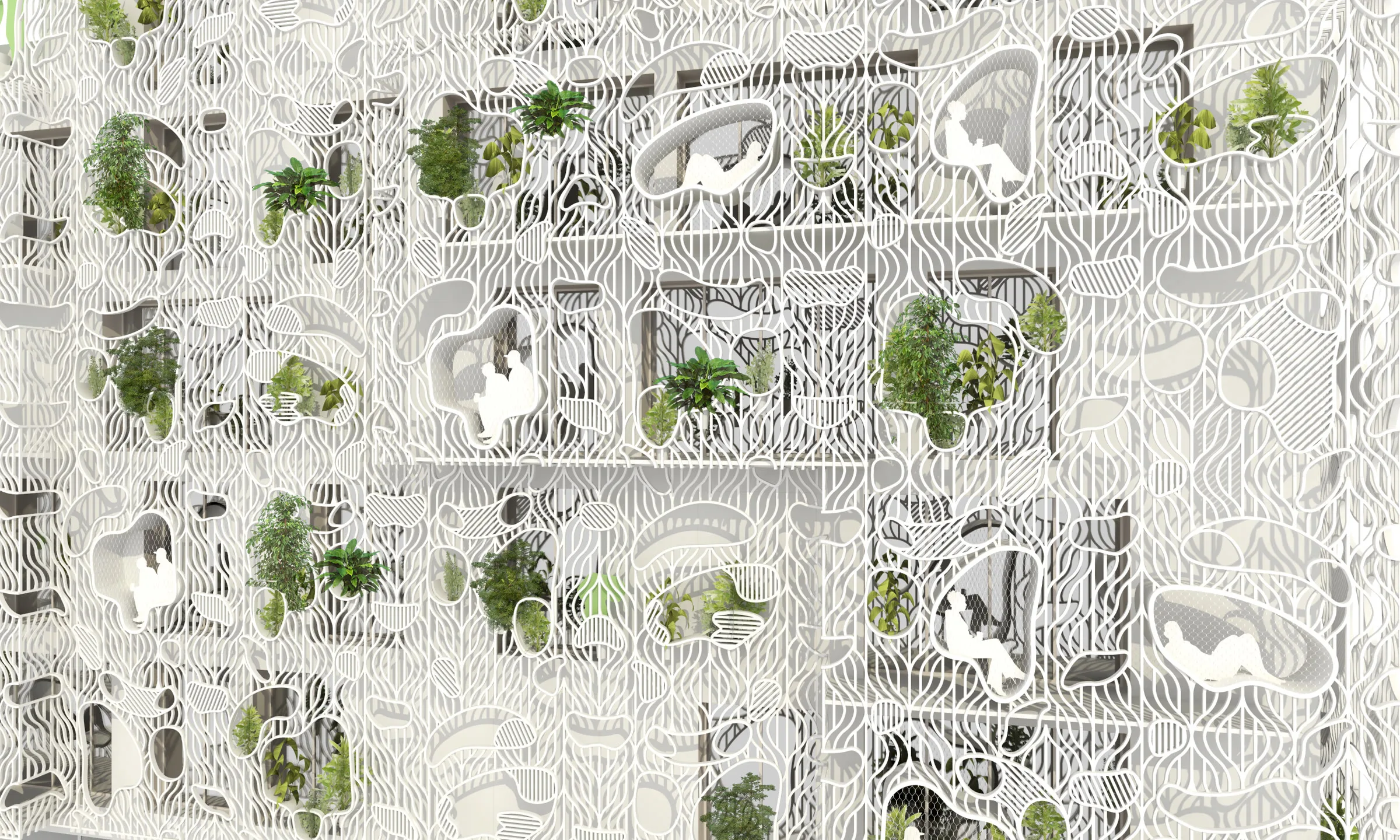
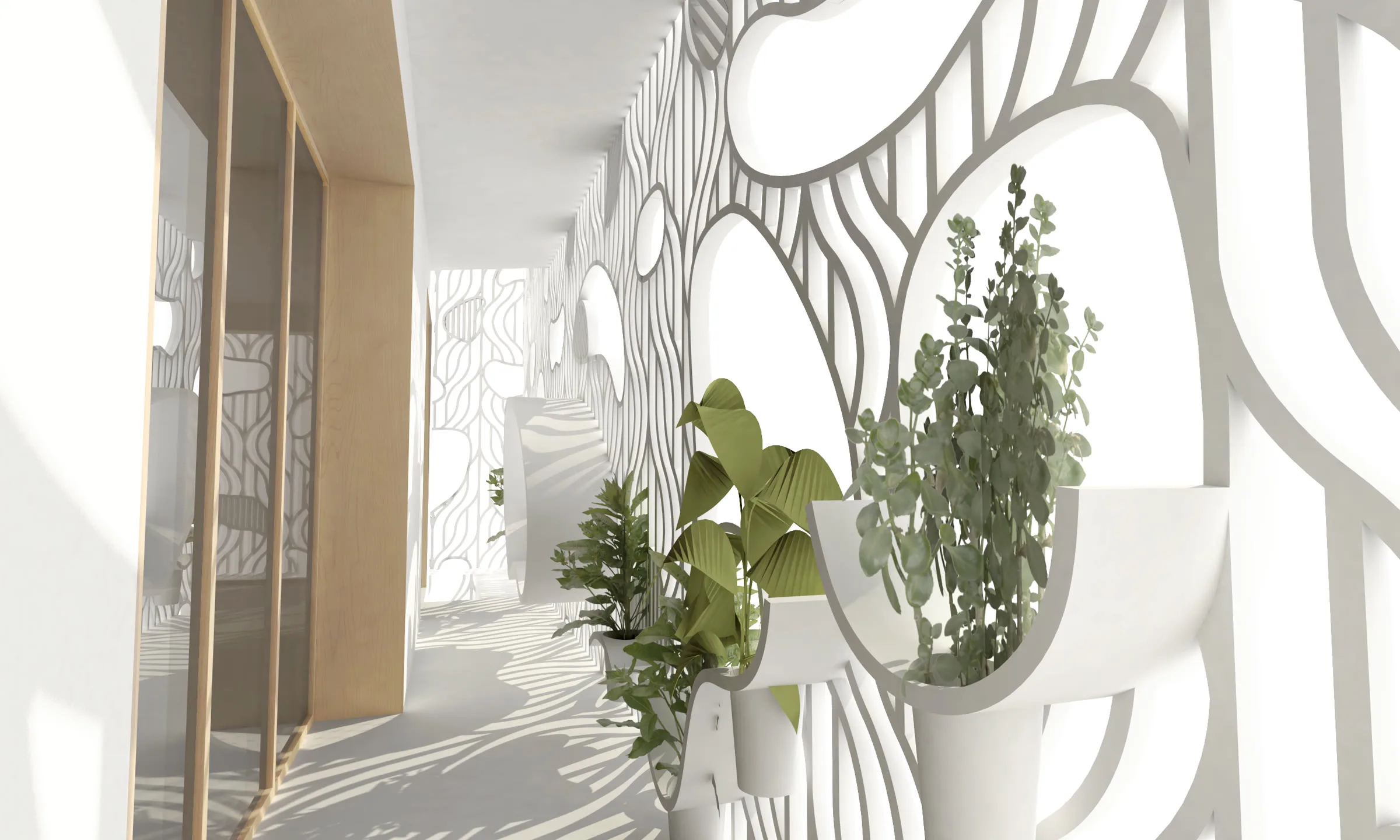
This formal vibration relies on a **high-density lightweight concrete lattice**, which clothes each of the three buildings. This material choice allowed us to combine structural performance, lightness, and expressiveness. The lattice directly references the Freyssinet hall, reprising its constructive spirit, its plastic power. But we repurposed it to make it an active element of the facade, creating undergrowth atmospheres, shade, protection for exterior living spaces. It functions as **genuine skin**, a bark in which inhabitants can sit, rest, admire the view. Vegetation attaches to this structure, progressively colonizing it, transforming the building into a living support, evolving, flamboyant with the seasons.
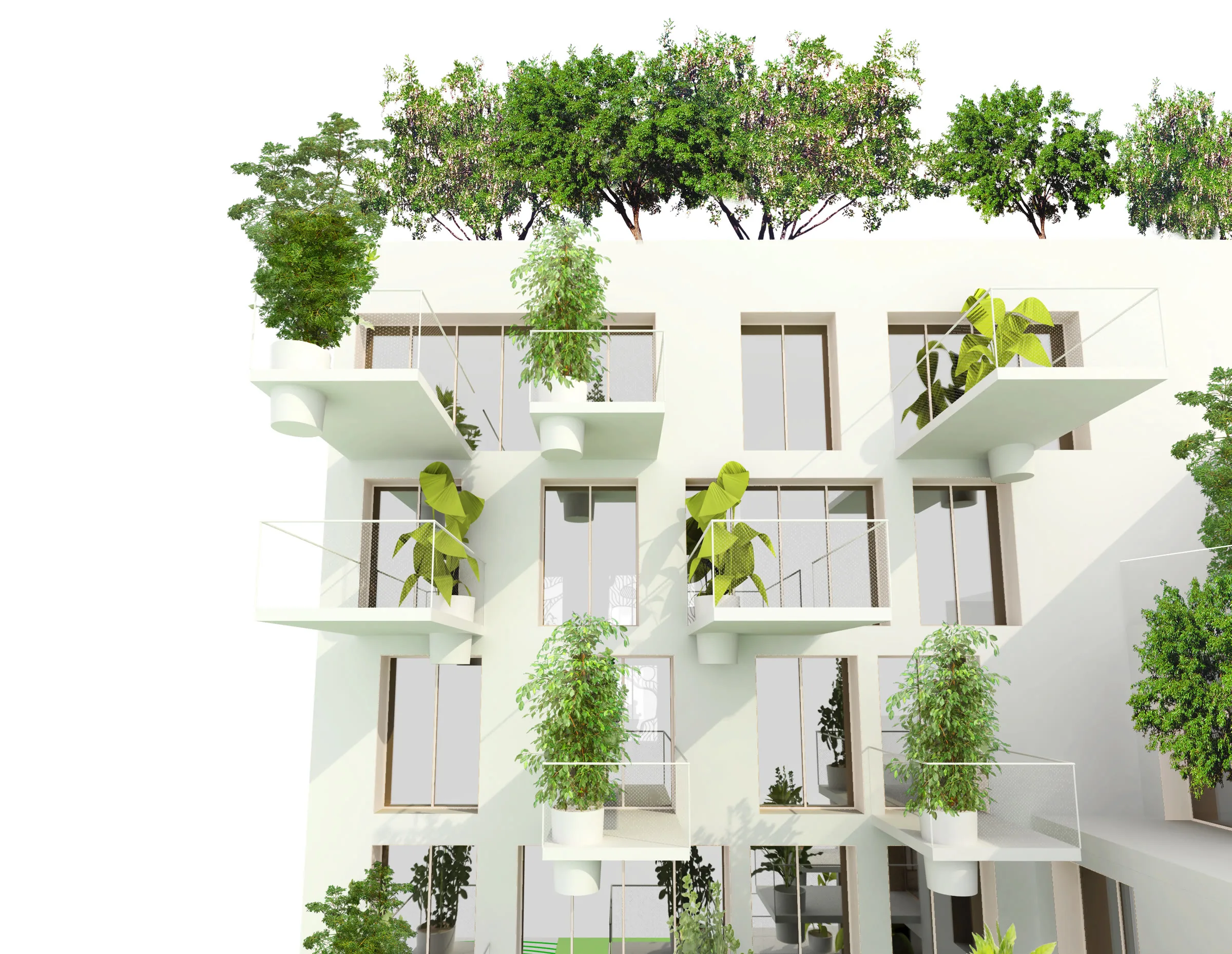
Nature plays a predominant role here, from conception onward. We refused the idea of vegetation as mere added decoration. On the contrary, vegetation is conceived as a structuring element, an architectural material in its own right. The three buildings unite progressively as **landscape sequences** are constructed, from the heart-of-block garden to inhabited terraces, passing through planters integrated into the lattice. Vegetation vertically and horizontally links the ensemble, creates visual continuities, softens transitions, establishes a slow temporality, that of growth, seasonal cycles, progressive transformation of the built.
This environmental approach goes beyond aesthetics. The massive presence of vegetation contributes to thermal regulation of dwellings, stormwater management, urban biodiversity. The high-density lightweight concrete lattice reduces structural loads while offering effective solar protection. Generous exterior spaces favor natural ventilation and offer climate refuges during periods of intense heat. We conceived these devices together, in an **integrated** manner, so that each project element contributes to improving inhabitants' living conditions and reducing the ensemble's ecological footprint.
As crowning elements, the **vegetated roofs** are not simple fifth facades. They are conceived as true socialization spaces, wooded belvederes offering breathtaking views over Paris. These collective spaces extend the logic of inhabited interstices we developed on the facade, creating places for gathering, contemplation, urban respiration. The architectural skyline formed by the entire T10 block is thus accentuated by vegetation, creating a recognizable, generous, living silhouette.
Working alongside Sou Fujimoto Architects and Nicolas Laisné Architectes allowed us to conceive the block in its totality, while asserting the singularity of our intervention. Each team brought its sensitivity, its way of questioning the relationship between architecture, nature, and memory of place. For our part, we sought to create buildings that are **supports for life**, in the fullest sense of the term, structures capable of accommodating the unexpected, appropriation, transformation. Architectures that age well, that improve with time, as vegetation establishes itself and inhabitants invest the spaces we designed for them.
The site bears traces of the Freyssinet hall and former railway circuits. Rather than erasing them, we chose to make them the conceptual foundation of the project. The compositional lines of the three buildings that constitute our intervention follow the tracings of these vanished flows, creating **historical continuity through design**. This play of tracings is not a simple nostalgic citation, it structures the block, orients pathways, organizes public and private spaces. The garden at the heart of the block thus becomes a space for strolling and wandering that connects the mineral quality of the forecourt with the vegetal depth we wanted to install at the project's core. It is an invitation to current use, but also a sensitive evocation of the neighborhood's railway past.
We conceived the facade as an **inhabited device**, far beyond a simple envelope. It multiplies exterior spaces, planters, planted terraces that ascend along the buildings' heights. These generous and comfortable places are true interstices between dwelling and city, intermediate spaces where inhabitants can settle, read, contemplate. They create thickness, breathing room, a way of living that escapes the strict interior-exterior separation. The vibrant facade we designed is not decoration, it organizes these uses, makes them possible.
This formal vibration relies on a **high-density lightweight concrete lattice**, which clothes each of the three buildings. This material choice allowed us to combine structural performance, lightness, and expressiveness. The lattice directly references the Freyssinet hall, reprising its constructive spirit, its plastic power. But we repurposed it to make it an active element of the facade, creating undergrowth atmospheres, shade, protection for exterior living spaces. It functions as **genuine skin**, a bark in which inhabitants can sit, rest, admire the view. Vegetation attaches to this structure, progressively colonizing it, transforming the building into a living support, evolving, flamboyant with the seasons.
Nature plays a predominant role here, from conception onward. We refused the idea of vegetation as mere added decoration. On the contrary, vegetation is conceived as a structuring element, an architectural material in its own right. The three buildings unite progressively as **landscape sequences** are constructed, from the heart-of-block garden to inhabited terraces, passing through planters integrated into the lattice. Vegetation vertically and horizontally links the ensemble, creates visual continuities, softens transitions, establishes a slow temporality, that of growth, seasonal cycles, progressive transformation of the built.
This environmental approach goes beyond aesthetics. The massive presence of vegetation contributes to thermal regulation of dwellings, stormwater management, urban biodiversity. The high-density lightweight concrete lattice reduces structural loads while offering effective solar protection. Generous exterior spaces favor natural ventilation and offer climate refuges during periods of intense heat. We conceived these devices together, in an **integrated** manner, so that each project element contributes to improving inhabitants' living conditions and reducing the ensemble's ecological footprint.
As crowning elements, the **vegetated roofs** are not simple fifth facades. They are conceived as true socialization spaces, wooded belvederes offering breathtaking views over Paris. These collective spaces extend the logic of inhabited interstices we developed on the facade, creating places for gathering, contemplation, urban respiration. The architectural skyline formed by the entire T10 block is thus accentuated by vegetation, creating a recognizable, generous, living silhouette.
Working alongside Sou Fujimoto Architects and Nicolas Laisné Architectes allowed us to conceive the block in its totality, while asserting the singularity of our intervention. Each team brought its sensitivity, its way of questioning the relationship between architecture, nature, and memory of place. For our part, we sought to create buildings that are **supports for life**, in the fullest sense of the term, structures capable of accommodating the unexpected, appropriation, transformation. Architectures that age well, that improve with time, as vegetation establishes itself and inhabitants invest the spaces we designed for them.
- Lieu
- Paris, France
- Nature
- Logements
- Surface
- 14 220 pour l'ensemble
- Budget
- 35 M€
- Concours
- 2016
- MOA
- Paris Habitat
- Co-architectes
- Sou Fujimoto Architects, Nicolas Laisné Architectes (pour l'ensemble de l'îlot)