
Arbre Blanc
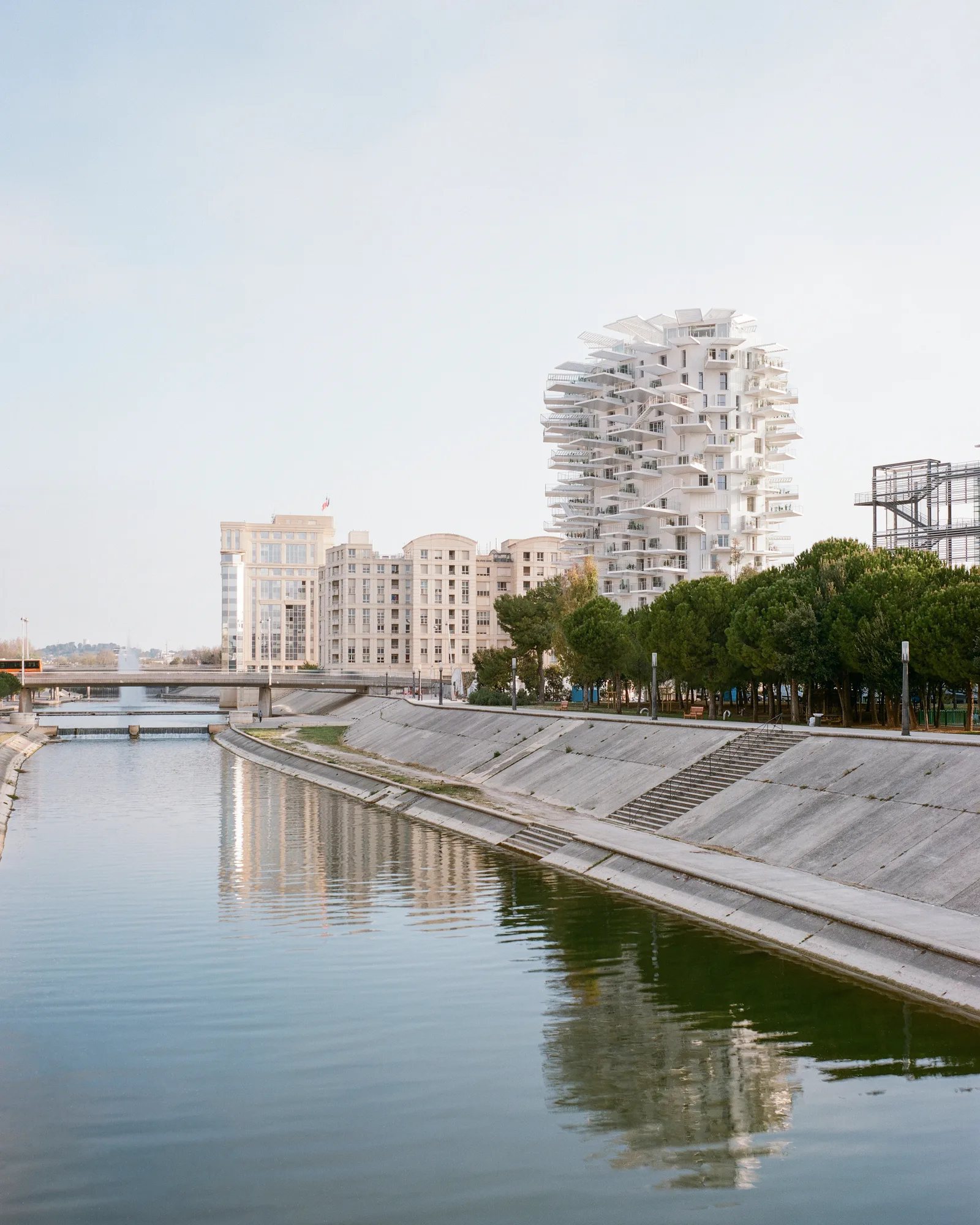
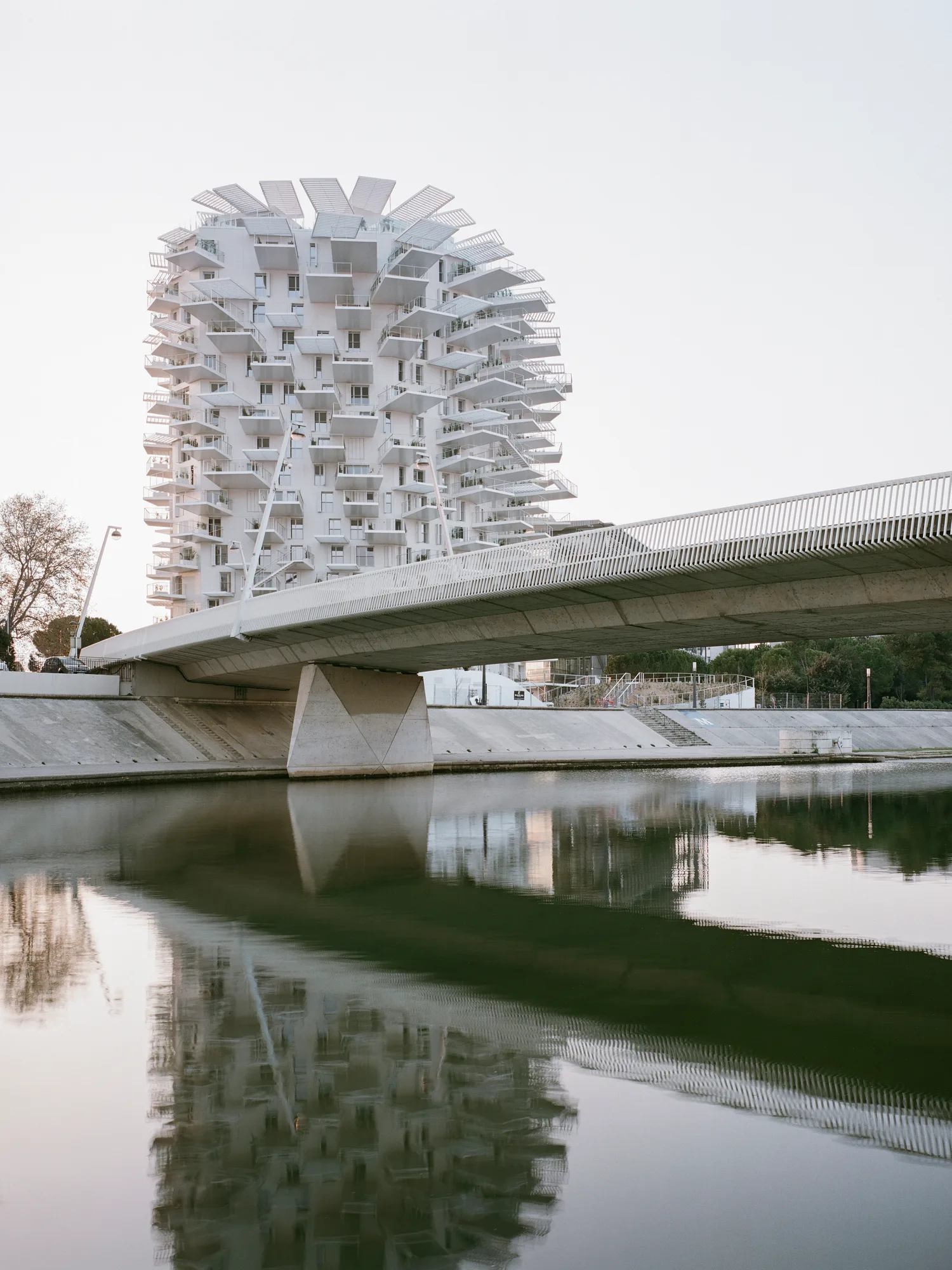
In Montpellier, the Arbre Blanc unfolds its balconies like branches above the Lez. The mixed-use tower offers each dwelling a direct relationship with the outdoors, shade, and the Mediterranean landscape. An architecture of outdoor living, delivered in 2019, that has become in just a few years one of the most photographed contemporary architectures in France. Born from an unlikely encounter between Sou Fujimoto, OXO, and Nicolas Laisné Associés, brought together by competition, the Arbre Blanc is also the symbol of a generation of architects who place nature at the heart of their approach.
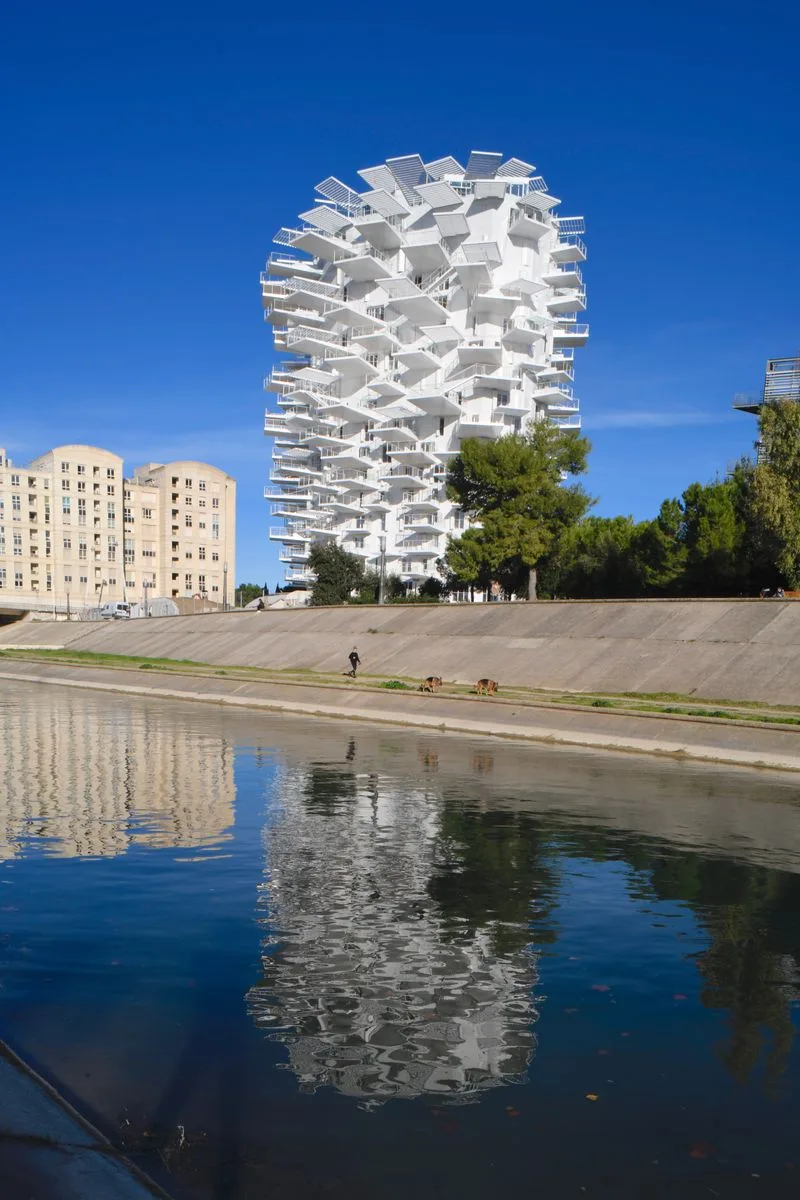
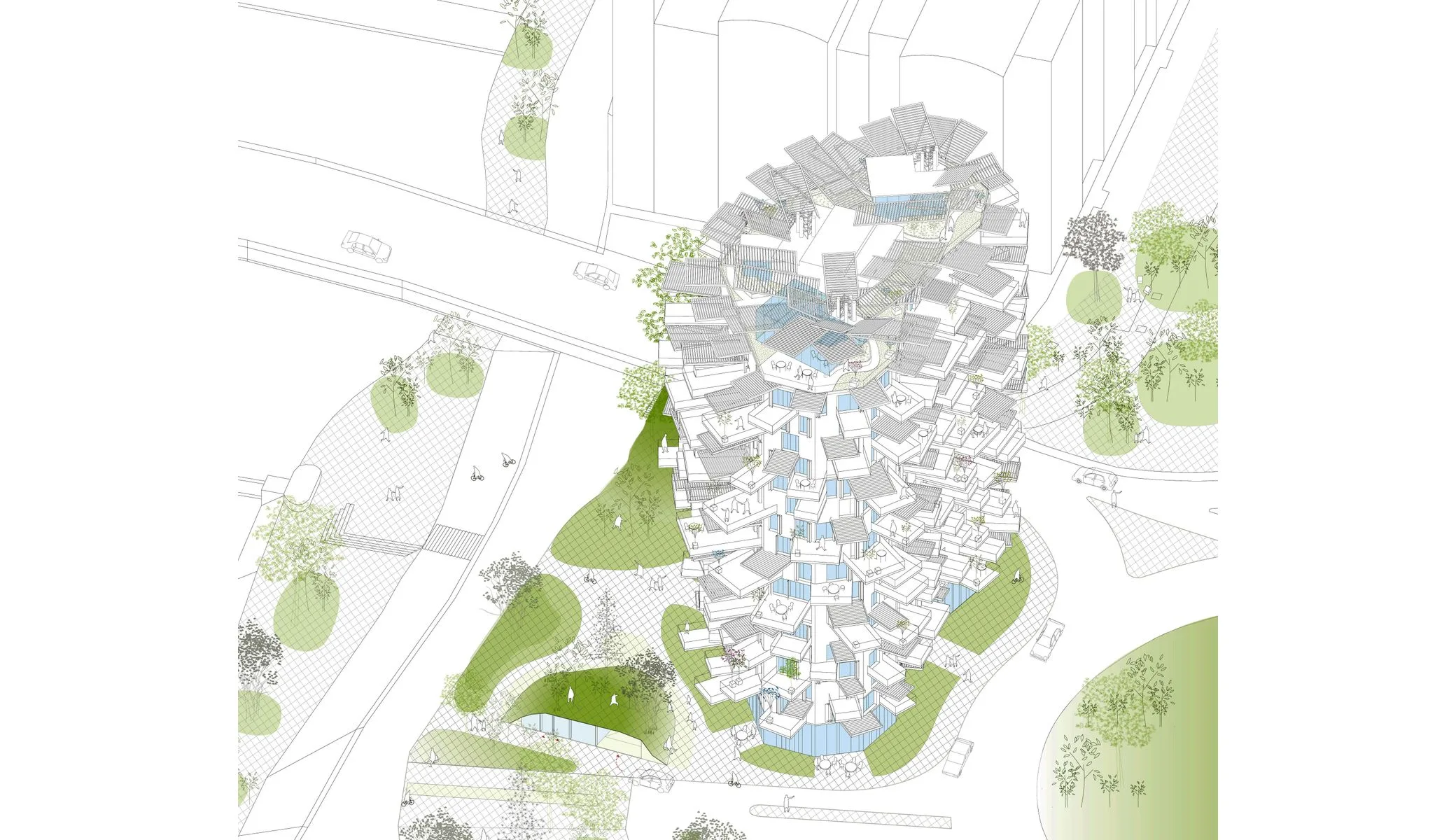
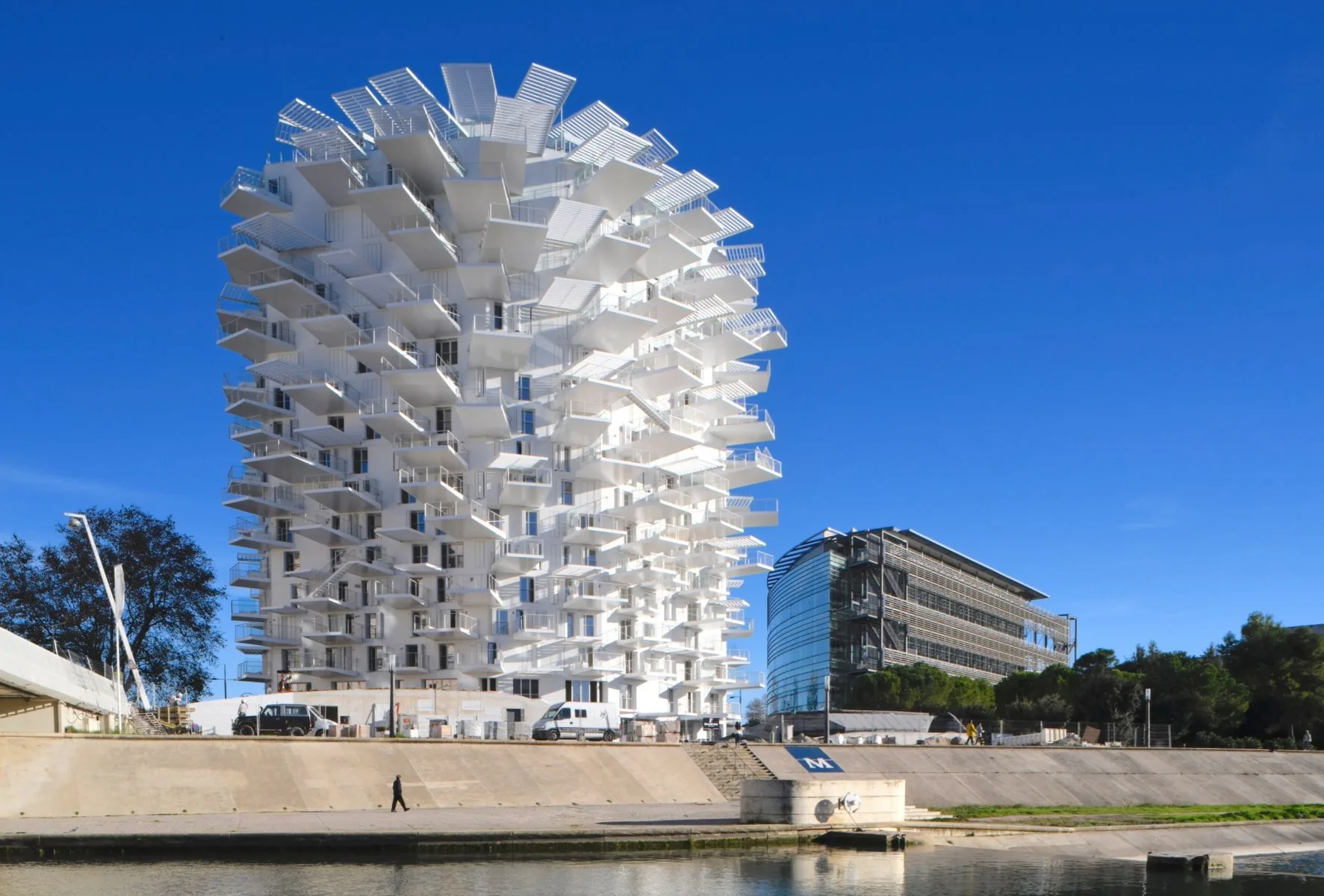
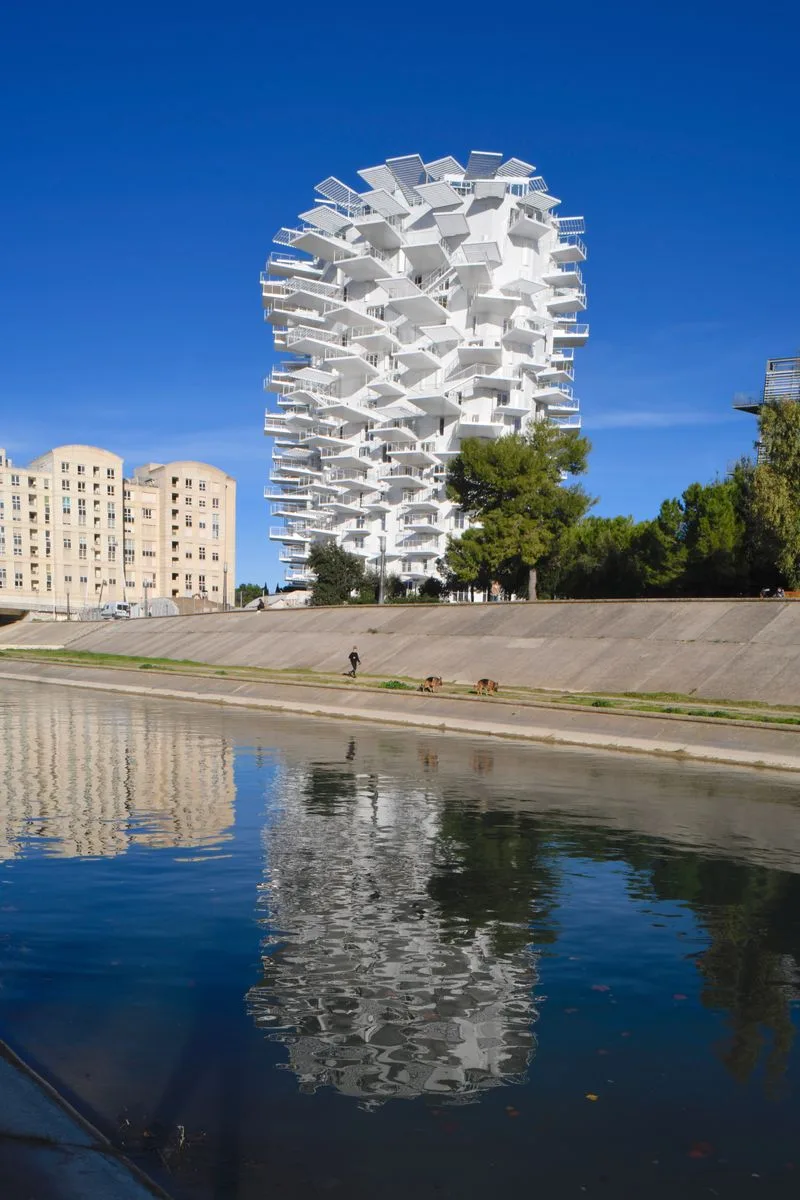
**The Arbre Blanc** rises on the edge of the Lez like a singular presence in the Montpellier landscape. We imagined this tower not as an autonomous object, but as an organism that dialogues with the flows of the city: the river, the expressway, the banks developed as a promenade. The project occupies a pivotal position, where Place Christophe Colomb meets the Octroi de Montpellier. We chose to anchor the building in this geography by extending the landscape park along the Lez, making the tower a point of convergence rather than an obstacle. This inaugural gesture, opening the space rather than obstructing it, guides the entire approach.
The genesis of the project is as singular as its form. In 2015, the competition brought together three agencies separated by geography and style: **Sou Fujimoto Architects**, whose architecture explores the boundaries between nature and artifice, **Nicolas Laisné Associés**, driven by an ecological and generous vision of habitat, and **OXO Architectes**. This unlikely encounter produced a rare synergy. We shared the conviction that contemporary architecture must reinvent the relationship between inside and outside, between built and vegetal, between private and common. The Arbre Blanc was born from this convergence, supported by four developers (Proméo Patrimoine, Evolis Promotion, Opalia, Crédit Agricole Languedoc Immobilier) who accepted the formal and programmatic risk.
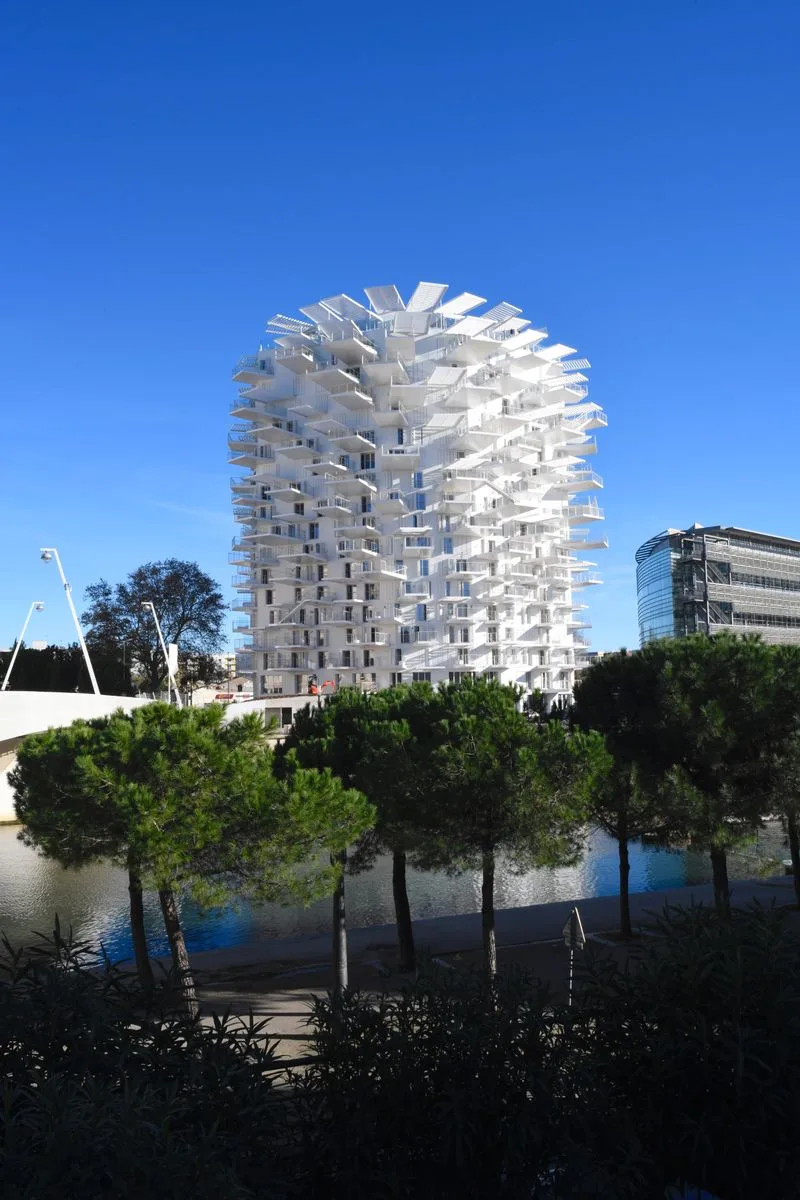
**The tower's curved form**, which evokes a pair of wings following the line traced by the Lez toward Avenue de la Pompignane, is not a gratuitous gesture. It responds to a dual necessity: sculpting the envelope to maximize views toward the river and the Cévennes, and creating a silhouette that seems to have been shaped by the elements, as water hollows rock or wind models sand. We seek to produce an architecture that, while contemporary and assertive, does not impose itself brutally on its context. The curvature also optimizes the orientation of the dwellings, varies the viewpoints, breaks with the monotony of classic residential towers. Each dwelling becomes unique through its relationship to the sky, the river, the Mediterranean landscape.
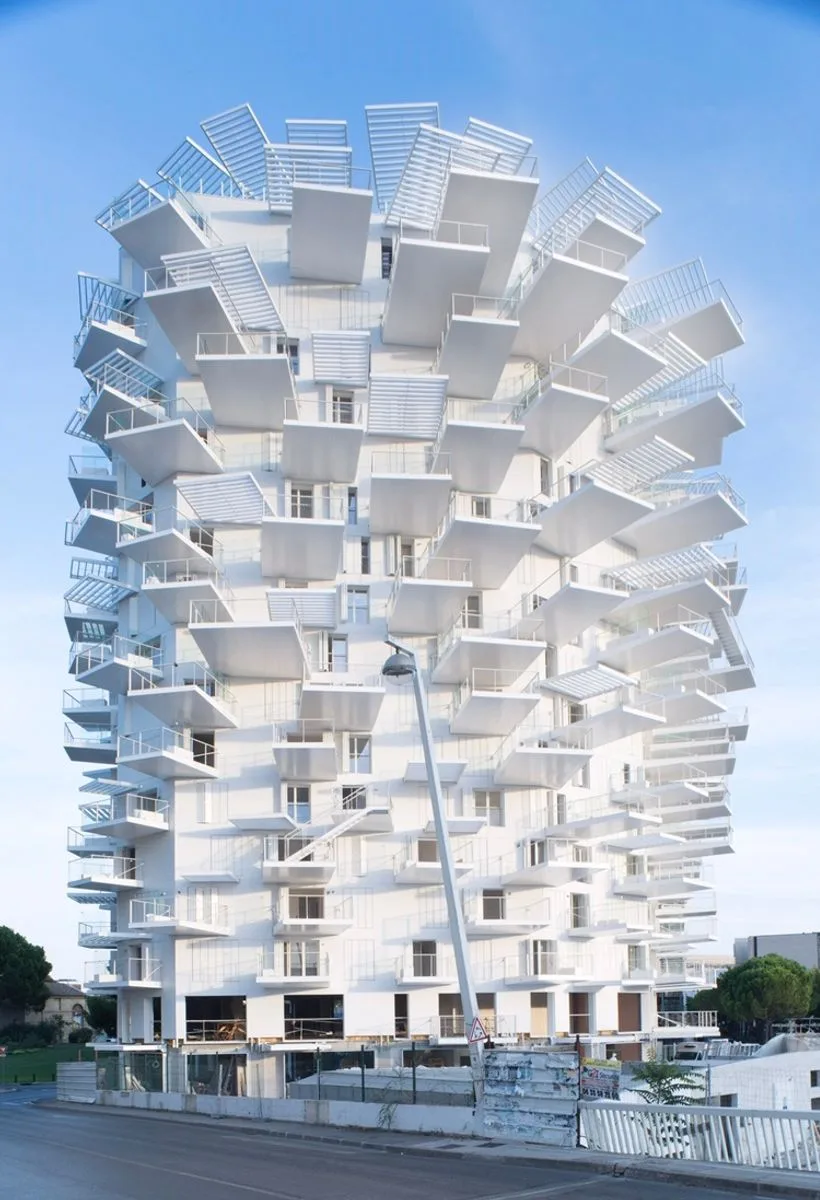
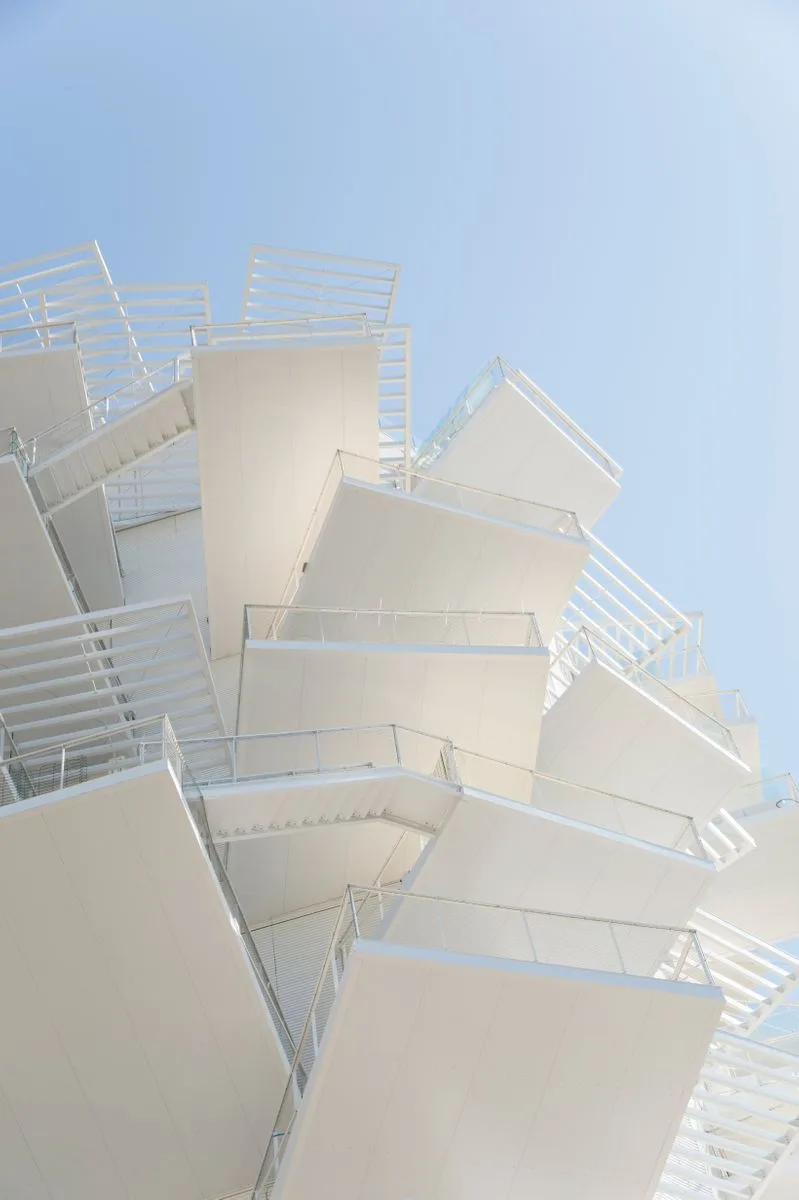
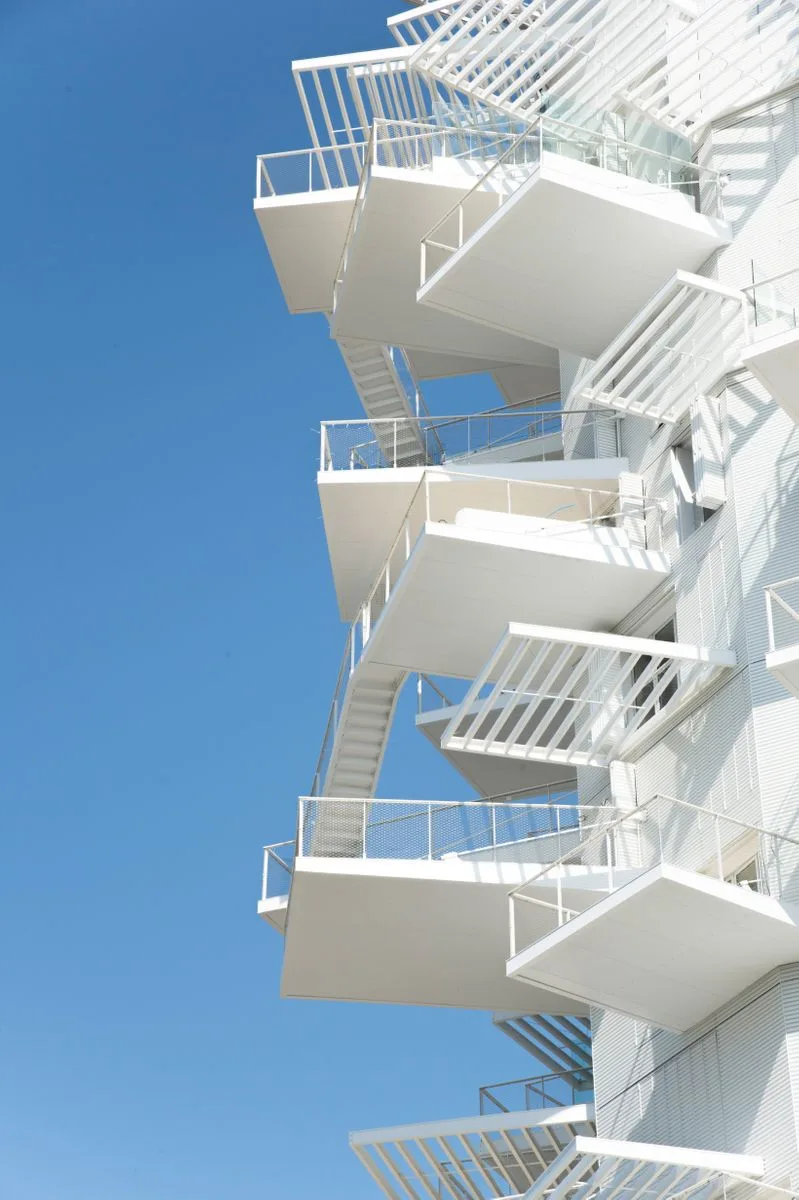
The **balcony system** constitutes the conceptual heart of the project. They are not simple appendages, but fully inhabited spaces, extending each apartment toward the exterior. We conceived these balconies as tree branches: each one different, oriented according to sunlight and view, creating an organic framework that gives the project its name. This multiplication of thresholds, between the air-conditioned interior and the exterior, responds to the **Mediterranean climate**, where living outdoors is not a luxury but a necessity. The balconies become intermediate spaces, offering shade in summer, sun in winter, the possibility of eating outside, working facing the landscape, cultivating plants. They transform the abstract verticality of the tower into a superimposition of individual habitats.
Programmatically, we refuse the monofunctional tower. The ground floor houses an **art gallery and restaurant**, opening onto the riverside promenade, ensuring porosity with public space. This generosity at ground level is essential: it makes the Arbre Blanc a **public tower**, accessible to Montpellier residents and visitors, not an enclosure reserved for residents. At the top, a **panoramic bar** and garden open views onto the metropolis and distant horizons. Residents also benefit from a complementary shared space, ensuring that the panorama is not monopolized by a commercial function. This redistribution of extremities, ground and sky, translates our conviction that collective architecture must produce the **common**, not only the private.
The materiality of the Arbre Blanc relies on a **white concrete exoskeleton**, chosen for its ability to reflect Mediterranean light and age gracefully. The cantilevered balconies are prefabricated concrete slabs, anchored in a rigorous load-bearing structure. White is not just a color: it is a climatic response, reducing thermal absorption, and a formal assertion, an assumed contrast with the blue sky and surrounding vegetation. Light metal railings reinforce the impression of lightness, of deployed branches. Inside, the dwellings favor transparency and fluidity: large bay windows, open plans, visual extensions toward the balconies.
Environmentally, the Arbre Blanc anticipates summer comfort challenges without systematically resorting to air conditioning. The **deep balconies** create shaded zones, reducing overheating. Natural ventilation is favored by the depth of the dwellings and the possibility of opening onto multiple facades. The choice of white concrete, an inert and durable material, follows a logic of longevity: we build for fifty years, not for ten. The presence of vegetation, encouraged on each balcony, contributes to thermal regulation and air quality. The tower becomes a support for vertical biodiversity, a habitat not only for humans but also for plants and, hopefully, for urban fauna seeking refuge.
Since its delivery in 2019, the Arbre Blanc has become one of the **most photographed contemporary projects in France**. This media success does not make us forget the essential: the tower must above all function well for its inhabitants. We designed 113 dwellings, from studio to four-room apartments, all with a direct relationship to the exterior. User feedback confirms our intuition: the balconies are appropriated, vegetated, inhabited. They become extensions of the living room, improvised offices, suspended gardens. This **architecture of outdoor living** responds to a deep aspiration, amplified by recent lockdowns: having a private outdoor space in the heart of the city, without renouncing density or proximity to urban services.
The Arbre Blanc also symbolizes a generation of architects who place **nature at the heart of their approach**, not as decoration or compensation, but as a structuring principle. We do not engage in greenwashing: we seek to build buildings that improve their environment, that offer shade, freshness, poetry. This Montpellier project is for us proof that ambitious architecture, formally audacious, can be ecologically responsible and socially generous. It demonstrates that a tower can be an **urban tree**, a living organism that breathes with the city and its inhabitants.
The genesis of the project is as singular as its form. In 2015, the competition brought together three agencies separated by geography and style: **Sou Fujimoto Architects**, whose architecture explores the boundaries between nature and artifice, **Nicolas Laisné Associés**, driven by an ecological and generous vision of habitat, and **OXO Architectes**. This unlikely encounter produced a rare synergy. We shared the conviction that contemporary architecture must reinvent the relationship between inside and outside, between built and vegetal, between private and common. The Arbre Blanc was born from this convergence, supported by four developers (Proméo Patrimoine, Evolis Promotion, Opalia, Crédit Agricole Languedoc Immobilier) who accepted the formal and programmatic risk.
**The tower's curved form**, which evokes a pair of wings following the line traced by the Lez toward Avenue de la Pompignane, is not a gratuitous gesture. It responds to a dual necessity: sculpting the envelope to maximize views toward the river and the Cévennes, and creating a silhouette that seems to have been shaped by the elements, as water hollows rock or wind models sand. We seek to produce an architecture that, while contemporary and assertive, does not impose itself brutally on its context. The curvature also optimizes the orientation of the dwellings, varies the viewpoints, breaks with the monotony of classic residential towers. Each dwelling becomes unique through its relationship to the sky, the river, the Mediterranean landscape.
The **balcony system** constitutes the conceptual heart of the project. They are not simple appendages, but fully inhabited spaces, extending each apartment toward the exterior. We conceived these balconies as tree branches: each one different, oriented according to sunlight and view, creating an organic framework that gives the project its name. This multiplication of thresholds, between the air-conditioned interior and the exterior, responds to the **Mediterranean climate**, where living outdoors is not a luxury but a necessity. The balconies become intermediate spaces, offering shade in summer, sun in winter, the possibility of eating outside, working facing the landscape, cultivating plants. They transform the abstract verticality of the tower into a superimposition of individual habitats.
Programmatically, we refuse the monofunctional tower. The ground floor houses an **art gallery and restaurant**, opening onto the riverside promenade, ensuring porosity with public space. This generosity at ground level is essential: it makes the Arbre Blanc a **public tower**, accessible to Montpellier residents and visitors, not an enclosure reserved for residents. At the top, a **panoramic bar** and garden open views onto the metropolis and distant horizons. Residents also benefit from a complementary shared space, ensuring that the panorama is not monopolized by a commercial function. This redistribution of extremities, ground and sky, translates our conviction that collective architecture must produce the **common**, not only the private.
The materiality of the Arbre Blanc relies on a **white concrete exoskeleton**, chosen for its ability to reflect Mediterranean light and age gracefully. The cantilevered balconies are prefabricated concrete slabs, anchored in a rigorous load-bearing structure. White is not just a color: it is a climatic response, reducing thermal absorption, and a formal assertion, an assumed contrast with the blue sky and surrounding vegetation. Light metal railings reinforce the impression of lightness, of deployed branches. Inside, the dwellings favor transparency and fluidity: large bay windows, open plans, visual extensions toward the balconies.
Environmentally, the Arbre Blanc anticipates summer comfort challenges without systematically resorting to air conditioning. The **deep balconies** create shaded zones, reducing overheating. Natural ventilation is favored by the depth of the dwellings and the possibility of opening onto multiple facades. The choice of white concrete, an inert and durable material, follows a logic of longevity: we build for fifty years, not for ten. The presence of vegetation, encouraged on each balcony, contributes to thermal regulation and air quality. The tower becomes a support for vertical biodiversity, a habitat not only for humans but also for plants and, hopefully, for urban fauna seeking refuge.
Since its delivery in 2019, the Arbre Blanc has become one of the **most photographed contemporary projects in France**. This media success does not make us forget the essential: the tower must above all function well for its inhabitants. We designed 113 dwellings, from studio to four-room apartments, all with a direct relationship to the exterior. User feedback confirms our intuition: the balconies are appropriated, vegetated, inhabited. They become extensions of the living room, improvised offices, suspended gardens. This **architecture of outdoor living** responds to a deep aspiration, amplified by recent lockdowns: having a private outdoor space in the heart of the city, without renouncing density or proximity to urban services.
The Arbre Blanc also symbolizes a generation of architects who place **nature at the heart of their approach**, not as decoration or compensation, but as a structuring principle. We do not engage in greenwashing: we seek to build buildings that improve their environment, that offer shade, freshness, poetry. This Montpellier project is for us proof that ambitious architecture, formally audacious, can be ecologically responsible and socially generous. It demonstrates that a tower can be an **urban tree**, a living organism that breathes with the city and its inhabitants.
- Lieu
- Montpellier
- Nature
- Logements
- Surface
- 10 225 m²
- Budget
- 22 M€ HT
- Concours
- 2015
- Livraison
- 2019
- MOA
- Proméo Patrimoine, Evolis Promotion, Opalia, Crédit Agricole Languedoc Immobilier
- Co-architectes
- Sou Fujimoto Architects, Laisné Roussel
Distinctions
- 2021 CTBUH, Best Tall Building under 100m, Award of Excellence (Arbre Blanc)
- 2021 CTBUH, Best Tall Building Europe, Winner (Arbre Blanc)
- 2020 Building of the Year Award, ArchDaily (Arbre Blanc)
- 2019 Équerre d'argent, Housing Nominee (Arbre Blanc)
- 2019 AMO, Innovative Building Prize Nominee (Arbre Blanc)