
The Tree of Life
The ambition of the Tree of Life is to contribute to the influence of the city of Créteil by creating attractive spaces that generate life and well-being. The project's impact will be felt at the scale of the city and the territory of Grand Paris Sud Est Avenir.
# The Tree of Life
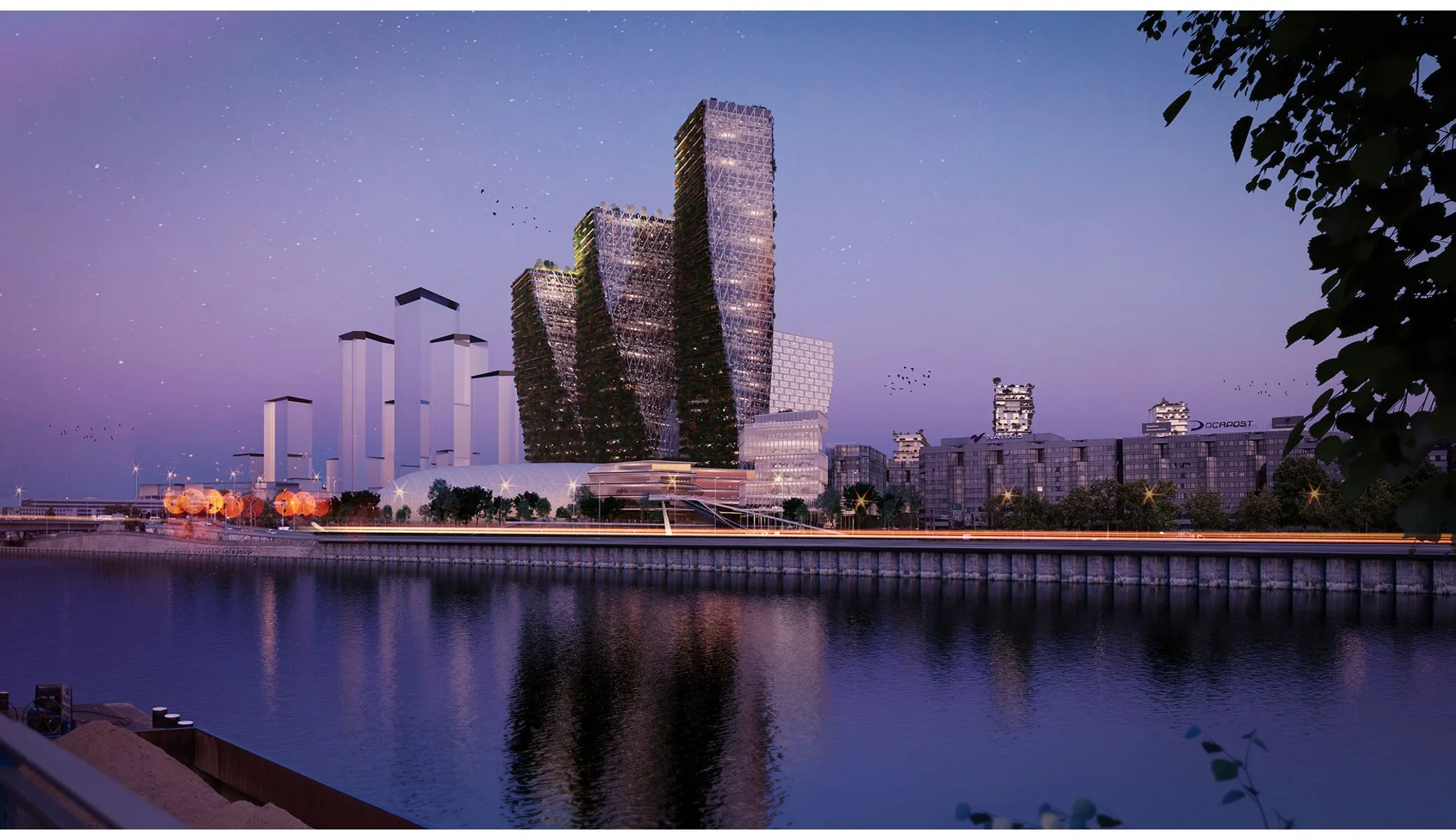
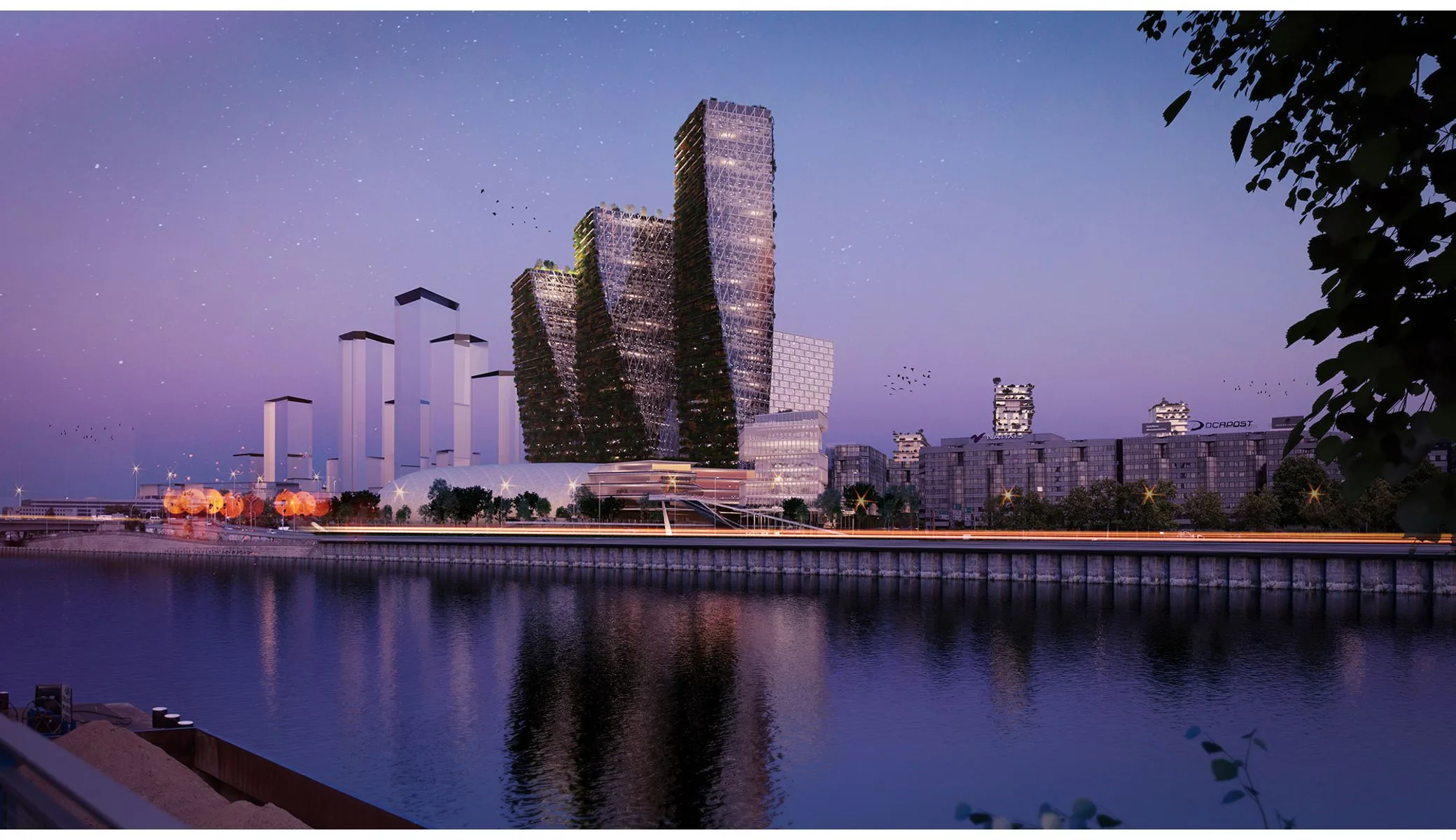
In Créteil, our project is part of a particular moment in the making of Grand Paris, when first-ring cities seek to assert their identity beyond their mere residential function. The Tree of Life is born from this ambition: not simply to build another tower, but to shape a **vertical piece of city** capable of radiating across the territory of Grand Paris Sud Est Avenir. We conceived this project as a strong architectural signal, a **signal-architecture** that embraces its verticality while maintaining an attentive dialogue with the ground, everyday uses, and the inhabitants who will pass through it.
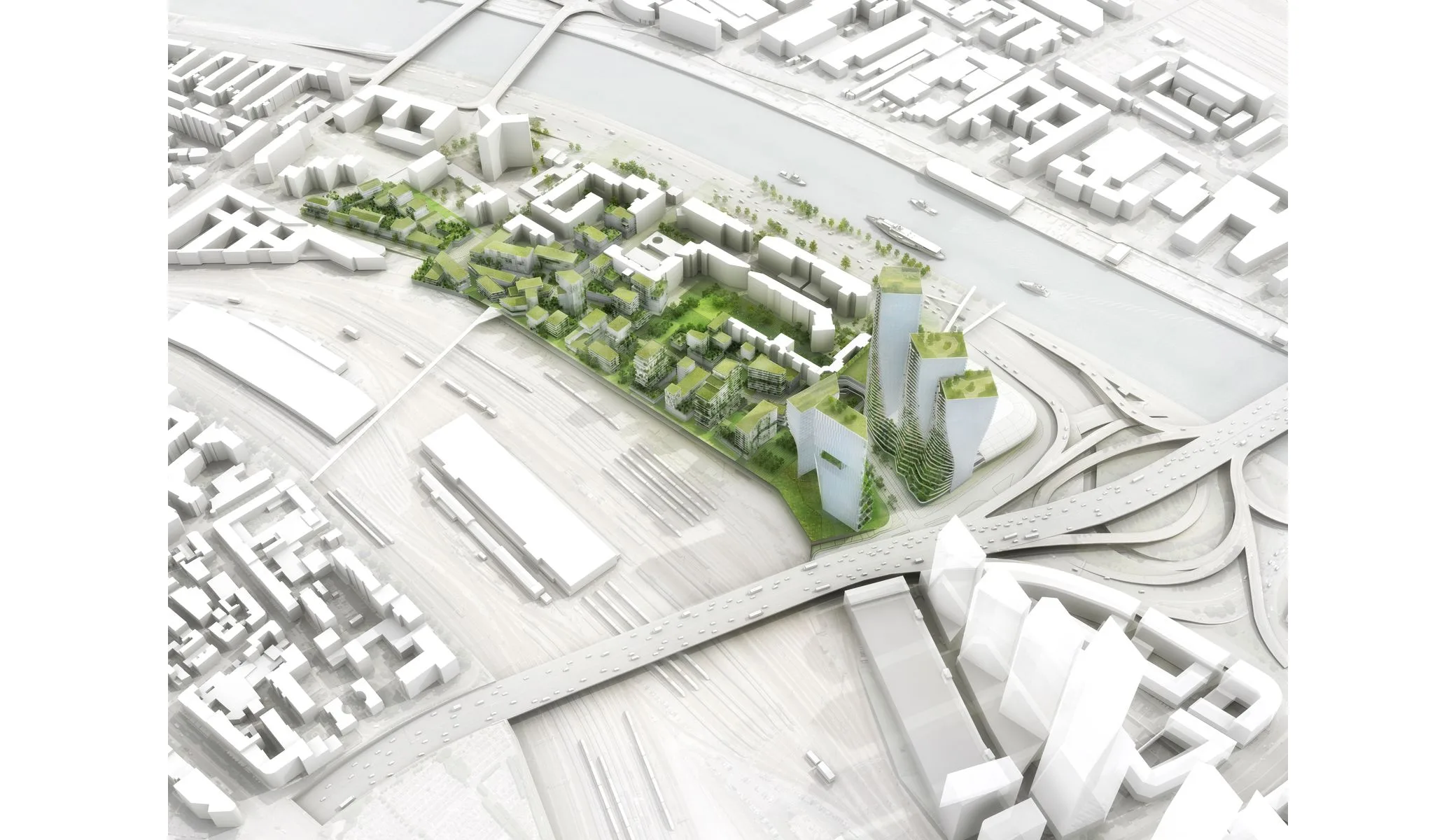
The Créteil site presents the particularity of suburban centralities: a fragmented urban fabric, inherited infrastructure, an existing shopping center that already structures flows without generating true urbanity. Our architectural approach is based on the idea of a **hybrid tower** that does not merely juxtapose programs, but weaves them together to create unexpected synergies. The challenge is not so much the height (which will make the Tree of Life one of Europe's tallest vegetated towers) as the way this verticality becomes a tool to **densify encounters**, multiply opportunities to meet others, to share common time.
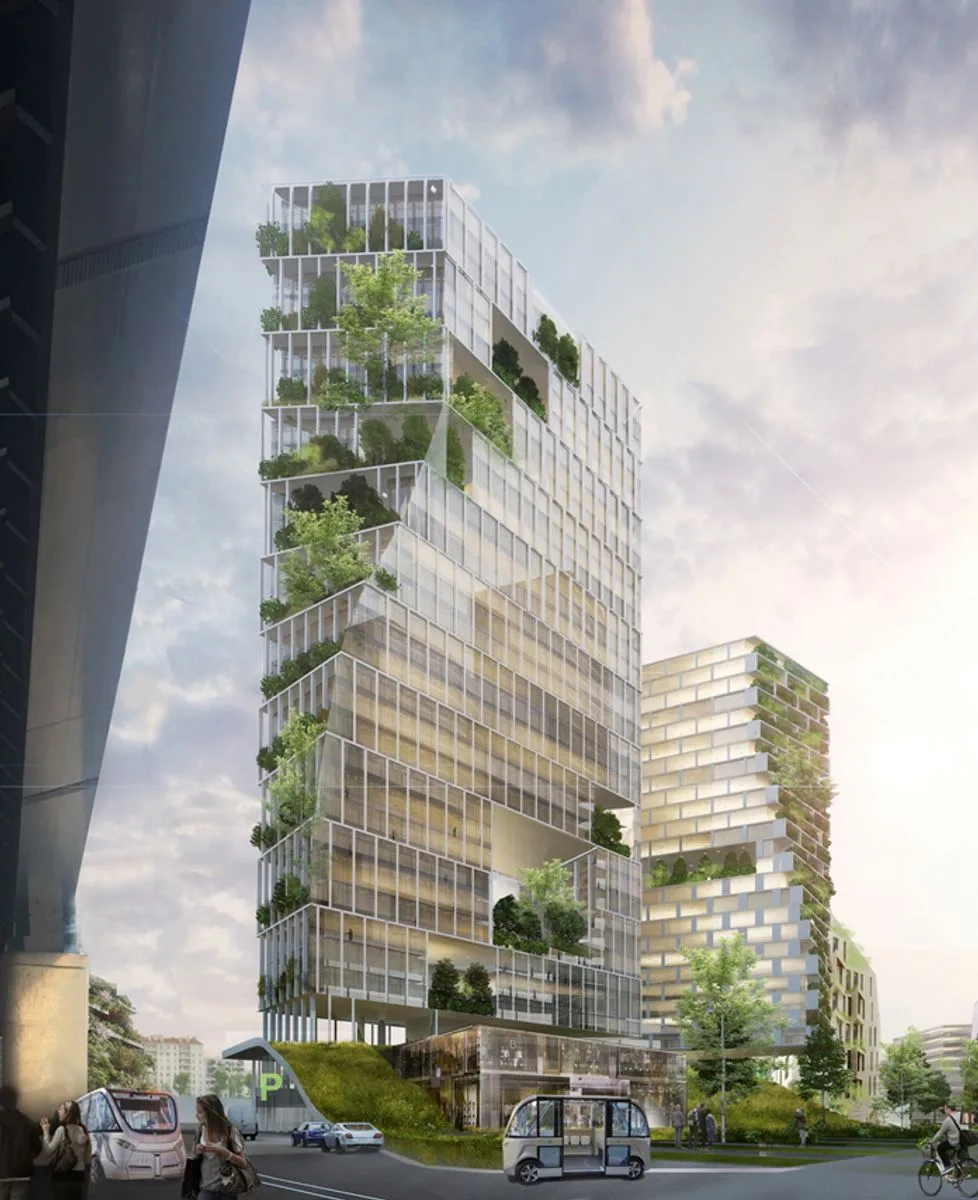
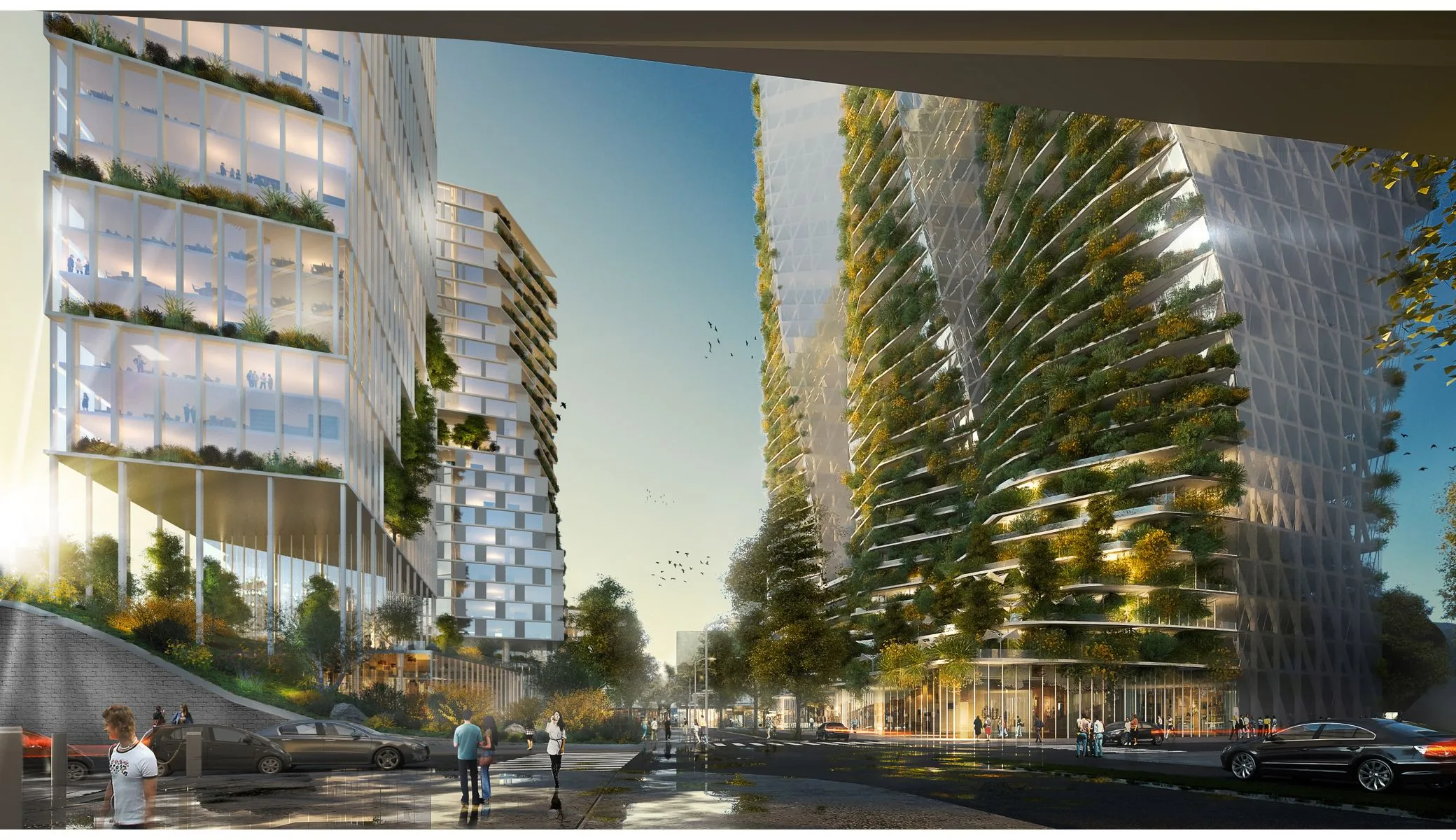
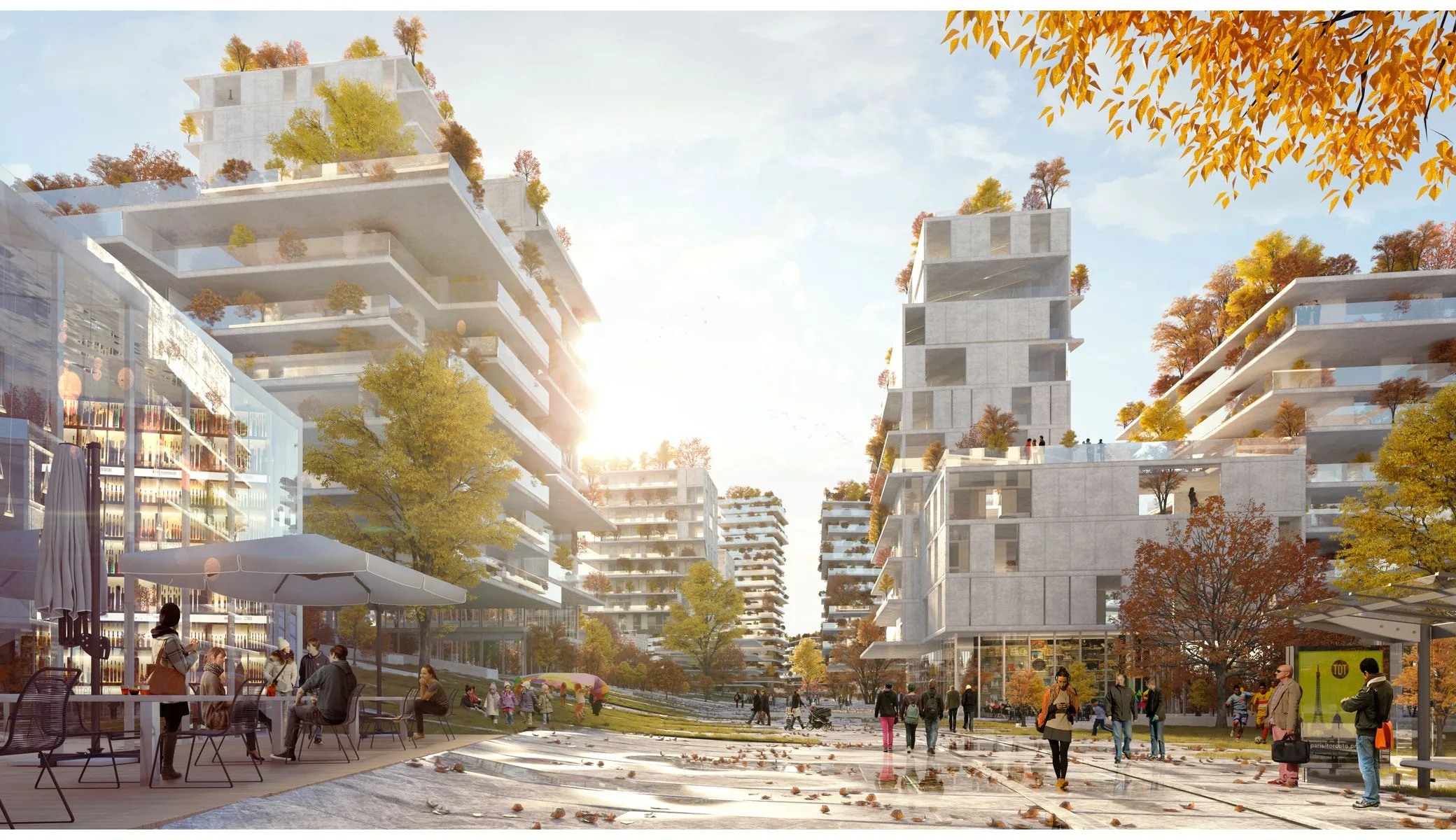
We conceived the **base** as a true urban platform, a transitional space between the lower city and the tower. This base is not a simple pedestal: it houses shops, a food court directly connected to the urban agriculture developed on the roof and intermediate terraces, amphitheaters and classrooms that open the project to training and knowledge exchange. The Sport-Health Cluster we integrate into the program complements this logic of **global well-being**, where architecture is no longer merely a container but an active support for physical, social, and alimentary practices. The base **resonates** with the surrounding public space, it unfolds, opens, invites promenade and dwelling. We refuse the monumental gesture that closes in on itself. On the contrary, each threshold, each interface is designed to be porous, so that nearby or distant residents can appropriate the project, make it a place of passage or destination.
The tower itself houses offices, housing, a student residence, a hotel. This **programmatic diversity** is not mere display: it is the engine of continuous life, of a building that knows no downtime, that vibrates at all hours of day and night. Students encounter workers, housing residents share common spaces with hotel guests, the food court becomes a meeting place for all. We seek to create a **social ecosystem** where generations and uses interact, mutually enrich each other. Architecture becomes the framework for these encounters, facilitating them through intermediate spaces, shared terraces, walkways that are not simple circulation but living spaces in their own right.
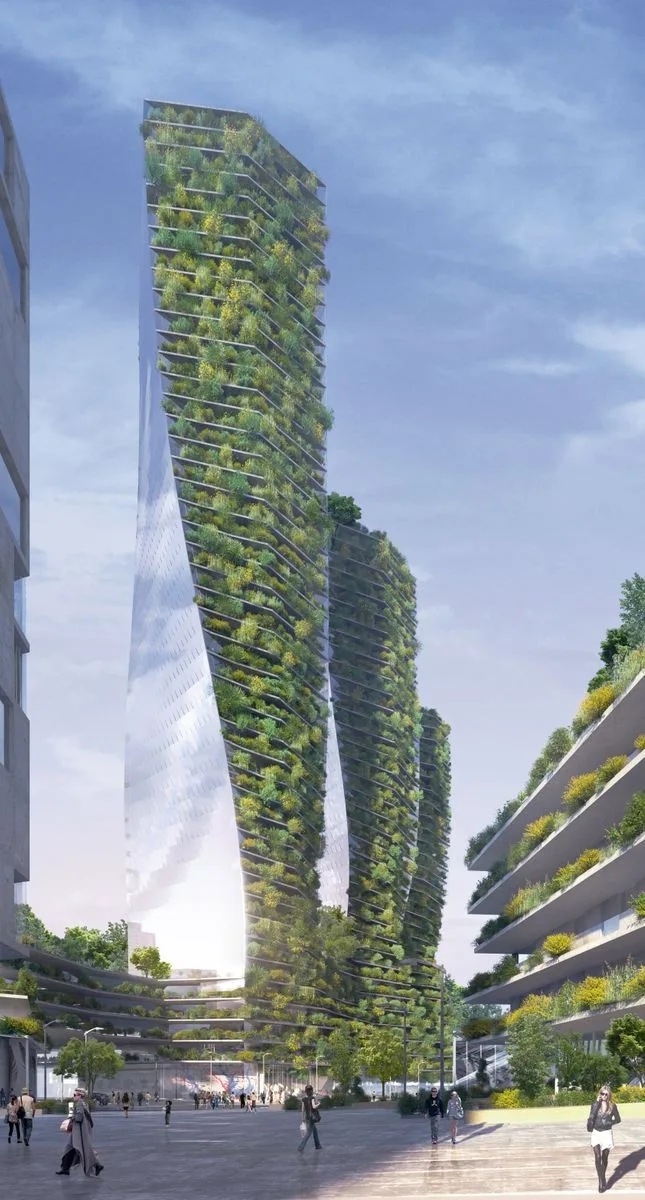
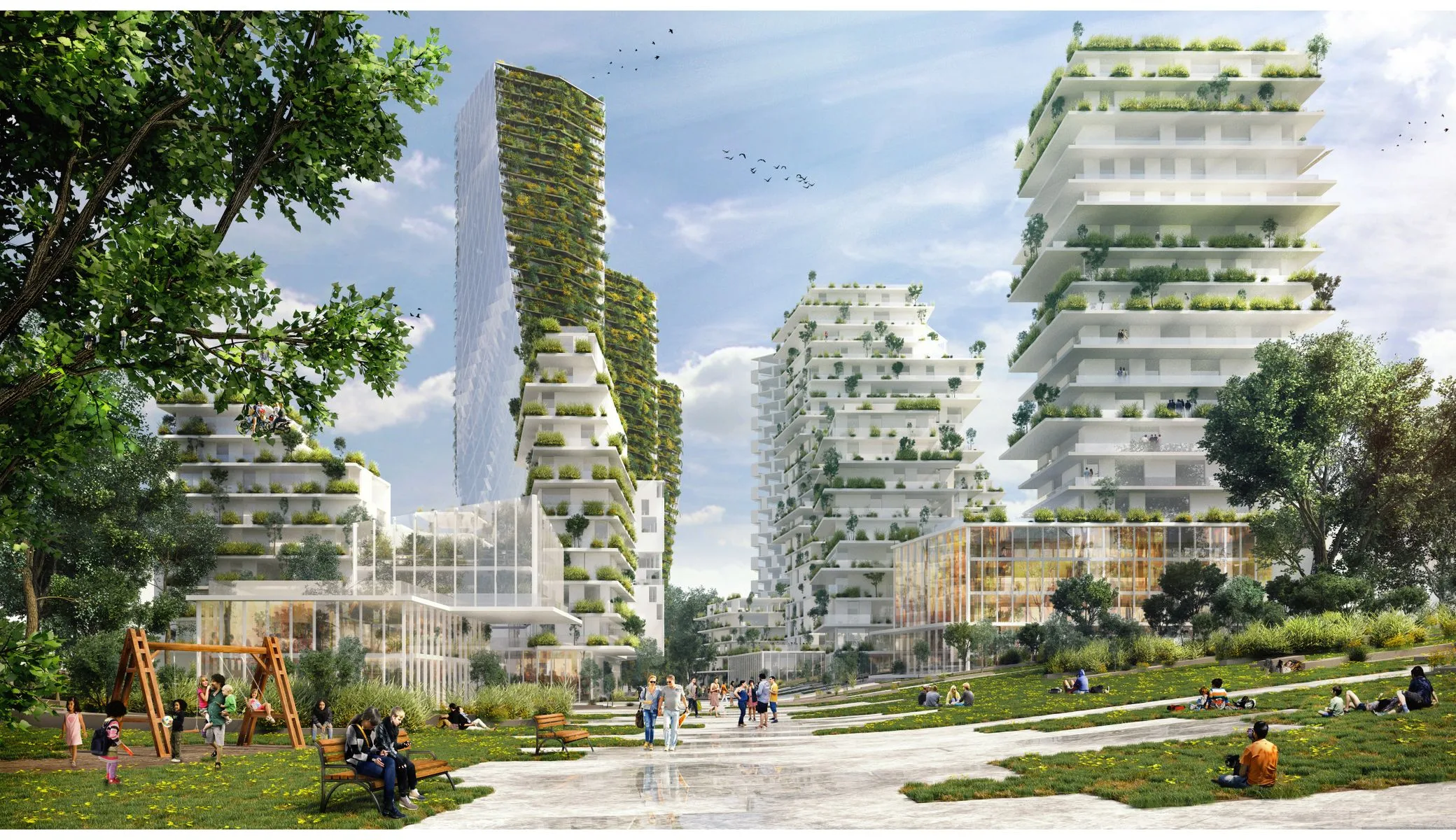
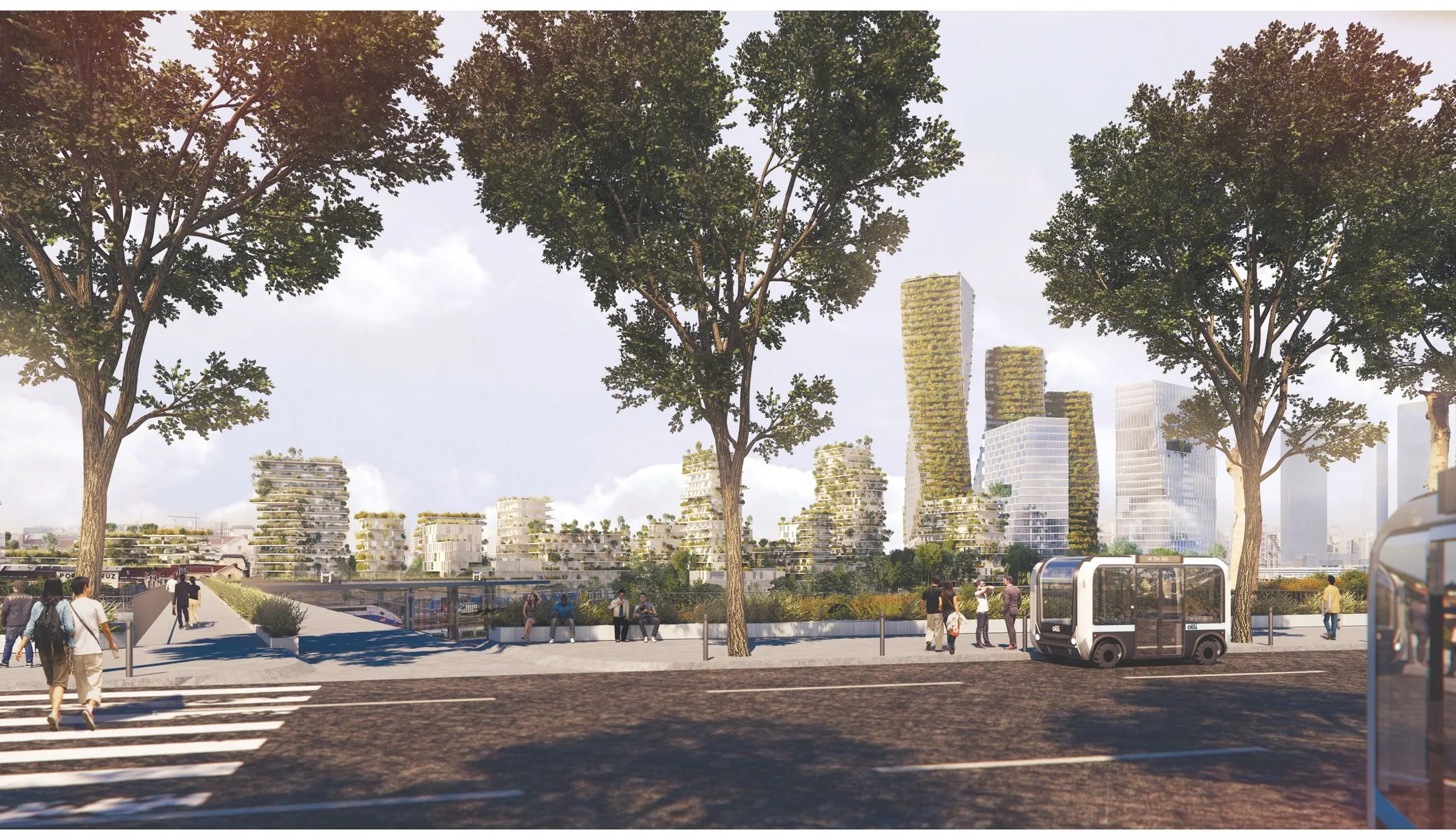
The **vegetal** dimension of the project is not decoration, a facade image. We developed a true three-dimensional vegetalization strategy, from ground to summit. Cultivated terraces host productive urban agriculture that directly supplies the food court, creating a **vertical short circuit**. Facades integrate climbing plants, shrubs in structural planters, support systems that allow vegetation to develop vertically without sacrificing species diversity. This plant cover plays an essential climatic role: it tempers facades, captures fine particles, offers refuges for urban biodiversity. The Tree of Life lives up to its name, conceived as a **living organism** that breathes, grows, evolves with the seasons.
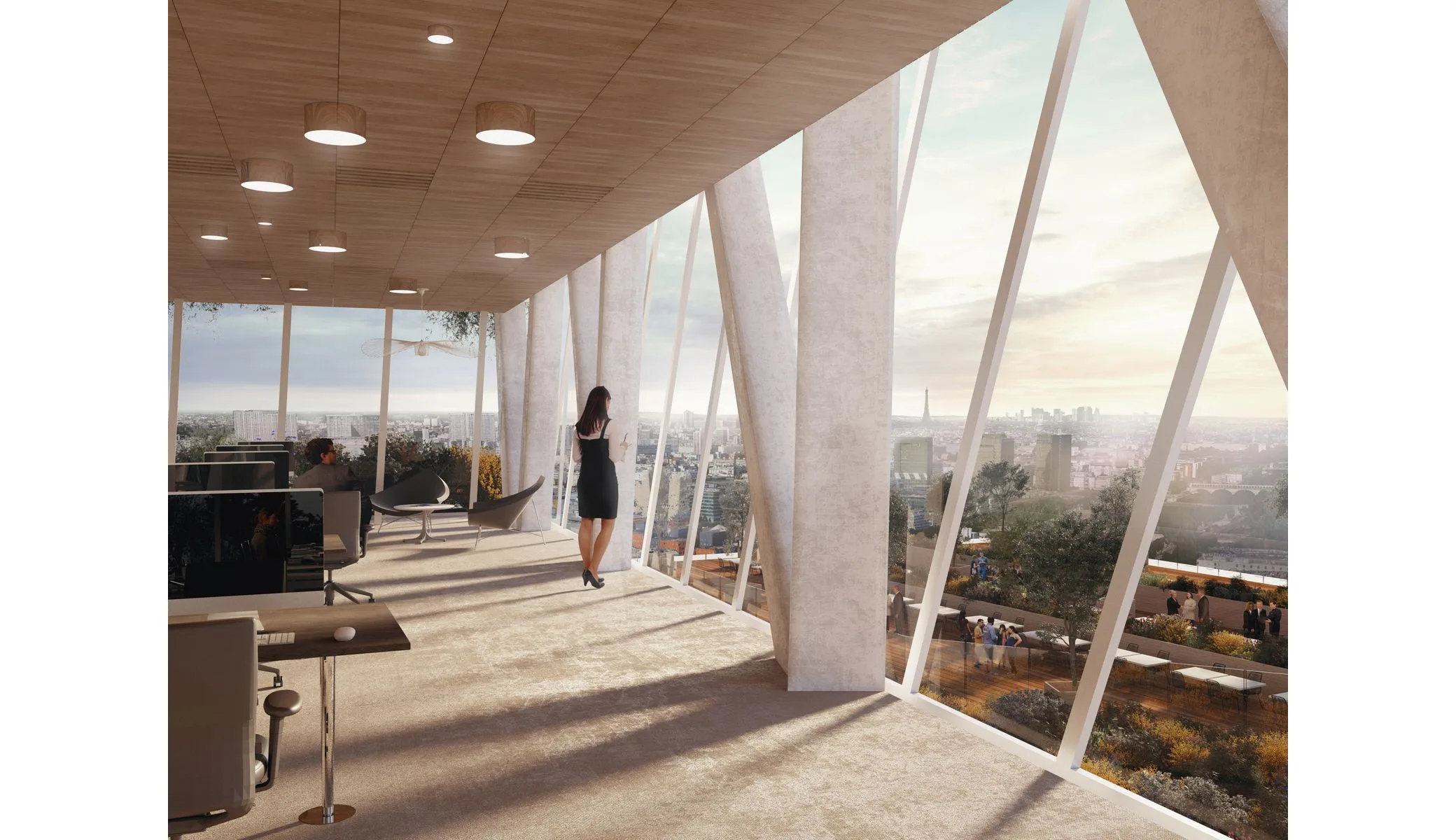
Our environmental approach goes beyond vegetation alone. We worked on volume compactness to limit energy loss, on facade orientation to optimize solar gains in winter and limit overheating in summer, on rainwater recovery for irrigating cultivated spaces. Structural materials (low-carbon concrete, wood for certain secondary frames) and envelope materials (biosourced insulation, high-performance glazing) were chosen for their **reduced carbon impact** and their ability to create comfortable interior atmospheres without systematic recourse to air conditioning. The tower roof, accessible to all, hosts a panoramic restaurant that becomes a place for contemplating the territory, a belvedere on Grand Paris in the making.
This project affirms that architecture can and must **render services** at different scales. At the user scale, it offers quality spaces, luminous, generous, open to the exterior. At the site scale, it restructures an urban fragment, creates a missing polarity, gives depth to a shopping center that was merely a consumption machine. At the scale of the Île-de-France territory, it contributes to East-West rebalancing, participates in Créteil's influence, proves that a first-ring city can carry architectural and urban ambitions on par with those of Paris proper.
We conceive the Tree of Life as a **new urban piece**, landscape and architectural, a hybrid object that refuses simple categories. It is neither solely an office tower, nor a housing building, nor a public facility, but all of this at once, in an assemblage that forms a system. This programmatic and architectural complexity is our response to the complexity of the contemporary city, to the necessity of creating **intergenerational**, **multifunctional**, **evolving** places. The Tree of Life will be a project marked by the seal of otherness, a building that does not merely serve its direct users but opens generously to all those who cross it, look at it, practice it, care for it. For an architectural project can no longer close in on itself: it must participate in constructing a common good, a shared space where everyone finds their place.
In Créteil, our project is part of a particular moment in the making of Grand Paris, when first-ring cities seek to assert their identity beyond their mere residential function. The Tree of Life is born from this ambition: not simply to build another tower, but to shape a **vertical piece of city** capable of radiating across the territory of Grand Paris Sud Est Avenir. We conceived this project as a strong architectural signal, a **signal-architecture** that embraces its verticality while maintaining an attentive dialogue with the ground, everyday uses, and the inhabitants who will pass through it.
The Créteil site presents the particularity of suburban centralities: a fragmented urban fabric, inherited infrastructure, an existing shopping center that already structures flows without generating true urbanity. Our architectural approach is based on the idea of a **hybrid tower** that does not merely juxtapose programs, but weaves them together to create unexpected synergies. The challenge is not so much the height (which will make the Tree of Life one of Europe's tallest vegetated towers) as the way this verticality becomes a tool to **densify encounters**, multiply opportunities to meet others, to share common time.
We conceived the **base** as a true urban platform, a transitional space between the lower city and the tower. This base is not a simple pedestal: it houses shops, a food court directly connected to the urban agriculture developed on the roof and intermediate terraces, amphitheaters and classrooms that open the project to training and knowledge exchange. The Sport-Health Cluster we integrate into the program complements this logic of **global well-being**, where architecture is no longer merely a container but an active support for physical, social, and alimentary practices. The base **resonates** with the surrounding public space, it unfolds, opens, invites promenade and dwelling. We refuse the monumental gesture that closes in on itself. On the contrary, each threshold, each interface is designed to be porous, so that nearby or distant residents can appropriate the project, make it a place of passage or destination.
The tower itself houses offices, housing, a student residence, a hotel. This **programmatic diversity** is not mere display: it is the engine of continuous life, of a building that knows no downtime, that vibrates at all hours of day and night. Students encounter workers, housing residents share common spaces with hotel guests, the food court becomes a meeting place for all. We seek to create a **social ecosystem** where generations and uses interact, mutually enrich each other. Architecture becomes the framework for these encounters, facilitating them through intermediate spaces, shared terraces, walkways that are not simple circulation but living spaces in their own right.
The **vegetal** dimension of the project is not decoration, a facade image. We developed a true three-dimensional vegetalization strategy, from ground to summit. Cultivated terraces host productive urban agriculture that directly supplies the food court, creating a **vertical short circuit**. Facades integrate climbing plants, shrubs in structural planters, support systems that allow vegetation to develop vertically without sacrificing species diversity. This plant cover plays an essential climatic role: it tempers facades, captures fine particles, offers refuges for urban biodiversity. The Tree of Life lives up to its name, conceived as a **living organism** that breathes, grows, evolves with the seasons.
Our environmental approach goes beyond vegetation alone. We worked on volume compactness to limit energy loss, on facade orientation to optimize solar gains in winter and limit overheating in summer, on rainwater recovery for irrigating cultivated spaces. Structural materials (low-carbon concrete, wood for certain secondary frames) and envelope materials (biosourced insulation, high-performance glazing) were chosen for their **reduced carbon impact** and their ability to create comfortable interior atmospheres without systematic recourse to air conditioning. The tower roof, accessible to all, hosts a panoramic restaurant that becomes a place for contemplating the territory, a belvedere on Grand Paris in the making.
This project affirms that architecture can and must **render services** at different scales. At the user scale, it offers quality spaces, luminous, generous, open to the exterior. At the site scale, it restructures an urban fragment, creates a missing polarity, gives depth to a shopping center that was merely a consumption machine. At the scale of the Île-de-France territory, it contributes to East-West rebalancing, participates in Créteil's influence, proves that a first-ring city can carry architectural and urban ambitions on par with those of Paris proper.
We conceive the Tree of Life as a **new urban piece**, landscape and architectural, a hybrid object that refuses simple categories. It is neither solely an office tower, nor a housing building, nor a public facility, but all of this at once, in an assemblage that forms a system. This programmatic and architectural complexity is our response to the complexity of the contemporary city, to the necessity of creating **intergenerational**, **multifunctional**, **evolving** places. The Tree of Life will be a project marked by the seal of otherness, a building that does not merely serve its direct users but opens generously to all those who cross it, look at it, practice it, care for it. For an architectural project can no longer close in on itself: it must participate in constructing a common good, a shared space where everyone finds their place.
- Lieu
- Charenton, France
- Nature
- Mixte
- Surface
- 300 000 m²
- Budget
- Confidentiel
- Concours
- 2017
- MOA
- Aténor
- Co-architectes
- A2M Bruxelles + EAI