
Ecotone Antibes
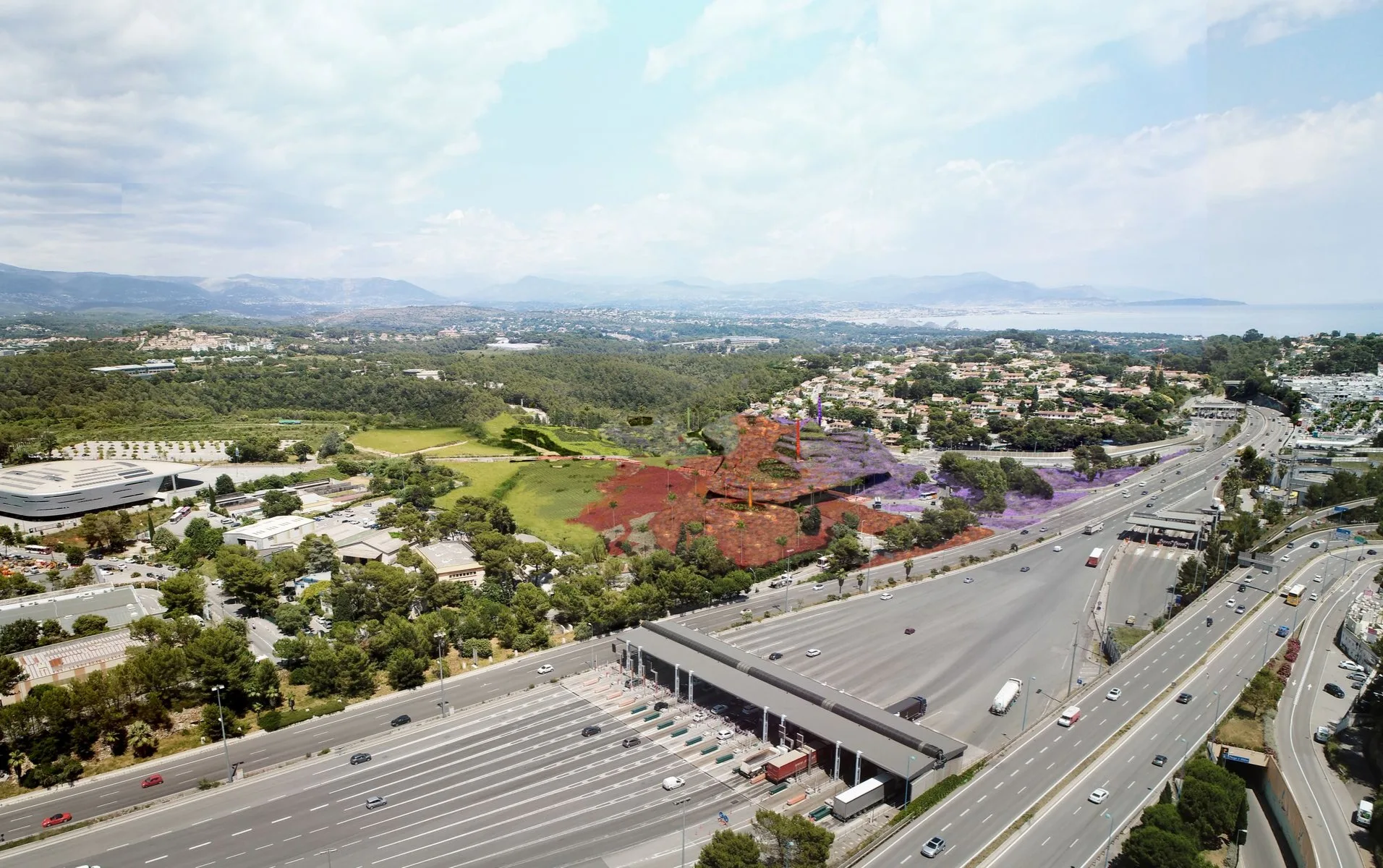
OXO Architectes, Les Ateliers Jean Nouvel, and Foussat Bapt agency are pleased to announce that they have been selected as winners of the competition for the development of the Trois Moulins site in Antibes with their project Ecotone Antibes. Our team, accompanied by landscape architect Jean Mus, shares a triple ambition for the project: - To make Ecotone Antibes the gateway and tertiary image of Sophia Antipolis, - To create the model for 21st-century campuses in France, - To make Ecotone Antibes the center of excellence for biomimicry in southern France. Composed of tertiary activities, hospitality, and services, Ecotone Antibes will be surrounded by green spaces.
At the entrance to Sophia Antipolis, Europe's leading technology park nestled between sea and hills, the Trois Moulins site in Antibes represented a rare opportunity: to rethink the very image of the contemporary campus. We responded to this call in 2018 alongside Les Ateliers Jean Nouvel and Foussat Bapt agency, together carrying a vision that transcends simple tertiary construction. **Ecotone Antibes** embodies our conviction that architecture can, and must, reconcile technological innovation with natural intelligence. The very term ecotone, borrowed from ecology, designates that fertile transition zone where two ecosystems meet and mutually enrich each other. This is precisely the dialogue we seek to materialize here: between city and nature, between work and well-being, between mineral and living.
**The context demanded a dual response**. On one hand, to establish a new gateway for Sophia Antipolis, to offer it a contemporary architectural statement capable of symbolizing its transformation toward a more sustainable, more open model, less dependent on automobiles and urban sprawl. On the other hand, to invent a place of collective life where the 41,000 m² program, offices, hotel, retail, student residence, does not merely juxtapose but truly hybridizes. We reject the idea of functional zoning inherited from the 20th century. Ecotone Antibes instead proposes **programmatic porosity**: tertiary spaces open onto traversing gardens, the hotel dialogues with shared facilities, the student residence benefits from campus amenities without dissolving into them.
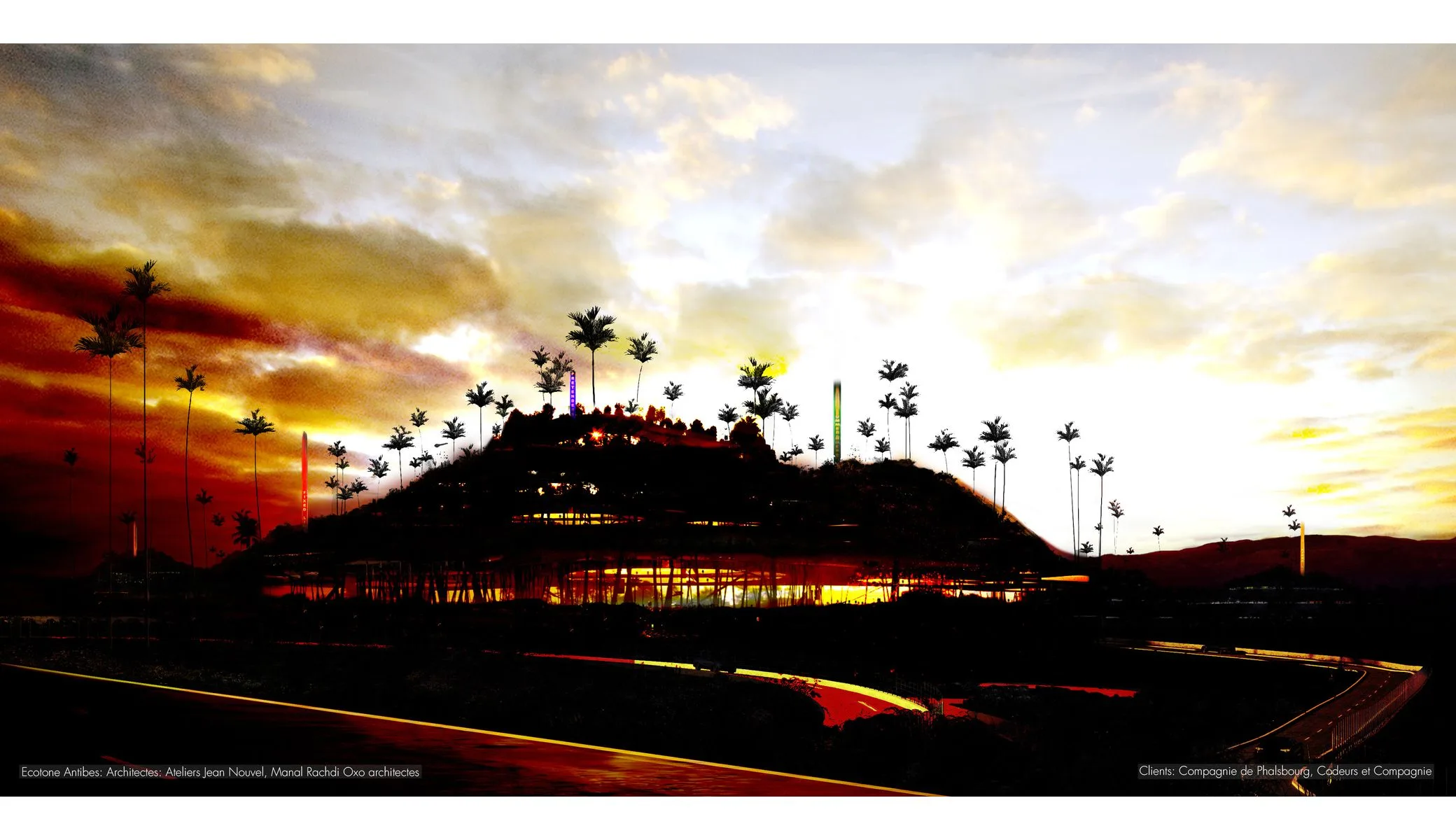
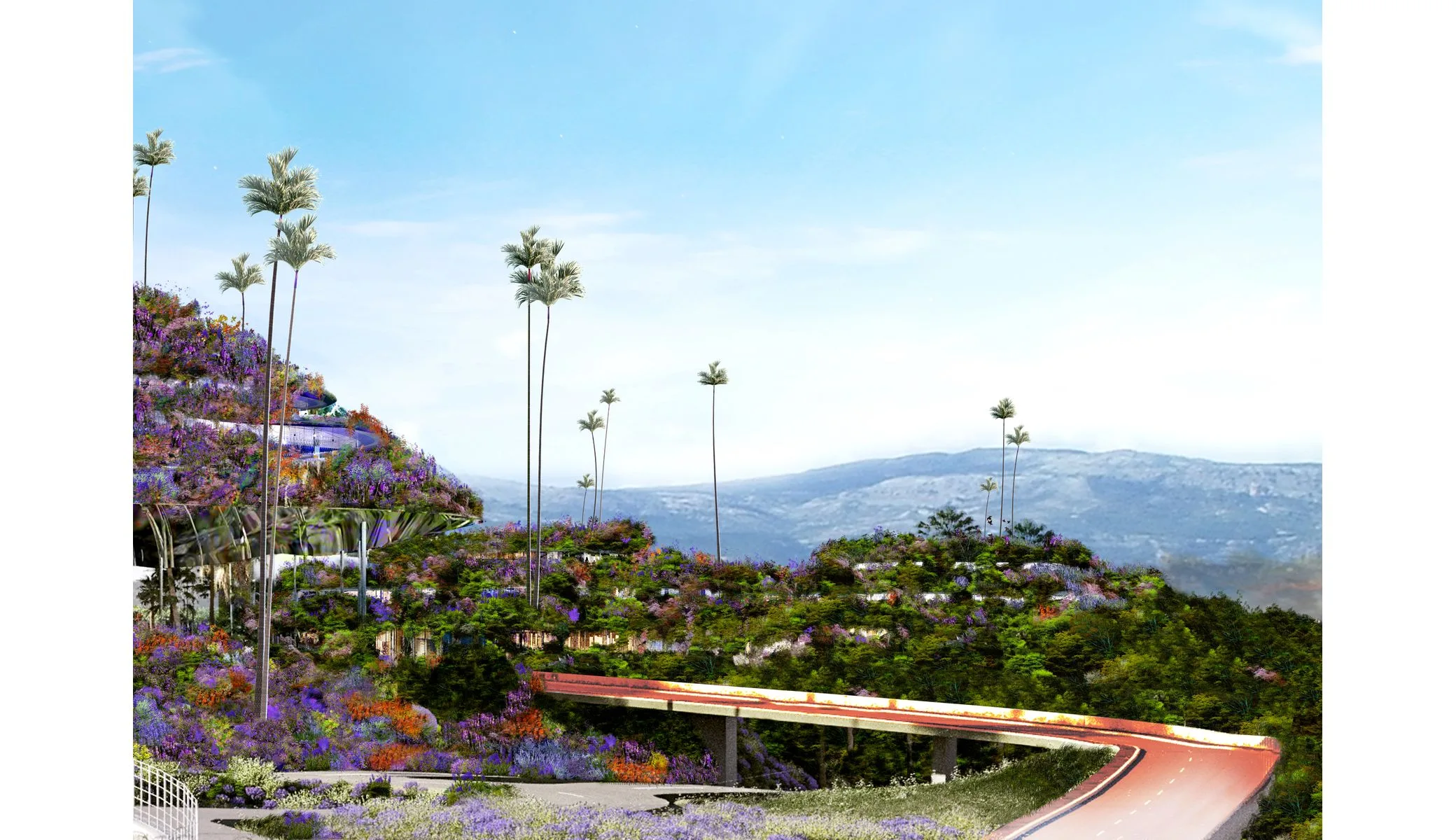
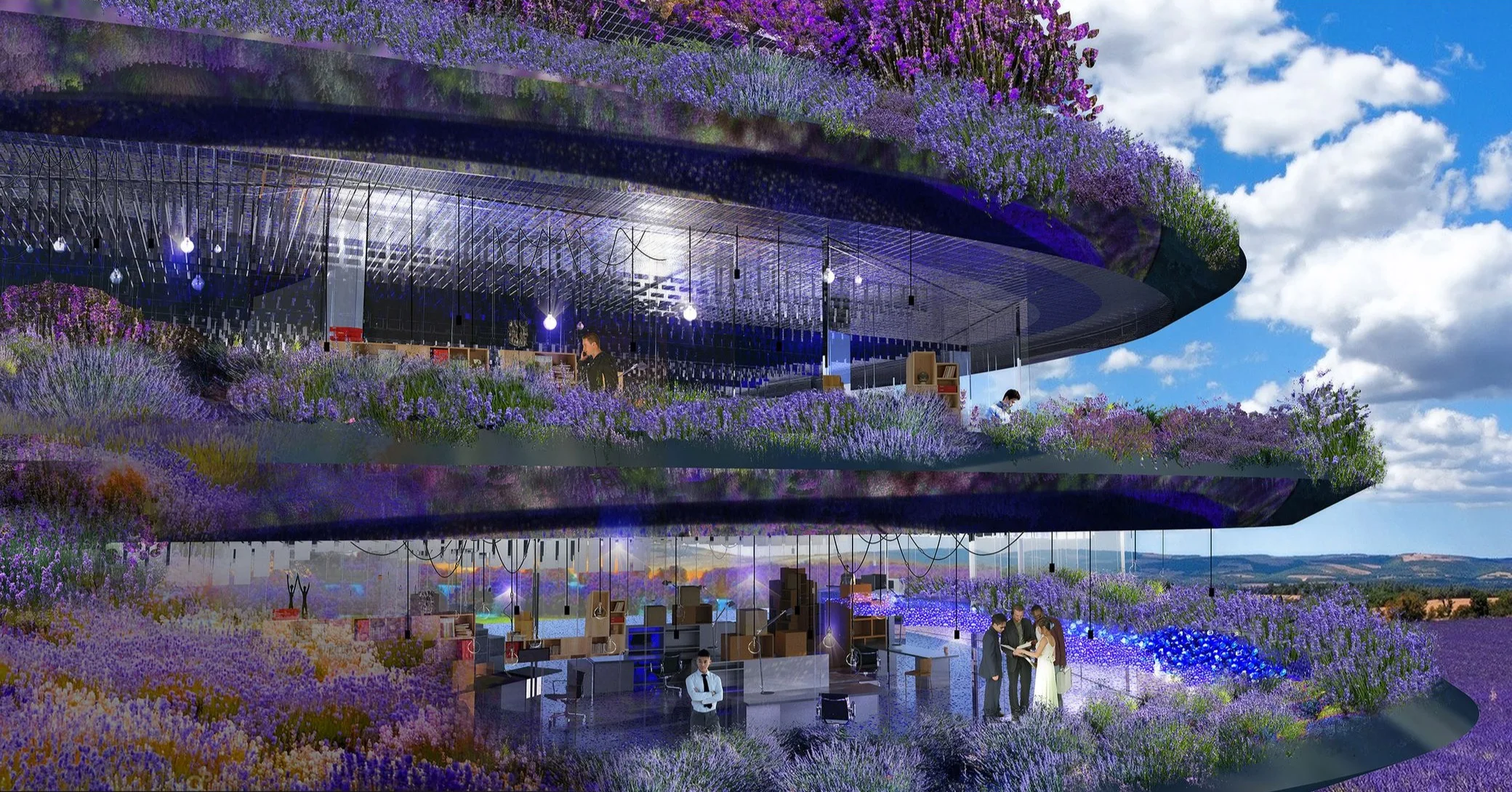
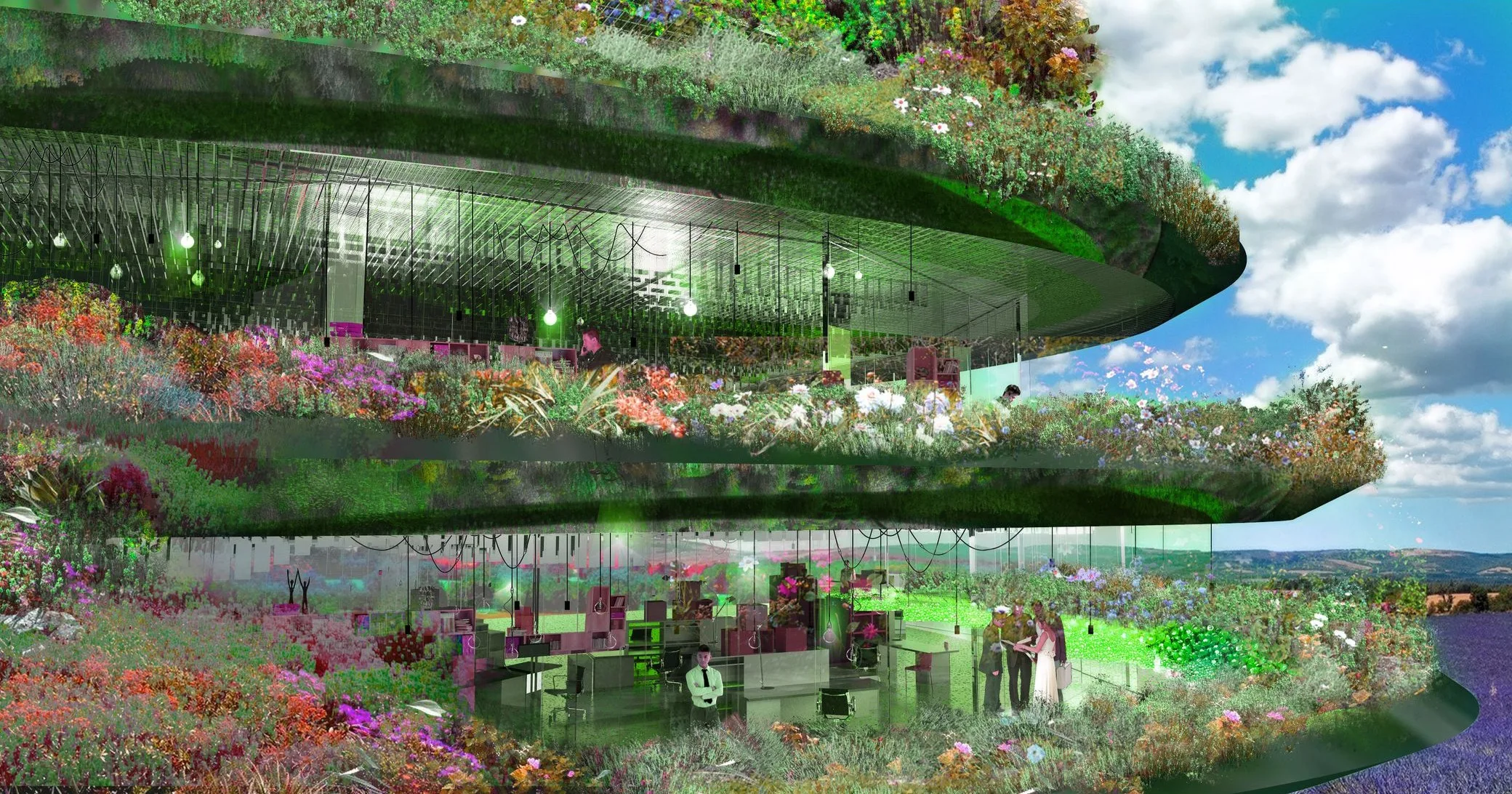
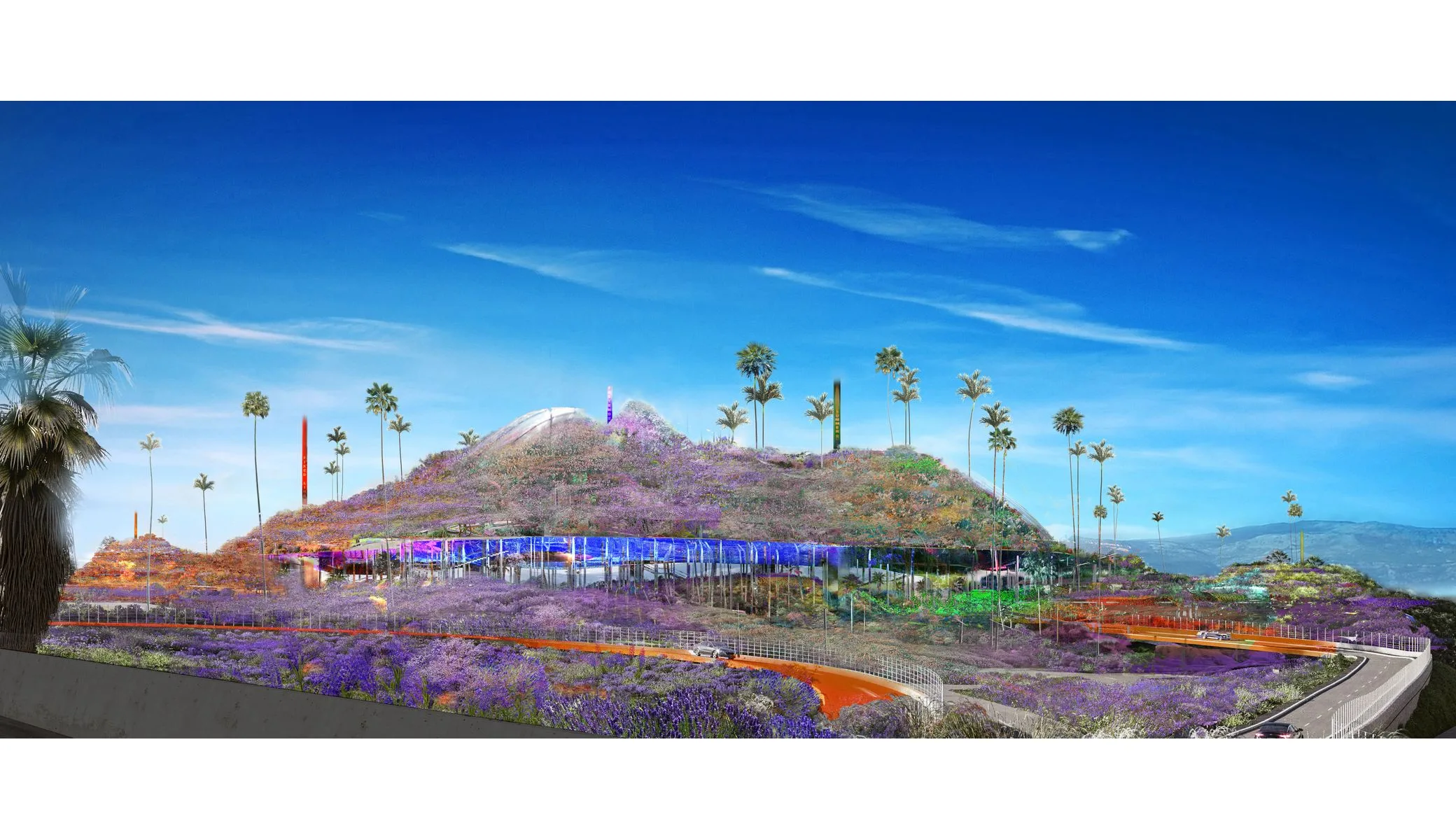
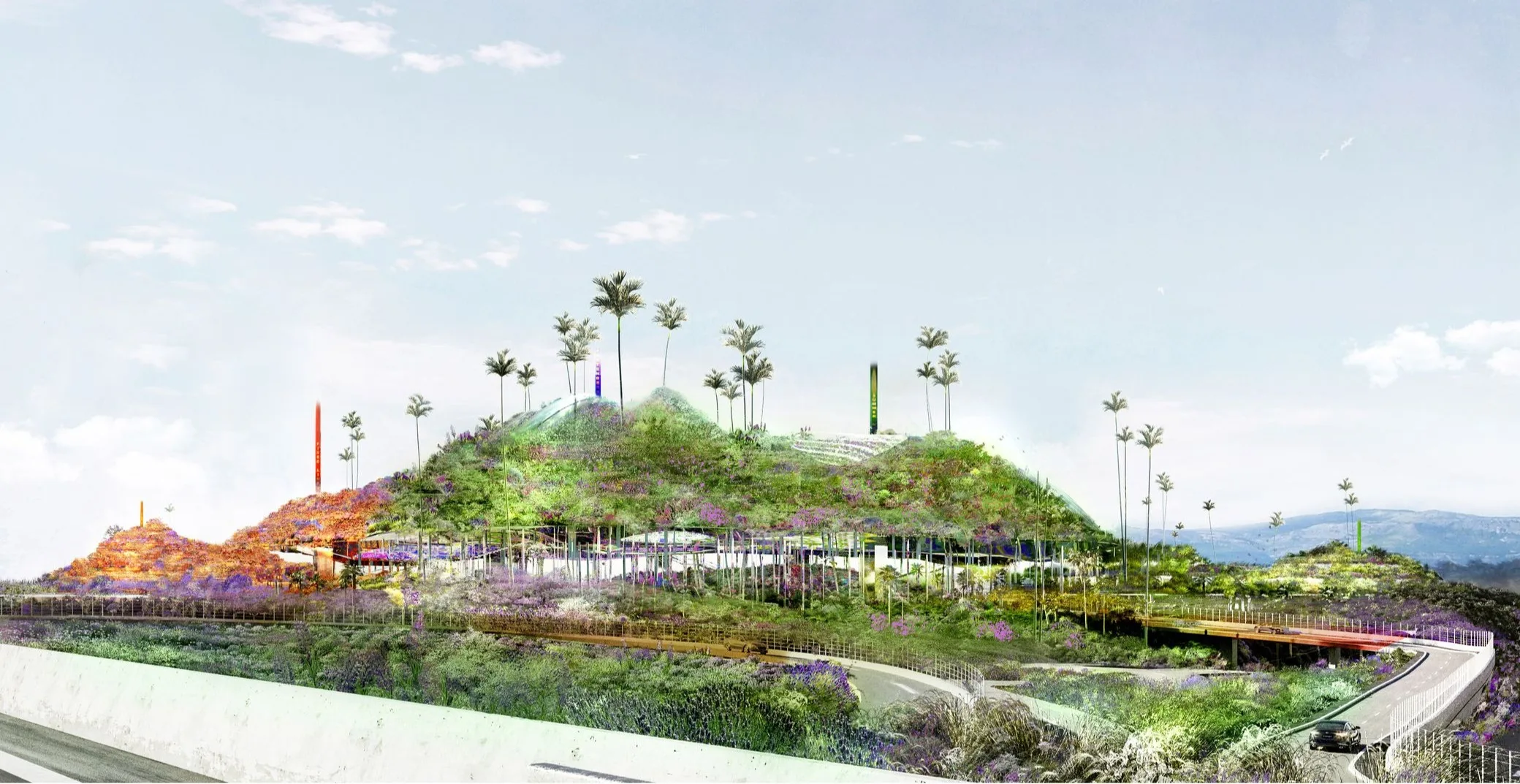
Our collaboration with Jean Mus, landscape architect, was decisive from the project's inception. We did not design a building to be subsequently "greened": we conceived **an inhabited landscape**, a constructed topography that inscribes itself in continuity with the Azurean reliefs. The edifice does not impose itself as a monolith but unfolds in strata, in successive terraces that embrace the terrain's curves and maximize views toward the Mediterranean. This tiered geometry creates a multitude of private or semi-public outdoor spaces, suspended gardens that fragment the built mass and allow true respiration. Each level thus benefits from an outdoor extension, blurring the traditional boundary between inside and outside.
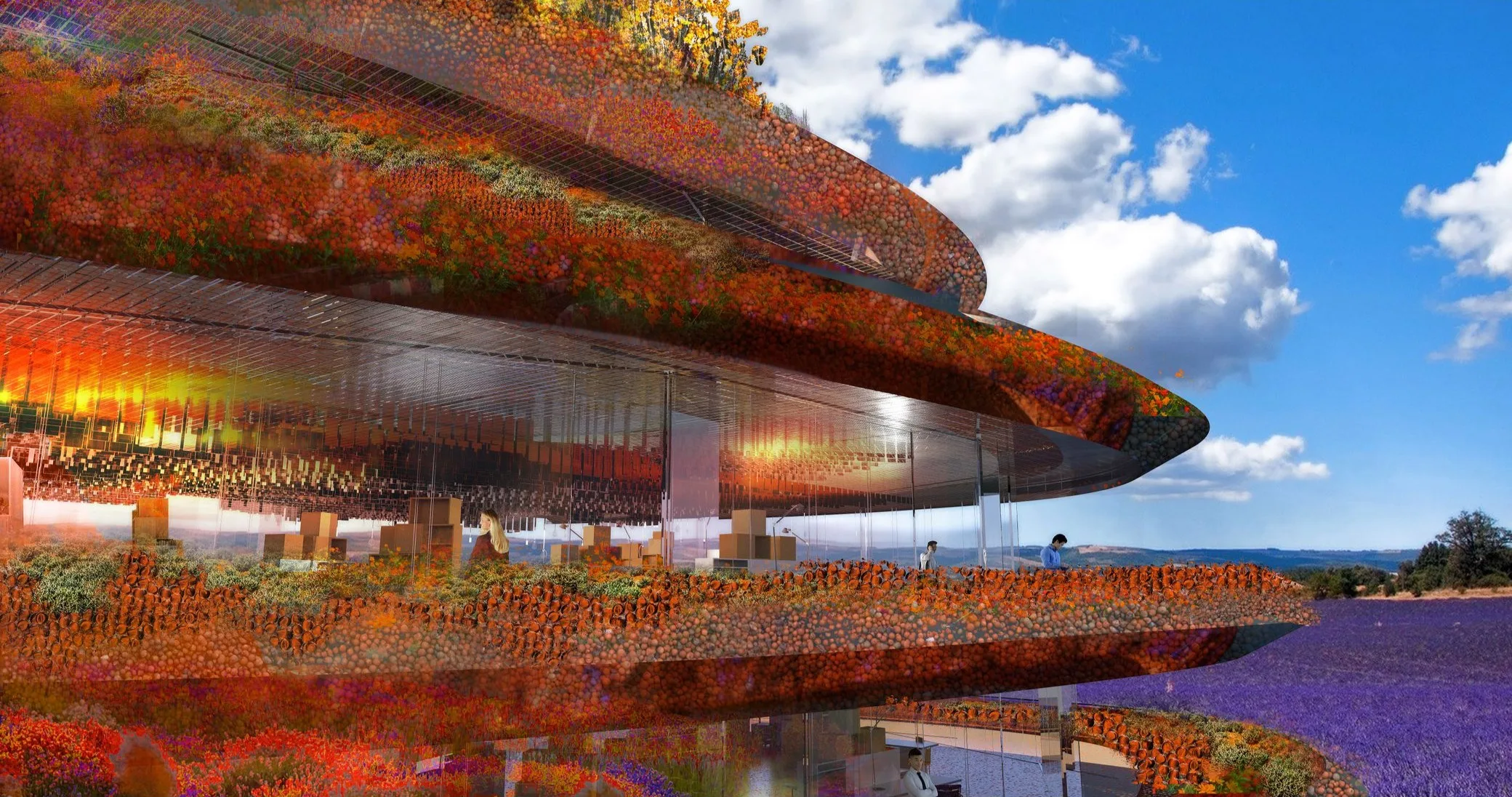
The project carries a strong environmental ambition, anchored in an approach of **biomimicry** that we claim as a structuring axis. Biomimicry does not consist of decorating a façade with natural motifs, but of drawing inspiration from living strategies to solve concrete technical problems. Ecotone Antibes's envelope functions like an intelligent skin, an epidermis capable of regulating thermal inputs, filtering light, managing air flows. This constructive membrane borrows its principles from adaptive systems observed in nature: it protects from summer sun without obstructing views, favors natural ventilation, integrates rainwater recovery devices. By elevating the levels and creating planted vertical breaks, it also isolates work spaces from noise pollution generated by road proximity.
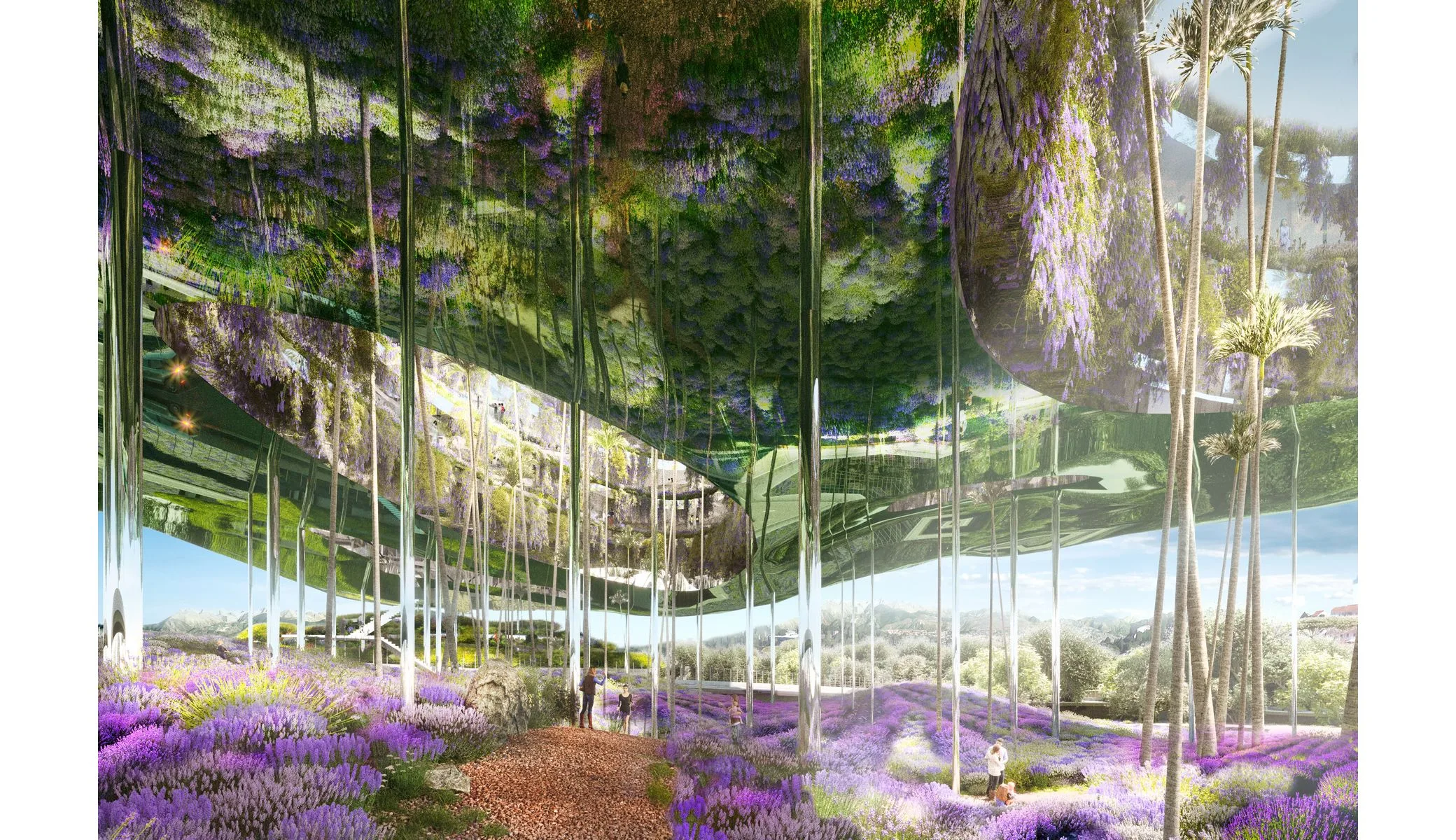
**We wanted to make Ecotone the center of excellence for biomimicry in southern France**, a place where this approach does not remain theoretical but translates into the project's very materiality. The façades integrate sunshades whose orientation varies according to exposure, deep loggias that create temperate micro-climates, structural planters that participate simultaneously in thermal insulation and users' psychological comfort. Greening is not cosmetic: it is conceived in ecological strata, with Mediterranean species adapted to the local climate, requiring little water, favoring biodiversity and creating corridors for small fauna.
The spatial organization responds to a logic of **evolving floor plates**. We reject the rigidity of compartmentalized plans in favor of large modular surfaces, capable of accommodating both growing companies and nomadic teams, coworking spaces or research laboratories. This programmatic flexibility corresponds to contemporary work transformations: decompartmentalization, mobility, hybridization of functions. Vertical circulations are not relegated to the building's core but generously inhabit the interfaces, offering spaces for informal meetings, breaks, serendipity. For a 21st-century campus is measured not only in square meters of offices but in quality of life, in capacity to foster exchanges, creativity, well-being.
The presence of the hotel and student residence reinforces this vocation as a **place of continuous life**, active beyond office hours. Ecotone Antibes aspires to become a piece of city in its own right, with its neighborhood shops, sports and cultural facilities, dining spaces open to the exterior. The ground floor is entirely porous, traversable, connected to soft mobility routes that irrigate Sophia Antipolis. We work on the continuity of floors, of plant atmospheres, so that the transition between public space and semi-private space occurs naturally, without abrupt rupture.
With our partners at Les Ateliers Jean Nouvel and Foussat Bapt, we share the same requirement: that of **architecture that does not merely consume nature but positively contributes to its cycle**. Ecotone Antibes aspires to produce more energy than it consumes, to return more water to the ground than it captures, to offer more biodiversity than it destroys. This ambition does not derive from utopia but from rigorous engineering, from close work with environmental consulting firms, from constant attention to performance without sacrificing sensory experience. For ultimately, our profession consists of creating places where it is good to live, work, meet, places that respect their environment not through regulatory constraint but through ethical and poetic necessity. Ecotone Antibes embodies this conviction: ecology is not a supplement to the soul but the very foundation of all contemporary architectural projects.
**The context demanded a dual response**. On one hand, to establish a new gateway for Sophia Antipolis, to offer it a contemporary architectural statement capable of symbolizing its transformation toward a more sustainable, more open model, less dependent on automobiles and urban sprawl. On the other hand, to invent a place of collective life where the 41,000 m² program, offices, hotel, retail, student residence, does not merely juxtapose but truly hybridizes. We reject the idea of functional zoning inherited from the 20th century. Ecotone Antibes instead proposes **programmatic porosity**: tertiary spaces open onto traversing gardens, the hotel dialogues with shared facilities, the student residence benefits from campus amenities without dissolving into them.
Our collaboration with Jean Mus, landscape architect, was decisive from the project's inception. We did not design a building to be subsequently "greened": we conceived **an inhabited landscape**, a constructed topography that inscribes itself in continuity with the Azurean reliefs. The edifice does not impose itself as a monolith but unfolds in strata, in successive terraces that embrace the terrain's curves and maximize views toward the Mediterranean. This tiered geometry creates a multitude of private or semi-public outdoor spaces, suspended gardens that fragment the built mass and allow true respiration. Each level thus benefits from an outdoor extension, blurring the traditional boundary between inside and outside.
The project carries a strong environmental ambition, anchored in an approach of **biomimicry** that we claim as a structuring axis. Biomimicry does not consist of decorating a façade with natural motifs, but of drawing inspiration from living strategies to solve concrete technical problems. Ecotone Antibes's envelope functions like an intelligent skin, an epidermis capable of regulating thermal inputs, filtering light, managing air flows. This constructive membrane borrows its principles from adaptive systems observed in nature: it protects from summer sun without obstructing views, favors natural ventilation, integrates rainwater recovery devices. By elevating the levels and creating planted vertical breaks, it also isolates work spaces from noise pollution generated by road proximity.
**We wanted to make Ecotone the center of excellence for biomimicry in southern France**, a place where this approach does not remain theoretical but translates into the project's very materiality. The façades integrate sunshades whose orientation varies according to exposure, deep loggias that create temperate micro-climates, structural planters that participate simultaneously in thermal insulation and users' psychological comfort. Greening is not cosmetic: it is conceived in ecological strata, with Mediterranean species adapted to the local climate, requiring little water, favoring biodiversity and creating corridors for small fauna.
The spatial organization responds to a logic of **evolving floor plates**. We reject the rigidity of compartmentalized plans in favor of large modular surfaces, capable of accommodating both growing companies and nomadic teams, coworking spaces or research laboratories. This programmatic flexibility corresponds to contemporary work transformations: decompartmentalization, mobility, hybridization of functions. Vertical circulations are not relegated to the building's core but generously inhabit the interfaces, offering spaces for informal meetings, breaks, serendipity. For a 21st-century campus is measured not only in square meters of offices but in quality of life, in capacity to foster exchanges, creativity, well-being.
The presence of the hotel and student residence reinforces this vocation as a **place of continuous life**, active beyond office hours. Ecotone Antibes aspires to become a piece of city in its own right, with its neighborhood shops, sports and cultural facilities, dining spaces open to the exterior. The ground floor is entirely porous, traversable, connected to soft mobility routes that irrigate Sophia Antipolis. We work on the continuity of floors, of plant atmospheres, so that the transition between public space and semi-private space occurs naturally, without abrupt rupture.
With our partners at Les Ateliers Jean Nouvel and Foussat Bapt, we share the same requirement: that of **architecture that does not merely consume nature but positively contributes to its cycle**. Ecotone Antibes aspires to produce more energy than it consumes, to return more water to the ground than it captures, to offer more biodiversity than it destroys. This ambition does not derive from utopia but from rigorous engineering, from close work with environmental consulting firms, from constant attention to performance without sacrificing sensory experience. For ultimately, our profession consists of creating places where it is good to live, work, meet, places that respect their environment not through regulatory constraint but through ethical and poetic necessity. Ecotone Antibes embodies this conviction: ecology is not a supplement to the soul but the very foundation of all contemporary architectural projects.
- Lieu
- Antibes
- Nature
- Mixte
- Surface
- 41 187 m²
- Concours
- 2018
- MOA
- Compagnie de Phalsbourg, Codeurs et Compagnie
- Co-architectes
- Ateliers Jean Nouvel, Foussat Bapt