
Talent Makers Lab
The architecture of the Talent Makers Lab draws inspiration from its context and reveals it. Our intention is to create the first plant-based ecosystem centered around work. We propose a block that is 50% planted and 50% built, offering a high-quality living and working environment for future users.
In Angers, the Talent Makers Lab positions itself as an architectural manifesto where the boundary between built form and vegetation becomes porous, even obsolete. In collaboration with Sou Fujimoto Architects, we developed a project that refuses any clear separation between interior and exterior, between construction and landscape. The ambition is not simply to add greenery to an office and housing program, but to make vegetation the primary material of architecture itself, its conceptual and spatial framework.
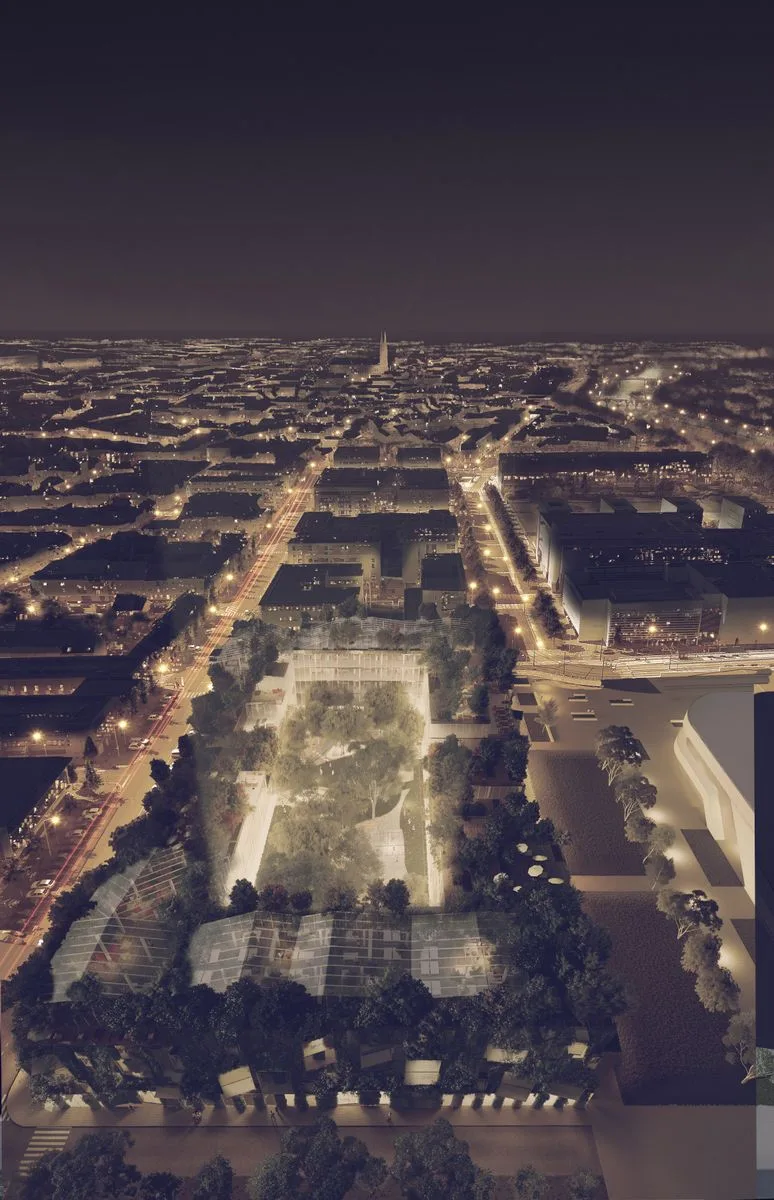
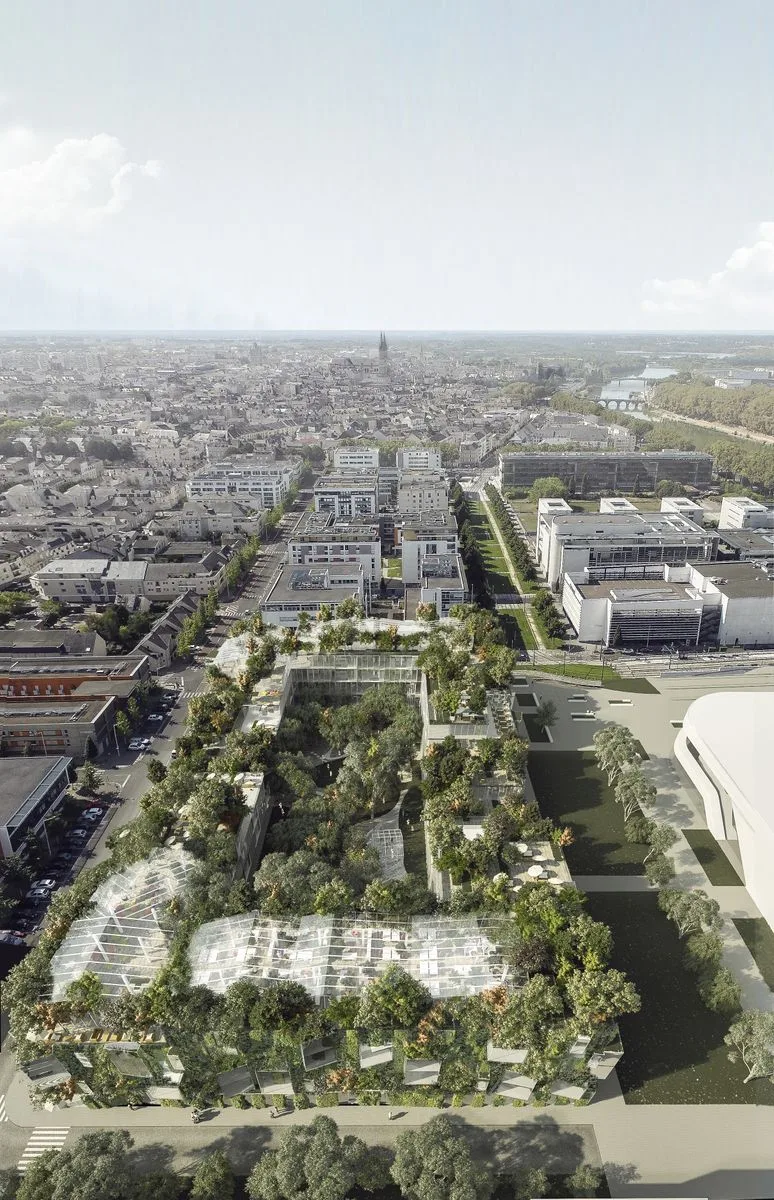
The Angers site invited us to extend the city's commitment to an urban fabric irrigated by nature. Rather than opposing urban density and biodiversity, we imagined a block where these two realities coexist in a strictly equal proportion: 50% planted surfaces, 50% built surfaces. This ratio is not a compromise, it is an acknowledged programmatic balance. The project spans 20,300 m² and integrates offices, a research center, housing, and a restaurant, programs that find their coherence in a constant relationship with the central garden, the true beating heart of the ensemble.
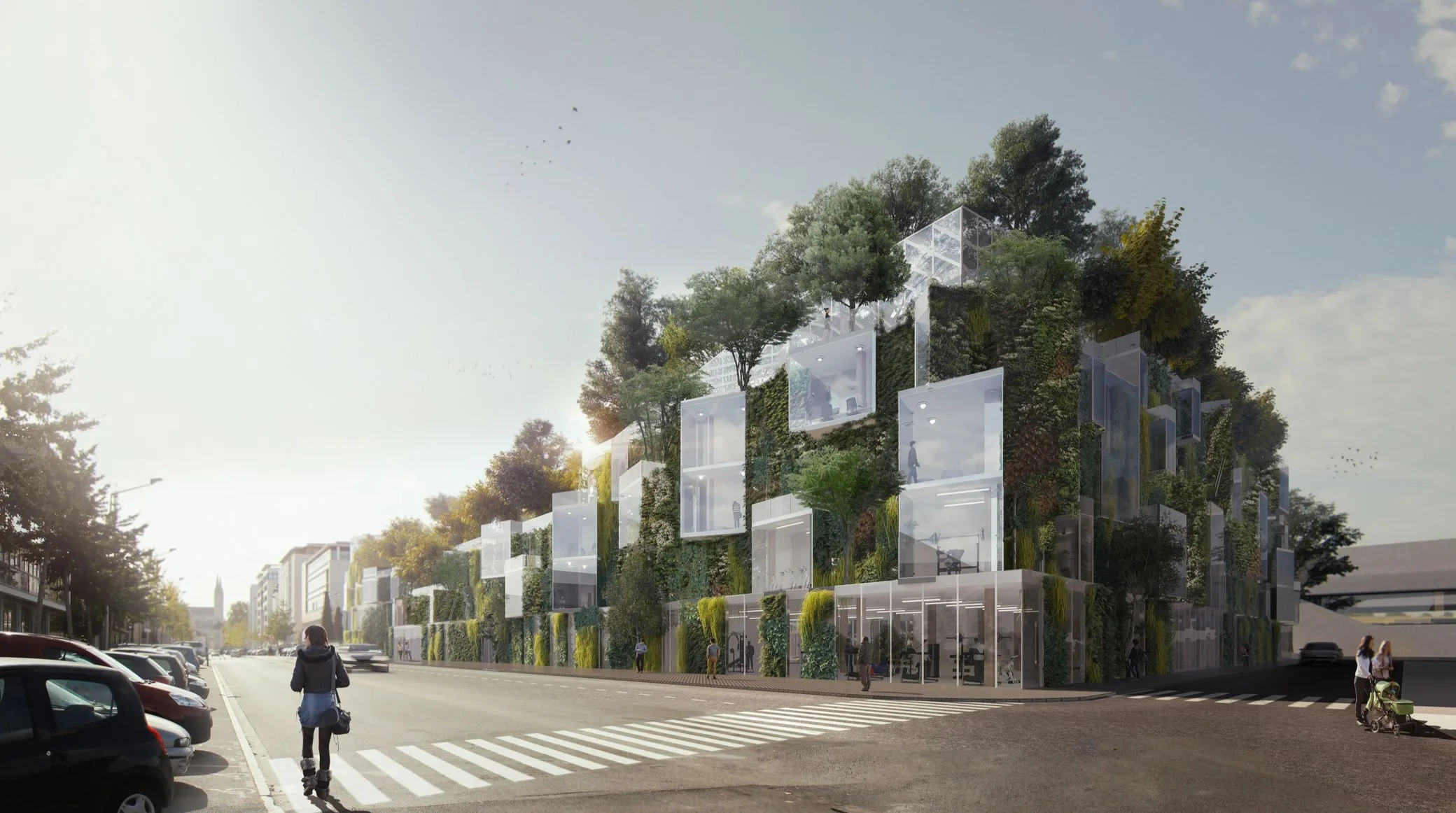
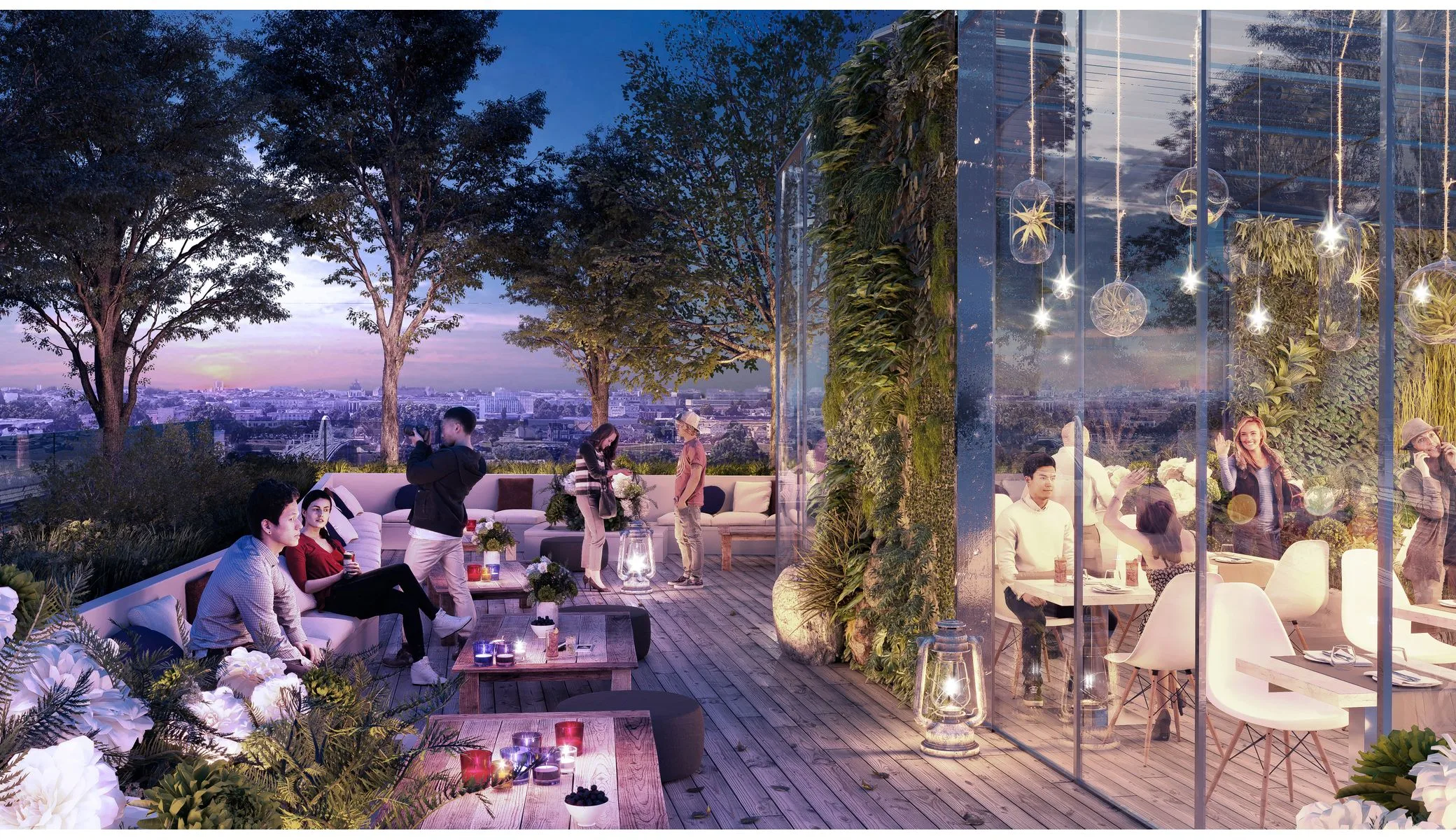
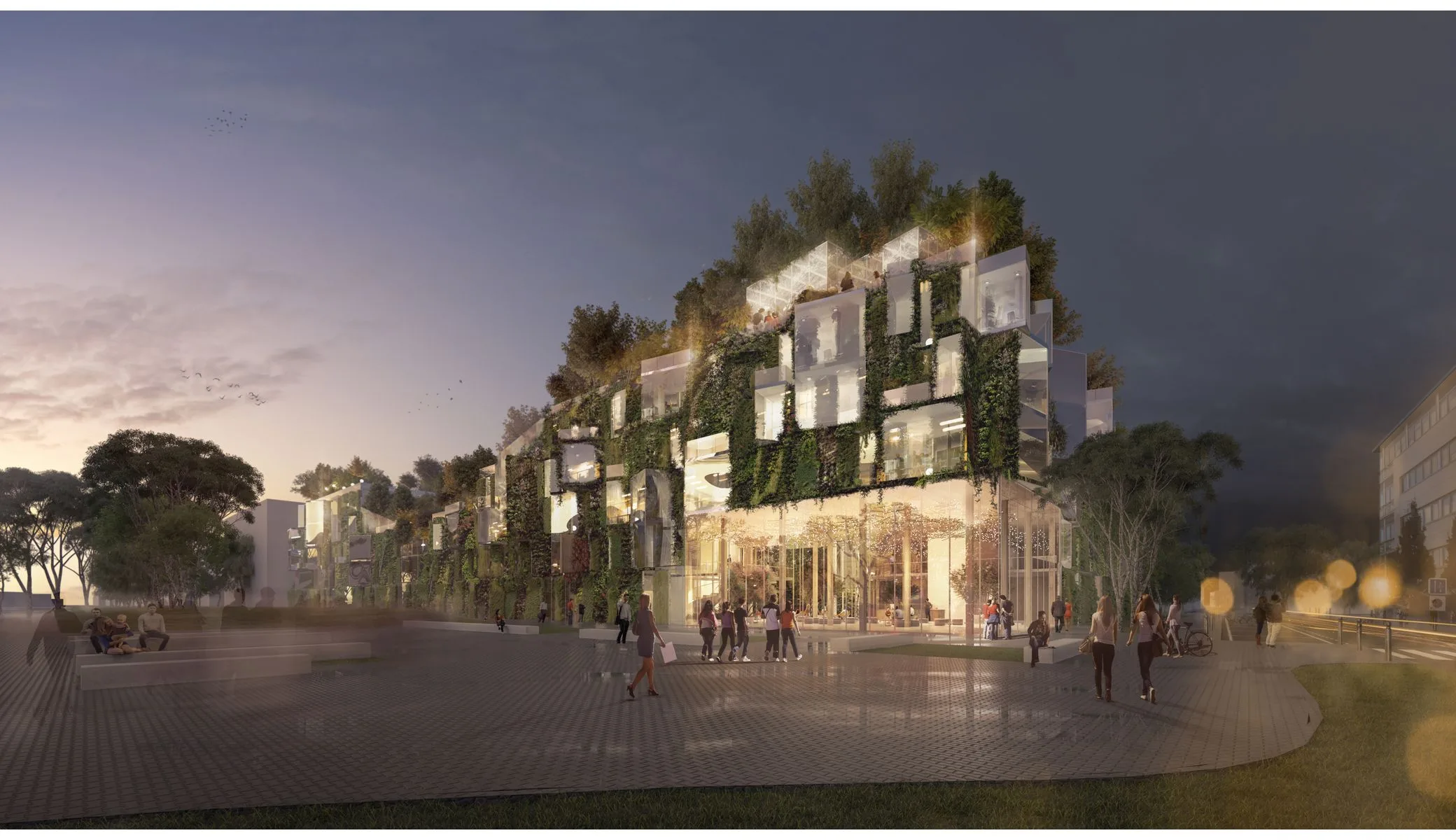
**The architectural gesture rests on a simple idea**: refusing to enclose vegetation within an armor of glass or metal. Too often, so-called "green" projects confine nature to decorative or compensatory roles, placed in the background, on rooftops, or in enclosed patios. Here, interiority and exteriority embrace, intertwine, and merge to give birth to a single architectural landscape. Facades become permeable interfaces, walkways and terraces extend into planted layers, trees structure views and atmospheres in the same way as porticos or slabs. The collaboration with Sou Fujimoto reinforced this search for radical porosity: each inhabited or work space dialogues with a planted sequence, whether a dense undergrowth or an open perspective onto the central garden.
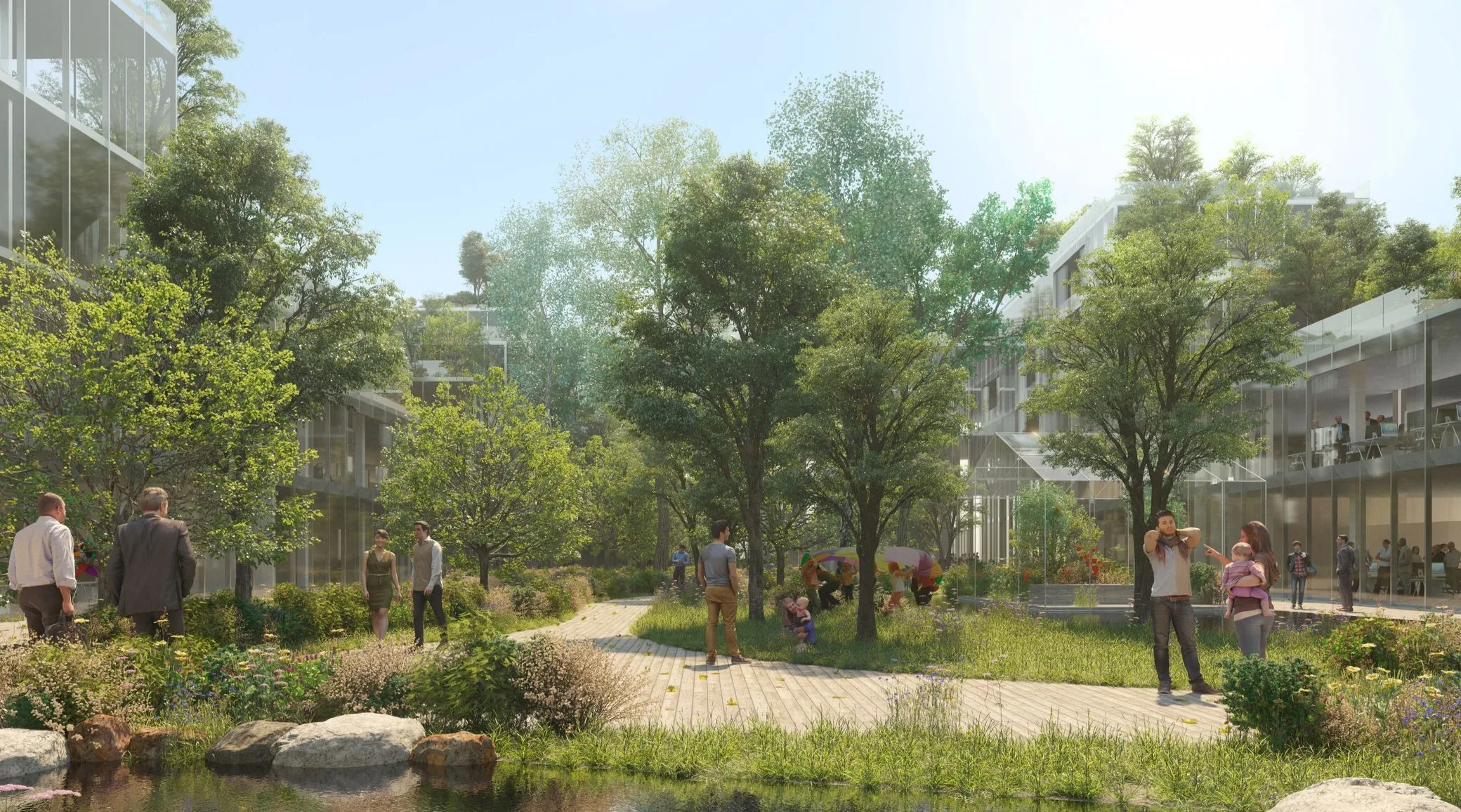
The spatial organization is precisely articulated around this garden, a true open-air public square that becomes the unifying element of the program. All built volumes open onto it, offering crossed views, multiple orientations, and a visual depth that abolishes any sensation of confinement. Air circulates freely, allowing wide openings in work spaces as well as in housing. This porosity favors natural ventilation and reduces dependence on mechanical air conditioning systems. Light also circulates, filtered by foliage, modulated by seasons, creating changing atmospheres that punctuate the day and the year.
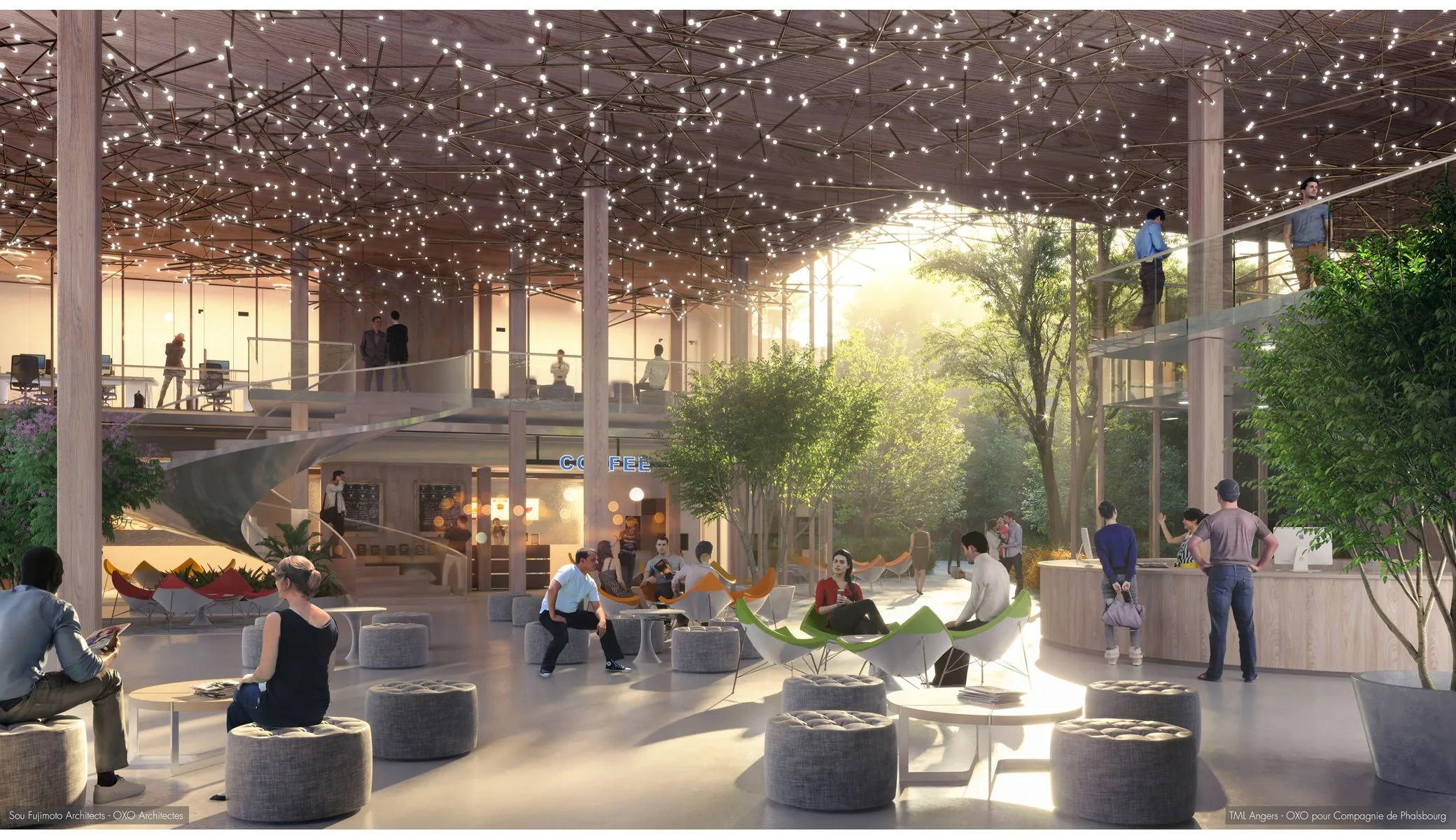
The work spaces of the Talent Makers Lab are not alike. We refused the standardization of office floors in favor of spatial diversity where each level, each orientation, each facade setback proposes a unique relationship with vegetation. Some offices slip beneath the canopy, in immediate contact with branches and trunks, offering an almost forest-like intimacy. Others open onto distant perspectives, embracing the garden in all its depth. Lights and atmospheres vary from one space to another, not by stylistic effect but through a geometry designed to accommodate these variations. This heterogeneity becomes an asset: it allows each team, each researcher, each resident to appropriate a singular place, to choose their degree of exposure to the landscape, to modulate their relationship to concentration or contemplation.
**The materiality of the project extends this logic of hybridization.** We favored sober, durable materials, capable of aging with dignity in contact with vegetation. Exposed concrete, wood for walkways and railings, metal for light structures: choices that favor economy of means and constructive legibility. Facades are not sealed skins but open devices, punctuated by setbacks, planted balconies, overhanging planters that accommodate trees, shrubs, and perennials. Vegetation is not applied *after the fact*: it is integrated from the conception of load-bearing structures, with reservations for planting pits, integrated irrigation systems, technical substrates adapted to growth in full soil even at height.
On the environmental level, the Talent Makers Lab embodies an approach where vegetation plays an active role in the building's performance. Planted surfaces participate in stormwater management, reduce urban heat islands, and promote local biodiversity. The volumetric composition and arrangement of built masses optimize solar gains in winter while protecting from direct radiation in summer. The objective is not to multiply labels or certifications, but to build a truly functional ecosystem where architecture supports plant life and vice versa.
The project ultimately aspires to become a **plant icon** for Angers, not through a spectacular posture but through an affirmed presence in the urban landscape. The Talent Makers Lab aims to be a signal, a reference that embodies the city's capacity to combine programmatic innovation, urban density, and ecological ambition. It is part of a collective dynamic where architecture no longer merely "greens" its facades but invents new ways of inhabiting, working, and coexisting with the living. This project, although it did not come to fruition, remains for us a fertile laboratory, an exploration of the architectural possibilities of a future where nature and construction no longer oppose each other but mutually enrich one another.
The Angers site invited us to extend the city's commitment to an urban fabric irrigated by nature. Rather than opposing urban density and biodiversity, we imagined a block where these two realities coexist in a strictly equal proportion: 50% planted surfaces, 50% built surfaces. This ratio is not a compromise, it is an acknowledged programmatic balance. The project spans 20,300 m² and integrates offices, a research center, housing, and a restaurant, programs that find their coherence in a constant relationship with the central garden, the true beating heart of the ensemble.
**The architectural gesture rests on a simple idea**: refusing to enclose vegetation within an armor of glass or metal. Too often, so-called "green" projects confine nature to decorative or compensatory roles, placed in the background, on rooftops, or in enclosed patios. Here, interiority and exteriority embrace, intertwine, and merge to give birth to a single architectural landscape. Facades become permeable interfaces, walkways and terraces extend into planted layers, trees structure views and atmospheres in the same way as porticos or slabs. The collaboration with Sou Fujimoto reinforced this search for radical porosity: each inhabited or work space dialogues with a planted sequence, whether a dense undergrowth or an open perspective onto the central garden.
The spatial organization is precisely articulated around this garden, a true open-air public square that becomes the unifying element of the program. All built volumes open onto it, offering crossed views, multiple orientations, and a visual depth that abolishes any sensation of confinement. Air circulates freely, allowing wide openings in work spaces as well as in housing. This porosity favors natural ventilation and reduces dependence on mechanical air conditioning systems. Light also circulates, filtered by foliage, modulated by seasons, creating changing atmospheres that punctuate the day and the year.
The work spaces of the Talent Makers Lab are not alike. We refused the standardization of office floors in favor of spatial diversity where each level, each orientation, each facade setback proposes a unique relationship with vegetation. Some offices slip beneath the canopy, in immediate contact with branches and trunks, offering an almost forest-like intimacy. Others open onto distant perspectives, embracing the garden in all its depth. Lights and atmospheres vary from one space to another, not by stylistic effect but through a geometry designed to accommodate these variations. This heterogeneity becomes an asset: it allows each team, each researcher, each resident to appropriate a singular place, to choose their degree of exposure to the landscape, to modulate their relationship to concentration or contemplation.
**The materiality of the project extends this logic of hybridization.** We favored sober, durable materials, capable of aging with dignity in contact with vegetation. Exposed concrete, wood for walkways and railings, metal for light structures: choices that favor economy of means and constructive legibility. Facades are not sealed skins but open devices, punctuated by setbacks, planted balconies, overhanging planters that accommodate trees, shrubs, and perennials. Vegetation is not applied *after the fact*: it is integrated from the conception of load-bearing structures, with reservations for planting pits, integrated irrigation systems, technical substrates adapted to growth in full soil even at height.
On the environmental level, the Talent Makers Lab embodies an approach where vegetation plays an active role in the building's performance. Planted surfaces participate in stormwater management, reduce urban heat islands, and promote local biodiversity. The volumetric composition and arrangement of built masses optimize solar gains in winter while protecting from direct radiation in summer. The objective is not to multiply labels or certifications, but to build a truly functional ecosystem where architecture supports plant life and vice versa.
The project ultimately aspires to become a **plant icon** for Angers, not through a spectacular posture but through an affirmed presence in the urban landscape. The Talent Makers Lab aims to be a signal, a reference that embodies the city's capacity to combine programmatic innovation, urban density, and ecological ambition. It is part of a collective dynamic where architecture no longer merely "greens" its facades but invents new ways of inhabiting, working, and coexisting with the living. This project, although it did not come to fruition, remains for us a fertile laboratory, an exploration of the architectural possibilities of a future where nature and construction no longer oppose each other but mutually enrich one another.
- Lieu
- Angers, France
- Nature
- Bureaux
- Surface
- 20 300 m²
- Budget
- Confidentiel
- Concours
- 2018
- MOA
- Compagnie de Phalsbourg, Bouygues Immobilier
- Co-architectes
- Sou Fujimoto Architects