
La Madeleine
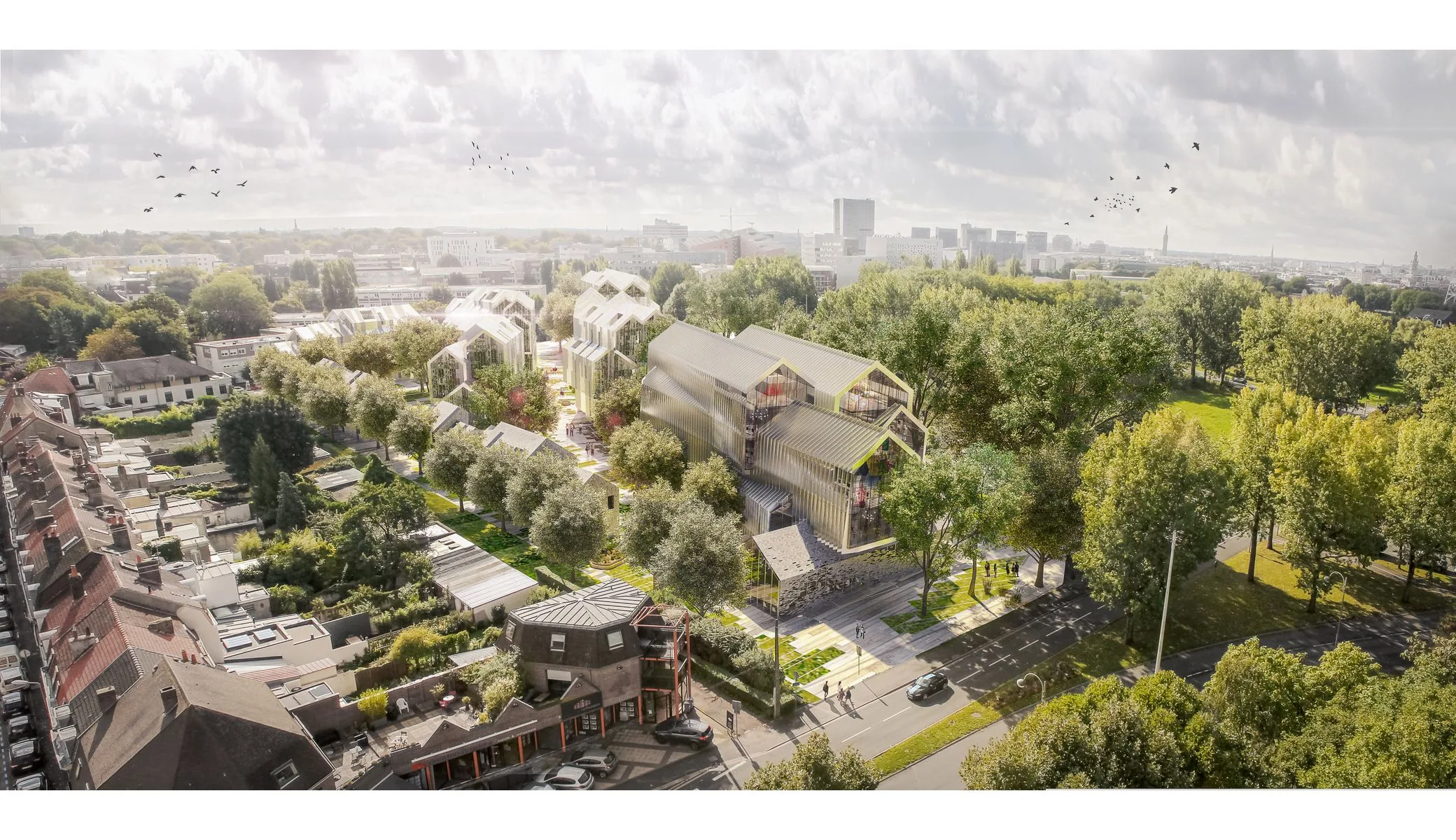
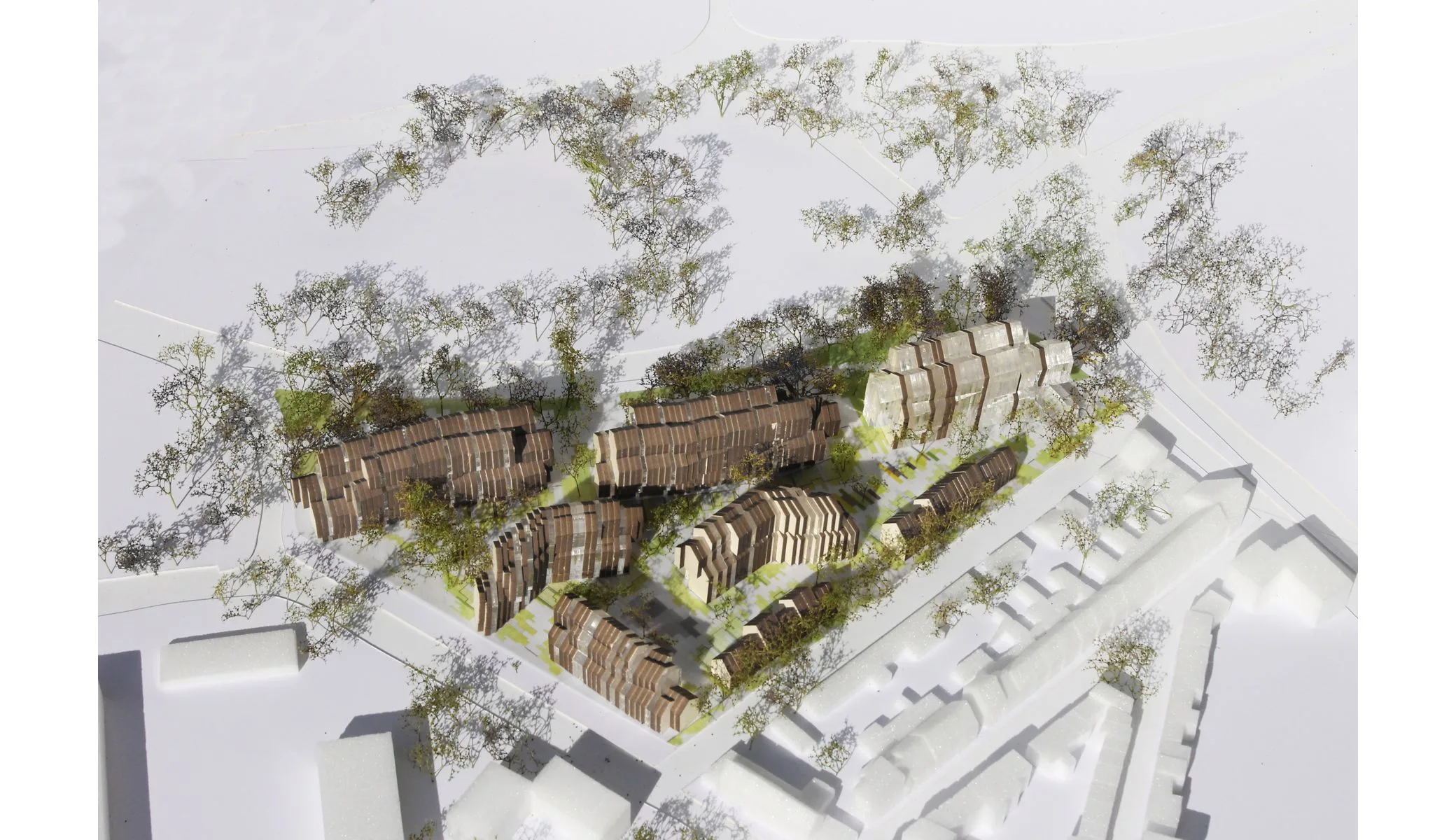
Aware of the challenges of urban and landscape stitching, as well as the ongoing development dynamics (ring road restructuring, courthouse construction), the project proposes to define an urban and architectural structure based on the integration and reinterpretation of existing elements.
The Tir à l'Arc site in La Madeleine embodies that category of interstitial spaces that carry within them the fragmented memory of a city in perpetual recomposition. Bordered by rue du Chaufour and the structural axes of avenue Paul Doumer and avenue du Général de Gaulle, this 24,500 m² site sits at the heart of multiple urban dynamics: the imminent restructuring of the ring road, the construction of the courthouse, and more broadly, the redefinition of relationships between center and periphery in the Lille metropolis. We approached this 2017 competition project with the conviction that any intervention must first reveal what already exists, this **temporal thickness** and these **landscape strata** that define the site's specificity. It was not about imposing a spectacular gesture, but rather operating an **urban stitching** capable of connecting heterogeneous fabrics while anticipating future transformations.
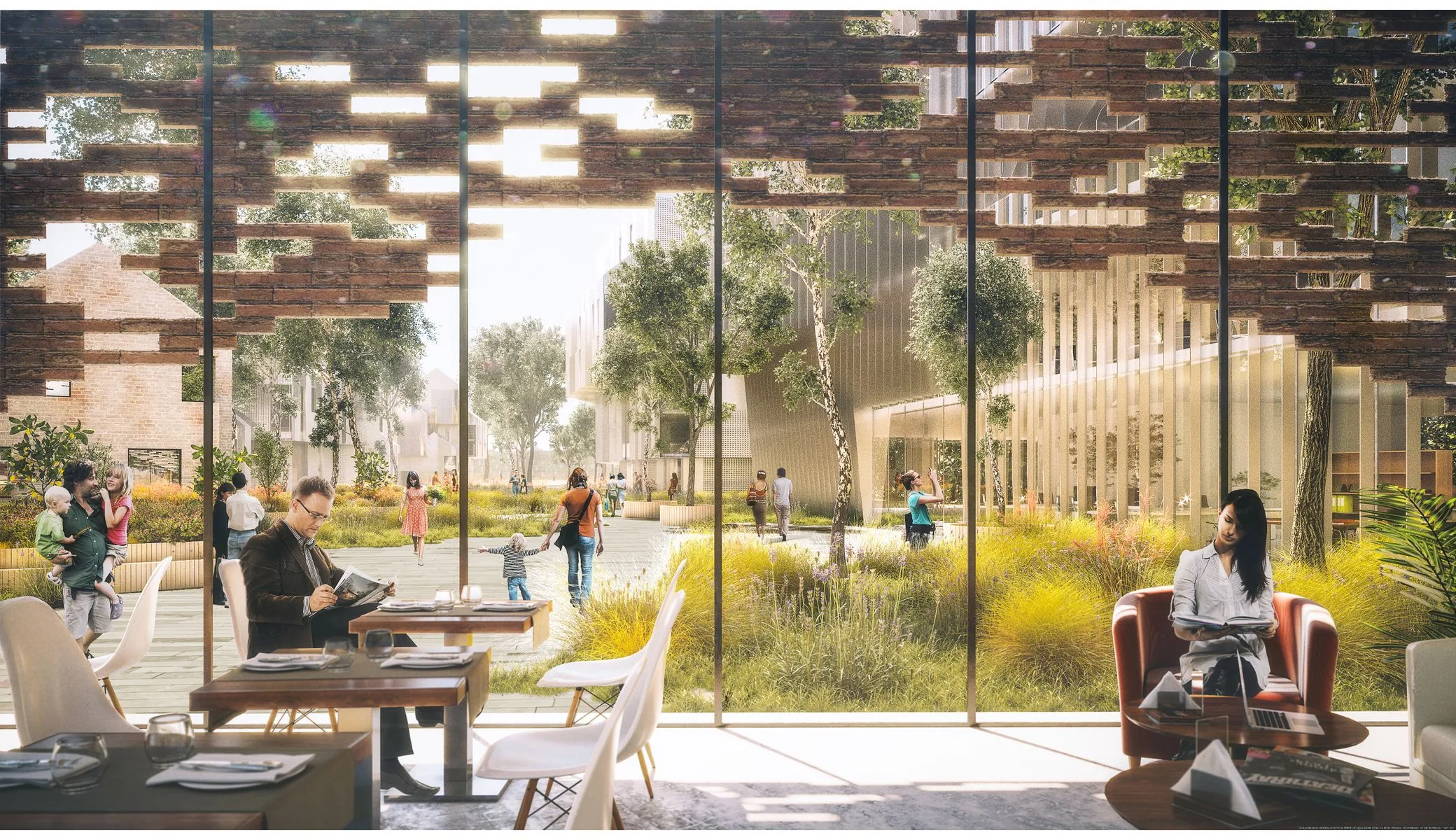
The first question was one of preservation. The site retains a landscape facade marked by the historic presence of archery, a rare vegetal breathing space in a densified urban context. Rather than sacrificing it for blind densification, we chose to **recompose** it, to integrate it as a founding element of a **metropolitan green framework** that traverses the entire project. This landscape sequence is not mere decor; it constitutes the structural armature of the mixed program (housing, shops, offices), a vegetal filter that organizes transitions and preserves a recreational and sports dimension. In an era where the question of the inhabited city merges with that of the breathable city, this green stratum becomes a common space, a shared asset that transcends simple ornamental function to become **infrastructure of daily life**.
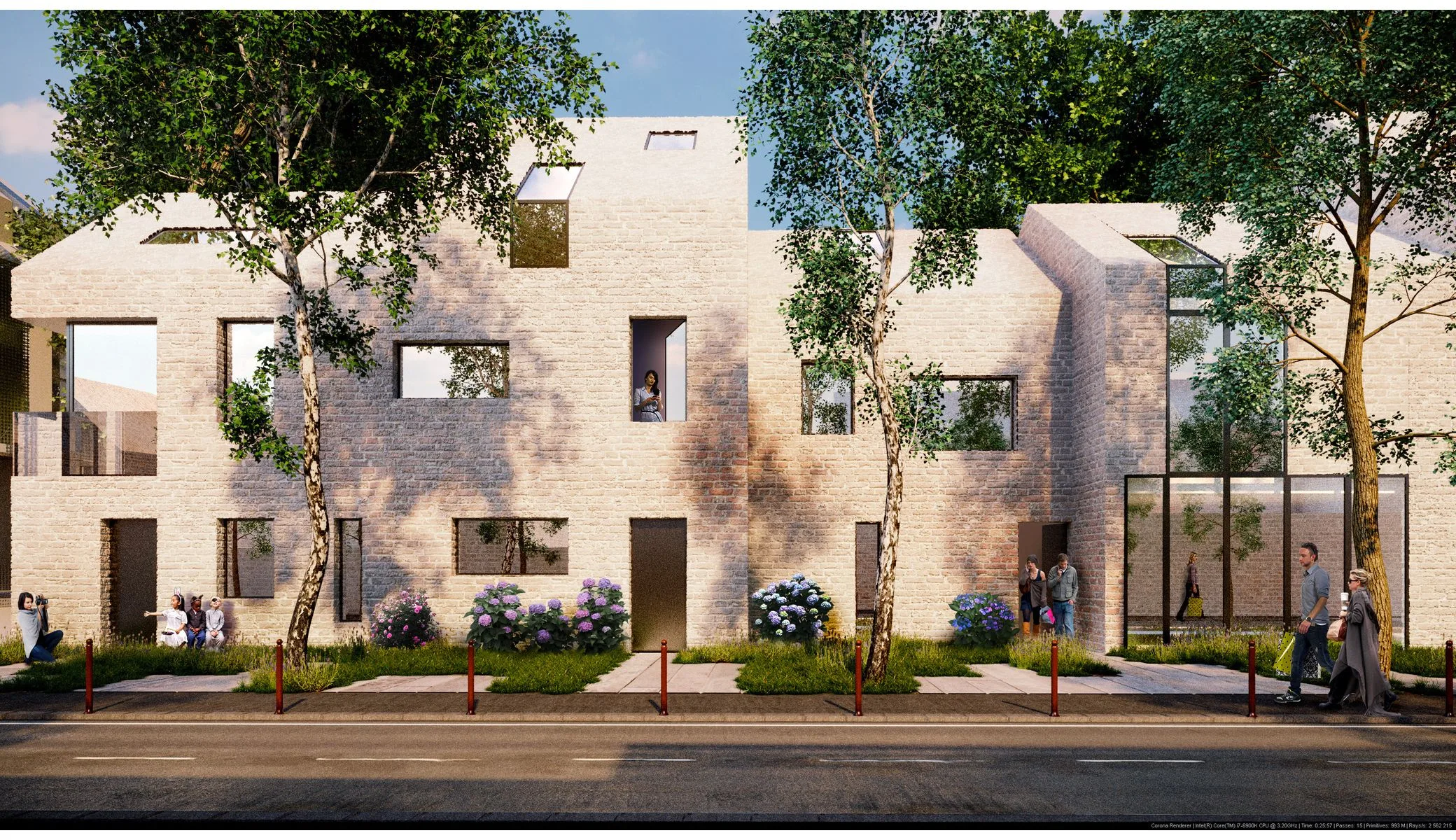
On rue du Chaufour, the existing fabric is characterized by a singular typology: narrow, deep ribbon houses that testify to an urbanization mode inherited from the 19th century. We decided to **reinterpret** this morphology rather than deny it. The project thus proposes a contemporary reinterpretation of these ribbons, playing on the alternation of solids and voids, on the verticality of volumes, and on the articulation between domestic space and collective space. This strategy allows us to **stitch** the new project to the old fabric without pastiche, affirming a typological filiation while introducing contemporary materialities and construction methods. The facades dialogue with the existing scale but emancipate themselves through their treatment, their porosity, their capacity to allow light and vegetation to penetrate.
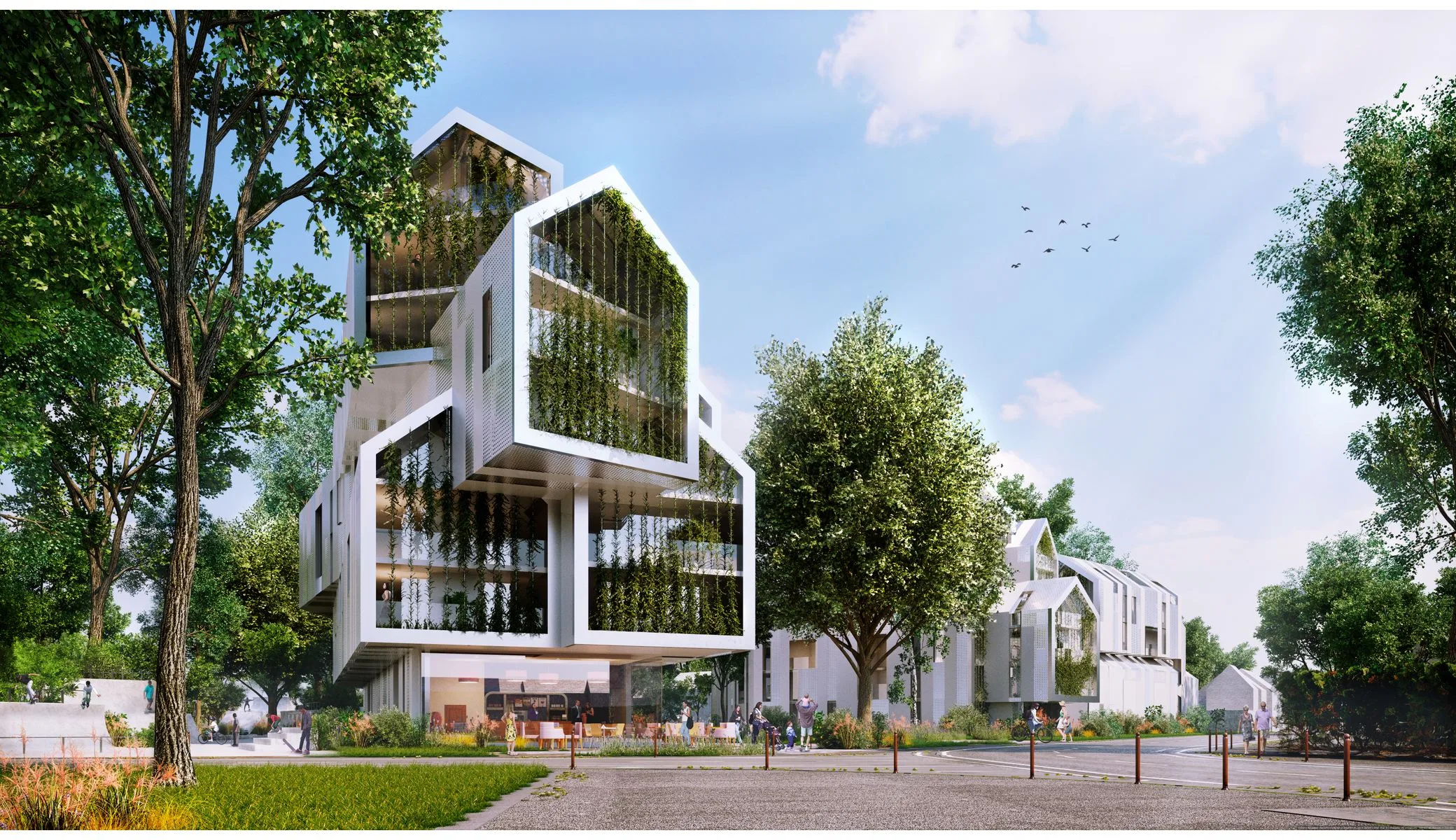
The mixed program (housing, shops, offices) responds to a logic of **virtuous density**, one that produces urbanity without congestion, that allows the cohabitation of uses without confusing them. Ground-floor shops animate the city entrance axes, creating continuity with existing centralities. Offices are inserted in a logic of proximity, limiting metropolitan travel and reinforcing the functional mix of the neighborhood. Housing, finally, occupies the upper floors, benefiting from the relative tranquility offered by the green framework and unobstructed views of the broader urban landscape. This programmatic stratification is not a simple superimposition; it organizes a **spatial gradation** from most public to most intimate, from most urban to most landscape-oriented.
The transition space we sought to define between the different fabrics framing the Paul Doumer and Général de Gaulle axes is not a residual void, but an **active space**, an inhabited threshold. This project anticipates ongoing projects, inscribing itself in different time scales. We reject the idea of frozen architecture, completed once delivered. On the contrary, we conceived a spatial device capable of **absorbing future transformations**, adjusting to new infrastructures, dialoguing with buildings that do not yet exist. This projectual philosophy positions the site as a **place of passage and destination**, a connected and connecting in-between, an integral part of a metropolitan journey that is not limited to the project's cadastral boundaries.
The project's materiality reflects this ambition of sobriety and reversibility. We favored rational construction systems, durable materials (exposed concrete, wood, metal), capable of aging with dignity and being reused. The facades play on **depth**, on the articulation between structure and envelope, offering intermediate spaces (balconies, walkways, terraces) that extend domestic space and participate in the thermal regulation of buildings. The environmental question is not treated as a technical supplement, but as a **constitutive dimension** of the architectural concept. The green framework participates in stormwater management, heat island regulation, urban biodiversity. Orientations, visual openings, solar shading are all parameters that informed the very form of the volumes.
This project, which remained at the competition stage, testifies to an ambition: that of making architecture a **tool for urban coherence**, capable of connecting fragments, valorizing the existing, anticipating transformations. La Madeleine, the Tir à l'Arc site, could have become that interstitial place where the threads of an emerging metropolis are woven, where landscape memory dialogues with contemporary dynamics, where architecture fully assumes its role of mediation between the individual and the territory.
The first question was one of preservation. The site retains a landscape facade marked by the historic presence of archery, a rare vegetal breathing space in a densified urban context. Rather than sacrificing it for blind densification, we chose to **recompose** it, to integrate it as a founding element of a **metropolitan green framework** that traverses the entire project. This landscape sequence is not mere decor; it constitutes the structural armature of the mixed program (housing, shops, offices), a vegetal filter that organizes transitions and preserves a recreational and sports dimension. In an era where the question of the inhabited city merges with that of the breathable city, this green stratum becomes a common space, a shared asset that transcends simple ornamental function to become **infrastructure of daily life**.
On rue du Chaufour, the existing fabric is characterized by a singular typology: narrow, deep ribbon houses that testify to an urbanization mode inherited from the 19th century. We decided to **reinterpret** this morphology rather than deny it. The project thus proposes a contemporary reinterpretation of these ribbons, playing on the alternation of solids and voids, on the verticality of volumes, and on the articulation between domestic space and collective space. This strategy allows us to **stitch** the new project to the old fabric without pastiche, affirming a typological filiation while introducing contemporary materialities and construction methods. The facades dialogue with the existing scale but emancipate themselves through their treatment, their porosity, their capacity to allow light and vegetation to penetrate.
The mixed program (housing, shops, offices) responds to a logic of **virtuous density**, one that produces urbanity without congestion, that allows the cohabitation of uses without confusing them. Ground-floor shops animate the city entrance axes, creating continuity with existing centralities. Offices are inserted in a logic of proximity, limiting metropolitan travel and reinforcing the functional mix of the neighborhood. Housing, finally, occupies the upper floors, benefiting from the relative tranquility offered by the green framework and unobstructed views of the broader urban landscape. This programmatic stratification is not a simple superimposition; it organizes a **spatial gradation** from most public to most intimate, from most urban to most landscape-oriented.
The transition space we sought to define between the different fabrics framing the Paul Doumer and Général de Gaulle axes is not a residual void, but an **active space**, an inhabited threshold. This project anticipates ongoing projects, inscribing itself in different time scales. We reject the idea of frozen architecture, completed once delivered. On the contrary, we conceived a spatial device capable of **absorbing future transformations**, adjusting to new infrastructures, dialoguing with buildings that do not yet exist. This projectual philosophy positions the site as a **place of passage and destination**, a connected and connecting in-between, an integral part of a metropolitan journey that is not limited to the project's cadastral boundaries.
The project's materiality reflects this ambition of sobriety and reversibility. We favored rational construction systems, durable materials (exposed concrete, wood, metal), capable of aging with dignity and being reused. The facades play on **depth**, on the articulation between structure and envelope, offering intermediate spaces (balconies, walkways, terraces) that extend domestic space and participate in the thermal regulation of buildings. The environmental question is not treated as a technical supplement, but as a **constitutive dimension** of the architectural concept. The green framework participates in stormwater management, heat island regulation, urban biodiversity. Orientations, visual openings, solar shading are all parameters that informed the very form of the volumes.
This project, which remained at the competition stage, testifies to an ambition: that of making architecture a **tool for urban coherence**, capable of connecting fragments, valorizing the existing, anticipating transformations. La Madeleine, the Tir à l'Arc site, could have become that interstitial place where the threads of an emerging metropolis are woven, where landscape memory dialogues with contemporary dynamics, where architecture fully assumes its role of mediation between the individual and the territory.
- Lieu
- La Madeleine, site du Tir à L’Arc
- Nature
- Mixte
- Surface
- 24 500 m²
- Budget
- Confidentiel
- Concours
- 2017
- MOA
- Aténor