
Ghost Stations
The Paris metro is inseparable from the life of the city of light. Its stations share the fame of its avenues, churches and museums. From Champs-Élysées to Bastille, passing through Arts et Métiers and Châtelet, they all inspire dreams. Each has its own history and everyone has their favorite! Some of these places, like Arsenal, Porte des Lilas, Porte Molitor or Champ de Mars, remain popular but have lost their stations, which have fallen into oblivion. The development project for these ghost stations would breathe new life into quintessentially Parisian places.
We grew up with the Paris metro, this underground network that pulses beneath our feet and sets the rhythm of life in the capital. Its stations bear names that resonate like mythical destinations: Champs-Élysées, Bastille, Arts et Métiers, Châtelet. Each carries the city's history, each feeds our imaginations. But what many don't know is that beneath Paris lies an archipelago of forgotten stations, closed to the public, turned into ghosts. Arsenal, Porte des Lilas, Porte Molitor, Champ de Mars: so many places that have lost their primary function but remain, intact, like time capsules buried beneath the asphalt.
**Ghost Stations** was born from a simple conviction: these spaces must not remain frozen in nostalgia. They must regain a life, a presence, a use. In 2014, together with Laisné Roussel, we proposed transforming these disused stations into cultural and sports facilities, nightlife venues, underground gardens. Not by erasing their memory, but on the contrary by activating it, by revealing their **latent potential**. The idea was to create an encounter between the history of these infrastructures and the contemporary needs of a dense, saturated city in permanent search of public spaces.
At the time, New York was preparing to inaugurate the Lowline, that underground park that reinvented the use of former railway infrastructures. Paris, rich with its own underground heritage, could do even better: not create a single grand gesture, but activate a network of scattered places, each with its singularity, its program, its atmosphere. Each ghost station thus became an opportunity for **gentle transformation**, respectful of the original aesthetic, but resolutely oriented toward new uses.
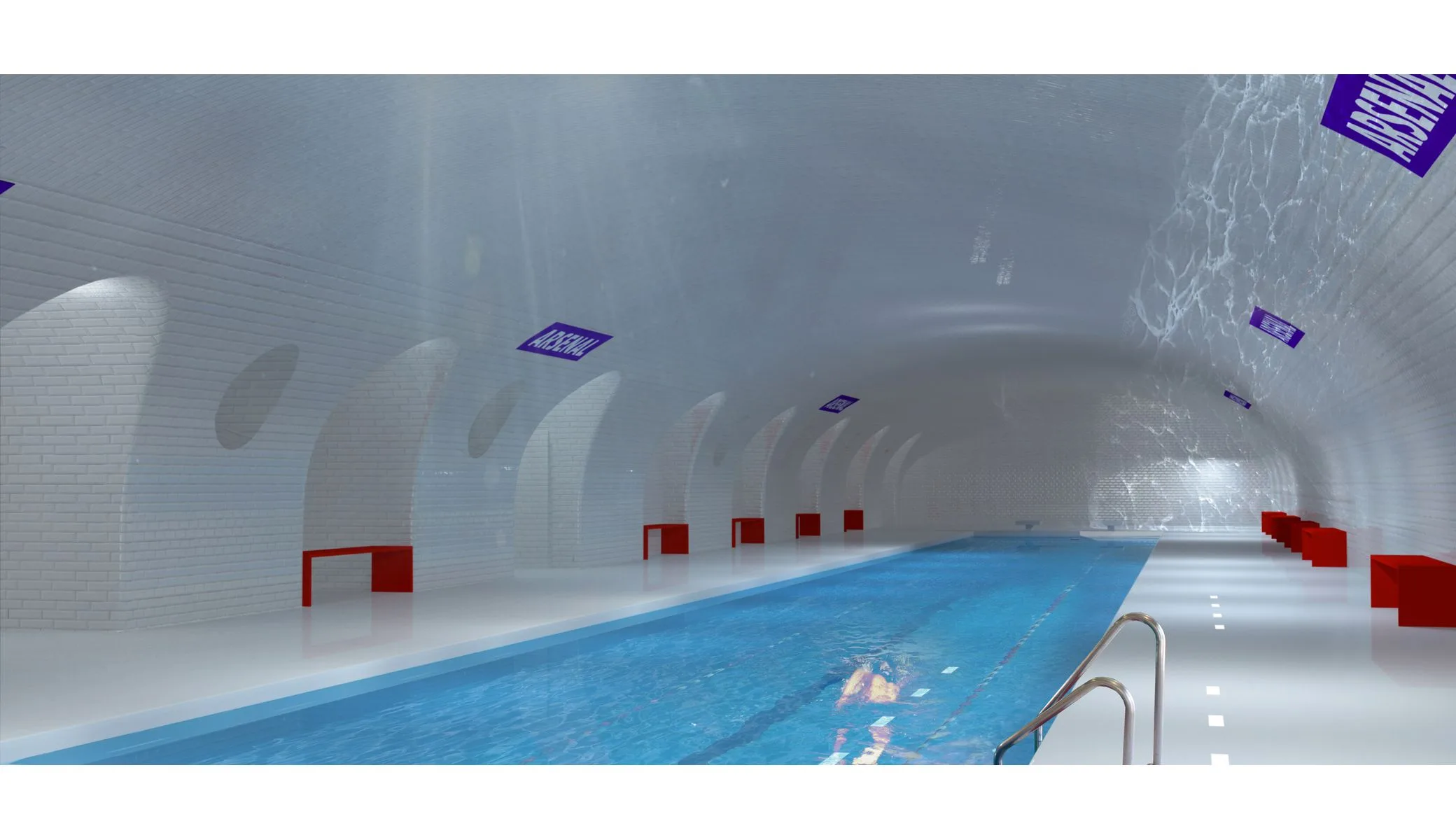
Imagine swimming in a metro alcove. The idea may seem utopian, almost surreal, yet it responds to a concrete need: Paris desperately lacks sports facilities, particularly public swimming pools. Installing a pool in a former station means offering the city a hybrid place, both athletic and poetic. The white ceramic tiles, the barrel vaults, the platforms converted into bleachers: everything is already there. We simply need to reveal this **particular spatiality**, illuminate it differently, create aquatic atmospheres in a setting that was never designed for this. Water then becomes a transformative material, a revealer of existing architecture.
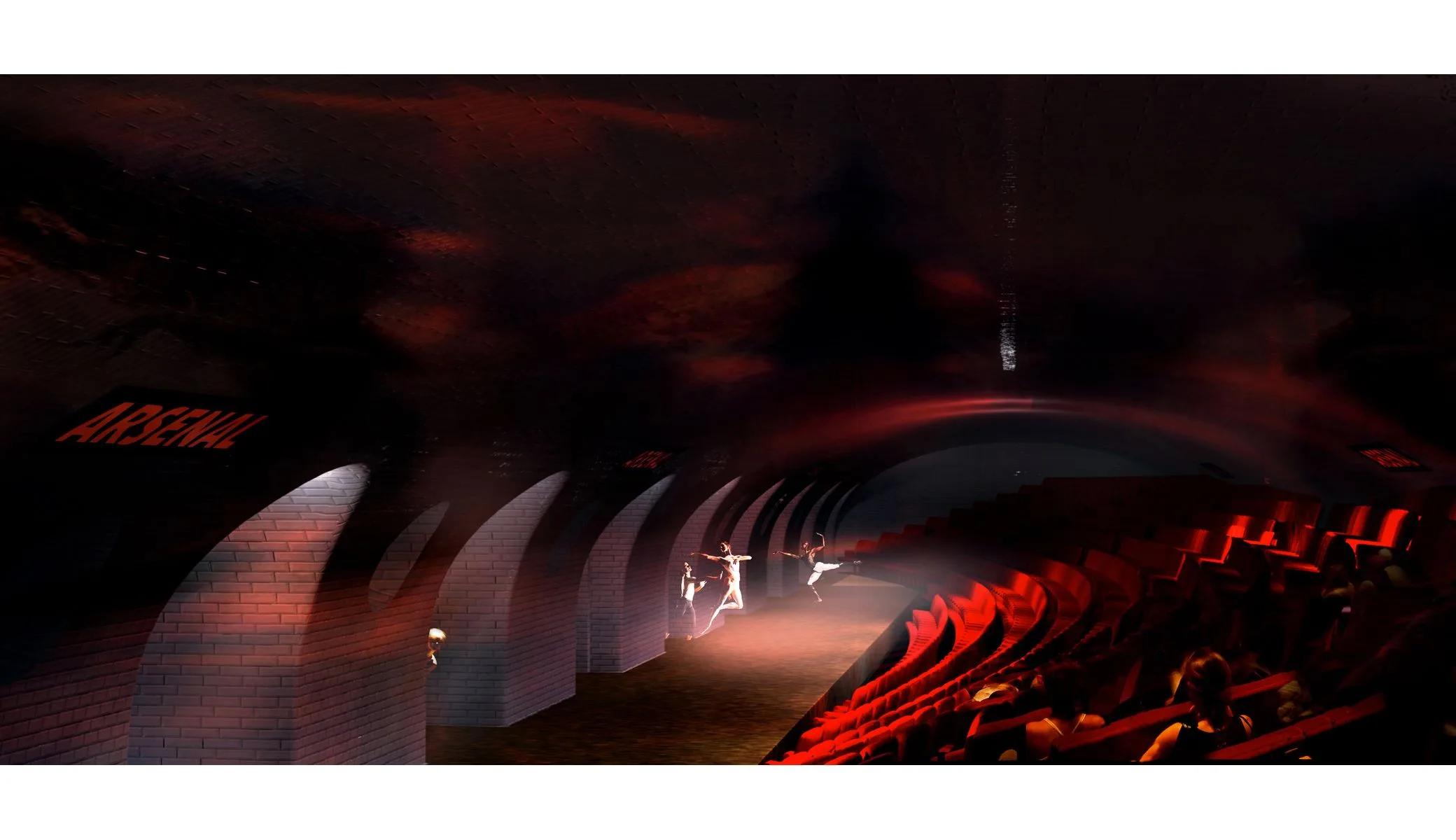
Similarly, a performance hall in a metro station constitutes a magnificent opportunity for scenographers, choreographers, dancers. These underground spaces, with their singular acoustics, their constrained geometry, their artificial light, offer unprecedented playing fields. The public would descend underground not to catch a train, but to experience an immersive artistic event. The **familiarity of the place** (everyone knows the atmosphere of a metro station) would blend with the strangeness of the situation (attending a performance where one ordinarily waits for a train). This programmatic shift creates a fertile tension, an unexpected urban poetry.
We also considered installing a nightclub at Arsenal, near Bastille. The advantage is obvious: nightlife that disturbs no one, thick walls that absorb sound, a central location that facilitates access. But beyond functionality, there's the idea of restoring these spaces to their original purpose: to be places of passage, crossing, encounter. At night, the station would regain its animation, but in a metamorphosed form. Bodies would dance where others once waited, strobe lights would replace administrative neons.
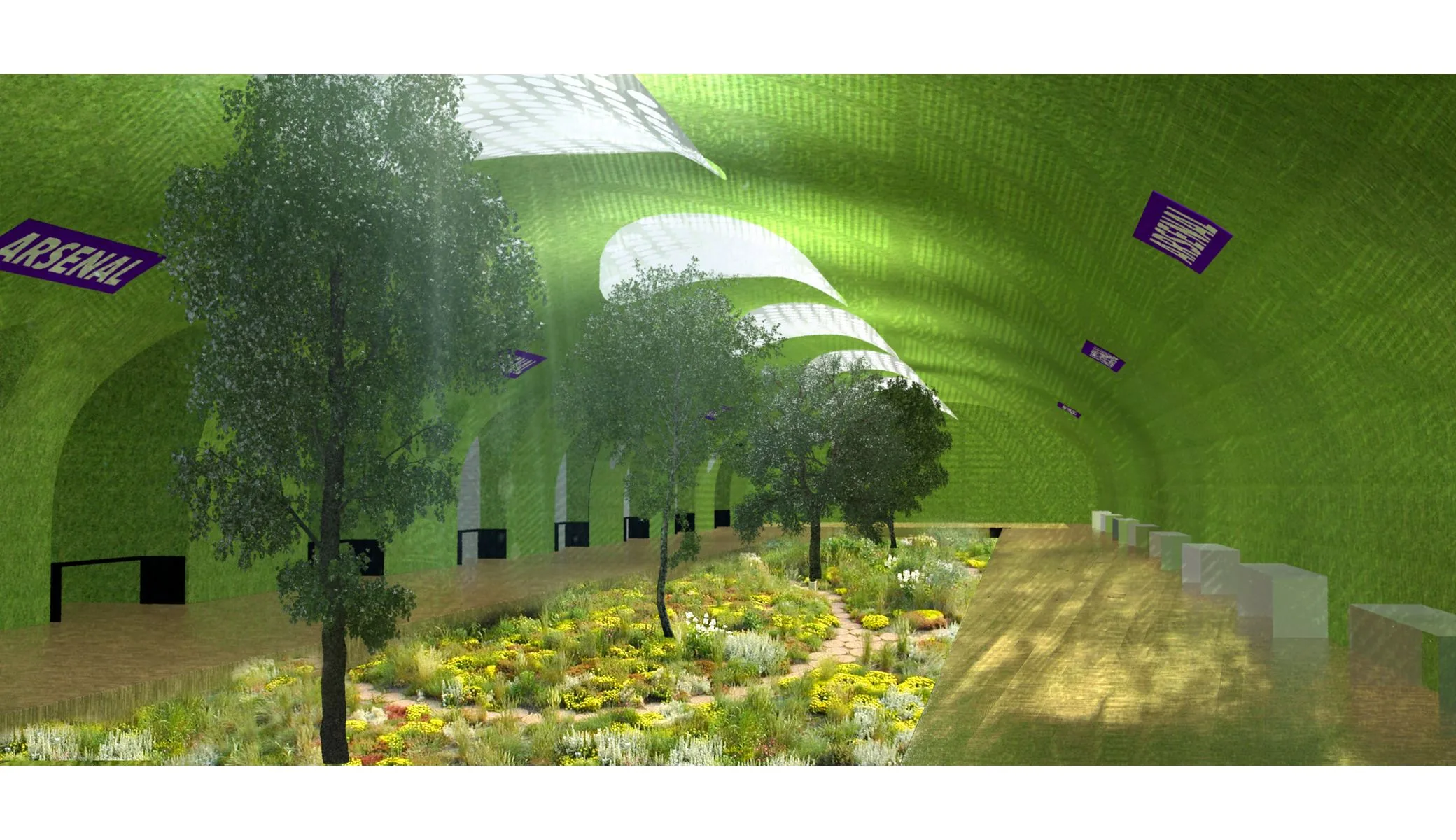
An underground garden would allow people to enjoy the calm and tranquility of a reinvented metro, especially on rainy days. We often think of public spaces as necessarily exterior, but Parisian density requires thinking differently. An underground garden, illuminated by artificial devices or by natural light captured from the surface, could offer a refuge, an urban respite in a climate-controlled, mastered context. Plants cultivated under LED lamps, benches installed on former platforms, vaults colonized by climbing plants: all this participates in an **inventive urban ecology**, which doesn't renounce nature but reinvents it in constrained contexts.
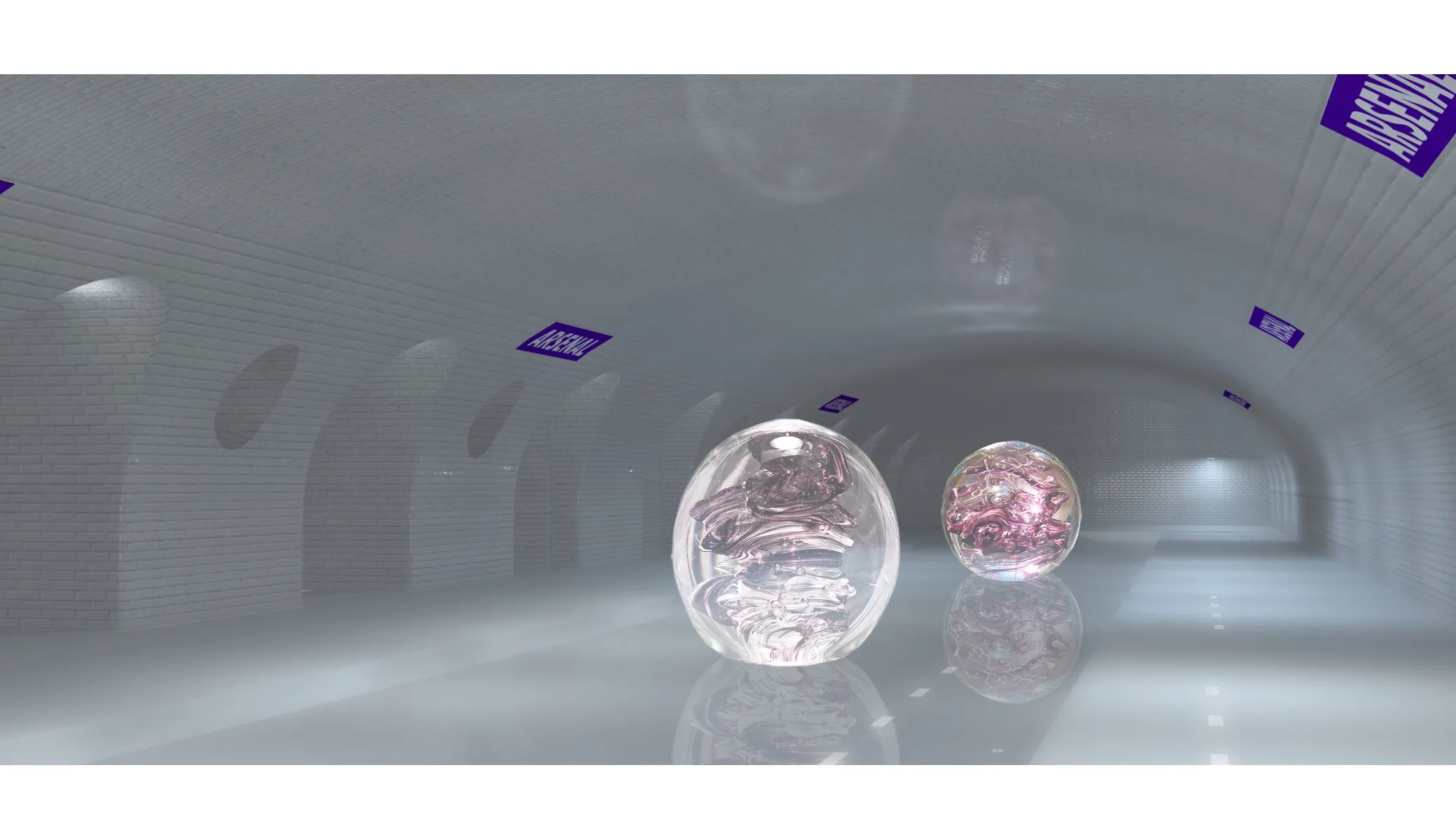
An art gallery, a contemporary creation space, a restaurant: each of these programs finds an unexpected setting in the ghost stations. The challenge is not to impose a function on a place, but to create **dialogues**, fruitful frictions between what was and what could be. Traces of the past (Dubonnet advertising panels, wooden benches, original ceramics) become scenographic elements, witnesses to an era that the new program reactivates without erasing.
Our approach, with Laisné Roussel, was also environmental in nature. Reusing what exists means avoiding new construction, saving resources, limiting carbon footprint. The ghost stations are already there, buried, forgotten, but structurally solid. They await only minimal intervention to regain utility. This approach of **reuse at urban scale** anticipates current concerns: working with what exists, rather than always destroying and rebuilding.
Finally, this project questions our relationship with the city, its temporal layers, its invisible spaces. Paris is not only what we see on the surface. It's also a network of galleries, tunnels, abandoned stations that tell another story. By proposing to reactivate these places, we wanted to prove that the city still has margins, untapped potentials, hidden resources. Transforming ghost stations into living facilities means restoring depth to Paris, both literally and figuratively. It means affirming that architecture doesn't always consist of building, but sometimes simply of revealing, repurposing, re-enchanting what had fallen into oblivion.
**Ghost Stations** was born from a simple conviction: these spaces must not remain frozen in nostalgia. They must regain a life, a presence, a use. In 2014, together with Laisné Roussel, we proposed transforming these disused stations into cultural and sports facilities, nightlife venues, underground gardens. Not by erasing their memory, but on the contrary by activating it, by revealing their **latent potential**. The idea was to create an encounter between the history of these infrastructures and the contemporary needs of a dense, saturated city in permanent search of public spaces.
At the time, New York was preparing to inaugurate the Lowline, that underground park that reinvented the use of former railway infrastructures. Paris, rich with its own underground heritage, could do even better: not create a single grand gesture, but activate a network of scattered places, each with its singularity, its program, its atmosphere. Each ghost station thus became an opportunity for **gentle transformation**, respectful of the original aesthetic, but resolutely oriented toward new uses.
Imagine swimming in a metro alcove. The idea may seem utopian, almost surreal, yet it responds to a concrete need: Paris desperately lacks sports facilities, particularly public swimming pools. Installing a pool in a former station means offering the city a hybrid place, both athletic and poetic. The white ceramic tiles, the barrel vaults, the platforms converted into bleachers: everything is already there. We simply need to reveal this **particular spatiality**, illuminate it differently, create aquatic atmospheres in a setting that was never designed for this. Water then becomes a transformative material, a revealer of existing architecture.
Similarly, a performance hall in a metro station constitutes a magnificent opportunity for scenographers, choreographers, dancers. These underground spaces, with their singular acoustics, their constrained geometry, their artificial light, offer unprecedented playing fields. The public would descend underground not to catch a train, but to experience an immersive artistic event. The **familiarity of the place** (everyone knows the atmosphere of a metro station) would blend with the strangeness of the situation (attending a performance where one ordinarily waits for a train). This programmatic shift creates a fertile tension, an unexpected urban poetry.
We also considered installing a nightclub at Arsenal, near Bastille. The advantage is obvious: nightlife that disturbs no one, thick walls that absorb sound, a central location that facilitates access. But beyond functionality, there's the idea of restoring these spaces to their original purpose: to be places of passage, crossing, encounter. At night, the station would regain its animation, but in a metamorphosed form. Bodies would dance where others once waited, strobe lights would replace administrative neons.
An underground garden would allow people to enjoy the calm and tranquility of a reinvented metro, especially on rainy days. We often think of public spaces as necessarily exterior, but Parisian density requires thinking differently. An underground garden, illuminated by artificial devices or by natural light captured from the surface, could offer a refuge, an urban respite in a climate-controlled, mastered context. Plants cultivated under LED lamps, benches installed on former platforms, vaults colonized by climbing plants: all this participates in an **inventive urban ecology**, which doesn't renounce nature but reinvents it in constrained contexts.
An art gallery, a contemporary creation space, a restaurant: each of these programs finds an unexpected setting in the ghost stations. The challenge is not to impose a function on a place, but to create **dialogues**, fruitful frictions between what was and what could be. Traces of the past (Dubonnet advertising panels, wooden benches, original ceramics) become scenographic elements, witnesses to an era that the new program reactivates without erasing.
Our approach, with Laisné Roussel, was also environmental in nature. Reusing what exists means avoiding new construction, saving resources, limiting carbon footprint. The ghost stations are already there, buried, forgotten, but structurally solid. They await only minimal intervention to regain utility. This approach of **reuse at urban scale** anticipates current concerns: working with what exists, rather than always destroying and rebuilding.
Finally, this project questions our relationship with the city, its temporal layers, its invisible spaces. Paris is not only what we see on the surface. It's also a network of galleries, tunnels, abandoned stations that tell another story. By proposing to reactivate these places, we wanted to prove that the city still has margins, untapped potentials, hidden resources. Transforming ghost stations into living facilities means restoring depth to Paris, both literally and figuratively. It means affirming that architecture doesn't always consist of building, but sometimes simply of revealing, repurposing, re-enchanting what had fallen into oblivion.
- Lieu
- Paris
- Nature
- Equipement culturel
- Surface
- NC
- Budget
- NC
- Concours
- 2014
- MOA
- Mairie de Paris
- Co-architectes
- Laisné Roussel